
The Executive Diploma is open to the general public
9 February 2026, Geneva, Switzerland – The role of sport in international relations has evolved significantly in recent decades. Beyond competition and entertainment, sport has emerged as a powerful vehicle for public diplomacy, soft power projection and multilateral cooperation. Governments, international organisations, sports federations and civil society actors increasingly recognise the capacity of sport to foster dialogue, promote inclusion and advance sustainable development objectives. In this context, sports diplomacy has become a growing field of practice, requiring professionals who can navigate the intersection of sport, international relations and global governance.
Against this backdrop, UNITAR organised the inaugural public edition of the Executive Diploma in Sports Diplomacy. The programme ran from 26 to 30 January in Geneva, Switzerland, and was open to all with an interest in the transformative power of sport. The programme was designed to equip participants with the knowledge and practical tools to harness sport responsibly and intentionally as a platform for international cooperation and sustainable development. The programme responded to the growing demand for professionals capable of leveraging sporting events and institutions as instruments of diplomacy, peacebuilding and soft power.
Mr Rabih El-Haddad, Director of the Division for Multilateral Diplomacy at UNITAR, speaking about the launch of this programme, remarked:
“The field of sports diplomacy represents one of the new and innovative tools we are leveraging to deliver on our mandate of strengthening multilateralism. This programme offers participants the tools to leverage sport in the service of diplomacy and development.”
During his opening remarks, Mr Marçal Jané García, Sports Partnerships Lead of the Division for Multilateral Diplomacy at UNITAR, said:
“At the core of this programme is the fact that sport offers a non-politicised entry point for dialogue, especially where traditional diplomacy breaks down – it is a means to build bridges and restore trust – and we hope that by the end of this programme, participants will be as sure as we are of the power of sport to revitalise international relations.”
Programme activities and learning components
The programme is particularly timely in light of this week’s upcoming Winter Olympic and Paralympic Games Milano-Cortina 2026, one of the world’s most prominent mega sporting events. With millions of spectators on site and close to two billion viewers worldwide, the Games underscore how contemporary sporting events extend far beyond athletic performance, serving as vehicles for diplomatic engagement, international visibility and long-term legacy-building. Drawing inspiration from the Games, the Executive Diploma used mega sporting events as a reference point to explore issues of governance, legacy-building and international cooperation.
The programme offered a practice-oriented introduction to the field, featuring skills-based workshops on leadership in international sport facilitated by Mr Jérôme L’Host, the theory and practice of sports diplomacy facilitated by Mr J. Simon Rofe, and mega sporting event legacy facilitated by Mr Jonathan Miseroy. Participants were also introduced to the work of the Court of Arbitration for Sport (CAS), the International Basketball Federation (FIBA) and the sports-related activities of the Office of the United Nations High Commissioner for Refugees (UNHCR) through immersive on-site visits.
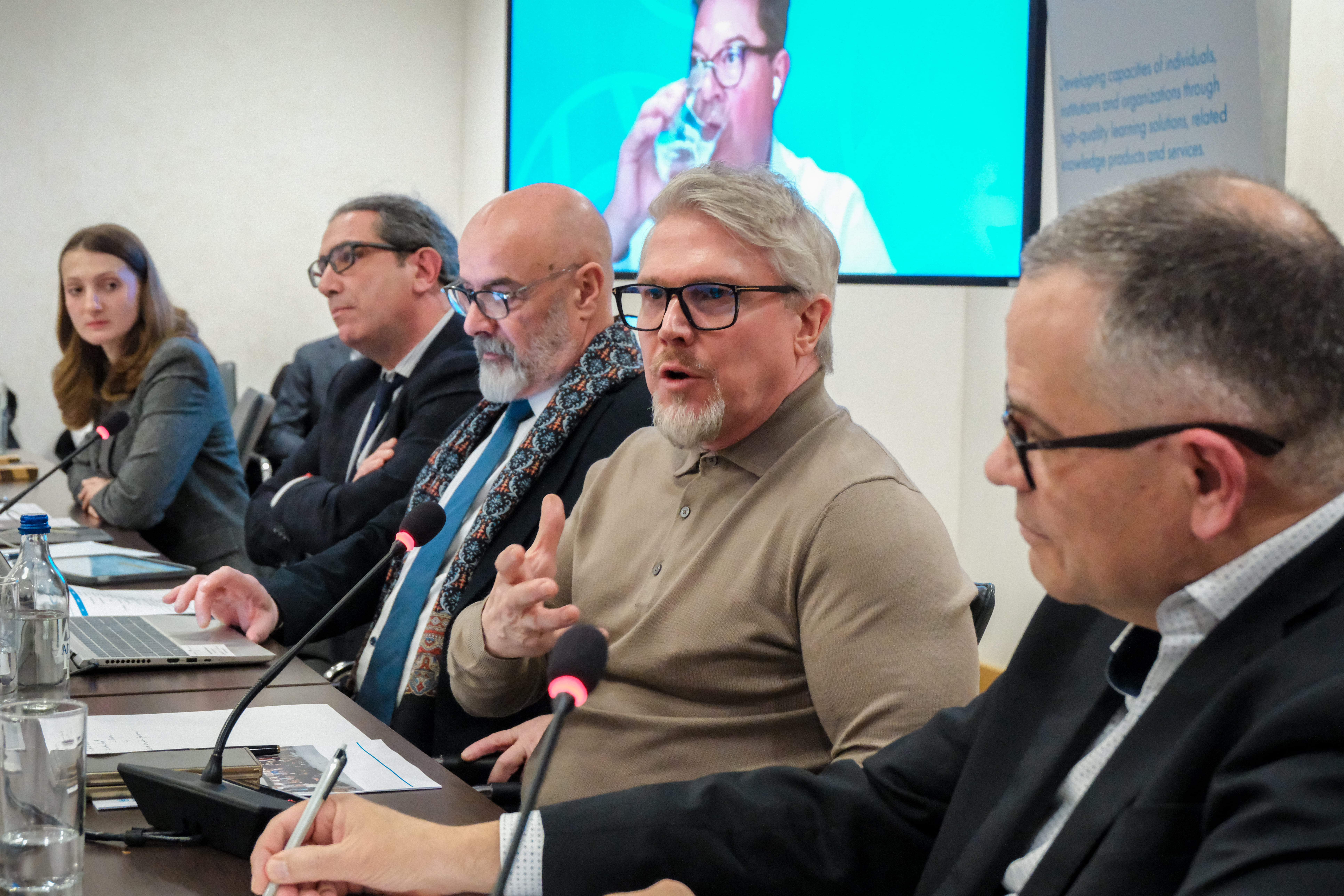
The programme further benefited from UNITAR’s established partnerships in the international sport ecosystem, including memoranda of understanding signed with the International Boxing Association (IBA) and the International Canoe Federation (ICF). Thanks to these partnerships, the programme featured a high-level roundtable discussion with prominent leaders such as Lluis Rabaneda Caselles, Vice-President of ICF, Chris Roberts, Secretary-General and Chief Executive Officer of IBA, Anna Utkina, Director of Development at IBA, André Vögtlin, Chairman of the Social Commission of the International Chess Federation (FIDE), and Jens Holm, Chief Executive Officer of the International Masters Games Association (IMGA), providing valuable reflections on leadership challenges and practices in international sport through practical, real-world perspectives.
In addition, the programme built on the ongoing engagement between UNITAR and the Centre for Sport and Human Rights (CSHR), whose Advisory Council UNITAR joined one year ago. CSHR delivered a dedicated seminar on the role of key international human rights frameworks, such as the UN Guiding Principles on Business and Human Rights (UNGPs), in the sports ecosystem and how to adopt a responsible sport approach.
Participation and outcomes
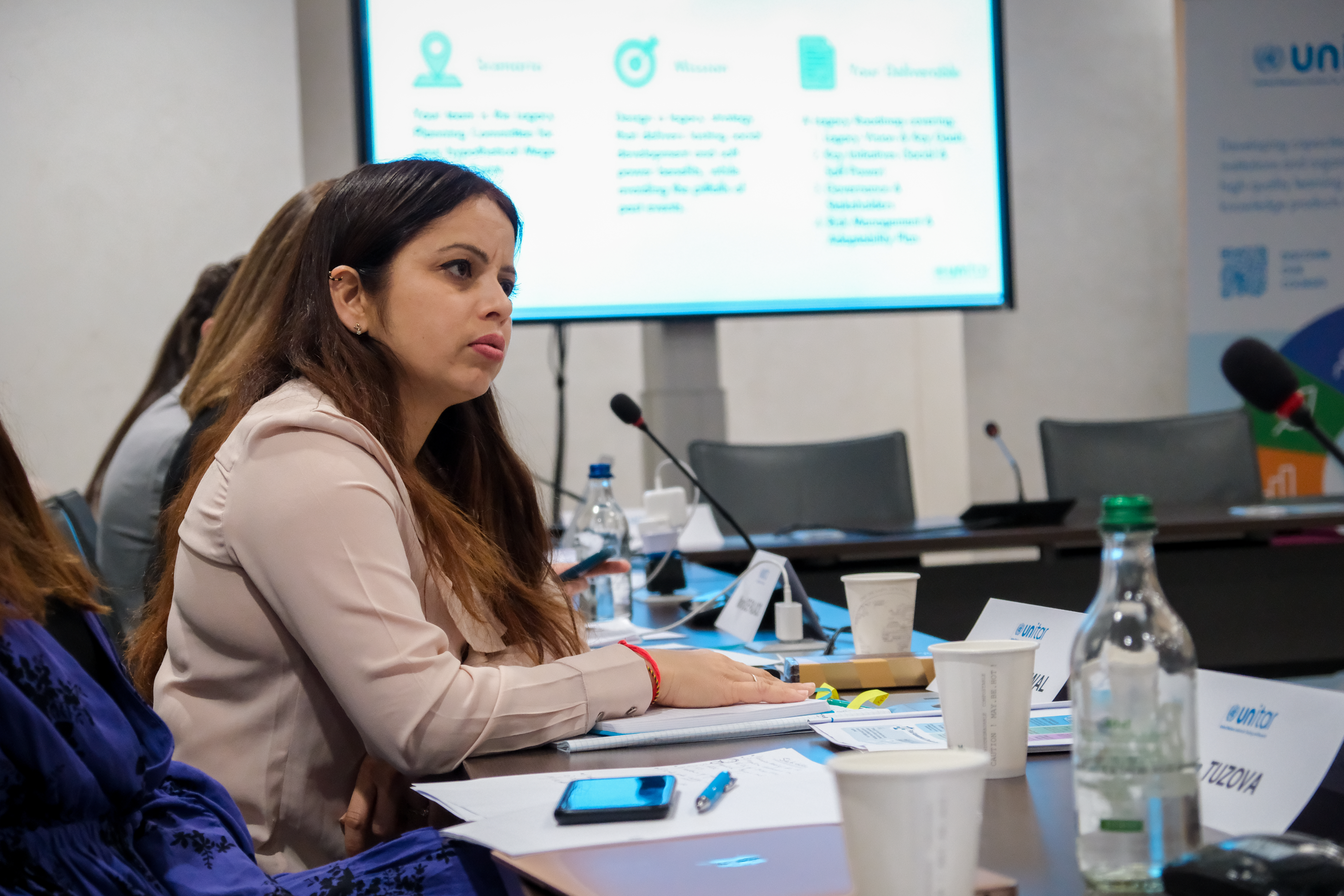
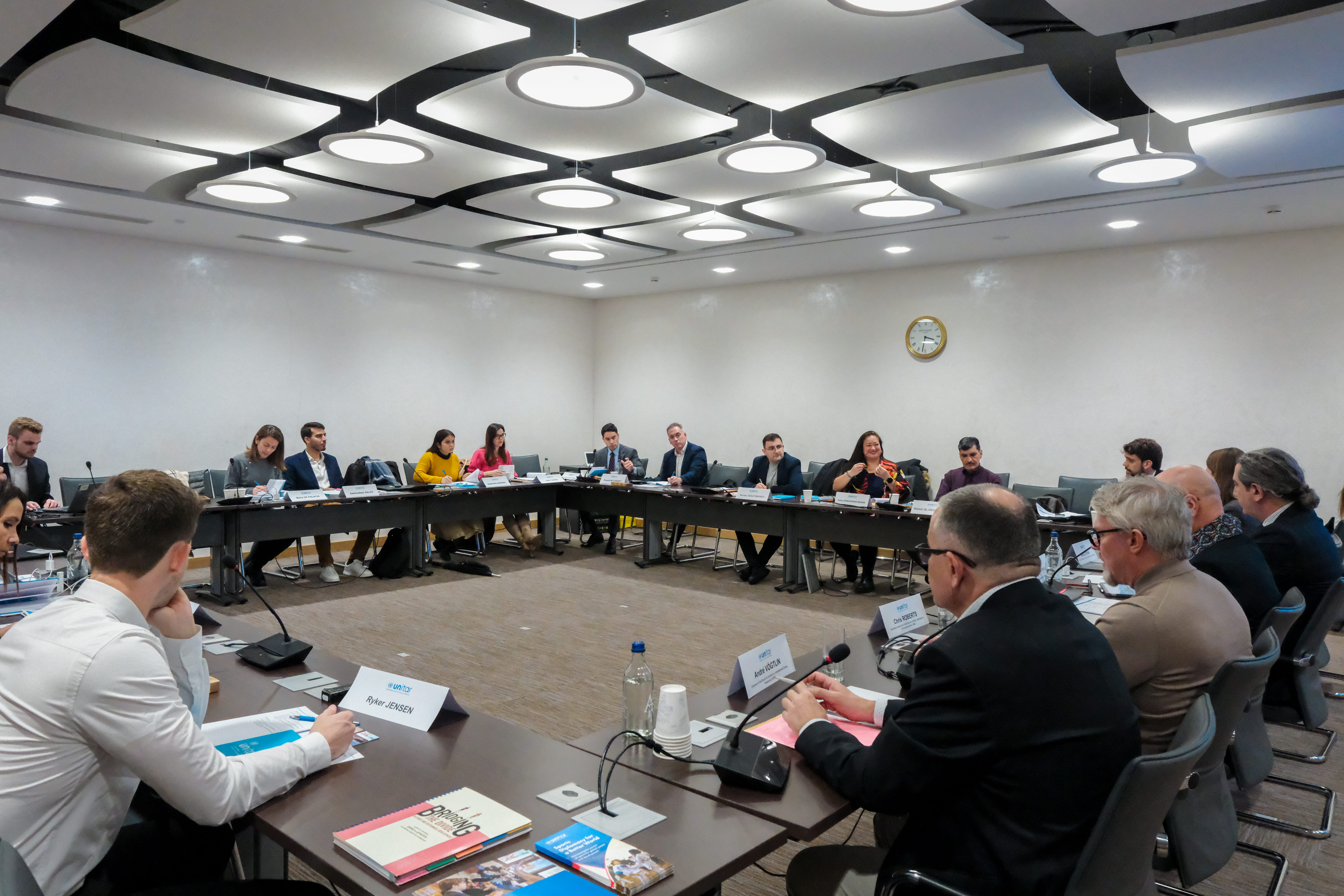
Participants came from a wide range of professional backgrounds, including national and international sporting federations, government institutions, academia, the private sector, United Nations agencies and civil society organisations. They represented over 10 countries, including the United States, India, Spain, Saudi Arabia, Egypt, Australia and Colombia, as well as a broad range of career stages, from junior- to senior-level professionals, reflecting the truly international character of the programme.
After rigorous simulations and group exercises, participants designed roadmaps for delivering mega sporting events that maximise their long-term soft power benefits, after which all participants were awarded an Executive Diploma in Sports Diplomacy. Programme evaluation results indicated that 100 per cent of participants found the Executive Diploma to be very useful and would recommend it to their colleagues, while over 90 per cent stated that the programme content significantly expanded their existing knowledge base on the topic.