

The Programme
Canva
UNITAR supports governments and regional organisations worldwide in strengthening maritime security, maritime governance and sustainable ocean management through capacity development, innovation and strategic partnerships.
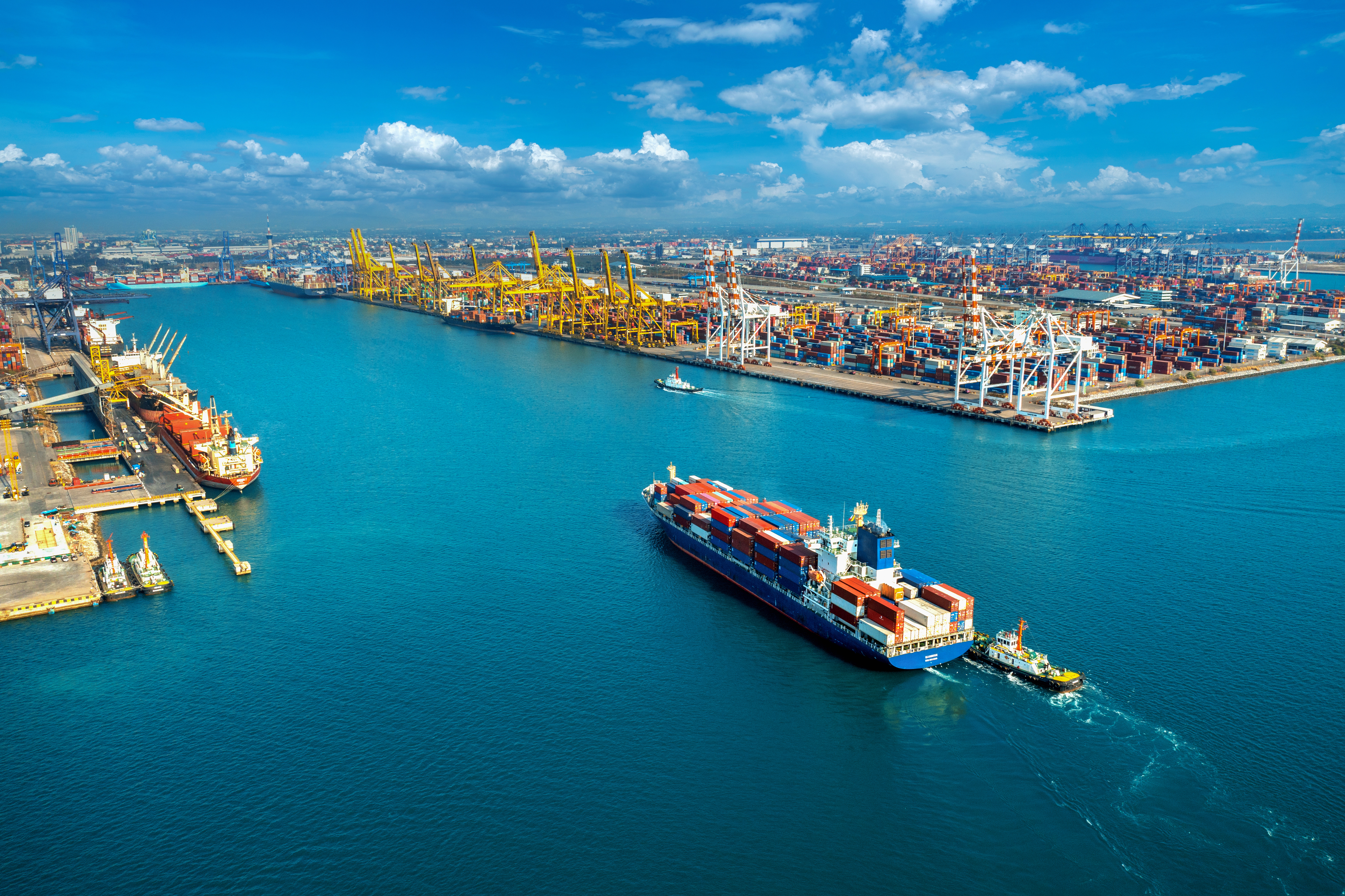
Maritime spaces are central to global stability, economic prosperity and sustainable development. More than 80% of global trade is transported by sea, while oceans provide essential ecosystem services and support the livelihoods of billions of people worldwide.
At the same time, maritime domains are increasingly affected by complex and interconnected challenges. These include illegal, unreported and unregulated (IUU) fishing, maritime crime and trafficking, marine pollution and environmental degradation, and disruptions to maritime navigation systems and critical maritime infrastructure. Emerging technological risks, such as interference with navigation systems and digital maritime infrastructure, further underline the importance of effective maritime governance and maritime security.
UNITAR’s Global Maritime Security Programme supports governments, regional organisations and international partners in strengthening maritime governance systems, improving maritime security capacities and advancing sustainable ocean management. Through training, applied research and strategic partnerships, the programme contributes to strengthening the institutional frameworks and professional competencies required to address evolving maritime challenges.
Strategic Alignment
The Global Maritime Security Programme is aligned with the UNITAR Strategic Framework 2026–2029, which focuses on strengthening individual and institutional capacities to advance peace, security and sustainable development.
The programme contributes to these objectives by empowering maritime professionals, strengthening governance systems and supporting sustainable learning ecosystems through partnerships with maritime academies, universities and regional training institutions.
The programme also supports the priorities of the United Nations Pact for the Future, which emphasises strengthened multilateral cooperation, improved global governance and enhanced international capacity development to address emerging global challenges.
Maritime governance is closely linked to the implementation of several Sustainable Development Goals, particularly SDG 14 (Life Below Water) and SDG 16 (Peace, Justice and Strong Institutions). Strengthening maritime governance systems, promoting the rule of law at sea and protecting marine ecosystems are therefore key elements of sustainable development and international stability.
Programme Areas
1. Maritime Security and Governance
UNITAR supports governments and maritime institutions in strengthening governance frameworks and operational capacities to address maritime security challenges. Training programmes target maritime administrations, coast guards, navies, maritime law-enforcement agencies and policymakers involved in maritime governance and international cooperation.
Activities focus on strengthening maritime law enforcement capacities, improving inter-agency coordination and supporting the implementation of international maritime conventions and governance frameworks.
2. Maritime Domain Awareness and Technology
Effective maritime governance increasingly relies on advanced monitoring systems and data-driven decision-making. UNITAR supports partner countries in strengthening capacities related to maritime domain awareness (MDA) through the use of satellite technologies, geospatial analysis and digital maritime monitoring systems.
These tools support maritime authorities and naval forces in monitoring maritime activities, strengthening maritime domain awareness systems (MDS) and improving operational decision-making in response to maritime security challenges.
3. Ports, Shipping and Maritime Infrastructure
Ports and maritime infrastructure are essential components of global trade and economic development. UNITAR supports port authorities and maritime operators through training initiatives focusing on maritime safety, port security and risk management.
These activities contribute to strengthening the resilience of maritime transport systems and protecting critical maritime infrastructure supporting global supply chains.
4. Blue Economy and Ocean Governance
UNITAR supports countries in promoting sustainable ocean-based economic development while safeguarding marine ecosystems. Capacity development initiatives address marine resource governance, sustainable fisheries management and environmental protection.
These activities contribute directly to the implementation of Sustainable Development Goal 14: Life Below Water, promoting responsible ocean governance and sustainable maritime development.
Flagship Programmes and Initiatives
UNITAR’s maritime activities are implemented through several regional and global initiatives developed in partnership with governments, international organisations and regional institutions.
Safe Seas Programme – Gulf of Guinea
The Safe Seas Programme (SO3), implemented in partnership with the European Union, aims to enhance maritime security and safety in the Gulf of Guinea. The programme focuses on strengthening the capacities and capabilities of national and regional maritime security centres and improving cooperation between maritime institutions.
Through targeted training, institutional support and technology-enabled learning initiatives, the programme contributes to strengthening maritime security governance and improving regional coordination across the region.
Maritime Surveillance Institute – Côte d’Ivoire
UNITAR supports the Institut de sécurité maritime interrégional (ISMI) of the Académie Régionale des Sciences et Techniques de la Mer (ARSTM) in Abidjan through the development of a Maritime Surveillance Institute aimed at strengthening maritime security capacities of Gulf of Guinea states.
The initiative focuses on enhancing maritime monitoring and operational capabilities through the use of information and communication technologies (ICT) and innovative surveillance tools, including unmanned aerial systems and data-driven maritime monitoring solutions. These capabilities support maritime authorities in strengthening maritime domain awareness and responding more effectively to maritime security threats.
In addition to strengthening maritime security, the initiative promotes sustainable economic development linked to the blue economy, while maintaining an exclusively civilian and non-military approach to maritime security challenges.
Indo-Pacific Maritime Security Programme
In Southeast Asia, UNITAR contributes to strengthening maritime security and resilience through programmes focused on improved governance, strengthened operational capacities and the responsible use of advanced analytics.
The programme contributes to protecting global trade routes, supporting efforts to counter piracy and IUU fishing, strengthening environmental monitoring and maritime domain awareness, and reinforcing ASEAN-led cooperation and a rules-based maritime order in the Indo-Pacific.
East Africa Maritime Security – Djibouti Code of Conduct
UNITAR supports East African coastal states and regional maritime stakeholders in strengthening maritime security capacities in line with the Djibouti Code of Conduct (DCoC) framework.
Activities focus on improving maritime surveillance, strengthening counter-piracy and maritime crime response capacities and supporting the development of legal frameworks aligned with regional maritime security cooperation mechanisms.
Our Approach
UNITAR’s Global Maritime Security Programme combines training, applied research, digital innovation and strategic partnerships to support sustainable maritime capacity development.
Training programmes equip maritime professionals with practical skills required to address evolving maritime governance and security challenges. These initiatives support maritime administrations, coast guards, naval forces, port authorities and policymakers through tailored learning programmes.
A key feature of UNITAR’s approach is the integration of training and applied research, ensuring that operational learning is informed by evidence-based analysis and policy dialogue.
UNITAR also places strong emphasis on gender equality and inclusive participation, supporting the participation of women in maritime governance and maritime security institutions through gender-responsive training and leadership initiatives.
Through partnerships with governments, regional and international organisations, such as IMO, UNODC and UNOCT, universities and maritime training institutions, UNITAR contributes to the development of sustainable learning ecosystems capable of delivering long-term maritime governance training and knowledge exchange.
Outlook
Strengthening maritime governance capacities is essential for addressing global challenges affecting oceans, trade and international stability.
Through its Global Maritime Security Programme, UNITAR aims to serve as a trusted partner for governments, regional organisations and international institutions working to advance maritime security, sustainable ocean governance and international cooperation.
CONTACT
UNITA's Division for Peace Project Office: brussels@unitar.org