

- Mriganika Singh Tanwar, a Research Analyst from India, based in Singapore, studied International Relations and now focuses on how strategic technologies interact with climate risks and social realities.
- She completed the 2024 Leaders for a Free and Open Indo-Pacific: Sea and Human Security Training Programme.
- In the UNITAR programme, Mriganika learned that climate and security are deeply connected, climate change is gendered, and that community voices must shape solutions.
- She is now researching small island state sovereignty and developing a platform to document indigenous climate knowledge in South Asia.
UNITAR
21 January 2026, Hiroshima, Japan - When Mriganika Singh Tanwar from India saw the flyer for UNITAR’s 2024 Sea and Human Security Training Programme, she had just completed her master’s degree in International Relations at Nanyang Technological University, Singapore. At the time, her focus was on international security and strategic technologies. “I found it … fascinating how [this] diverse region – tied by culture, economy, geography and demography – is also connected by two sets of common challenges: sea and human security,” she says.
That curiosity led her to apply for the UNITAR programme, which reshaped her academic and professional trajectory. Today, Mriganika is a Research Analyst at the Institute of South Asian Studies at National University of Singapore, where she examines how strategic technologies – artificial intelligence, digital infrastructure, cybersecurity, fintech, and space technologies– interact with social realities and climate risks.
The UNITAR Experience, Step by Step
The UNITAR Leaders for a Free and Open Indo-Pacific: Sea and Human Security training programme aimed to provide participants with the skills and knowledge to enhance climate, social, economic, food and maritime security and to establish a coordination mechanism across the Indo-Pacific. It was implemented by UNITAR from June 2024 to February 2025 and funded by the Government and People of Japan.
The programme was run in three incrementally competitive phases, and Mriganika was among the learners who progressed through all three. In the first phase, in which over 400 learners completed two months of online learning, Mriganika was exposed for the first time to the cross-cutting nature of climate and security.
“Climate will reshape how we see conflict.” —Mriganika Singh Tanwar, research analyst and UNITAR alumna, India and Singapore
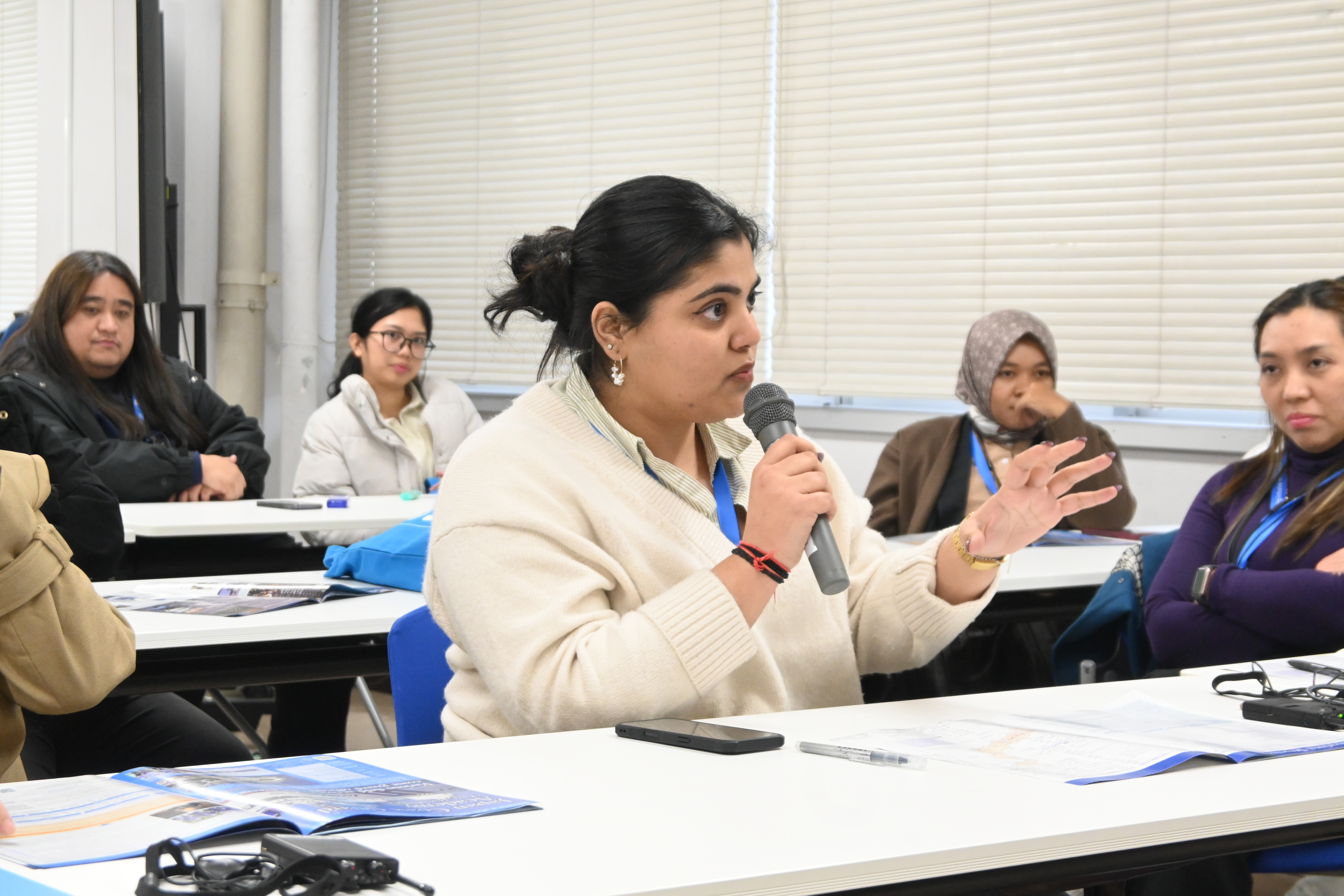
Advancing to the second phase, an in-person workshop in Jakarta for participants from Asia (a parallel workshop was held in Fiji for Pacific participants), she further gained a gendered understanding of climate change. She says that, for the first time, she understood how climate is gendered and that this understanding will inform her research.
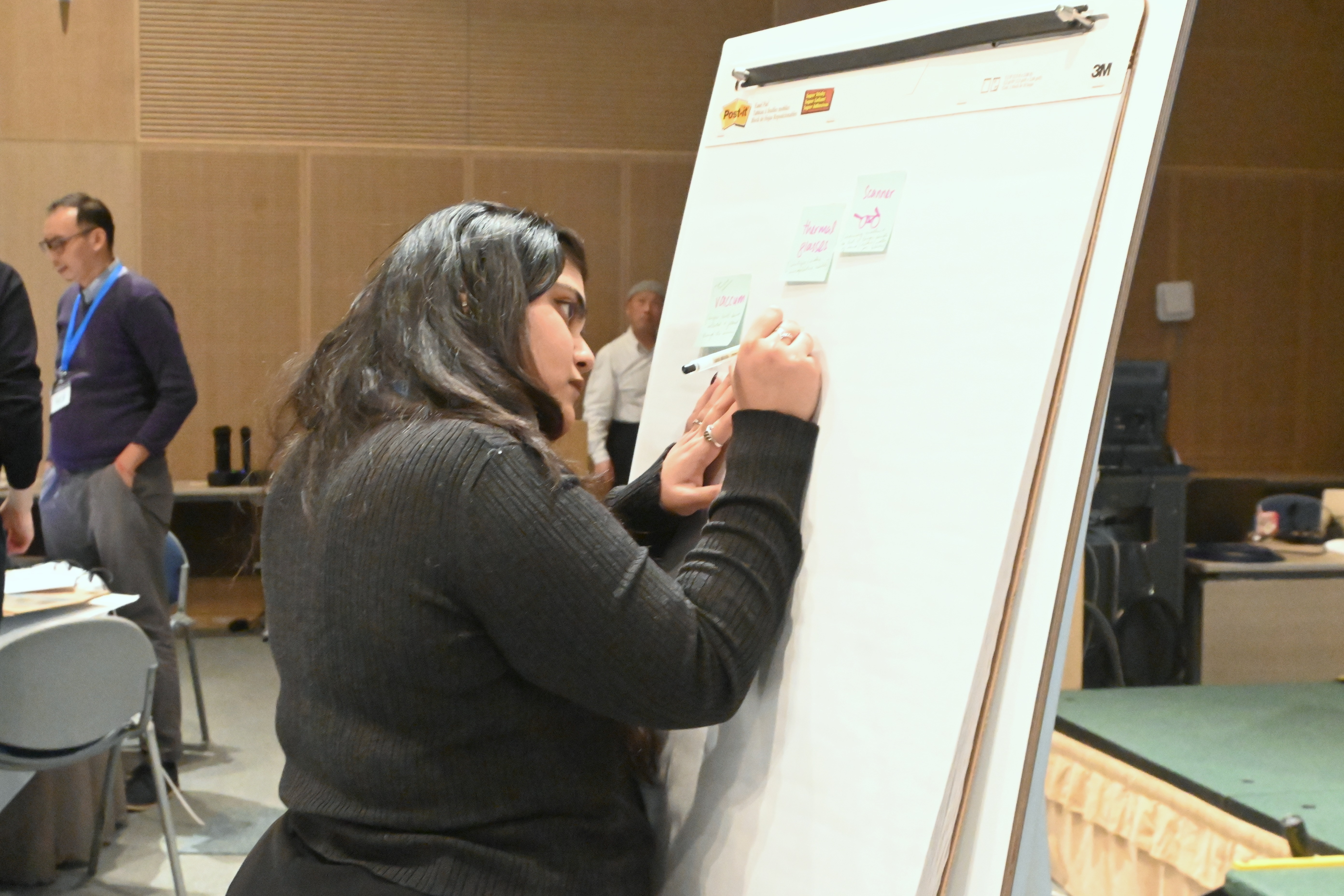
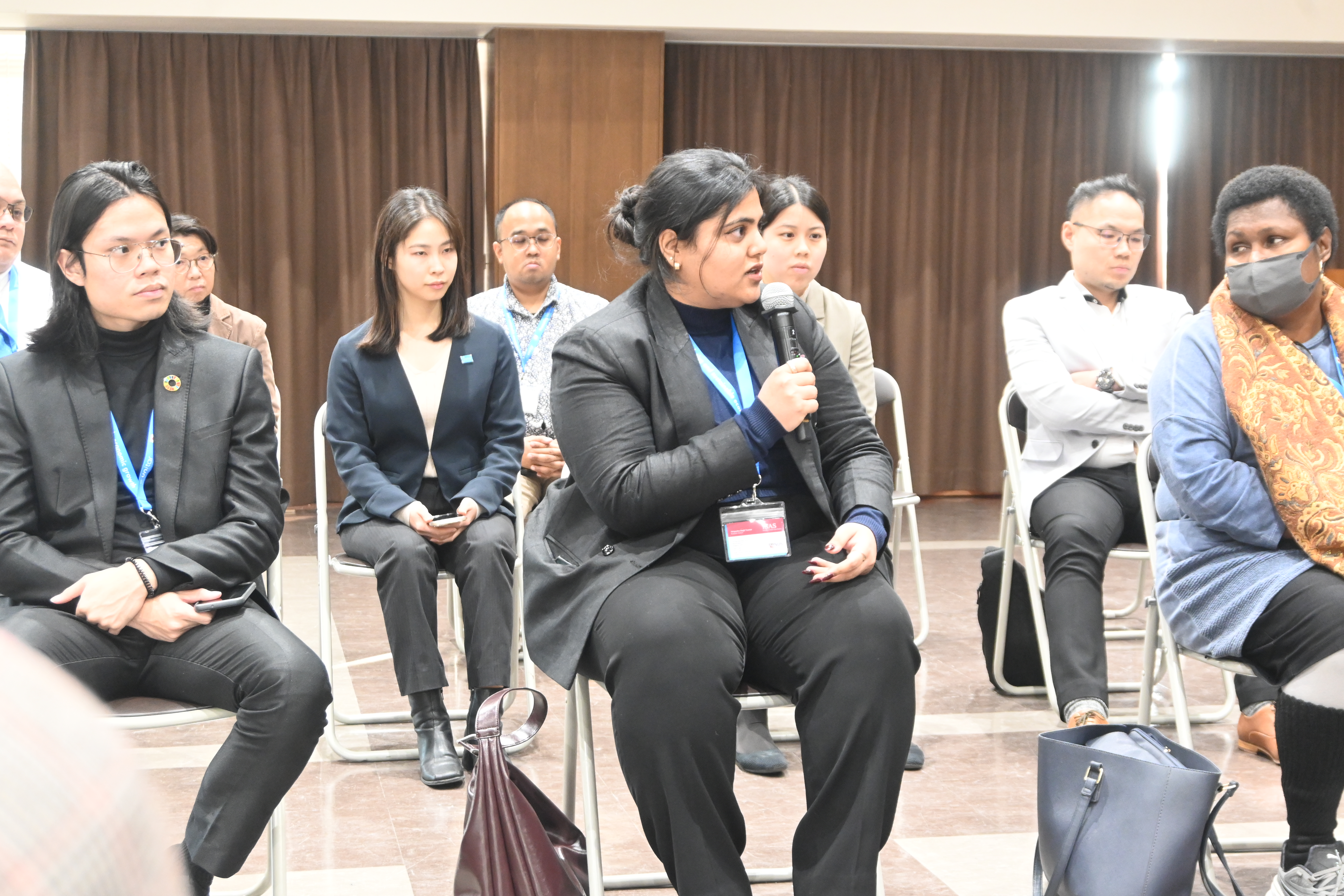
Mriganika was selected for the final phase in Japan along with around 50 other top learners from Asia and the Pacific. Meeting her Pacific counterparts was memorable: recognizing that the Pacific Islands are in the midst of slow-onset disasters, Mriganika found her peers’ calm, collective approach “inspiring”.
UNITAR
UNITAR
Linking Technology and Society
Mriganika recognizes that disasters, wars and conflicts could derail digital transformation and reverse progress for vulnerable communities. “A disaster [can] cut communities off from the rest of the world. For regions striving for digital transformation, even small-scale climate impacts can put them at a disadvantage,” she points out.
Communities need to be central in any response to climate change and security. Mriganika points out how the floodgates and seawalls she visited in Japan integrate community perspectives into disaster management. “It showed how engineered solutions must go hand-in-hand with community acceptance. That’s something South Asian countries can learn from,” she says.
From Insights to Action: India and the Indo-Pacific
Motivated by the UNITAR programme, Mriganika is conducting a study on the sovereignty of small island nations such as Tuvalu. Kiribati, and the Maldives. The study analyses whether international law adequately addresses climate-driven threats to such nations’ statehood.
With her peers, she is also developing Folkway, a digital repository to document indigenous communities’ knowledge, cultural behaviour and sustainable practices in India. “India faces multi-risk disasters – tsunamis, droughts, earthquakes, avalanches. Yet we lack systematic documentation of indigenous knowledge. That gap inspired me to create Folkway,” she says.
She plans to expand her research on the nexus of technology, climate and human security while promoting Folkway and partnering with local experts and NGOs to amplify community voices.
“Even Small Efforts Can Create Lasting Change”
Mriganika expressed deep gratitude to UNITAR and the Government of Japan for preparing her to see conflicts and security through a broader and nuanced lens. She keeps her UNITAR water bottle at her workplace so that each time someone asks about it, she can tell them about the programme and the lessons she learned. Such programmes, she believes, push researchers out of their comfort zones and show them that what they write can influence communities.
To those who may feel powerless against global challenges, she had these words to offer:
“It doesn’t [matter] where you come from or what opportunities you get. Passion speaks louder. Even small efforts, impacting just two people, can create change that passes on for generations.” —Mriganika Singh Tanwar, research analyst and UNITAR alumna, India and Singapore
UN Volunteer Monica Sareen contributed to this article.
About
The United Nations Institute for Training and Research (UNITAR) is a dedicated training arm of the United Nations. In 2024, UNITAR trained approximately 550,000 learners around the world to support their actions for a better future. UNITAR has a global presence, with offices in Geneva, Hiroshima, New York and Bonn and networks around the world. Find out more at unitar.org