

- Jinto Kanazawa, a high school student living in Hiroshima, completed the 2025 UNITAR SDGs and Digital Futures: Changemaking Through AI and Digital Storytelling programme.
- Jinto learned how AI and digital tools can be used in thoughtful ways to create and are stories connected to peace and the SDGs.
- He used what he learned to produce a ten-minute digital story about his great-grandmother, a hibakusha, to help ensure her experience is not forgotten.
UNITAR
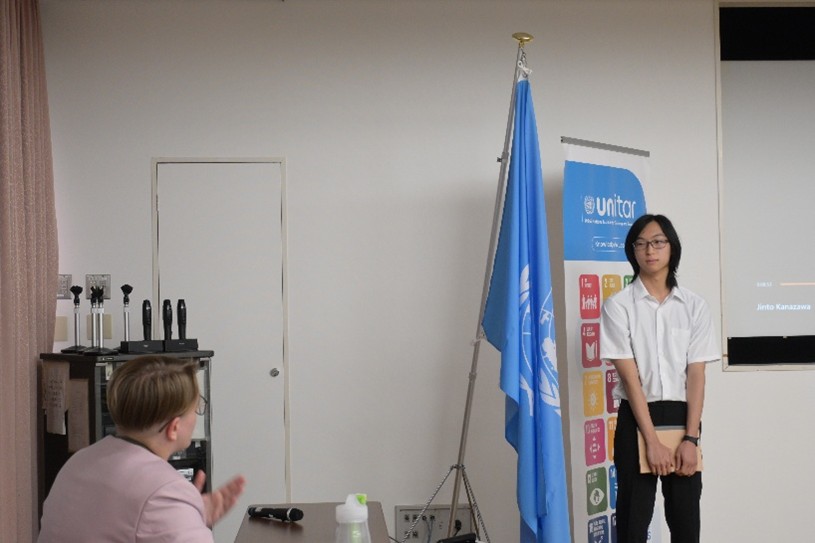
22 January 2026, Hiroshima, Japan - Jinto Kanazawa is a high school student in Hiroshima. In 2025, he joined the United Nations Institute for Training and Research (UNITAR) “SDGs and Digital Futures: Changemaking Through AI and Digital Storytelling” where he learned how digital tools can be used to share personal stories connected to peace and the Sustainable Development Goals (SDGs).
Jinto’s great-grandmother is a hibakusha (atomic bombing survivor) who never shared her experience publicly. Jinto joined the UNITAR programme because he wanted to make sure her experience would not disappear with time. He was intrigued how digital storytelling might help him share his great-grandmother’s story.
She’s been holding onto that for quite a while and … never told anyone, aside from our family. I thought it’s good for me to share her story so that what she experienced wouldn’t be forgotten.” – Jinto Kanazawa, UNITAR Training Participant, Japan
The UNITAR SDGs and Digital Futures: Changemaking Through AI and Digital Storytelling programme brought together young people from Asia and Hiroshima to learn how to use AI and digital tools to tell stories that advance the SDGs. Organized to commemorate 80 years since the atomic bombing, the programme took place between June and November 2025, funded by City of Hiroshima and Hiroshima Prefectural Government. It combined online learning with a study tour in Hiroshima, and participants developed individual digital storytelling projects that they presented in a public workshop in November.
From “AI Slop” to Meaningful Content Creation Using Digital Tools
UNITAR
Initially, Jinto’s impression of AI and how people use it was negative. He saw that much on social media was “AI slop” – lazy content made with AI. But the UNITAR programme changed his mind as he learned how AI could support storytelling in more thoughtful ways.
One session that stood out for him was the session by AI filmmaker Alan Xiao. Jinto knew that people could make images or videos based on text prompts, but he had never realised AI could create such high-quality, cinematic content. It showed him how AI could be used as a creative tool rather than a shortcut.
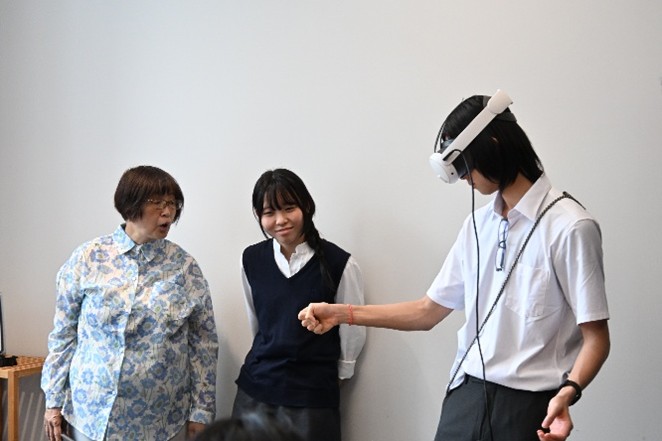
The UNITAR programme also showed him the power of digital tools. In the session offered in collaboration with Microsoft Japan Co., Ltd., for example, participants used Minecraft Education to recreate buildings in Hiroshima from before the atomic bombing. Jinto found it an effective way to understand how life was back then and was surprised that Minecraft could be used as an educational tool, not just a game.
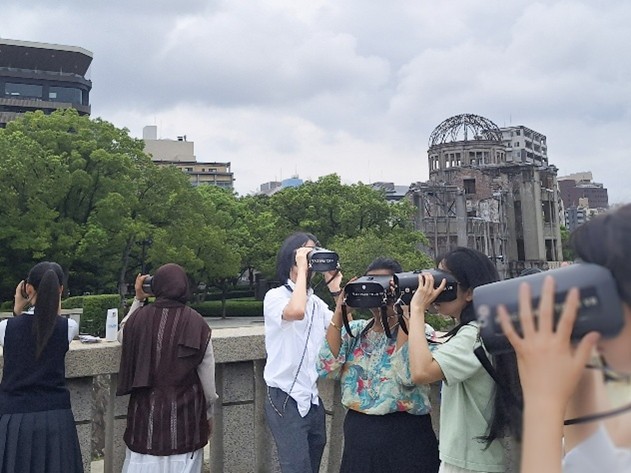
Another memorable activity was the virtual reality (VR) tour around the Hiroshima Peace Memorial Park. Jinto was already familiar with the displays, photographs and artefacts at the Peace Memorial Museum, but experiencing the history of the atomic bombing through VR felt different. Being placed inside the re-created environment made the events more immediate to him, rather than something observed from a distance.
Normally in the Peace Memorial Museum, we would see pictures and artefacts …. It’s a good way to show what happened but sometimes … people wouldn’t really feel attached to it … since there’s nothing connecting them. When they used VR, we were put in that scenario and we could see … what happened.”
Bringing His Great-Grandmother’s Story to Life
UNITAR
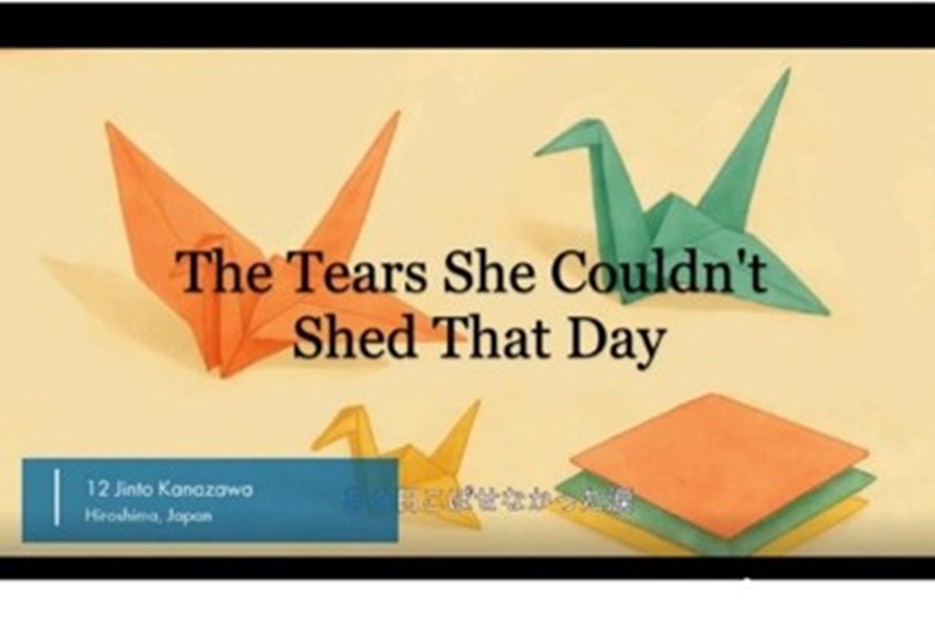
These experiences influenced Jinto’s final storytelling project, a ten-minute video focusing on his great-grandmother’s life during and after the atomic bombing. He centred the video on memory and on how she continued her life while carrying those experiences with her.
To produce the video, Jinto used the digital tools he learned about in the UNITAR programme to generate visuals, select music and create AI-generated audio. It was not a simple process. AI-generated visuals could be inconsistent and finding the right emotional tone for the music and narration also required careful thought.
Feedback from teachers and family members confirmed that the message of the video came through. People said they enjoyed the video, and one of his teachers said they almost cried.
Discovering Hidden Stories and Perspectives
UNITAR
The UNITAR digital storytelling programme introduced other new perspectives to Jinto. Meeting participants from other countries and listening to their stories introduced him to issues and situations he had never encountered before. And a visit with the Green Legacy Hiroshima initiative taught him that the familiar trees in the local landscape were grown from saplings that survived the atomic bombing. Until then, he had seen them simply as part of the landscape. Learning their history made him realize how much meaning was embedded in everyday places.
Looking ahead, Jinto hopes to pursue a career in global issues and peace. He wants to continue learning about the challenges people face in different parts of the world. Digital storytelling is a tool he could use to connect personal memory with wider conversations about peace.
My great-grandmother’s story is one among many, but understanding these personal experiences is an important way to recognize the costs of wars and conflict. I hope my project can encourage people to value peace and think about why it matters.”
About UNITAR
The United Nations Institute for Training and Research (UNITAR) is a dedicated training arm of the United Nations. In 2024, UNITAR trained approximately 550,000 learners around the world to support their actions for a better future. UNITAR has a global presence, with offices in Geneva, Hiroshima, New York and Bonn and networks around the world. Find out more at unitar.org