

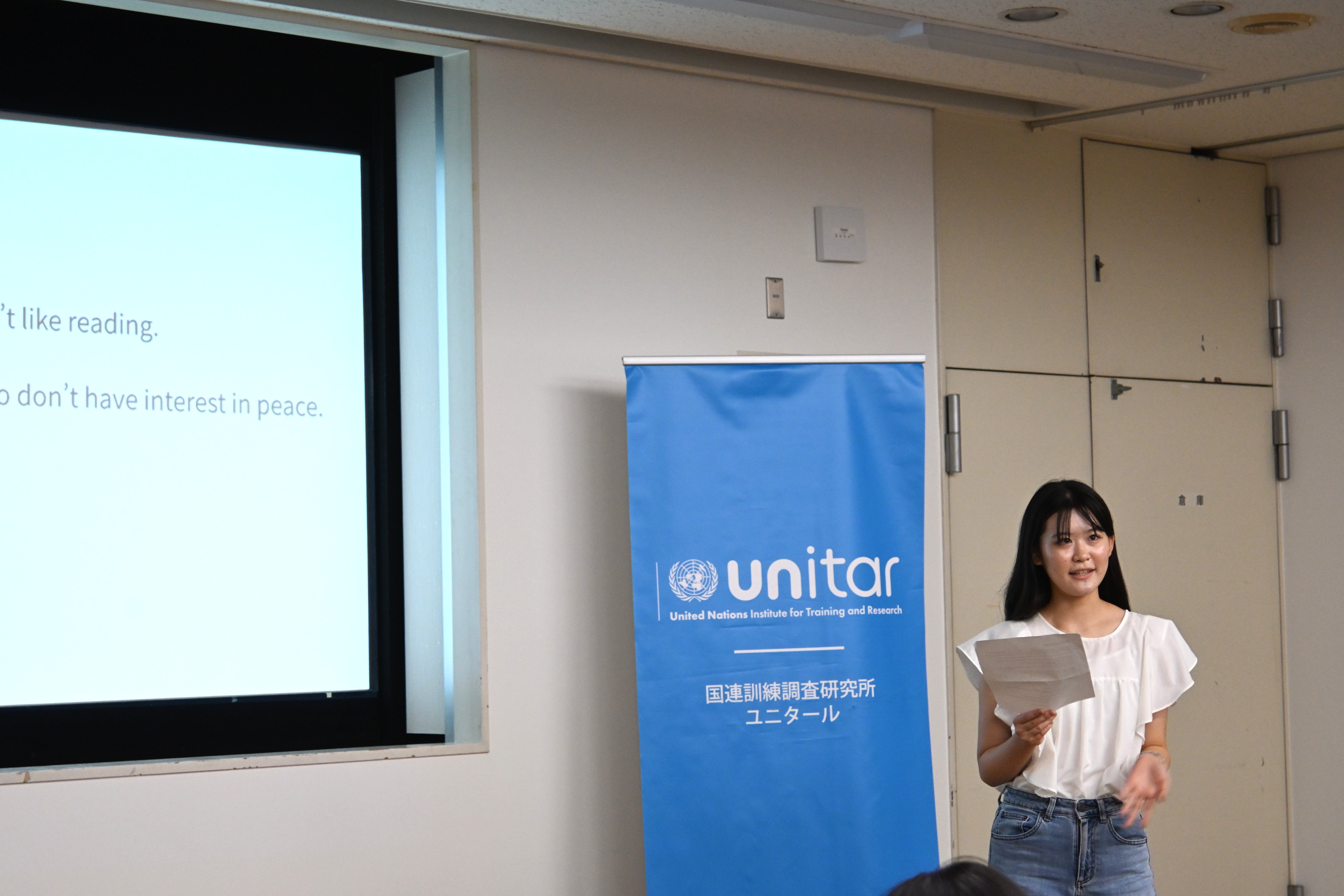
- Nodoka Dekihara is a high school student in Hiroshima. She participated in the UNITAR “SDGs and the Digital Future: Driving Transformation through AI and Digital Storytelling” training programme in 2025.
- Nodoka wants to convey to a global audience the experiences of the atomic bombing in an accurate and easy-to-understand way.
- For her storytelling project, Nodoka created a digital picture book, using AI to generate illustrations based on real before-and-after photos.
UNITAR
14 January 2026, Hiroshima, Japan - Hiroshima high school student Nodoka Dekihara learned from an early age about the history of the atomic bombing and peace. As her interest in the wider world deepened through studying abroad and international exchanges, she joined a UNITAR digital storytelling training programme to explore new possibilities for communicating messages of peace.
Realizing Sharing the Atomic Bomb Experience with the World
UNITAR
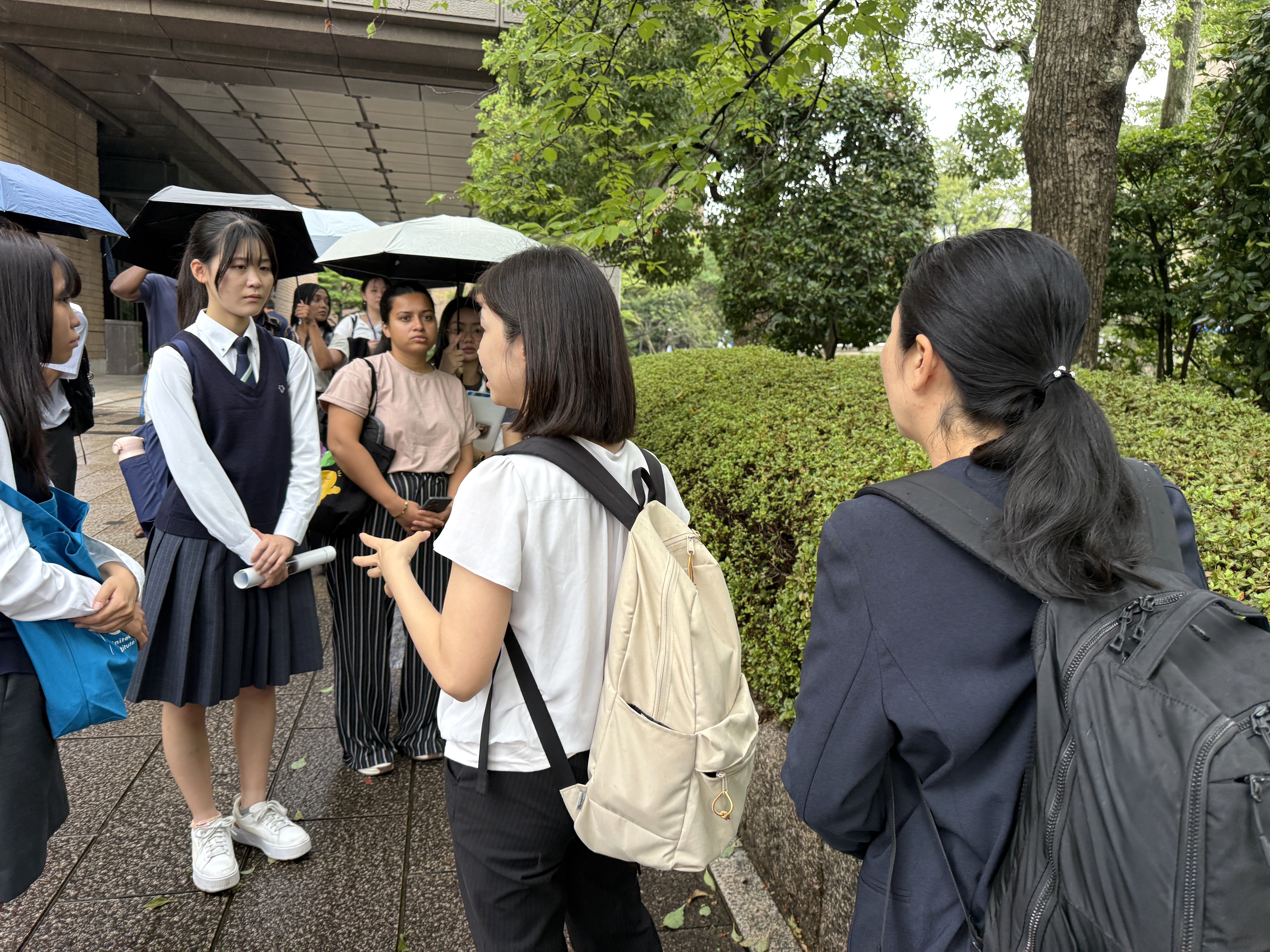
Born and raised in Hiroshima, Nodoka has been learning about the atomic bomb and peace since elementary school. But when she went to the US for a homestay programme, she was shocked to discover that many young people her age knew nothing beyond the basic fact that an atomic bomb was dropped on Hiroshima. This discovery turned it into a personal challenge to widely convey the atomic bombing experience.
To reduce nuclear weapons worldwide, people need to understand concretely what really happened.” – Nodoka Dekihara, high school student and UNITAR training participant (Japan)
As Nodoka contemplated how she might effectively tell the story of what actually happened in Hiroshima, she encountered the UNITAR training programme “SDGs and the Digital Future: Driving Transformation through AI and Digital Storytelling”. Organized with the support of Hiroshima Prefecture and Hiroshima City, the programme sought to train young people, aged 15 to 28, from Asia and Hiroshima to use artificial intelligence (AI) and storytelling in advancing the Sustainable Development Goals (SDGs). It was implemented as part of the 80th anniversary of the atomic bombing. From June to November 2025, the young people joined online sessions and in-person training in Hiroshima and developed individual storytelling projects, which they presented at the culmination of the programme.
Nodoka found the lectures by experts particularly inspiring. For example, AI film director Alex Xiao taught her practical tips on how to give prompts to generate the images that she wants, what perspectives to emphasize and how to adjust composition and scale. Another lecture by Microsoft Japan introduced her to Minecraft as a learning tool for children, reinforcing her determination to make the first step into learning feel light and accessible.
Creating a Digital Picture Book to Convey the Atomic Bomb Realities
UNITAR
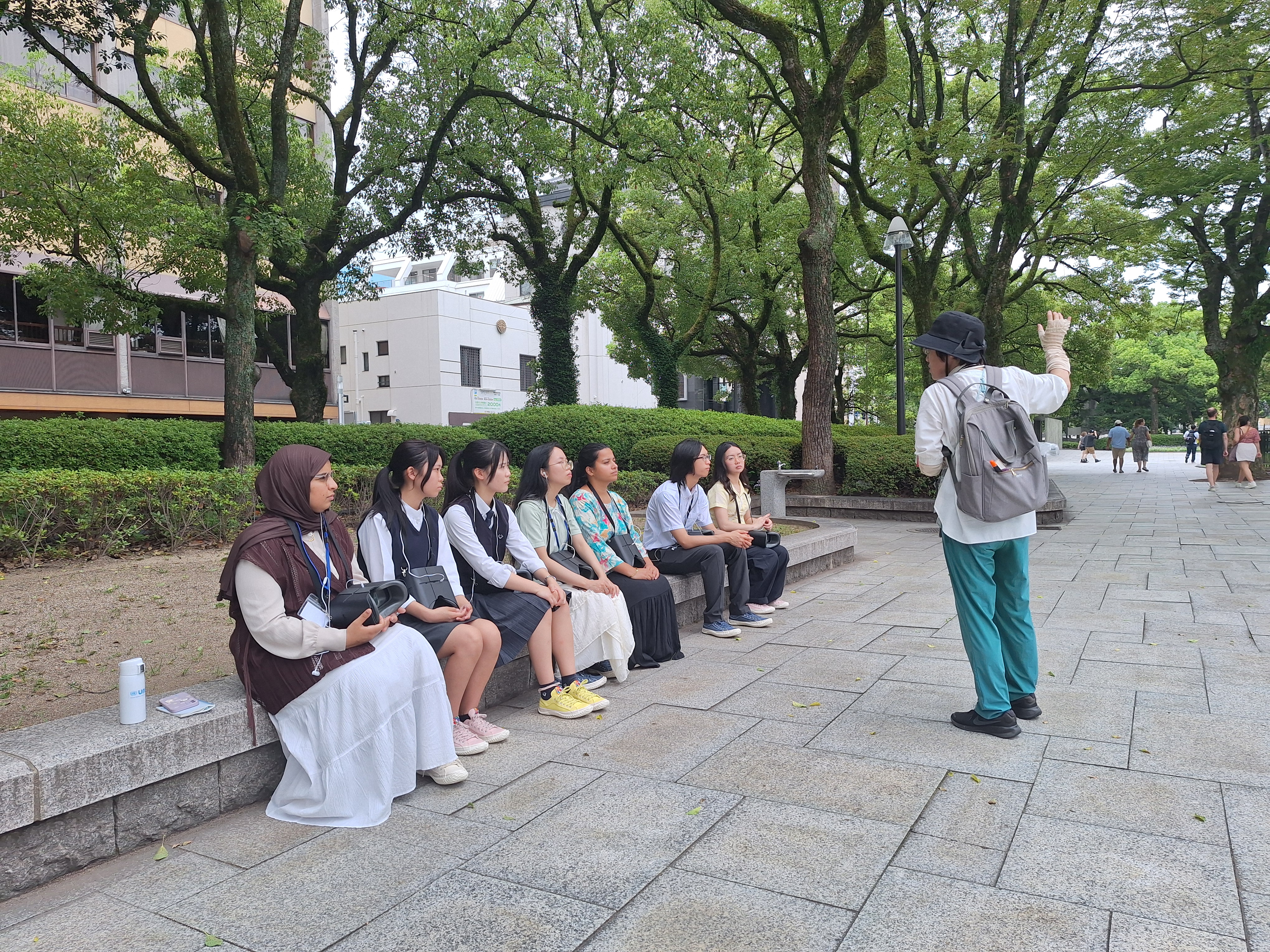
For her storytelling project, Nodoka created a digital picture book with Hiroshima Peace Memorial Park as its setting. Through the book, she wants to tell an accurate and clear story about the realities of the atomic bombing to people who may know little about it.
If people don’t first learn about the atomic bomb and begin thinking about it, global cooperation will never follow. As survivors age, it is our responsibility to learn and pass on accurate information and not turn away because it’s frightening. I decided to make a picture book to make the first step lighter.”
To convey the scale and horror of the atomic bomb, Nodoka used AI to generate images based on photos of Hiroshima before and after the bombing. At the same time, she paid careful attention to creating gentle, approachable illustrations that might encourage those unfamiliar with or uninterested in the topic to open the book in the first place.
Since completing the project, Nodoka has already been using the picture book. She also plans to refine it further based on feedback from acquaintances and international students.
Continuing to Learn About the World
Building on peace education at school, her interactions with people from overseas, and using her newly acquired AI skills, Nodoka transformed her ideas into a tangible picture book. But it’s just a first step.
Nodoka hopes to continue sharing stories about Hiroshima with a global audience, while also learning more about other countries and their histories.
I strongly felt how important it is to keep learning about what is happening in other countries and what kinds of histories they have.”
The UNITAR programme also taught Nodoka that AI technologies are not limited to specialized fields but are being used across a wide range of areas. Motivated by this discovery, she is determined to continue learning how to effectively use AI tools in the future.
About UNITAR
The United Nations Institute for Training and Research (UNITAR) is a dedicated training arm of the United Nations. In 2024, UNITAR trained approximately 550,000 learners around the world to support their actions for a better future. UNITAR has a global presence, with offices in Geneva, Hiroshima, New York and Bonn and networks around the world. Find out more at unitar.org