

- Mohseen Riaz-Ud-Dean is a UNDP programme analyst from Fiji. He learned the importance of disaster preparedness after experiencing Cyclone Kina as a child.
- In 2024, Mohseen joined the UNITAR Rapid Response to Climate Crises Through Early Warning Systems Training Programme, funded by Japan.
- Inspired by Japanese early warning solutions, Mohseen returned to Fiji with ideas for adapting them to Pacific contexts, a belief in strong, broad partnerships and in community-based disaster risk management.
- Mohseen hopes to bridge theory and real-world implementation towards a Pacific where every nation has early warning systems to anticipate disasters and act early.
UNITAR
8 December 2025, Hiroshima, Japan - When Mohseen Riaz-Ud-Dean was a child, Cyclone Kina swept across Fiji and flooded Mohseen’s home. He recalls:
My house was underwater, we had to relocate … [take] all the belongings we had with us to a higher level.
The experience taught him what it means to grow up in a vulnerable island nation and the importance of preparedness.
Today, Mohseen is a programme analyst with the Resilience and Climate Change Unit at the United Nations Development Programme (UNDP) Pacific Multi-Country Office in Fiji. His team supports 10 Pacific Island nations – Fiji, Kiribati, the Marshall Islands, Micronesia, Nauru, Palau, the Solomon Islands, Tonga, Tuvalu, and Vanuatu – to anticipate and withstand rising seas, stronger storms, and biodiversity loss. UNITAR’s early warning systems training programme helped raise his capacity to support Pacific countries in developing early warning systems.
Disaster Risk Reduction in the Pacific
Life in the Pacific Islands is increasingly shaped by rising sea levels, stronger cyclones, and floods. “We face an existential threat of climate change,” Mohseen says. While national disaster risk management offices, meteorological services, and communication ministries in these countries are developing early warning systems, ensuring that the warnings reach the most remote communities remains a challenge.
Disasters will not stop; they are becoming more frequent and intense. The only way forward is to build our resilience and be better prepared.
Long-term resilience, he says, requires not just technology but strong institutions and empowered people who understand the value of early action.
Learning with UNITAR about Early Warning Systems
Mohseen learned about the UNITAR 2024 Leave No One Behind: Rapid Response to Climate Crises Through Early Warning Systems Training Programme through a colleague’s social media post. Drawn to the programme’s combination of theory, practical application, and international collaboration, he joined around 200 participants from across the Pacific in the first online phase.
Funded by the Government and the People of Japan, the programme sought to train individuals and communities in Pacific Island countries so they can disseminate, monitor, and respond to early warning signals for climate-related hazards and extreme-weather events. It ran in two phases from July to November 2024.
In the first phase, the participants deepened their understanding of early warning systems, collaboration, and timely communication through an online learning platform and live webinars. Mohseen says he appreciated being able to complete the modules at his own pace and found the interactive mix of theory and real-world examples engaging and well-structured.
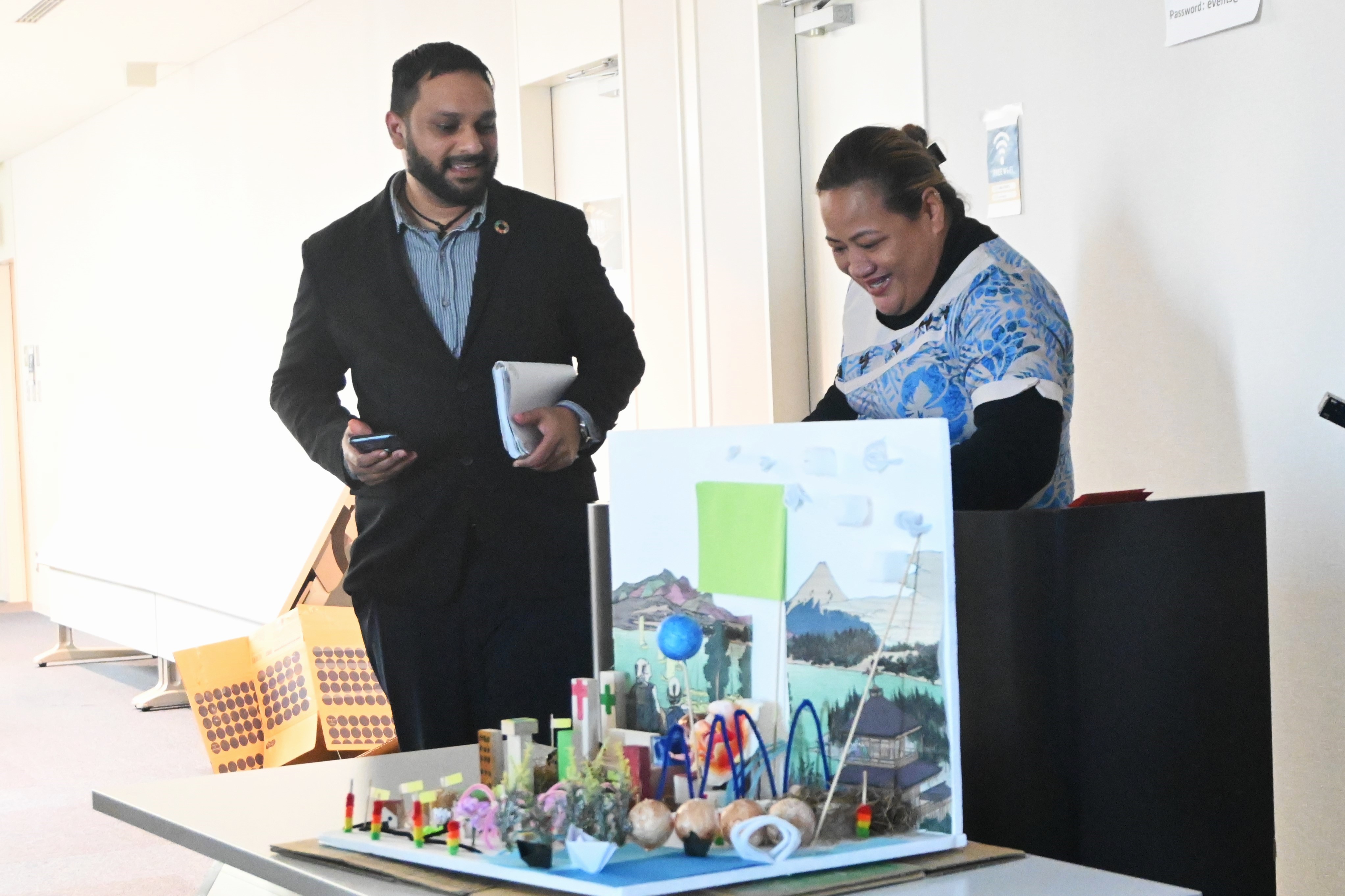
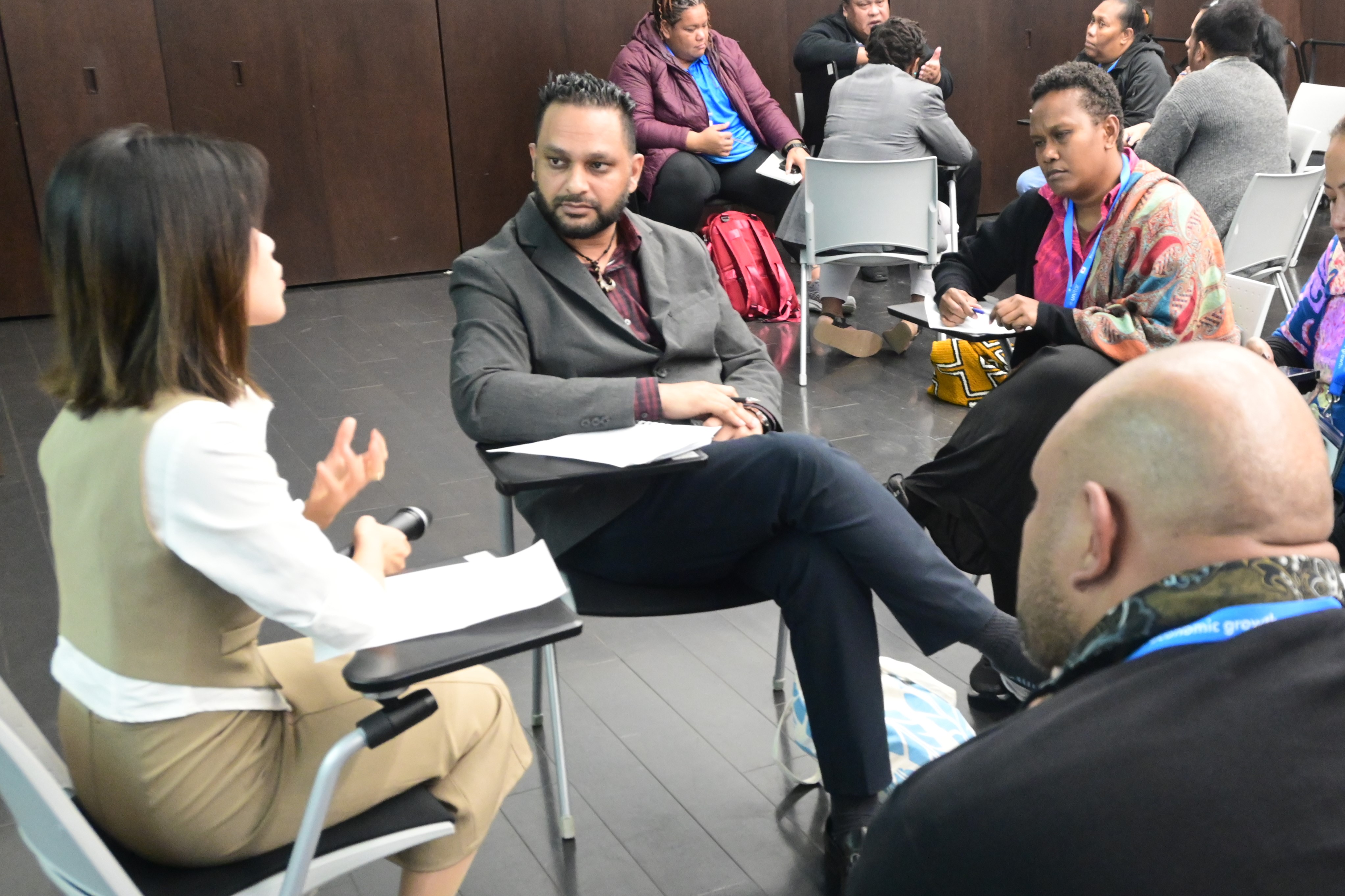
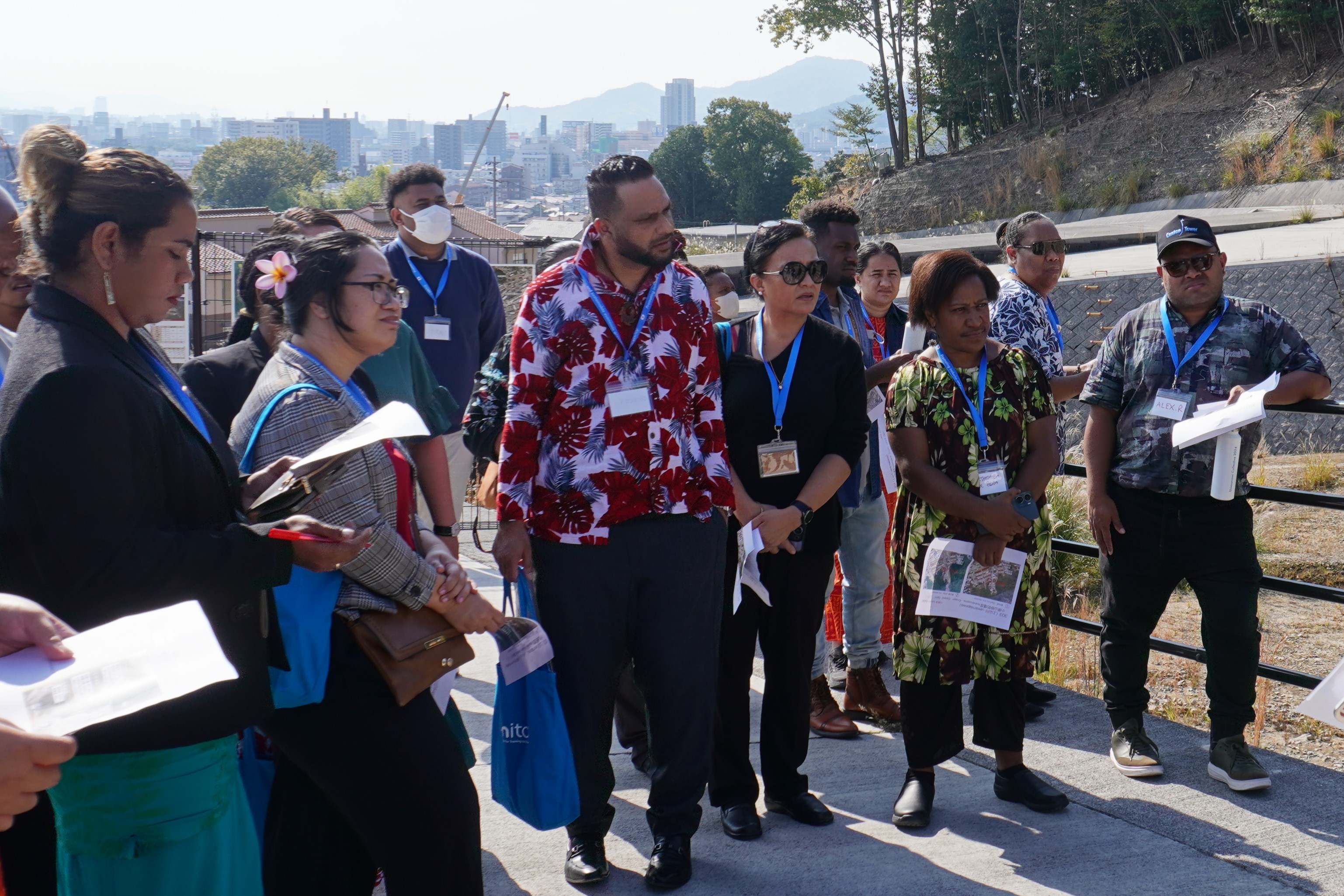
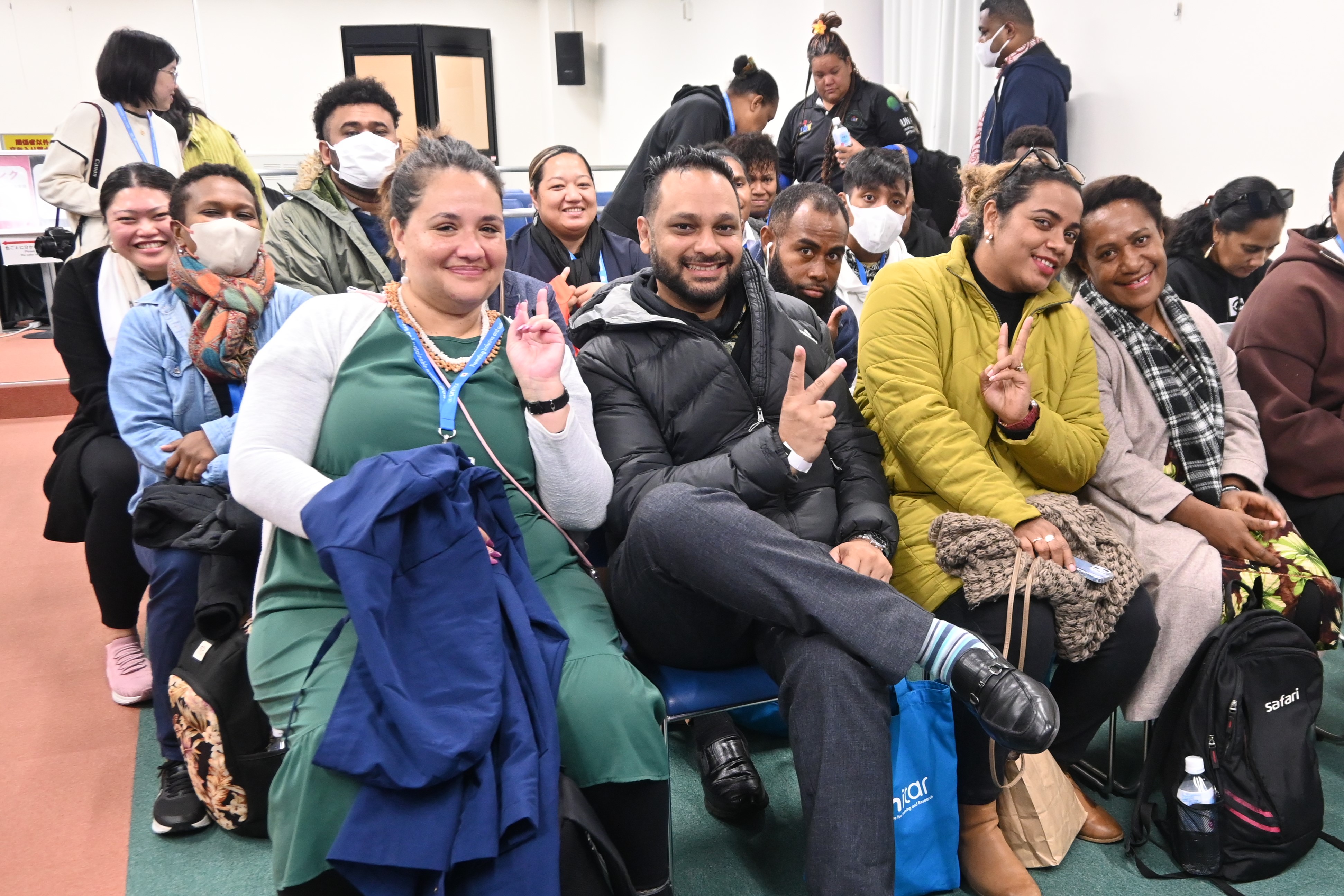
Around 30 top learners, including Mohseen, were then invited to continue to the next phase, an in-person workshop in Japan. There, the participants visited disaster management centres, flood control facilities, and universities, engaged in expert-led lectures, and developed action plans for adopting early warning systems in their countries.
Eager to learn from other countries’ experiences, Mohseen was fascinated by the wide range of topics covered in the programme, such as ocean and coastal risks, disaster impacts on vulnerable groups, and collaboration and communication. The session on disaster waste management, for example, captured his attention, as the 2022 Hunga Tonga-Hunga Haʻapai eruption and tsunami had shown the urgent need for better ways to handle disaster-related waste.
In Japan, one thing that stood out for Mohseen was how all the stakeholders – the institutions, communities, government – were committed to early warning systems and to continuously improve existing systems.
[Japan] relies on the notion of continuous improvement …. What is good today can be made better tomorrow … and even better the next day.
Energized, he took home ideas for how he might adapt Japanese early warning solutions to Pacific contexts and a deeper conviction of the importance of strong partnerships with governments, communities, and others – even retirees, who could bring their experiences and perspectives to the community response.
UNITAR
UNITAR
UNITAR
Applying Community-based Disaster Risk Management
Back in Fiji, Mohseen immediately began using what he learned – especially the concepts of community-based disaster management – in the Fiji component of a large-scale early warning systems project covering seven countries. Mohseen believes that solutions must come from the people who live closest to the problems, who face disasters in their everyday lives, and who need to be ready to act when they receive the early warning signals.
As a practitioner, Mohseen sees his role as understanding these communities and their problems and creating solutions with them that are applicable to the communities but also meet national goals.
As practitioners, we need to understand … the problems that they face when the disasters hit them and … devise the solutions accordingly. It's all about coming up with solutions that are applicable to the communities [and also] help us achieve the larger mandates of the government.
Mohseen plans to continue supporting capacity development, community resilience, and policy alignment in the region, bridging the gap between theory and real-world implementation. Noting also the region’s limitations in human and financial resources, he hopes to help Pacific countries access climate finance and technical support for climate adaptation and strengthening early warning systems.
Future Vision: Collaborating for a Prepared Pacific
Mohseen envisions a Pacific where every nation has the tools and systems to anticipate disasters before they strike. He expresses heartfelt gratitude to UNITAR and the Government and People of Japan, whose support, he says, has nurtured a network of Pacific pioneers ready to lead in resilience building.
We are better now positioned … as pioneers of early warning systems. In the Pacific, the 30 of us who participated in Japan, we can share knowledge and build communities that are more resilient against future natural disasters.
With the belief that partnerships, local knowledge, and continuous learning are key, Mohseen urges fellow practitioners to continue working together across sectors and countries to build a safer Pacific.
UN Volunteer Sayem Mohammad Abu contributed to this article.
About UNITAR
The United Nations Institute for Training and Research (UNITAR) is a dedicated training arm of the United Nations. In 2024, UNITAR trained approximately 550,000 learners around the world to support their actions for a better future. UNITAR has a global presence, with offices in Geneva, Hiroshima, New York and Bonn and networks around the world. Find out more at https://unitar.org/