

- Andre Magpantay is a university art studies instructor from the Philippines interested in the intersection of art, ecology and memory.
- Andre completed the 2025 UNITAR programme SDGs and Digital Futures: Changemaking Through AI and Digital Storytelling, supported by the Hiroshima City Government and Hiroshima Prefectural Government.
- The programme taught Andre how to use Geographic Information Systems, generative AI, and Minecraft Education to support storytelling and creative work.
- In his digital storytelling project, he put the stories of two disaster-stricken cities in Japan and the Philippines.
UNITAR
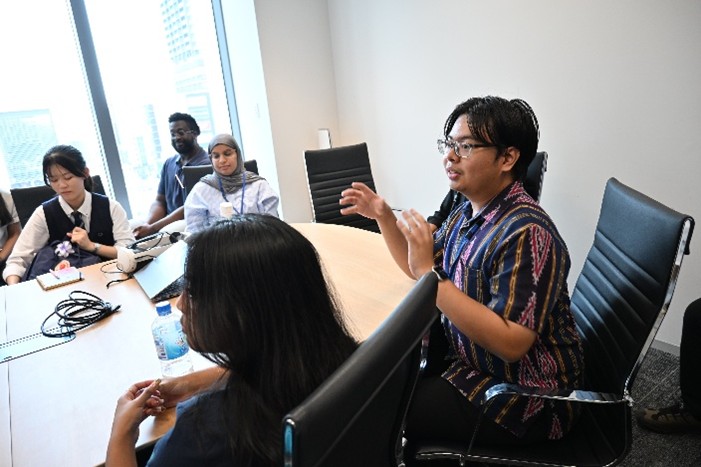
10 February 2026, Hiroshima, Japan - Andre Magpantay is a university instructor of art studies from the Philippines, whose work focuses on art and ecology and on how art engages with memory. In 2025, he joined the UNITAR programme SDGs and Digital Futures: Changemaking Through AI and Digital Storytelling, where he explored how digital tools could be used to capture memories and tell stories that help people recover, prevent future disasters and foster peace.
Exploring Art, Storytelling and Memory
For years, Andre’s work has centred on storytelling and memory in traditional physical media and spaces. But he recognized the fundamental limitation in this approach: exclusivity. Physical objects and spaces are bound by geography and accessibility. Andre was curious to explore how digital tools may help extend reach, ensuring that stories of the past are available to everyone regardless of their physical location.
This was where the UNITAR programme caught his attention. “[The programme was] about storytelling, but not just simple storytelling”, says Andre. He hoped to learn how he can integrate technology in his work, to help improve how we tell stories to people.
The Hiroshima Transformation
The 2025 UNITAR SDGs and Digital Futures: Changemaking Through AI and Digital Storytelling programme brought together youth participants from Asia and Hiroshima to learn how to use AI and digital tools to tell stories that advance the SDGs. Organized to commemorate 80 years since the atomic bombing, the programme took place between June and November 2025, funded by Hiroshima City and Hiroshima Prefecture. It combined online learning with a study tour in Hiroshima, Japan, and participants developed individual digital storytelling projects that they presented in a public workshop in November.
Over four days in Hiroshima, Andre visited the Atomic Bomb Dome and the Peace Memorial Museum and observed how different agencies and government offices work together to preserve memory and communicate history. Being physically present in Hiroshima shaped his understanding in ways that reading alone had not.
Being in Hiroshima and seeing how the city changed through time and how memories have been preserved … has been life changing.” – Andre Magpantay, UNITAR training alumnus, Philippines
It motivated him to do more to contribute to sustainable peace by using the power of storytelling and memories.
Tools for a New Era
UNITAR
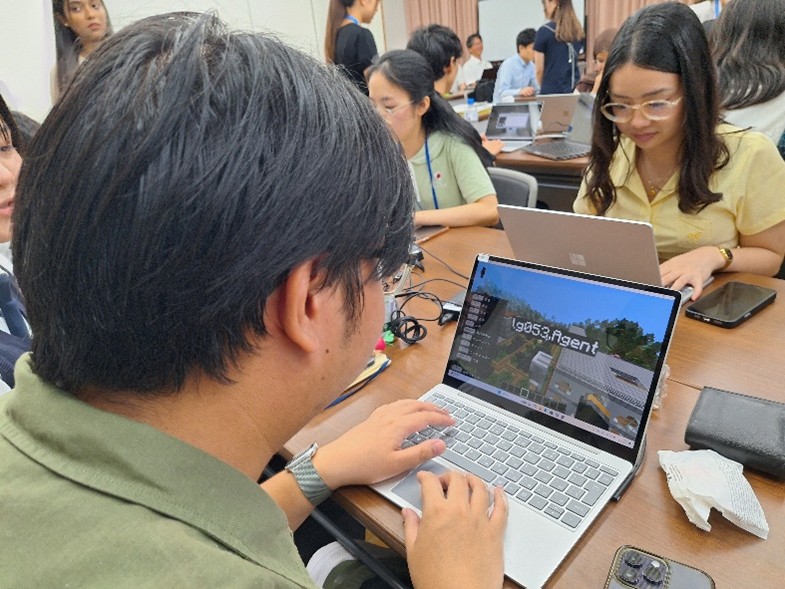
The UNITAR programme introduced Andre to what he describes as three “transformative tools”: Geographical Information Systems (GIS), generative AI, and Minecraft Education. GIS allows him to present data and imagery within a spatial context, showing how people’s experiences are intimately connected to their environments. Generative AI, while often viewed with resistance, is seen by Andre as something that institutions must learn to use ethically to potentially improve the way people work and live.
Minecraft Education was perhaps the most unexpected tool. Commonly known as a game, Andre saw how it might be used as an engaging and creative tool to teach and share complex or difficult narratives, such as those involving conflict or disaster, with children.
A Parallel Digital Exploration: Arahama to Tacloban
For his digital storytelling project, Andre drew on his past studies on ecological crises and creative ways people remember their disaster experiences and draw on those memories to prevent future disasters. He used GIS to create a parallel digital exploration of two sites: the Arahama Elementary School in Japan, which serves as a memorial for the 2011 Great East Japan Earthquake and tsunami, and Tacloban in the Philippines, which was devastated by Typhoon Haiyan in 2013.
By placing the two stories in a digital space, Andre wanted to move beyond the bare numbers and instead focus on the stories of what happened on the ground.
When the story resonates more with you, you can realize more and your connection to these people is nearer than just reading numbers.”
Integrating Digital Tools into Teaching and Researching Art and Memory
Andre plans to integrate digital tools into his daily teaching, research, exhibitions and curatorial work. He also intends to share stories from Hiroshima with his students and create space for reflection in his classes. By making use of technology to transcend physical barriers, Andre hopes to ensure that collective memories and stories remain accessible, resonant, and vital for sustainable peace.
About UNITAR
The United Nations Institute for Training and Research (UNITAR) is a dedicated training arm of the United Nations. In 2024, UNITAR trained approximately 550,000 learners around the world to support their actions for a better future. UNITAR has a global presence, with offices in Geneva, Hiroshima, New York and Bonn and networks around the world. Find out more at unitar.org