

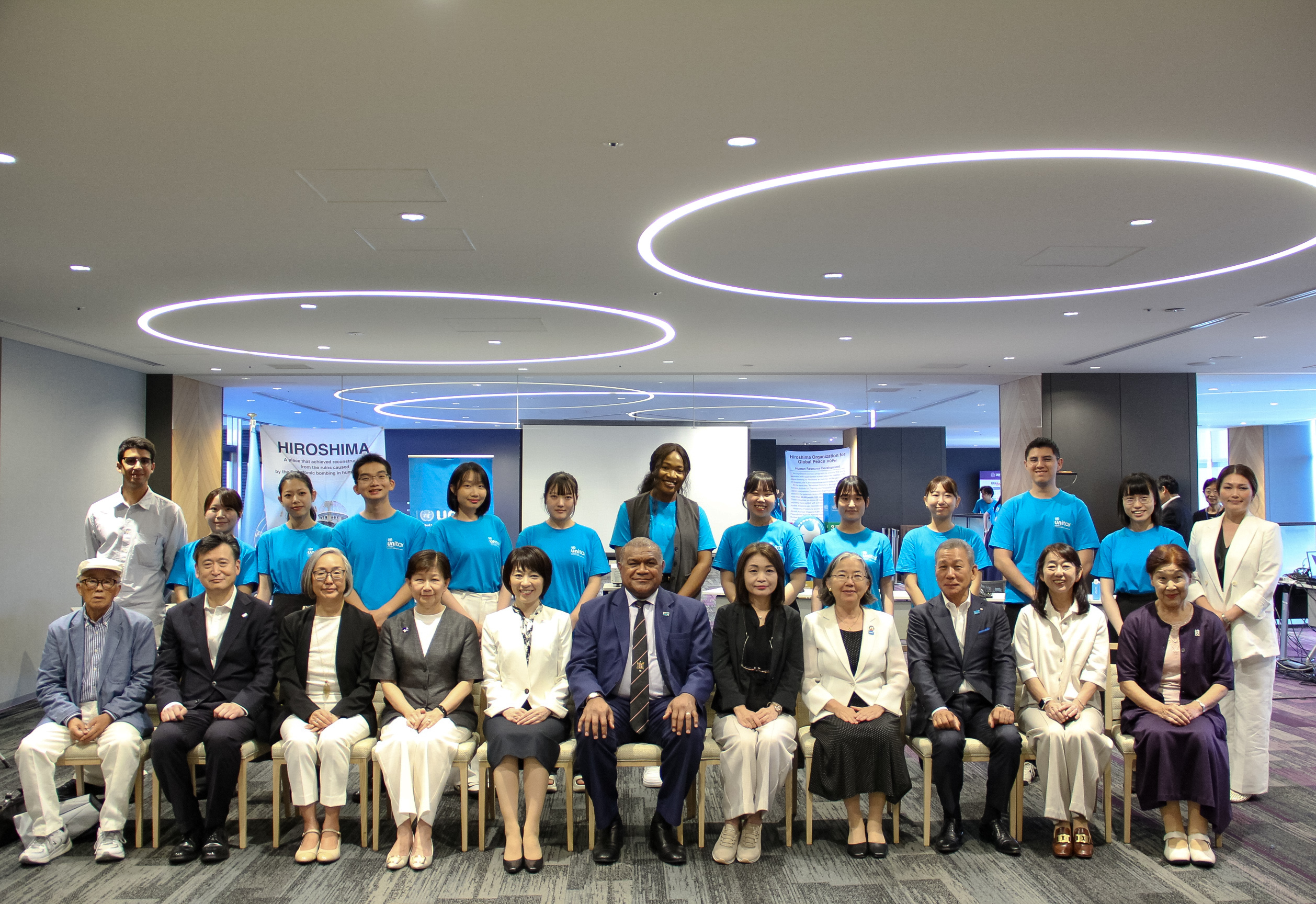
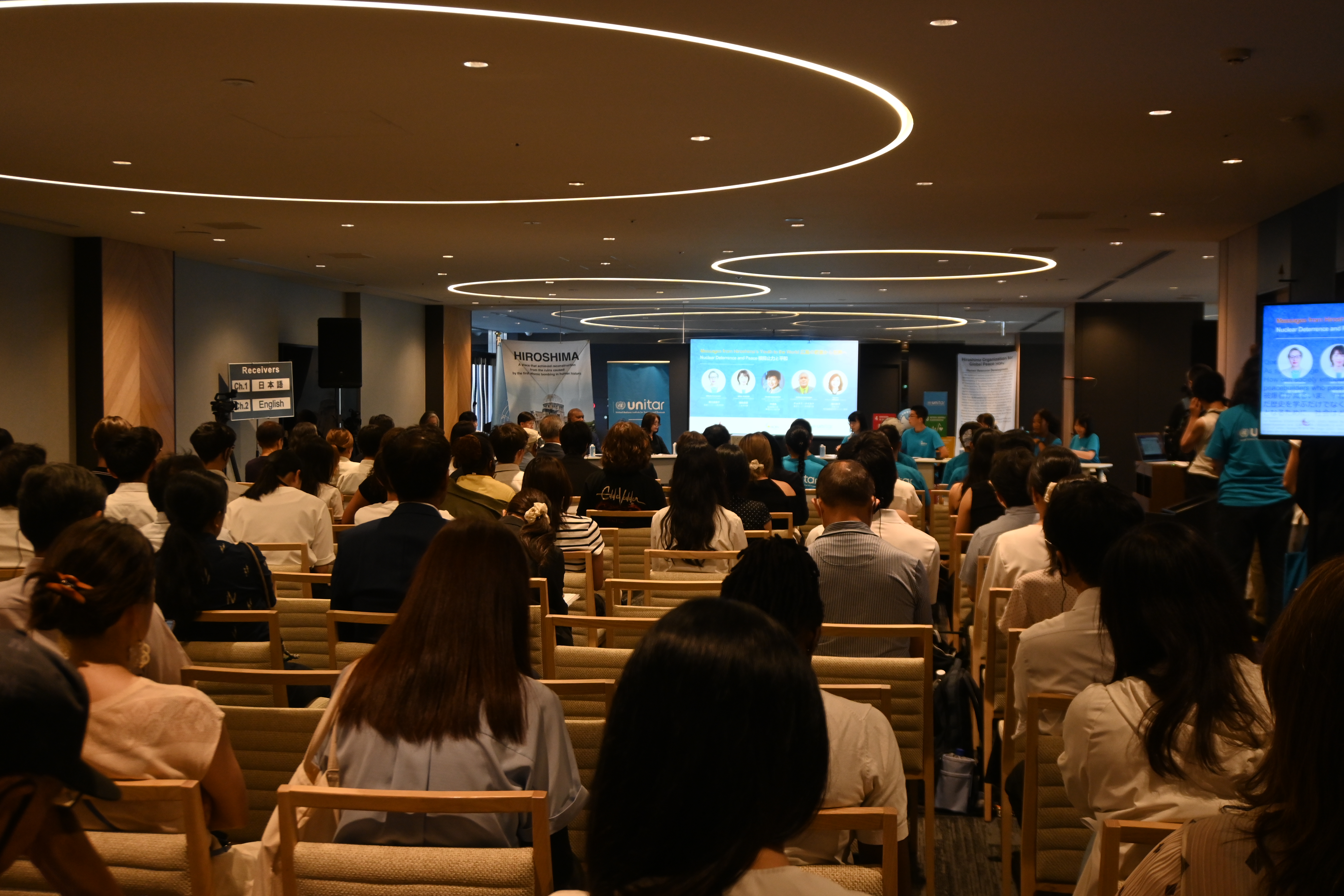
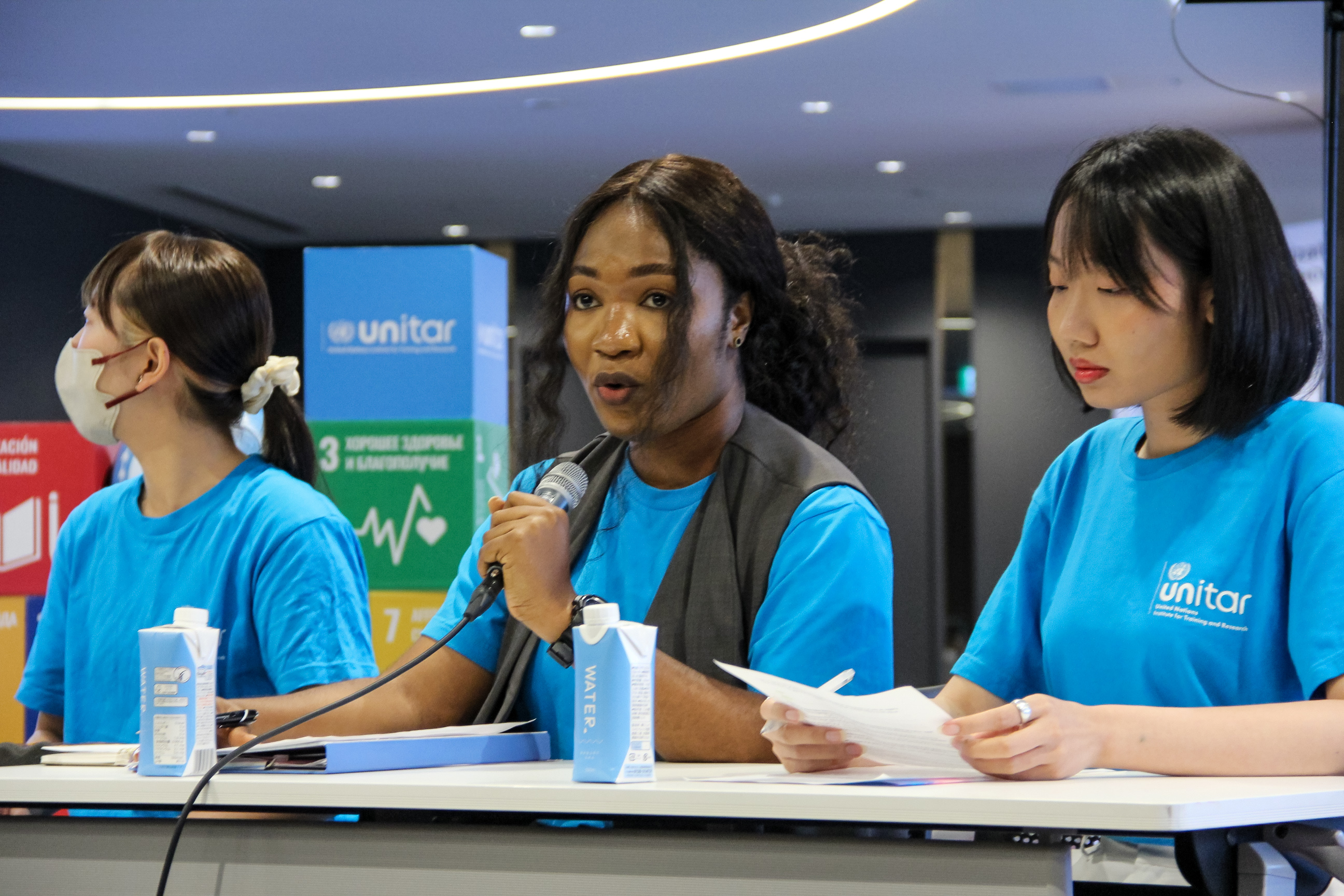
- On 6 August 2026, the 2026 UNITAR Hiroshima Youth Ambassadors engaged with experts to question the concept of nuclear deterrence and explore actions towards the abolition of nuclear weapons at the public event “From Hiroshima’s Youth to the World: Nuclear Deterrence and Peace”.
- The Youth Ambassadors developed the content of the event based on what they learned during the 2026 Hiroshima Youth Ambassador Programme, which started in April 2026 and culminated in the event.
- In July, the Youth Ambassadors also met with participants of the Youth Leader Fund for a World Without Nuclear Weapons programme, where they shared their messages of peace from Hiroshima and connected to a global network.
- The public event was organized by the United Nations Institute for Training and Research in collaboration with Hiroshima Prefecture and Hiroshima Organization for Global Peace (HOPe).
UNITAR
25 August 2026, Hiroshima, Japan – On the 81st anniversary of the atomic bombing of Hiroshima, 6 August 2026, the 2026 Hiroshima Youth Ambassadors engaged with experts to explore the concept of nuclear deterrence and actions towards the abolition of nuclear weapons at the public event “From Hiroshima’s Youth to the World: Nuclear Deterrence and Peace”. The event, organized by the United Nations Institute for Training and Research (UNITAR) in collaboration with Hiroshima Prefecture and Hiroshima Organization for Global Peace (HOPe), brought together the Youth Ambassadors and experts in disarmament, international affairs and peacebuilding. It was attended by more than 100 people and livestreamed for audiences beyond Hiroshima.
The occasion marked the culmination of the 2026 UNITAR Hiroshima Youth Ambassador Programme. Implemented with Hiroshima Prefecture and HOPe, the programme helped young people from Hiroshima deepen their understanding of global issues and the Sustainable Development Goals and develop skills to address challenges in their communities.
Build Peace, Protect Peace: The 2026 Hiroshima Youth Ambassador Programme
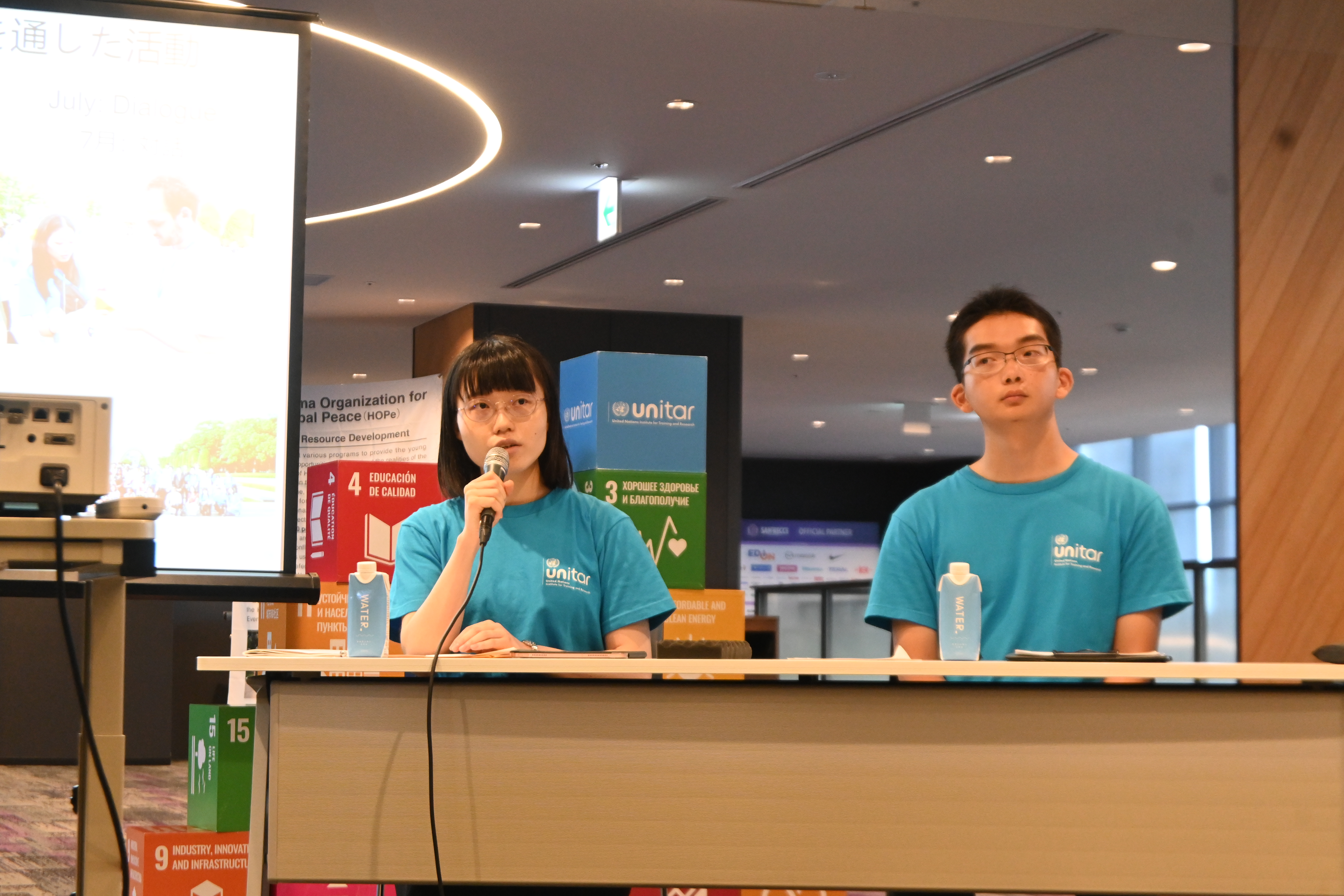
Since April, the UNITAR Hiroshima Youth Ambassadors expanded their understanding of the realities of the atomic bombing through conversations with atomic bomb legacy successors (Hiroshima volunteers trained to inherit and share the personal stories of first-generation hibakusha), visits to the Peace Memorial Park, and learning about the effects of nuclear testing in Algeria and the Marshall Islands. They attended expert lectures on international law and explored the root causes of current global conflicts, while questioning why nuclear weapons have not yet been eliminated.
This year’s Youth Ambassadors also met with the participants of the Youth Leader Fund for a World Without Nuclear Weapons programme (YLF) during the YLF Hiroshima and Nagasaki study visit, coordinated by the United Nations Office of Disarmament Affairs and UNITAR. The Youth Ambassadors joined the YLF Youth International Conference on 3 July, where they shared their messages of peace from Hiroshima. The experience exposed the Hiroshima Youth Ambassadors to international perspectives and connected them to a global network of likeminded young people.
Throughout the programme, the young people learned that peace is not simply granted, but something that must be built and protected. And through their experiences, the Youth Ambassadors concluded that true peace begins with dialogue.
We realized that building peace takes more than just remembering the history of Hiroshima, Nagasaki, and nuclear testing. It requires us to understand today’s realities, including ongoing conflicts, nuclear risks, and challenges facing the international community. To move forward, we must listen to different perspectives, embrace diverse backgrounds, and engage with one another. That’s why we believe true peace begins with dialogue.” – Yuri Matsuoka, Youth Ambassador
UNITAR
UNITAR
The Youth Ambassadors Lead Nuclear Disarmament Talks with Experts
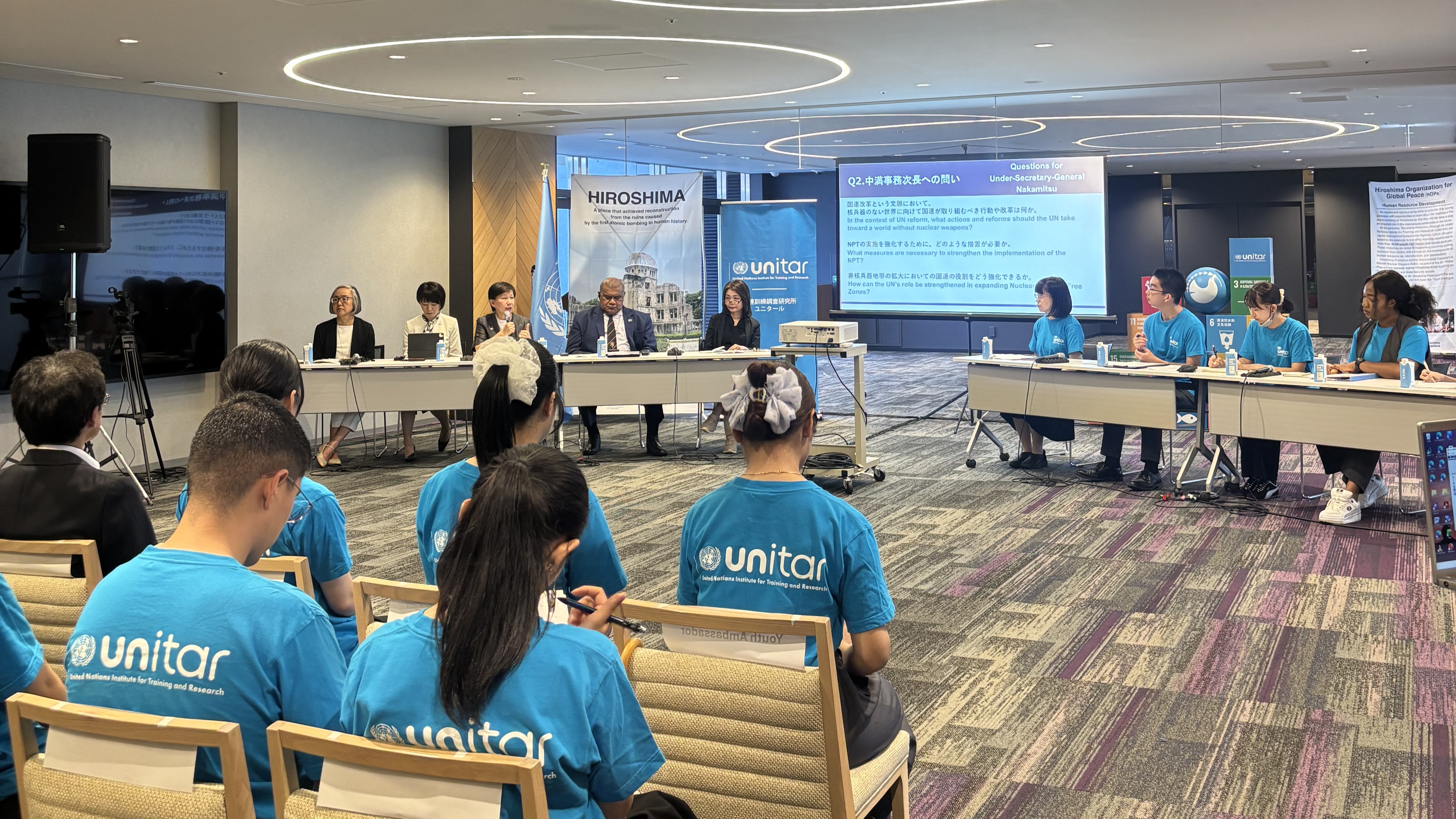
The Youth Ambassadors identified nuclear deterrence as a major barrier to nuclear disarmament and selected it as the focus of the event. After presenting reflections from the four-month programme, they explored with UN officials, diplomats and researchers issues around deterrence, trust-building and possible pathways towards a world without nuclear weapons. Ms. Mika Yokota, Governor of Hiroshima Prefecture and President of the Hiroshima Organization for Global Peace (HOPe), emphasized the importance of international cooperation at a time when people around the world continue to live under the threat of nuclear weapons.
The experiences of Hiroshima and Nagasaki do not belong solely to the people of Hiroshima and Nagasaki. They belong to people everywhere in the world. That is why we must work in cooperation with other countries. When it comes to passing these experiences on to future generations, there are no national borders.” – Mika Yokota, Governor of Hiroshima Prefecture
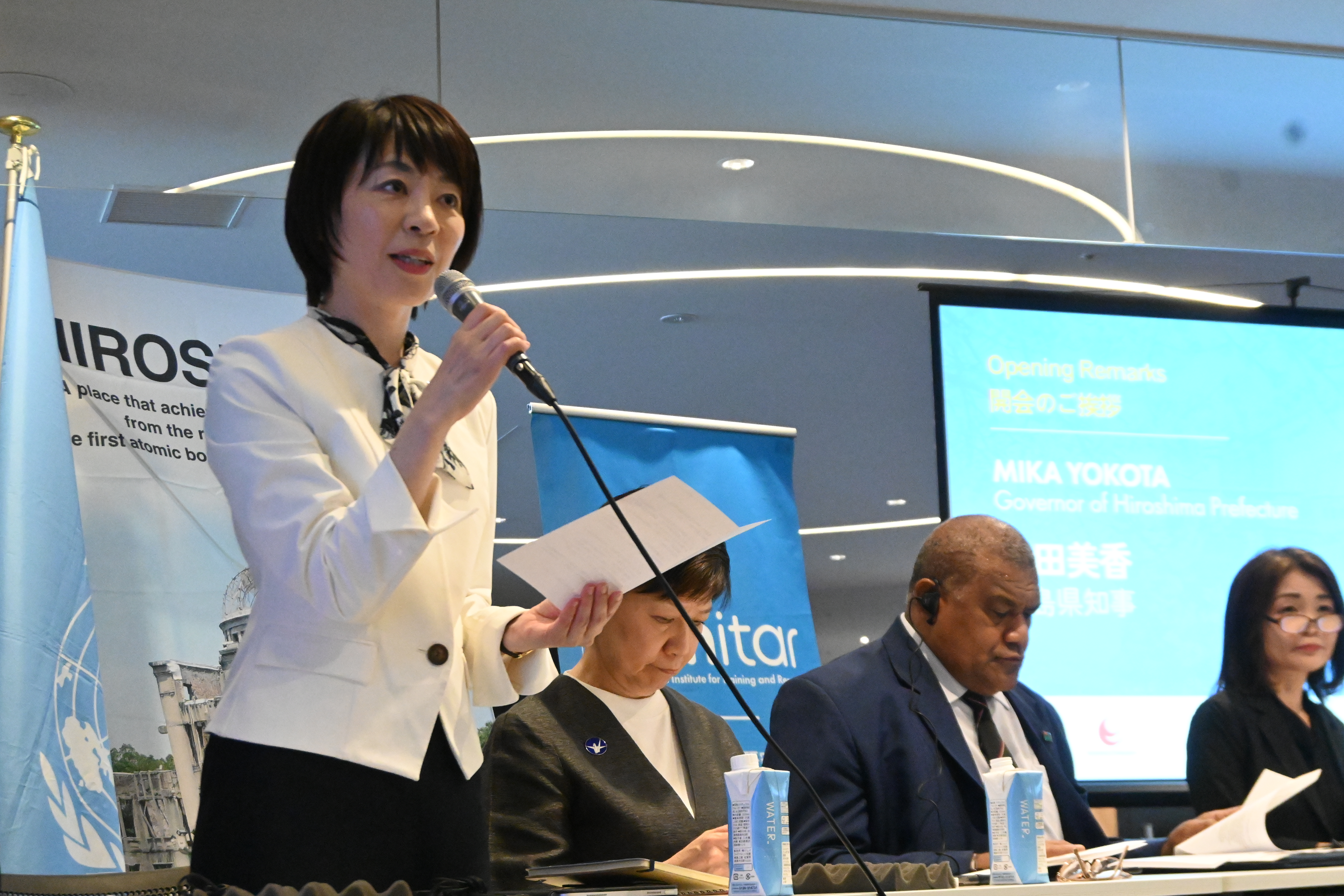
UNITAR (Photo: Ms. Mika Yokota, Governor of Hiroshima Prefecture and Representative of the Hiroshima Organization for Global Peace (HOPe))
Ms. Mika Yokota, Governor of Hiroshima Prefecture and Representative of the Hiroshima Organization for Global Peace (HOPe), emphasized the importance of international corporation at a time when people around the world continue to live under the threat of nuclear weapons.
The experiences of Hiroshima and Nagasaki do not belong solely to the people of Hiroshima and Nagasaki. They belong to people everywhere in the world. That is why we must work in cooperation with other countries. When it comes to passing these experiences on to future generations, there are no national borders.” – Mika Yokota, Governor of Hiroshima Prefecture
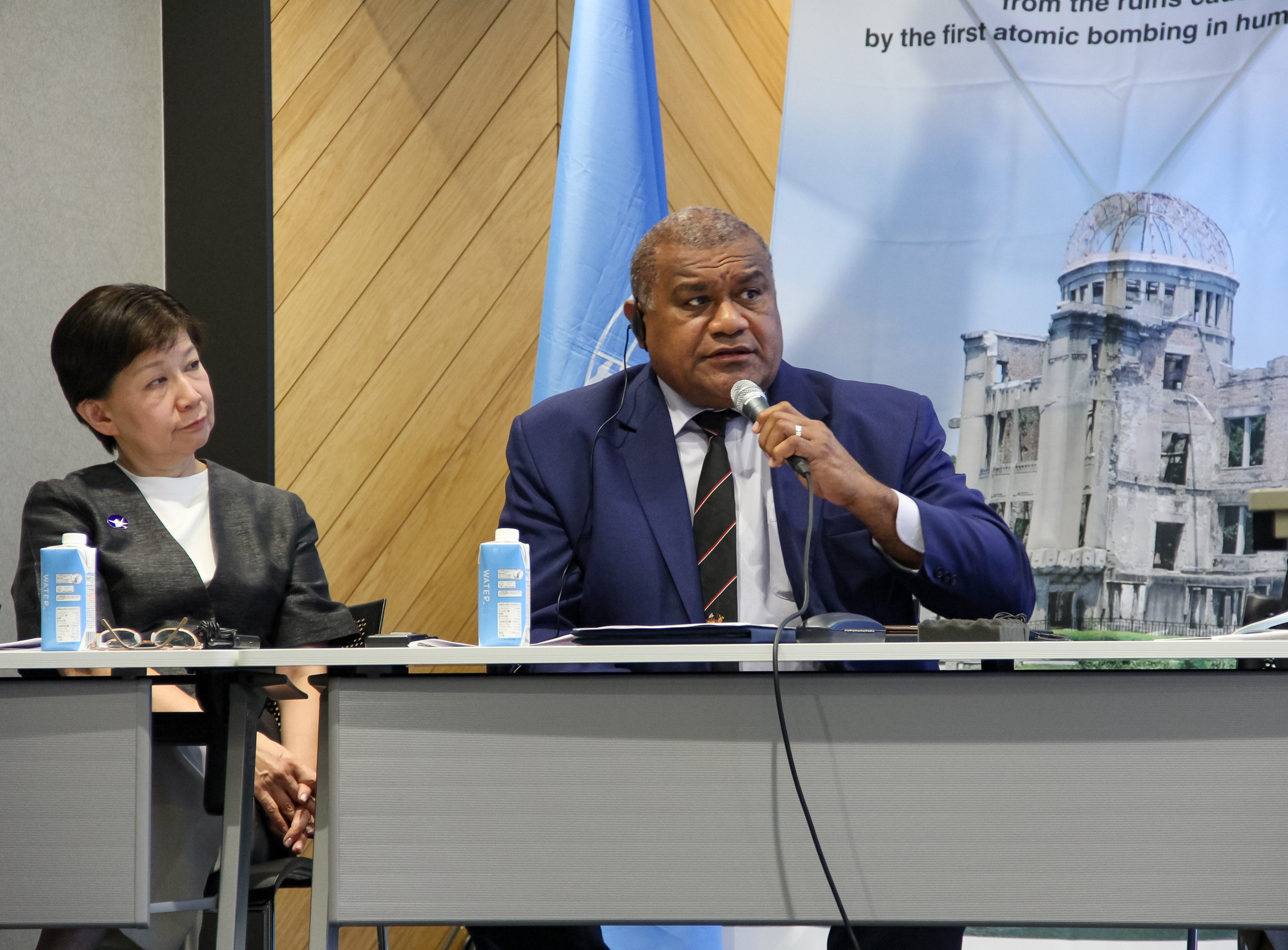
UNITAR (Photo: Ambassador Extraordinary and Plenipotentiary of the Republic of Fiji, Mr. Kemueli Naiqama)
Ambassador Extraordinary and Plenipotentiary of the Republic of Fiji, Mr. Kemueli Naiqama, highlighted the need to recognize the experiences of communities affected by nuclear testing, alongside those of Hiroshima and Nagasaki.
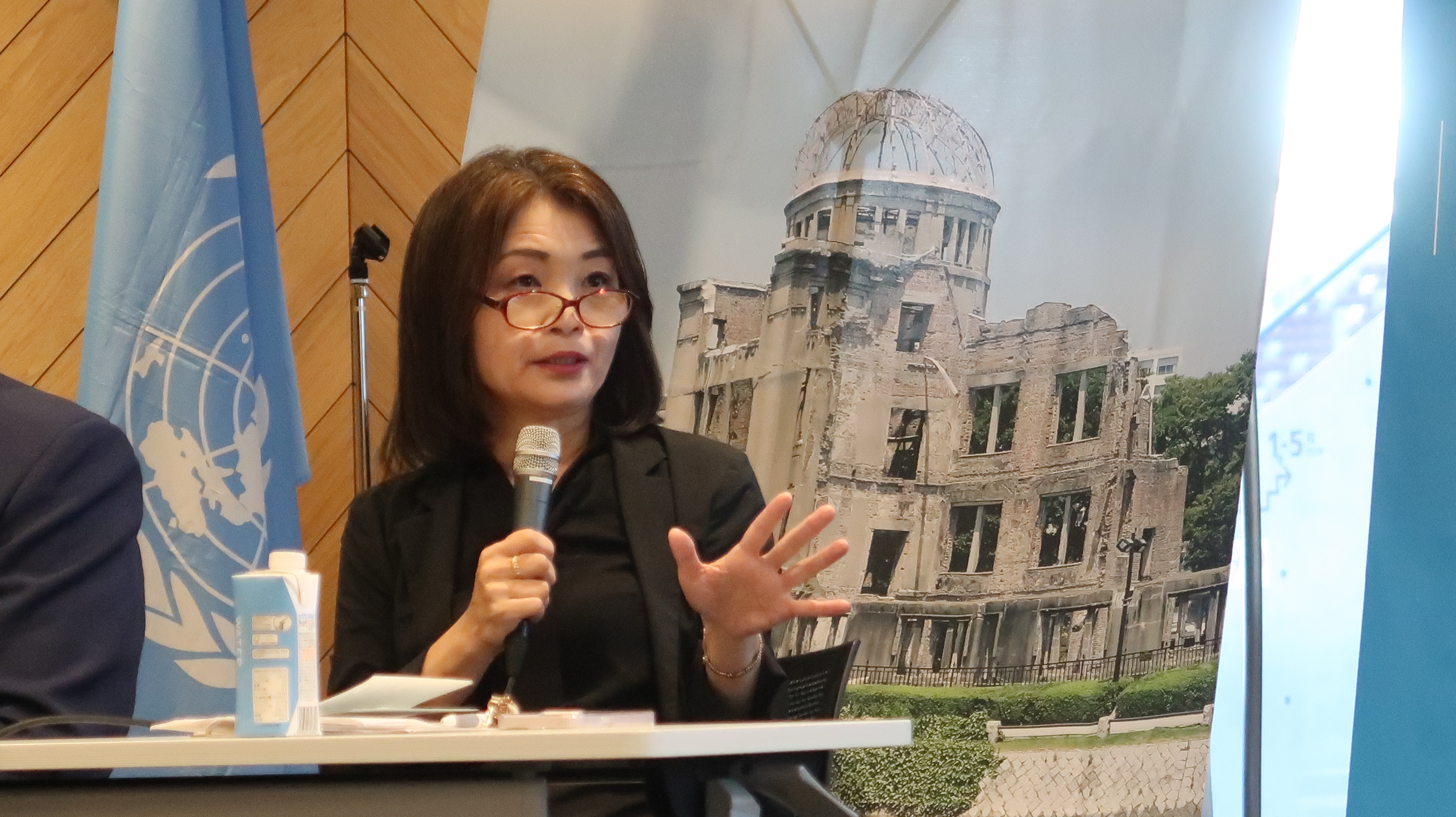
UNITAR (Photo: Professor Kazuko Hikawa, Professor and Deputy Director of the Research Center for Nuclear Weapons Abolition, Nagasaki University (RECNA))
Professor Kazuko Hikawa, Professor and Deputy Director of the Research Center for Nuclear Weapons Abolition, Nagasaki University (RECNA), stressed that while experiences from other regions offer valuable lessons, new and creative approaches are needed to address current nuclear challenges.
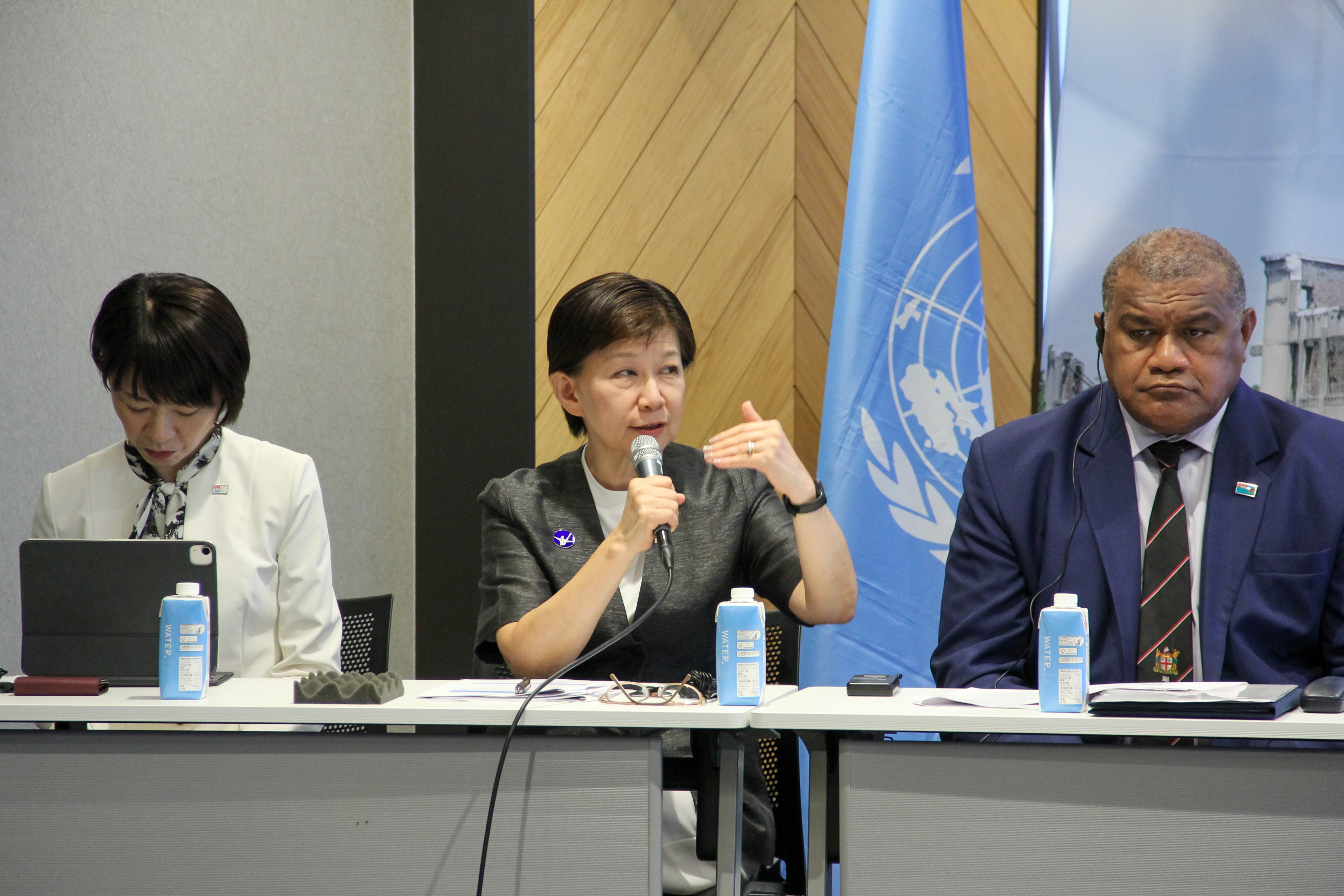
UNITAR (Photo: Ms. Izumi Nakamitsu, United Nations Under-Secretary-General and High Representative for Disarmament Affairs)
The event closed with remarks by Ms. Izumi Nakamitsu, United Nations Under-Secretary-General and High Representative for Disarmament Affairs. Ms. Nakamitsu, who was also a panellist, encouraged participants to equip themselves with knowledge and wisdom, think critically and maintain a sense of humility, solidarity and justice. She emphasized that young people have the power to change the world.
I think it’s fantastic that you [the Youth Ambassadors] focused on trust building… Creating a mechanism in this region [Northeast Asia] for trust-building dialogue, where actors can gather to discuss security, may even lead to the creation of nuclear-weapon-free zones” –Izumi Nakamitsu, United Nations Under-Secretary-General and High Representative for Disarmament Affairs
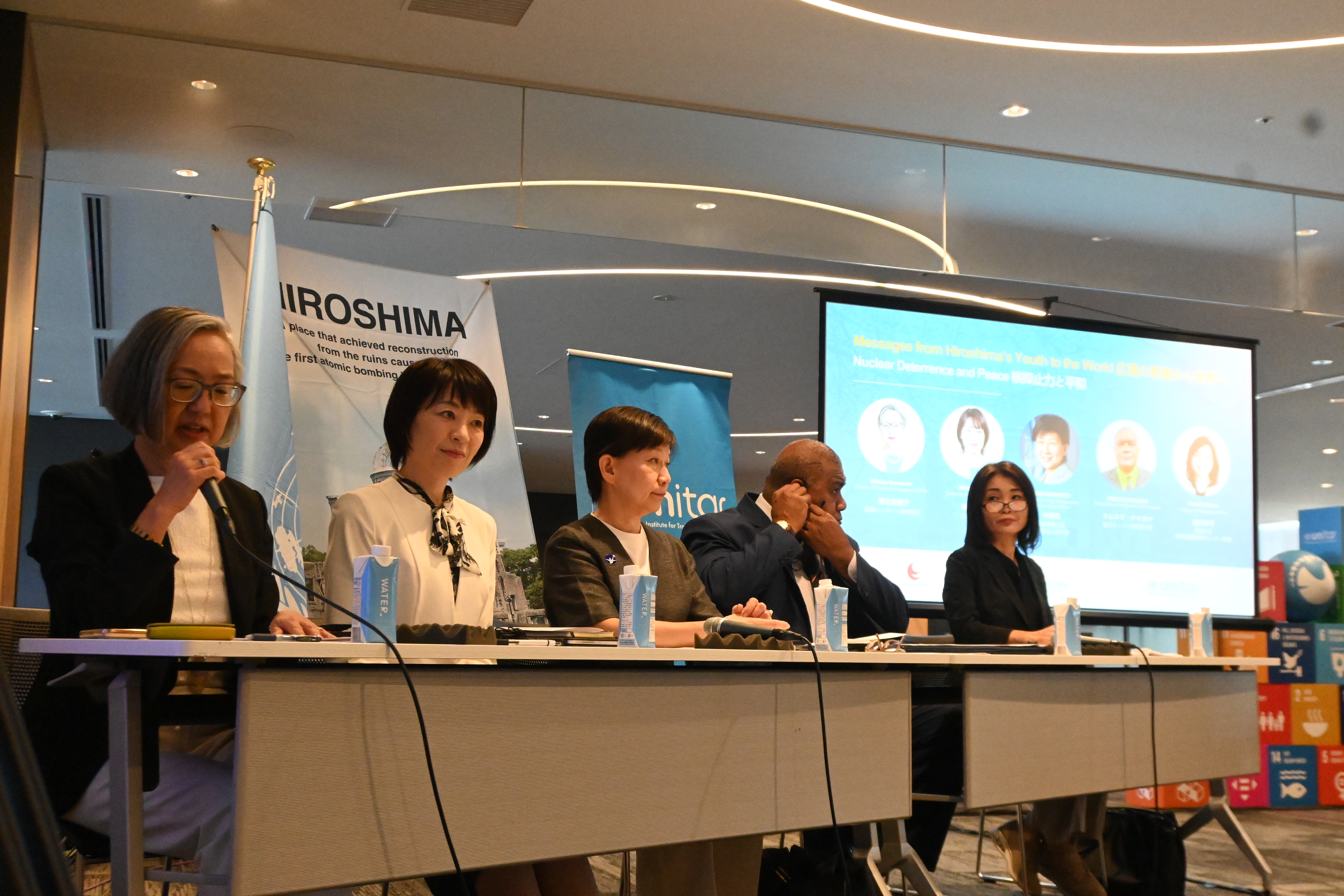
The event was facilitated by Ms. Mihoko Kumamoto, Director of UNITAR Division for Prosperity, and offered a platform for the young people to transmit their messages of peace to a world marked with continuous conflict.
UNITAR
UNITAR
UNITAR