

- UNITAR and UNITAR Association held the 11th Hiroshima Nuclear Disarmament and Non-Proliferation Training Programme, from 23 to 27 February 2026.
- The programme welcomed 15 diplomats from 14 Asia-Pacific countries.
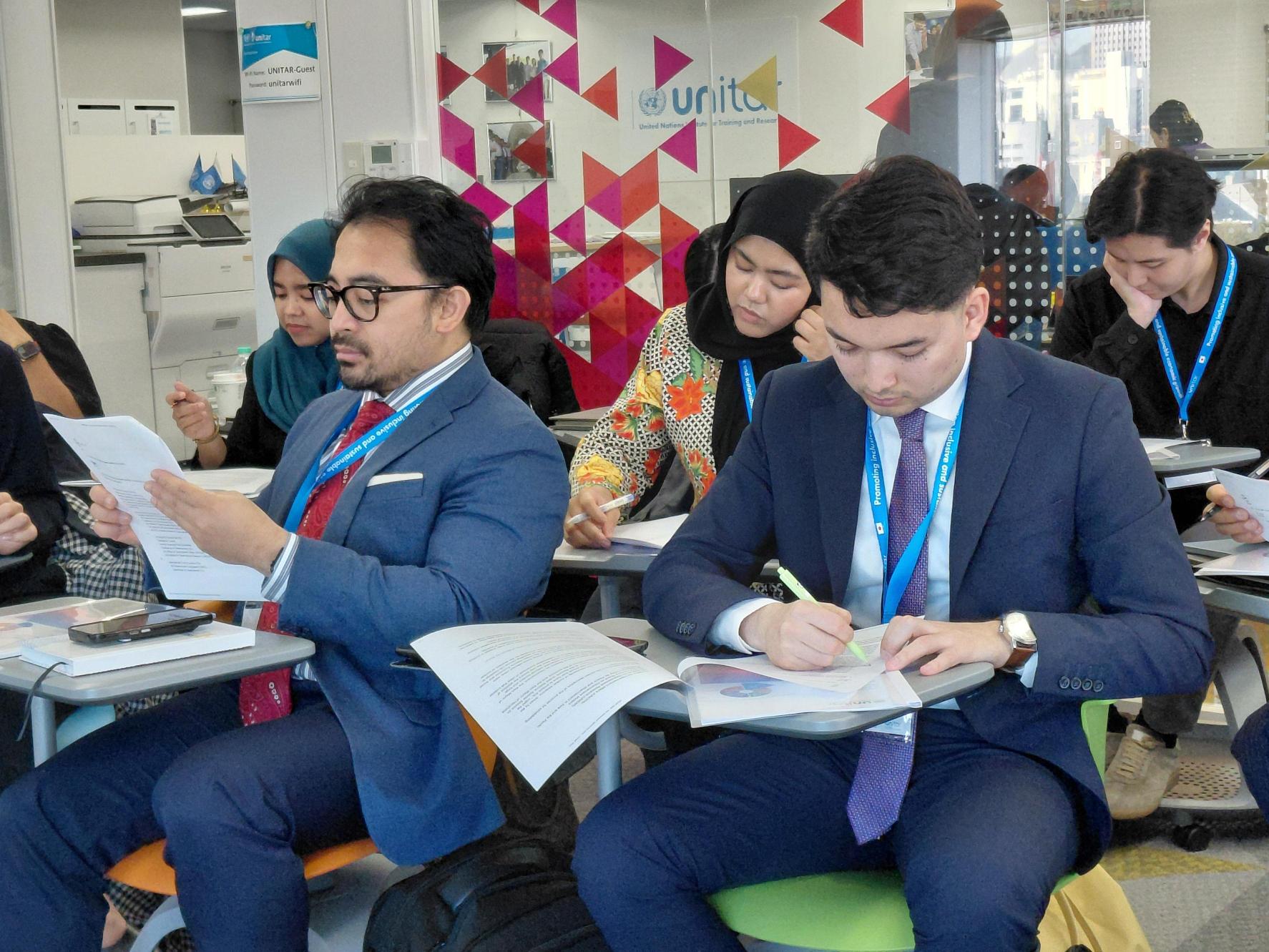
- The participants learned about the current global debate on nuclear weapons and practiced negotiation skills needed to advance nuclear disarmament at international meetings, including the Review Conference of the Parties to the Treaty on the Non-Proliferation of Nuclear Weapons (NPT).
- New and old UNITAR programme alumni are expected to represent their countries at the 2026 NPT Review Conference in New York.
UNITAR
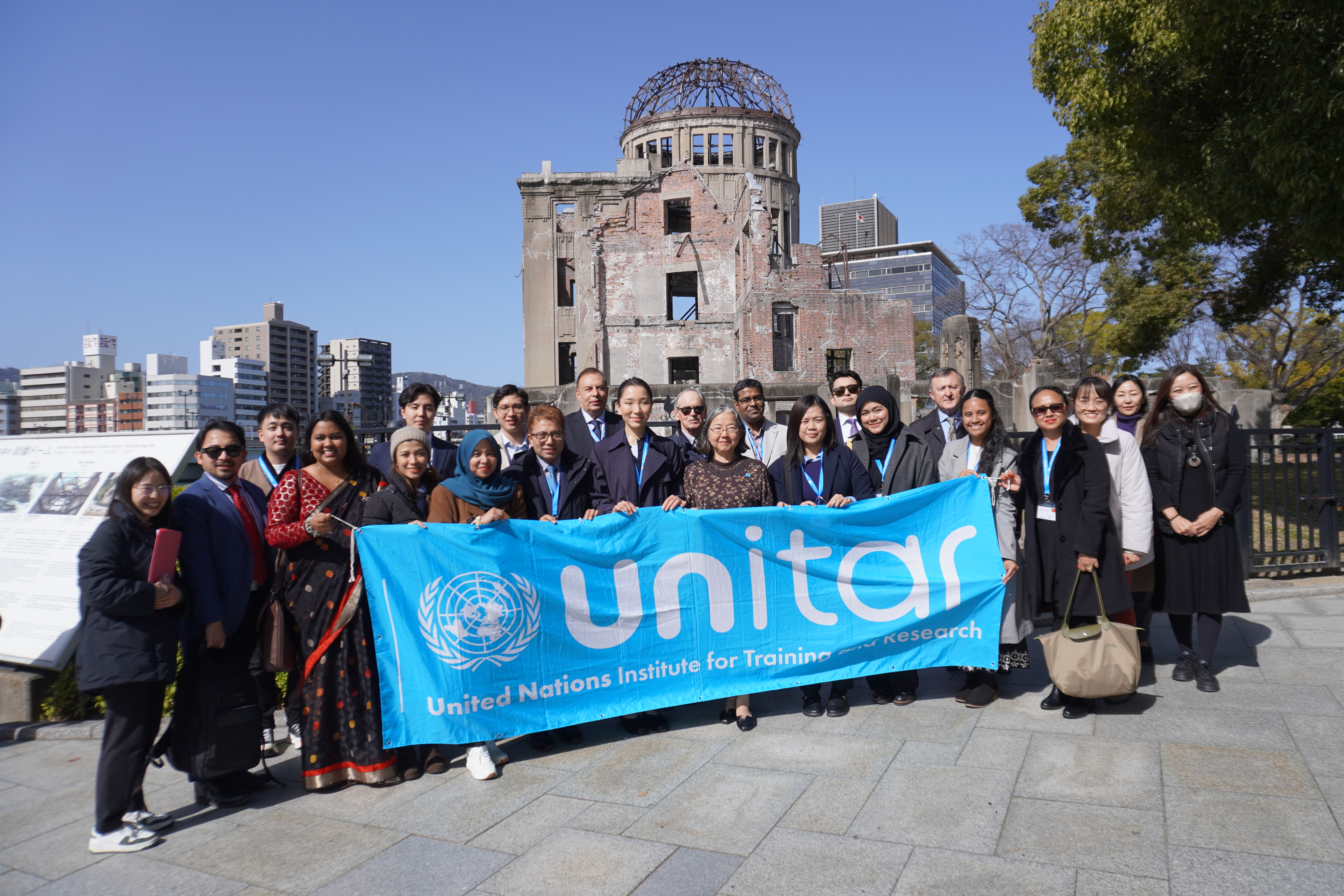
4 March 2026, Hiroshima, Japan - From 23 to 27 February 2026, UNITAR and the UNITAR Association co-organized the 11th Hiroshima Nuclear Disarmament and Non-Proliferation Training Programme. The programme, funded by Hiroshima Prefectural Government and the City of Hiroshima, brought together 15 diplomats from 14 Asia-Pacific countries, including Kazakhstan and the Marshall Islands – two countries that experienced the impacts of nuclear testing.
The 11th Hiroshima Nuclear Disarmament and Non-Proliferation Training Programme
UNITAR
As the only United Nations organization based in Hiroshima, UNITAR has been running the Hiroshima Nuclear Disarmament and Non-Proliferation Training since 2015. Guided by the principles of the first resolution adopted by the United Nations General Assembly in 1946, the programme invites serving diplomats engaged in nuclear disarmament negotiations worldwide to the city of peace, Hiroshima, for a specialized learning experience.
The programme aims to help diplomats from Asia-Pacific countries to:
- strengthen their understanding of current global discussions on nuclear issues
- improve their negotiation skills for international conferences related to the Treaty on the Non-Proliferation of Nuclear Weapons (NPT), the Treaty on the Prohibition of Nuclear Weapons (TPNW) and related frameworks
- deepen their understanding of the humanitarian impact of nuclear weapons through their experience in Hiroshima
This year’s programme featured lecturers from the International Atomic Energy Agency (IAEA), the United Nations Institute for Disarmament Research (UNIDIR) and the United Nations Regional Centre for Peace and Disarmament in Asia and the Pacific (UNRCPD). Acknowledging the rapidly changing global context, the experts covered international frameworks for nuclear disarmament, nuclear strategies in the Asia-Pacific and effective negotiation skills for international meetings on the NPT and TPNW.
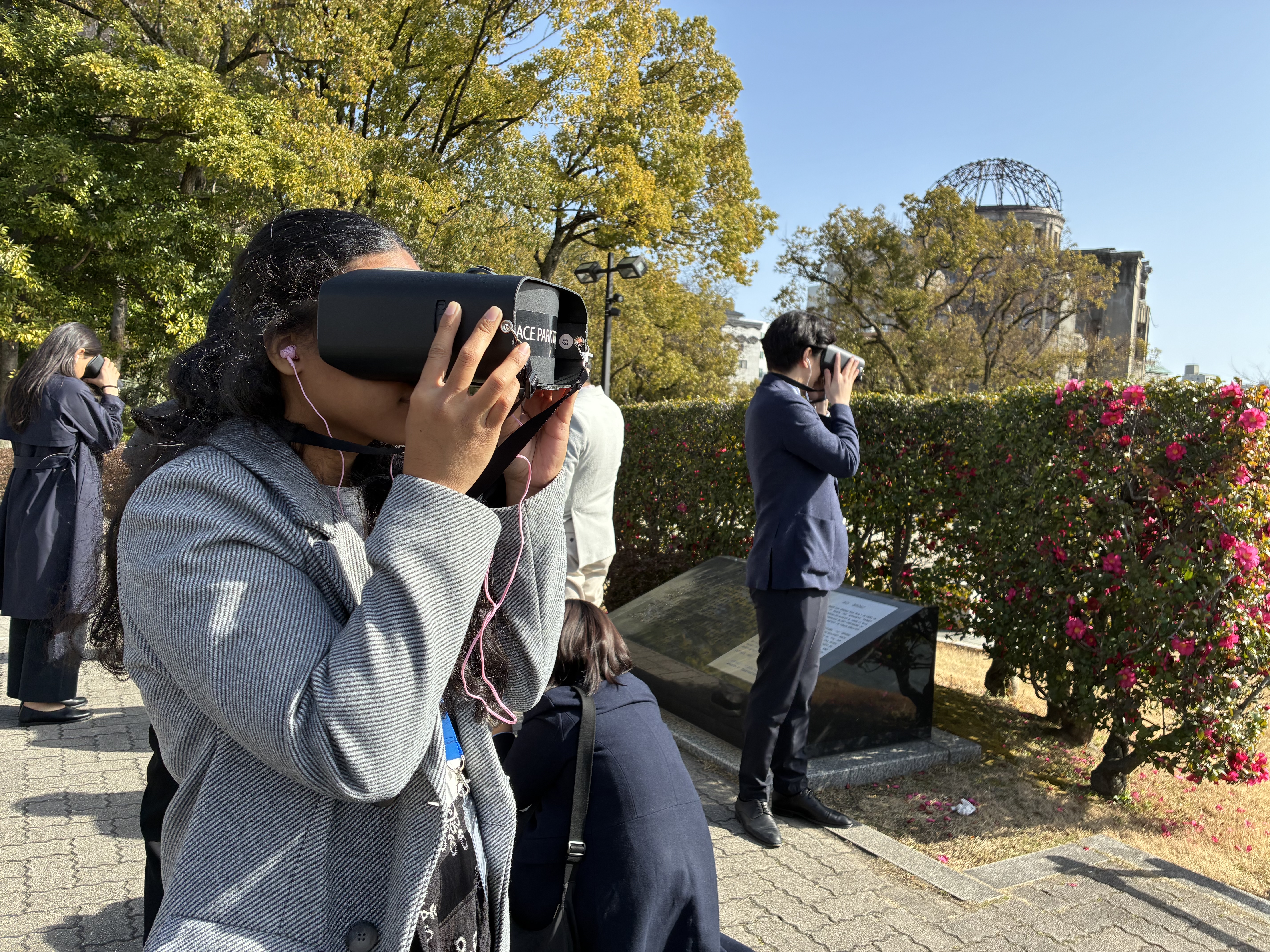
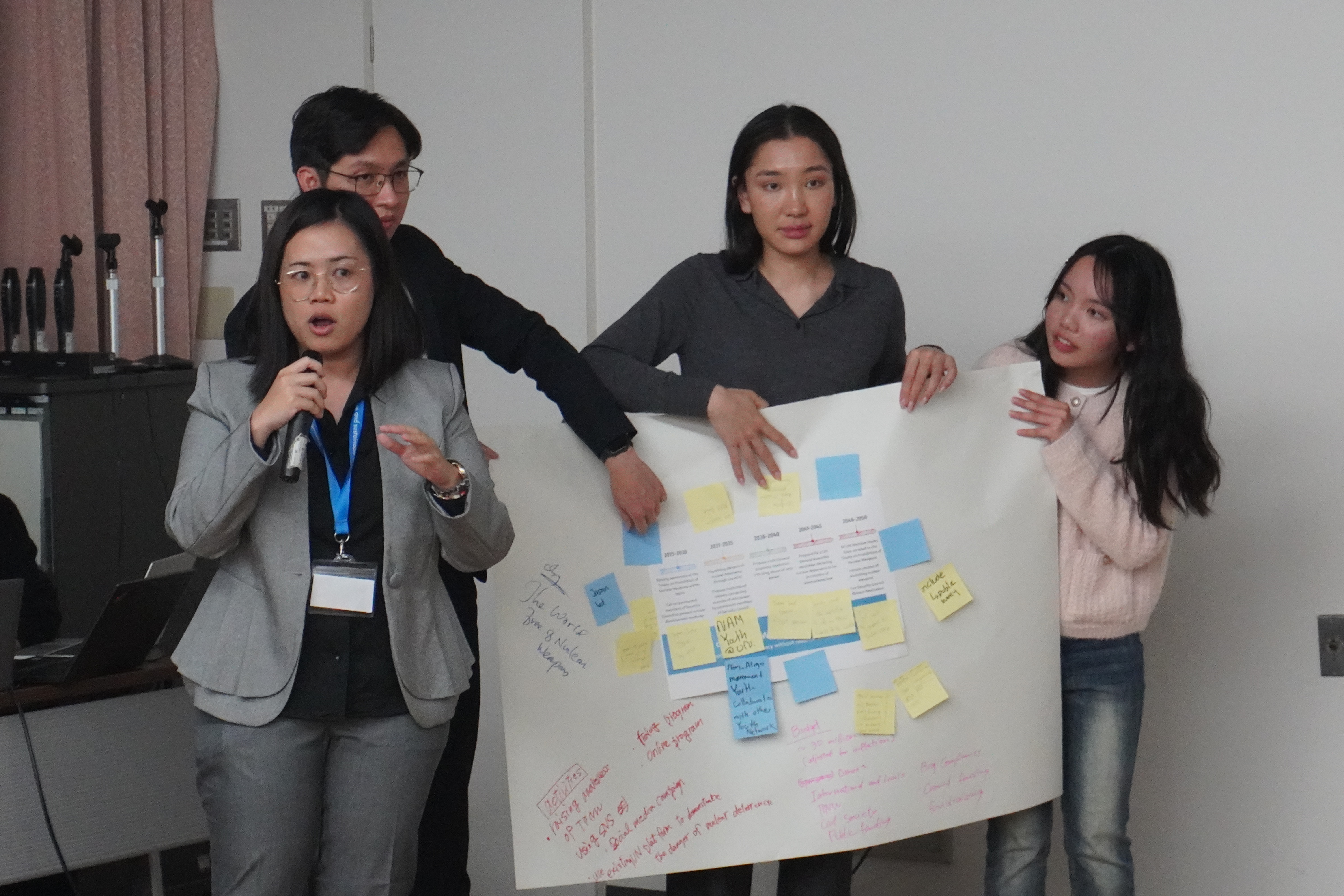
The participants further deepened their understanding of the human costs of the atomic bombing through meeting an atomic-bombing survivor (hibakusha) and visiting the Hiroshima Peace Memorial Park and the Peace Memorial Museum. On 26 February, the diplomats joined an event co-organised with the Hiroshima Peace Culture Foundation, where they exchanged views with UNITAR Hiroshima Youth Ambassadors, local young people and researchers. Through these discussions, the training participants considered realistic actions to achieve nuclear abolition by 2050 along three themes: peace education; international law and the functions and role of the United Nations; and the importance of passing on the legacy of the atomic bombing.
Rising Nuclear Deterrence and Security
UNITAR
Mr. Tariq Rauf, former Head of IAEA Nuclear Verification and Security Policy Coordination Office and a training adviser to the programme since its launch, pointed out the recent increase in global debate surrounding nuclear deterrence.
He hopes this training programme will deepen diplomats’ awareness of the urgency of advancing nuclear disarmament and underscore the importance of maintaining dialogue with all States parties.
Ms. Kano Korlynn H. Balos, a diplomat from the Marshall Islands who participated in the programme, shared the following reflections on what they learned and what left the strongest impression:
As we saw in this programme, there are a lot of us who didn't know about the Hiroshima history and the story and the outcome of that. It was very important because these types of stories and testimonies are lost on the world powers. They don't seem to care about this history, which is why we are where we are in the world right now in terms of global security." - Kano Korlynn H. Balos, Diplomat, Marshall Islands
When asked what they would like to prioritise in their future diplomatic work by making use of these lessons and experiences, she answered:
After seeing the many stories that illustrate the devastating realities of the atomic bombing that took place here, I feel that they strongly reinforce the spirit, as well as the urgent need, for peacebuilding." - Kano Korlynn H. Balos, Diplomat, Marshall Islands
Connecting Learning in Hiroshima to Nuclear Disarmament Negotiations
UNITAR
Having learned about the aspirations of the people of Hiroshima – especially young people – and how they translate these into action, Ms. Orndaporn Pewngern, a diplomat from Thailand stated the following.
I believe that, both as career diplomats and as global citizens, it is essential for us to reflect on and learn from major moments in history. Without a clear understanding of what happened in the past and the scale of its impact on the world, we risk living in a far more dangerous world.” - Ms. Orndaporn Pewngern, Diplomat, Thailand
By the end of the training programme, the 15 diplomats had gained a deeper appreciation of both the difficulties and the importance of nuclear disarmament. Some participants are scheduled to join the 11th NPT Review Conference in New York in April-May 2026, where they plan to apply what they learned with UNITAR in the actual negotiations. There, they will join the programme alumni of the UNITAR programme who are also expected to attend the meeting.
Through networks in Hiroshima, UNITAR will continue to provide education and training programmes to help move forward discussions on nuclear disarmament and contribute to disarmament and peacebuilding.
For more information on this training programme, see:
Hiroshima Nuclear Disarmament and Non-Proliferation Training Programme
About UNITAR
The United Nations Institute for Training and Research (UNITAR) is a dedicated training arm of the United Nations. In 2024, UNITAR trained approximately 550,000 learners around the world to support their actions for a better future. UNITAR has a global presence, with offices in Geneva, Hiroshima, New York and Bonn and networks around the world. Find out more at unitar.org