
Airports serve as critical hubs for global innovation, sustainable development, and regional resilience. Globally, the airport sector contributes over $1.1 trillion to the world GDP and serves as a vital economic lifeline for Least Developed Countries (LDCs) and Small Island Developing States (SIDS). The transformative potential of optimized aviation infrastructure is powerfully exemplified by Hartsfield-Jackson Atlanta International Airport (HJAIA), which generates over $32.5 billion in economic activity for metropolitan Atlanta alone, highlighting the profound capacity of airports to drive regional growth.
However, with passenger demand projected to double by 2040, a critical capacity gap remains: currently, only 42% of the world’s busiest airports align with the Sustainable Development Goals (SDGs). In response to this urgent need and in alignment with the UN Decade of Sustainable Transport (2026-2035), the United Nations Institute for Training and Research (UNITAR) launched the Airports Global Training Programme. This initiative is supported through strategic partnerships with HJAIA and the Georgia Institute of Technology’s Enterprise Innovation Institute (EI2), bringing together world-class expertise in airport management and technological innovation to provide a comprehensive framework for sustainable airport development.
The programme operates in close collaboration with UNITAR’s International Training Centre for Authorities and Leaders (CIFAL) Global Network, engaging five strategic centres across key regions: CIFAL Atlanta (United States), CIFAL Merida (Mexico), CIFAL Miami (United States), CIFAL Singapore (Singapore), and CIFAL York (Canada). This network ensures broad geographical coverage and facilitates context-sensitive knowledge exchange across diverse airport environments.
Programme Description

The Airports Global Training Programme provides comprehensive capacity-building for civil aviation authorities, airport executives, and aviation stakeholders. Moving beyond traditional transportation concepts, the programme consists of intensive workshops designed to equip aviation leaders with the strategies and tools necessary to navigate technological modernization, climate resilience, social inclusion, and environmental sustainability.
Four Pillars:
The programme is structured around four interconnected strategic pillars designed to future-proof global airport systems:
- Smart Airports: Building institutional capacity for AI adoption, cybersecurity management, and strategic digital transformation to streamline terminal operations and enhance passenger experience.
- Resilient Airports: Strengthening disaster risk management, emergency preparedness, and business continuity in the face of climate, geopolitical, and operational risks.
- Inclusive Airports: Implementing people-centred policies, universal accessibility, and services that prioritize human wellbeing, including anti-human trafficking protocols and accommodations for invisible disabilities.
- Sustainable Airports: Advancing environmental responsibility, decarbonization, the transition to Sustainable Aviation Fuels (SAF), energy efficiency, and wildlife management.
Methodology:
The programme employs UNITAR’s integrated knowledge management approach, bridging the gap between theoretical frameworks and immediate operational application. Delivery modalities include:
- Presentations and Case Studies: Sharing global best practices and lessons learned from diverse airport contexts.
- Interactive Discussions: Facilitating peer-to-peer exchange and cross-regional knowledge sharing.
- Scenario-Based Exercises: Applying concepts to practical, real-world situations in a collaborative setting.
- Collaborative Planning: Guiding participants to develop actionable recommendations and strategic approaches for their institutions.
Core Objectives & Outcomes:
- Deepen stakeholders' understanding of airports as catalysts for sustainable economic development, regional resilience, and environmental sustainability.
- Provide innovative frameworks and practical tools for leveraging airports to drive future-proof economic growth.
- Foster global collaboration and knowledge exchange among airport stakeholders including Airport-to-Airport (A2A) partnerships for knowledge exchange.

Airports and Economic Development Global Training Porgramme
For More Information
File
Concept Note 2026_0.pdf1.04 MB
Schedule 2026
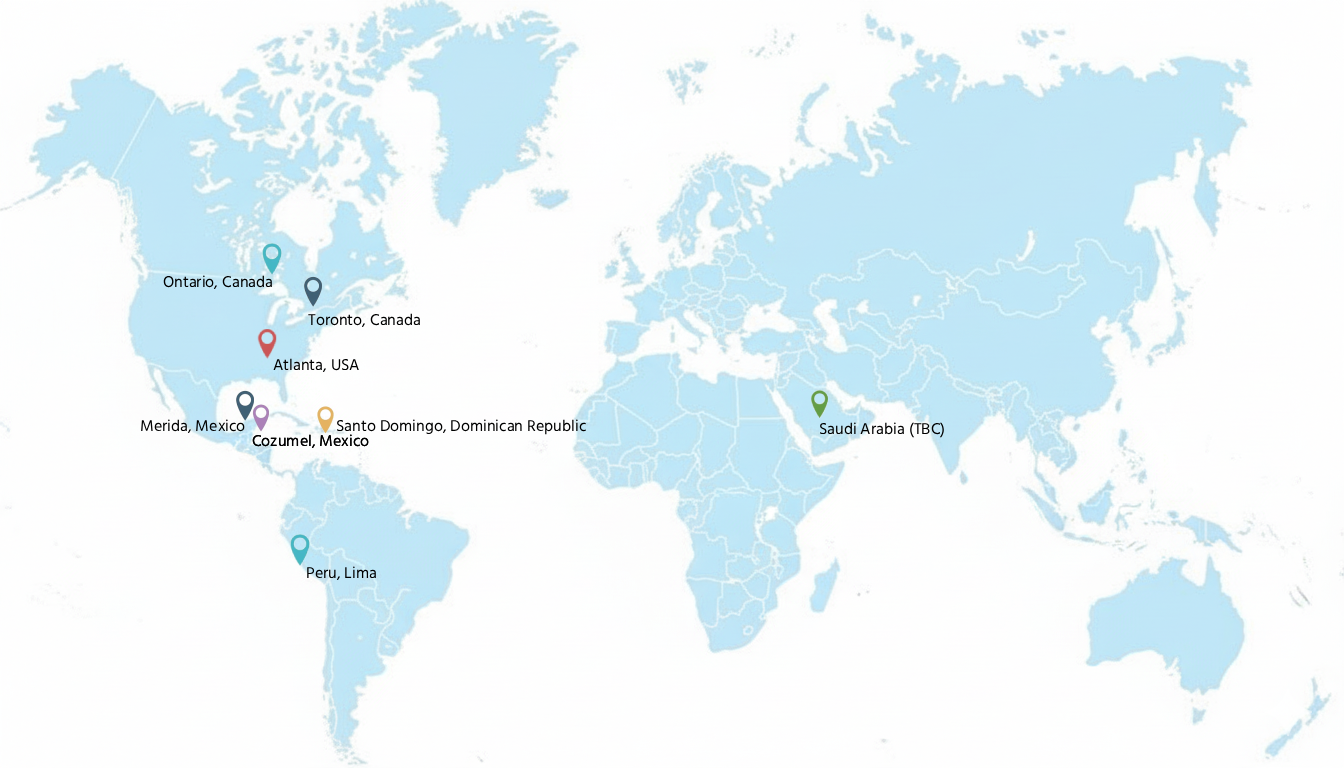
- Cozumel, Mexico (Latin America): January 29, 2026
Topics: Lactation Room Opening (CIFAL Merida) - Mérida, Mexico (Latin America): February 25, 2026
Topics: Neurodivergence Awareness (CIFAL Merida) - Mérida, Mexico (Latin America): March 23–24, 2026
Topics: XXI International Hurricane Seminar (CIFAL Merida) - Webinar (Global): April 15, 2026
Topics: Airport Operations & Emergency Management During Geopolitical Disruptions (CIFAL York) - Atlanta, USA (Global): April 22–23, 2026
Topics: Preparedness for Mega Events (CIFAL Atlanta) - Webinar (Global): April 27, 2026
Topics: Technology & Operational Barriers in Aviation Crisis Response (CIFAL York) - Santo Domingo, Dominican Republic (Caribbean): May 2026
Topics: Regional Workshop (CIFAL Miami) - Ontario, Canada (Global): September 2026
Topics: General Aviation Emergency Exercise (CIFAL York) - Lima, Peru (Latin America): September 21–25, 2026
Topics: Future-Proofing Airport Development (CIFAL Atlanta) - Speaker Series (Global): October 2026
Topics: Emergency Management & Business Continuity - Saudi Arabia (MENA): October 12–16, 2026
Topics: MENA Workshop (CIFAL Atlanta) - Toronto, Canada (Global): November 2026
Topics: Airport and Aviation Hackathons (CIFAL York)