

- The UNITAR Hiroshima Women’s Leadership in Tsunami-Based Disaster Risk Reduction for World Tsunami Awareness Day 2025 concluded with global online sessions and a regional workshop in Apia.
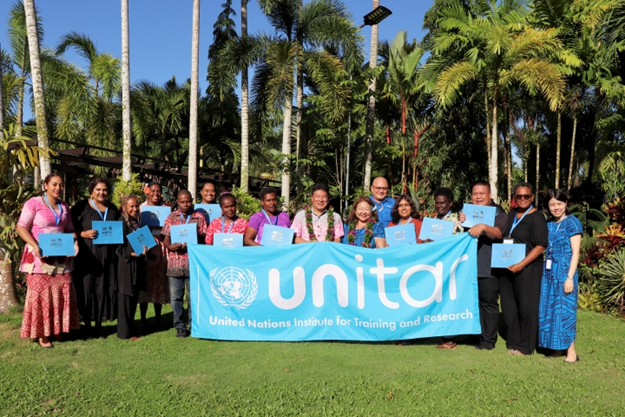
- 24 leaders from around the world joined the Phase II online track, from 3-17 February 2026, while 12 from six Pacific island countries participated in a four-day regional workshop in Apia, from 9 to 12 March 2026.
- Participants deepened their knowledge of disaster risk reduction and leadership. They developed community-based disaster risk reduction project plans and strengthened collaboration across regions.
UNITAR
10 April 2026, Hiroshima, Japan –The UNITAR Women’s Leadership in Tsunami-based Disaster Risk Reduction for World Tsunami Awareness Day 2025 training programme concluded on 12 March 2026, having brought together emerging leaders, especially women from Asia and the Pacific, to strengthen their skills in disaster risk reduction and community resilience.
Implemented by the UNITAR Hiroshima Project Office with the support of the Government and People of Japan, the programme aimed to empower leaders with knowledge and leadership skills to design inclusive disaster risk reduction strategies in their communities. It was delivered in two phases to build both foundational knowledge and practical leadership skills.
- Phase I, held from 10 September to 19 November 2025, consisted of asynchronous online learning, expert-led webinars and peer exchanges for participants from across the Asia-Pacific and beyond.
- In Phase II, selected participants from the global cohort joined live online sessions to develop their project concepts, while participants from Pacific island countries took part in an in-person regional workshop in Apia. The participants further deepened their understanding of disaster risk reduction and strengthened international and regional networks.
Through this blended learning approach, the programme created opportunities for participants to exchange experiences, build networks and strengthen their capacity to promote inclusive disaster risk reduction in their communities.
Phase II: Two Tracks to Strengthen Leadership
UNITAR
Online Global Track
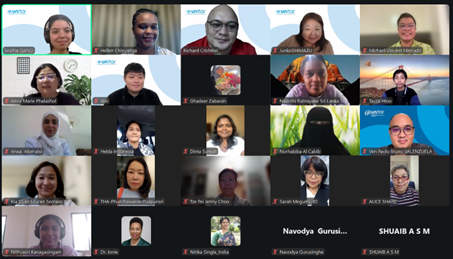
Phase II was divided into two tracks to maximize learning opportunities for participants: an online global track and an in-person Pacific track. Twenty-four participants from non-Pacific countries joined the global track, held from 3 to 17 February 2026. The online track consisted of five interactive workshops conducted via Zoom, combining expert presentations with participant-led discussions. Participants explored key themes in disaster risk reduction, including:
- Understanding hazards and risk assessment tools
- Leadership and management in disaster risk reduction
- Nature-based solutions and traditional ecological knowledge
- Inclusivity in disaster risk reduction and the principle of “Leave No One Behind”
- Health, safety and mental health considerations during disasters
Each session began with an expert lecture, followed by participant presentations of their disaster risk reduction project plans. The setup allowed participants to exchange ideas and receive feedback from peers and experts.
In-Person Pacific Track: Regional Workshop in Samoa
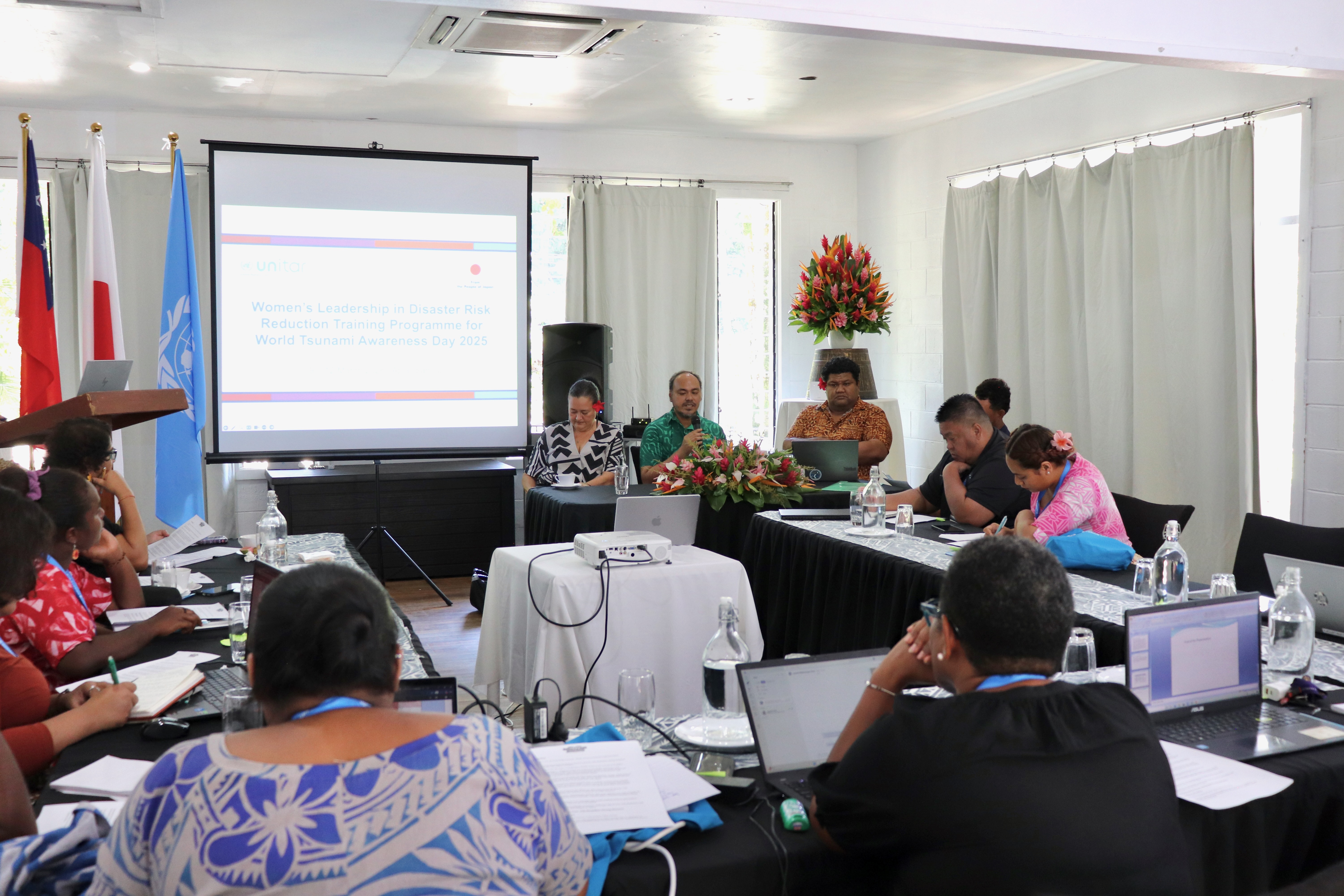
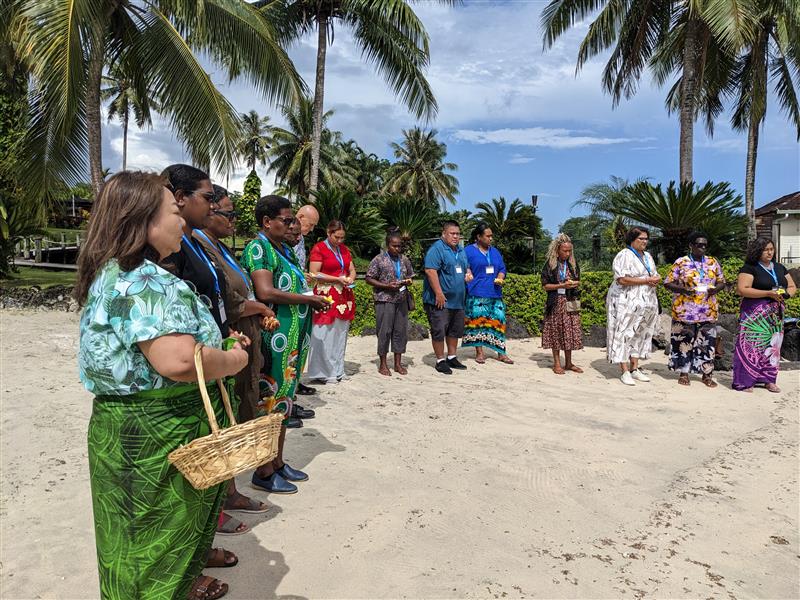
For the in-person Pacific track, 12 participants from six Pacific island countries were selected to participate in a four-day regional workshop in Apia, held from 9 to 12 March 2026. During the workshop, participants engaged in expert lectures, group exercises, discussions and study visits focusing on disaster resilience in the Pacific. The workshop also covered topics such as:
- Understanding hazards (geological, technological and hydrometeorological hazards)
- Ecosystem-based and community-based disaster risk reduction
- Leadership and management in navigating disaster risk reduction
- Pacific indigenous traditional knowledge and disaster resilience
- Post-disaster needs assessment
- Early warning systems and communications in disaster risk reduction
- Inclusivity in disaster risk reduction, with consideration to gender, persons with disabilities and other marginalized groups
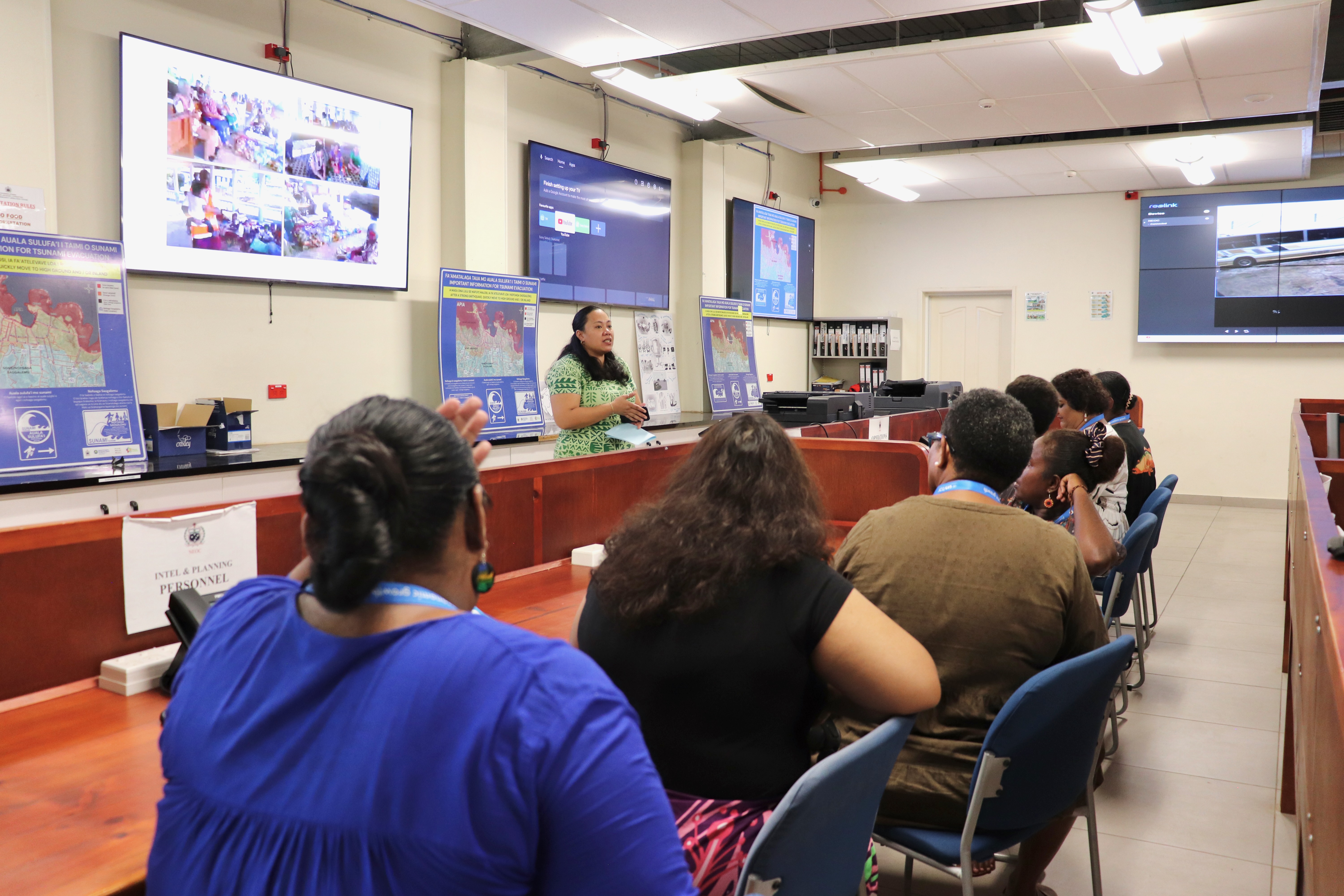
A highlight of the workshop was a study visit to the Samoa National Emergency Operation Centre, where participants gained firsthand insights into disaster preparedness and response mechanisms. Participants also visited Maninoa on the southern coast, where a local community member shared his experiences of the 2009 Samoa earthquake and tsunami.
Throughout the workshop, participants developed their disaster risk reduction project plans, which they presented during the final session of the programme.
UNITAR
UNITAR
UNITAR
Reflections from Participants
Participants shared that the programme provided valuable opportunities to deepen their knowledge of disaster risk reduction while strengthening regional and global networks.
This programme significantly strengthened my understanding of leadership in disaster risk reduction and the importance of inclusive, community-centred approaches. I deeply appreciate the opportunity to engage with global peers and experts. The training has enhanced my confidence to contribute meaningfully to disaster risk reduction initiatives within my country and beyond.” – Ms. Sachinthani Navodya Gurusinghe, Sri Lanka (Phase II Online Cohort)
I … had a wonderful opportunity to network with other Pacific island participants. We will bring what we learned to continue the disaster risk reduction work across the Pacific, providing future trainings and technical support in our respective areas of specialities.” – Phase II Pacific Workshop Participant
Participants welcomed the programme’s dual-track setup. Having both the global online track and the regional in-person track allowed participants from around the world to benefit from expert knowledge and peer exchange, and strengthen their capacity to address disaster risks in their communities.
This programme has been highly valuable and insightful. The content is relevant, well-structured and encourages critical reflection on inclusive disaster risk reduction. The discussions and learning materials helped broaden perspectives, particularly on ensuring that marginalized groups are meaningfully included in resilience-building efforts. The programme also reinforces the importance of removing barriers, strengthening leadership and local capacity, and truly ensuring that no one is left behind in resilience planning and implementation. I am truly grateful and pleased to have been part of this two-phase disaster risk reduction training programme." – Ms. Sarah Rosemery, Indonesia (Phase II Online Cohort)
About the Women’s Leadership in Tsunami-based Disaster Risk Reduction Training Programme for World Tsunami Awareness Day 2025
The Women’s Leadership in Tsunami-based Disaster Risk Reduction Training Programme for World Tsunami Awareness Day 2025 aimed to equip participants with the skills to design inclusive disaster risk reduction strategies. The programme was financially supported by the Government and People of Japan.
This two-phase programme selected participants from around the world who are passionate about women’s empowerment and disaster risk reduction. Phase I was a three-month asynchronous online learning experience with expert-led webinars and group exercises. Phase II invited the top 24 participants from non-Pacific countries to the online global track and the top 12 participants from Pacific countries to an intensive in-person workshop in Apia.
For more information, visit the programme webpage.