

- On 1 July, UNITAR launched the RISE LAB 2026, welcoming 238 young South Sudanese participants to a programme on entrepreneurship and innovation for food security.
- Offered free of charge with the support of the Government and People of Japan, the programme equips youth with practical business skills to create sustainable livelihoods.
- With an estimated 7.8 million people facing acute food insecurity in South Sudan, the programme responds to an urgent need for locally grounded, youth-led solutions.
- Following a three-phase approach — Learn, Apply, and Lead — the curriculum covers agribusiness, financial management, digital literacy and food security through self-paced lessons, webinars and mentorship.
- With a strong focus on inclusive participation, particularly young women, the programme aims to expand access to skills and create pathways for dignified livelihoods.
UNITAR
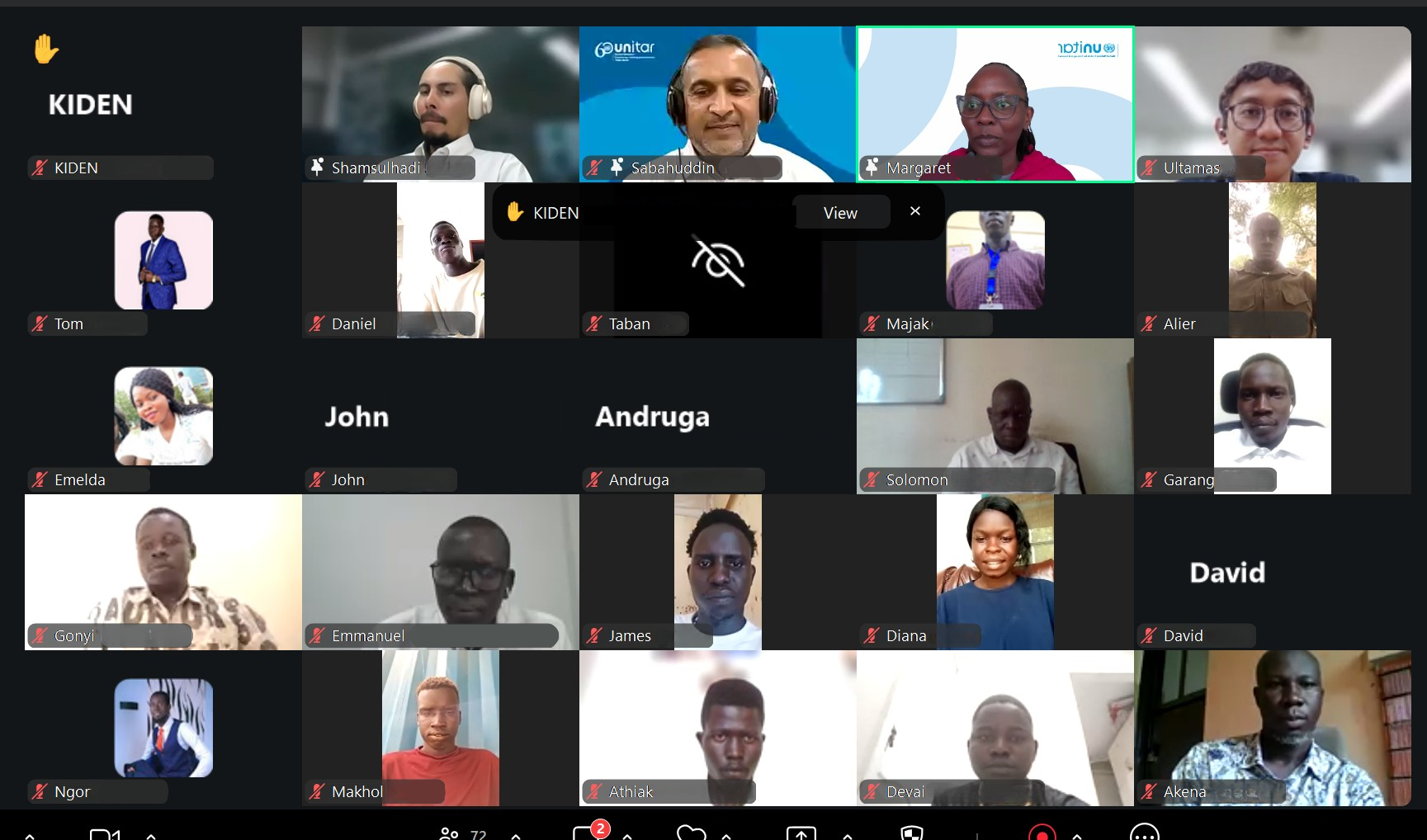
7 July 2026, Hiroshima, Japan - On 1 July 2026, the United Nations Institute for Training and Research (UNITAR) officially launched RISE (Resilient Ideas for Sustainable Entrepreneurship) LAB 2026: Advancing Youth Skills in Business and Innovation for Food Security in South Sudan through an onboarding webinar, welcoming 238 young participants from across South Sudan.
Offered free of charge with the generous support of the Government and People of Japan, the programme is designed to equip young people with practical knowledge, tools, skills and confidence to identify business opportunities, strengthen food security, and create dignified livelihoods through entrepreneurship and innovation.
Programme Launch and Key Focus Areas
The launch marked the beginning of a structured learning journey that will support participants to move from ideas to practical action. Through online learning, webinars, peer discussion, mentorship, and applied activities, participants will explore how entrepreneurship can address real challenges in their communities, especially those related to food systems, agribusiness, employment, and local economic development.
South Sudan continues to face serious development challenges, including food insecurity, limited livelihood opportunities, climate-related shocks, market disruption, and barriers to economic participation, particularly for young people and women. According to the Integrated Food Security Phase Classification, between April and July 2026, an estimated 7.8 million people in South Sudan are facing high levels of acute food insecurity, with some populations experiencing Catastrophe-level conditions. These realities highlight the urgent need for practical, locally grounded solutions that strengthen livelihoods while contributing to improved food security.
The programme supports participants with better understanding of the challenges around them, identifying viable business opportunities, assessing market needs, developing practical ideas, and gradually turning those ideas into sustainable initiatives.
During the onboarding webinar, participants were introduced to UNITAR and the RISE LAB team, the programme’s learning journey, the mobile-first learning platform, and the expectations for successful participation. The session also introduced the programme’s key focus areas, including:
- Entrepreneurial mindset
- Innovation
- Financial management
- Leadership
- Food security
- Agribusiness and livelihood development
- Digital literacy and project management
Participants will begin with self-paced online lessons, designed with short and practical approaches. The mobile-first learning platform will allow learners to study at their own pace, engage with peers through discussion forums, access learning resources in low-data environments and offline, and complete activities that help them apply key concepts to their own contexts.
Programme Structure
The programme follows a phased learning approach.
- Phase 1 Learn: participants will develop an entrepreneurial mindset, identify viable agribusiness and food security opportunities, build practical business skills that can help them generate income, strengthen livelihoods, and contribute to more resilient communities.
- Phase 2 Apply: participants will gain sector-specific skills to further develop their business ideas, while learning how to leverage innovation and partnerships.
- Phase 3 Lead: participants are expected to engage in mentorship, experiential learning, prototyping and a hackathon, where they will test and refine their ideas into more practical solutions.
Takeaway from the Launch Session
A key highlight of the onboarding session was the high level of interest and engagement shown by participants. Many asked thoughtful and practical questions about developing strong business ideas, turning those ideas into concrete initiatives, and connecting their learning with real opportunities in their communities. Participants also expressed interest in networking with businesses, learning from mentors, understanding how to attract investment and funding, and exploring ways to make their ideas more viable and sustainable.
These questions reflect the strong motivation of the young people of South Sudan to move beyond theory and engage with practical entrepreneurship. They also show the importance of creating learning spaces where young people can ask questions, exchange ideas, build confidence and receive guidance as they develop solutions linked to their own realities.
The programme places strong emphasis on inclusive participation. By supporting young people and especially women, it contributes to broader efforts to expand access to skills, strengthen local enterprise development, and create pathways for dignified livelihoods. In contexts where young people often face limited employment opportunities, entrepreneurship and innovation can provide an important pathway for self-reliance, leadership and community-level change.
Looking Ahead
Over the coming months, participants will take part in online lessons, weekly discussion forums, and webinars with subject matter experts and coaches, completing practical assignments and accessing additional learning resources.
By investing in youth-led innovation, UNITAR aims to empower young people in South Sudan to transform the challenges facing their communities into practical, locally driven solutions. The programme strives to help participants strengthen their skills, build confidence and create sustainable livelihoods, contributing to more resilient communities and improving food security.
The RISE LAB 2026 begins with a clear statement: South Sudan’s young people are not only learners, but also innovators and future leaders who can play a meaningful role in shaping more sustainable and food-secure communities.
About UNITAR
Established in 1965, the United Nations Institute for Training and Research (UNITAR) is the dedicated training arm of the United Nations. Its mission is to strengthen knowledge and skills through high-quality training, research and innovative learning solutions.
Through strategic partnerships and a global learning platform, UNITAR builds skills of individuals, and enhances capacities of institutions and organizations, particularly those in vulnerable contexts, to accelerate progress towards the 2030 Agenda for Sustainable Development and the Pact for the Future.