

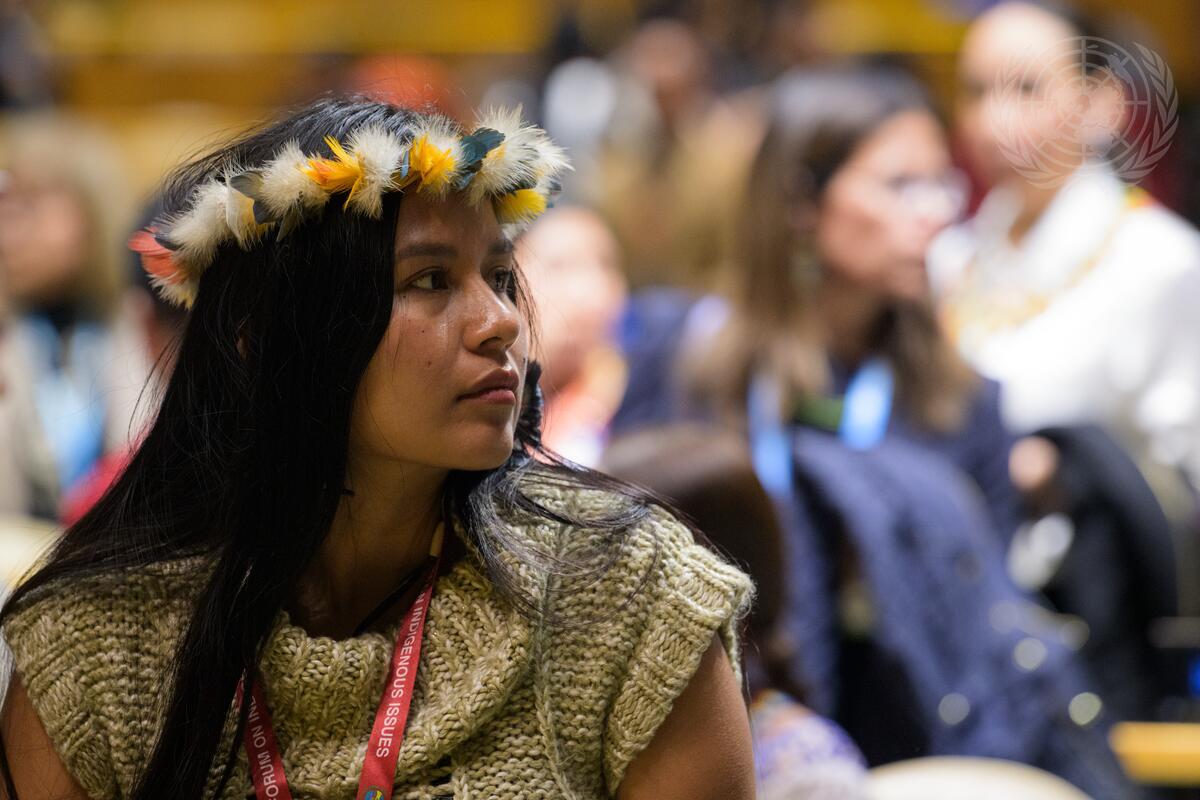
UN Photo/Manuel Elías
20 May 2026, New York, USA - The United Nations Institute for Training and Research (UNITAR), in partnership with the University of Kansas School of Law and the University of Utah S.J. Quinney College of Law, delivered a two-part online series titled Strengthening Pathways for Indigenous Peoples’ Representation at the UN on 9 and 16 April 2026
Guided by the principles of self-determination enshrined in the United Nations Declaration on the Rights of Indigenous Peoples (UNDRIP), the series aimed to strengthen participants’ understanding of Indigenous Peoples’ engagement within the United Nations system and promote more inclusive, rights-based approaches to multilateral participation.
EXPLORING INDIGENOUS PARTICIPATION IN THE UNITED NATIONS SYSTEM
Led by Shawn K. Watts, Lecturer of Law, Director of the Tribal Judicial Support Clinic from University of Kansas School of Law and Supreme Court, and Jacqueline Esty Morrison, Associate Professor (Lecturer), Director of Experiential Education from University of Utah S.J. Quinney College of Law, the series brought together participants from diverse professional and academic backgrounds to examine the frameworks, mechanisms, and processes supporting the full, direct, and meaningful participation of Indigenous Peoples at the United Nations.
The two sessions focused respectively on Free, Prior and Informed Consent (FPIC) and the Permanent Forum on Indigenous Issues, highlighting key dimensions of Indigenous engagement within the multilateral system.
Participants engaged in guided discussions and interactive group exercises exploring the evolving relationships between states and Indigenous Nations, as well as the development and significance of UNDRIP within international human rights discourse.
STRENGTHENING UNDERSTANDING OF KEY UN MECHANISMS
Particular emphasis was placed on the principle of Free, Prior and Informed Consent as a cornerstone of Indigenous rights and self-determination, alongside the structure, mandate, and ongoing work of the Permanent Forum on Indigenous Issues.
The training also introduced participants to key UN mechanisms supporting Indigenous Peoples, including the Expert Mechanism on the Rights of Indigenous Peoples (EMRIP), the Special Rapporteur on the Rights of Indigenous Peoples, and support structures such as the Voluntary Fund and the System-Wide Action Plan (SWAP).
By strengthening participants’ knowledge of UN processes and Indigenous rights frameworks, the series reinforced UNITAR’s continued commitment to advancing meaningful participation, inclusive dialogue, and capacity-building across the multilateral system.