
Photo Credit: UNITAR
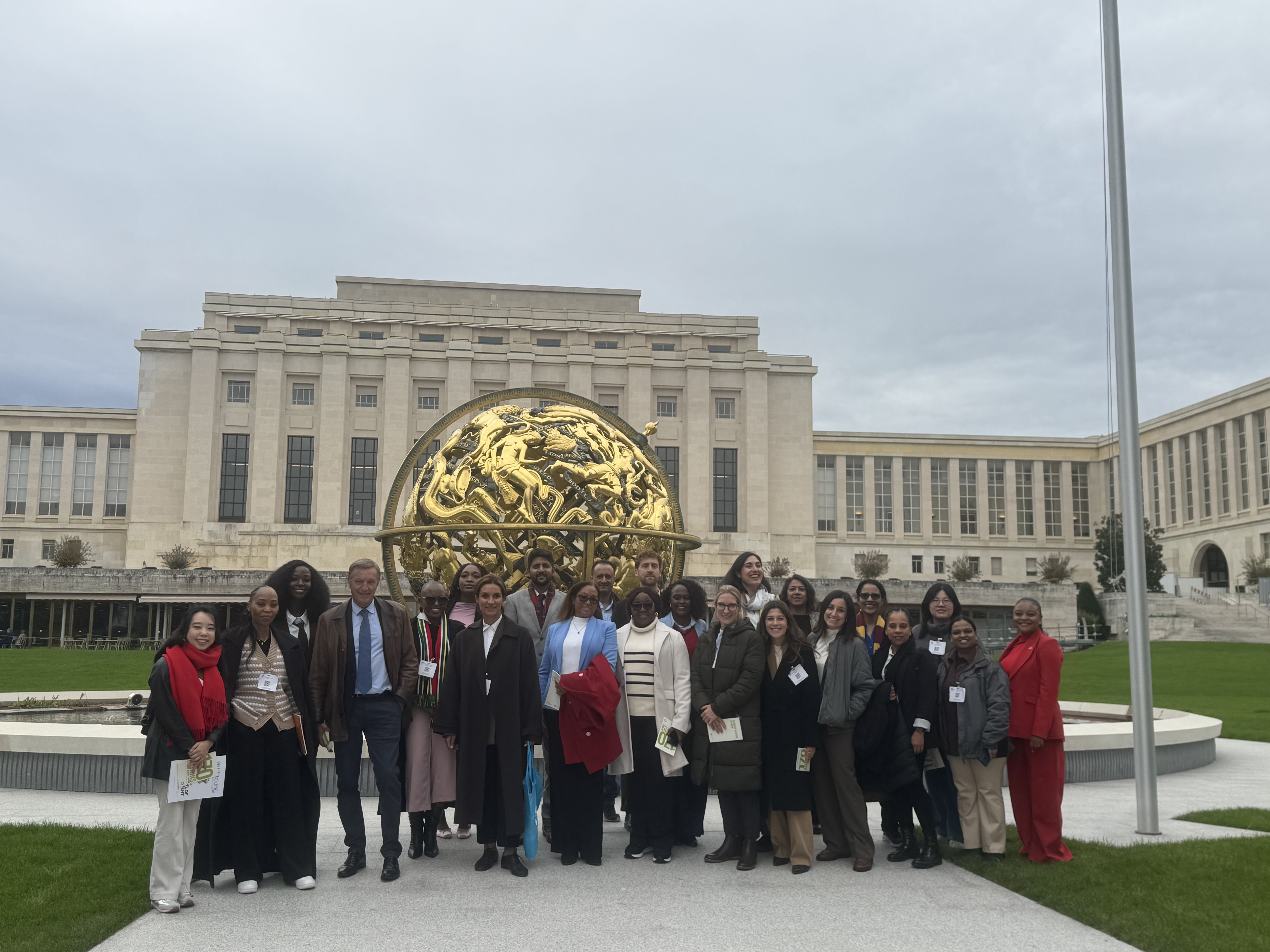
26–30 October 2026, Geneva, Switzerland – The United Nations Institute for Training and Research (UNITAR) successfully concluded the inaugural United Nations Climate Change Study Programme, bringing together professionals for a five-day programme on international climate governance, climate science, climate finance, and practical pathways towards a just and inclusive green transition. 27 participants from 18 countries engaged directly with 28 experts representing 20 organizations from United Nations agencies, international organizations, scientific institutions, academia, the private sector, and civil society to explore how international climate commitments can be translated into effective action at national and global levels.
As countries work to accelerate implementation of the Paris Agreement and strengthen their climate ambitions, developing the knowledge and skills needed to advance climate action remains essential. The programme provided participants with practical insights into the science-policy interface, climate mitigation and adaptation, disaster risk reduction, sustainable infrastructure, climate finance, and the skills and technologies required to support a green transition
Day 1: Global Climate Governance and International Cooperation
The programme opened by examining the role of the United Nations system and International Geneva in shaping climate diplomacy and international cooperation. Discussions explored how governments, international organizations, and other stakeholders can work together to turn global commitments into tangible results. A panel on Global Climate Commitments in Practice brought perspectives from Villars Institute, the Swiss Plasma Centre, and Zoi Environment Network.
In his opening remarks, Mr. Angus Mackay, Director of UNITAR’s Division for Planet, highlighted that "the UN needs to become more open to professionals across multiple sectors and cadres so that they have the opportunity to engage directly with UN staff. The climate study programme provides exactly this in ways that feel fresh and energising".
Day 2: Climate Science, International Agreements, and the Science-Policy-Action Interface
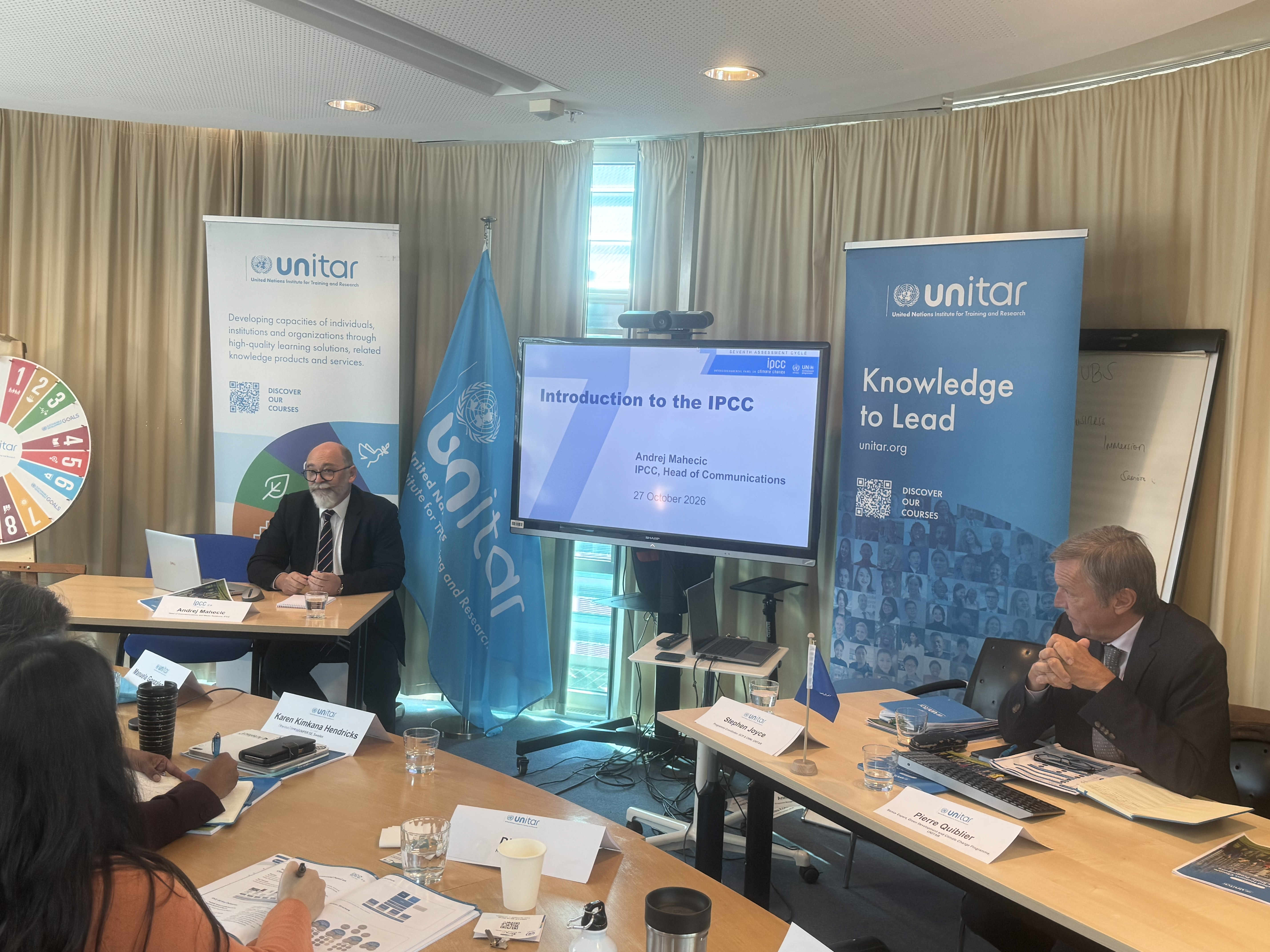
Understanding the science behind climate change is essential to developing effective policies and responses. Contributions from the World Meteorological Organization (WMO) and the Intergovernmental Panel on Climate Change (IPCC) explored observed climate trends, climate prediction, and how scientific assessments inform mitigation, adaptation, and climate-risk management.
These discussions were complemented by sessions on the United Nations Framework Convention on Climate Change (UNFCCC) process and the role of the United Nations Office for Disaster Risk Reduction (UNDRR) in strengthening resilience. Participants also took part in an interstakeholder simulation focused on consulting a national climate action strategy, considering how scientific evidence, institutional coordination, and diverse stakeholder priorities can shape national climate planning.
On the role of the Convention on Climate Change process, Mr. Gianluca Crispi, Legal Officer, UNFCCC, stated, "COP31 is important because it must turn global climate pledges into practical action that improves people’s lives. By advancing inclusive, adequately financed solutions, COP31 can help cut emissions, strengthen resilience, and keep the 1.5°C goal within reach."
Day 3: Climate Action Across Sectors — Challenges and Solutions
Effective climate action requires coordinated responses across interconnected sectors. Sessions with the World Health Organization (WHO) and UN-Water examined the implications of climate change for health, clean water, and sanitation, highlighting the importance of resilient systems and integrated policy approaches.
The programme also explored low- and zero-carbon technologies for just energy systems through the United Nations Economic Commission for Europe (UNECE), alongside sustainable infrastructure and procurement with the United Nations Office for Project Services (UNOPS). An institutional visit to SIG's GeniLac underground pumping station brought these discussions into practice, demonstrating how innovative infrastructure can contribute to more sustainable urban development.
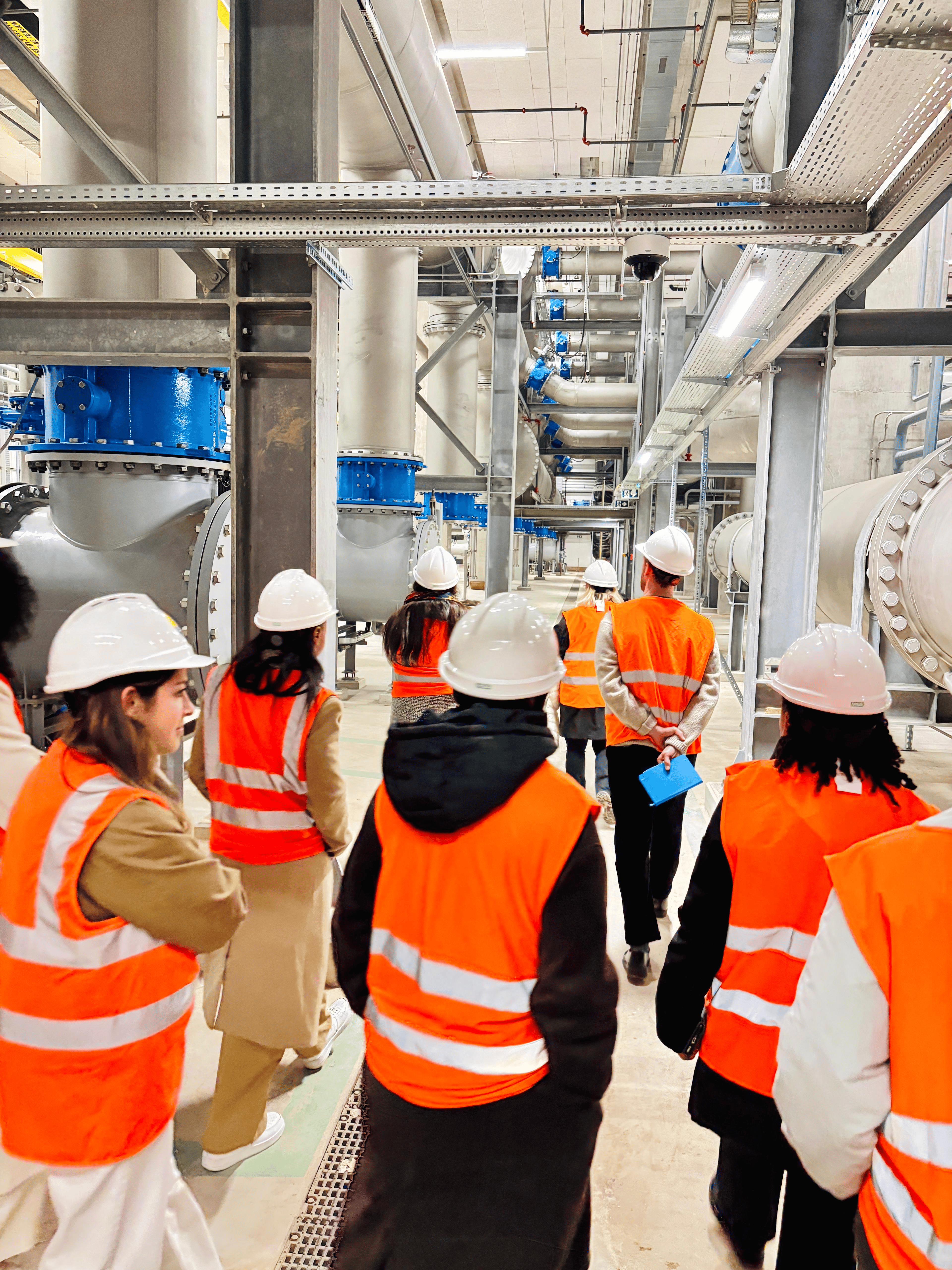
Photo Credit: UNITAR
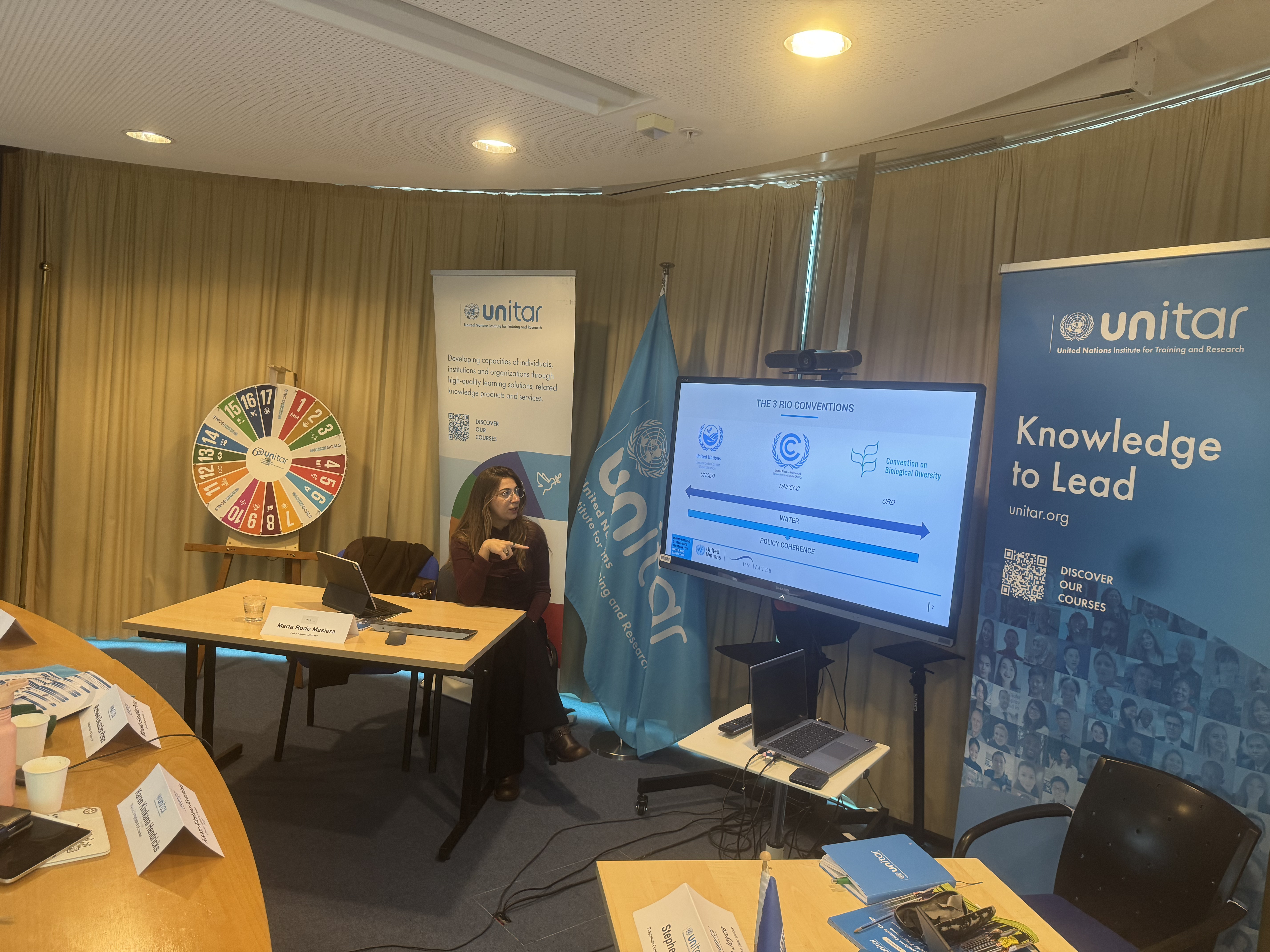
Photo Credit: UNITAR
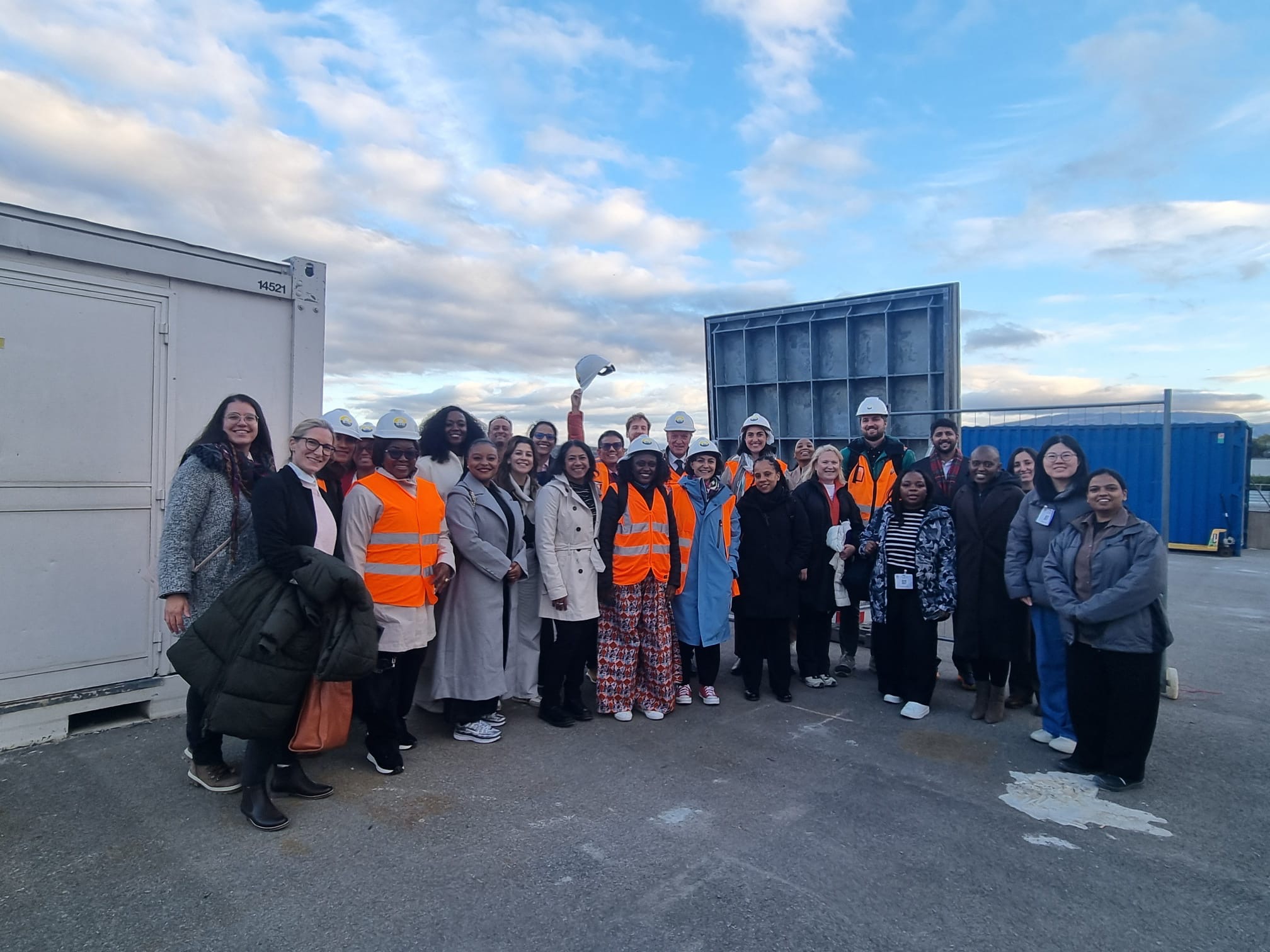
Photo Credit: UNITAR
Day 4: Climate Finance, Green Skills, and an Inclusive Transition
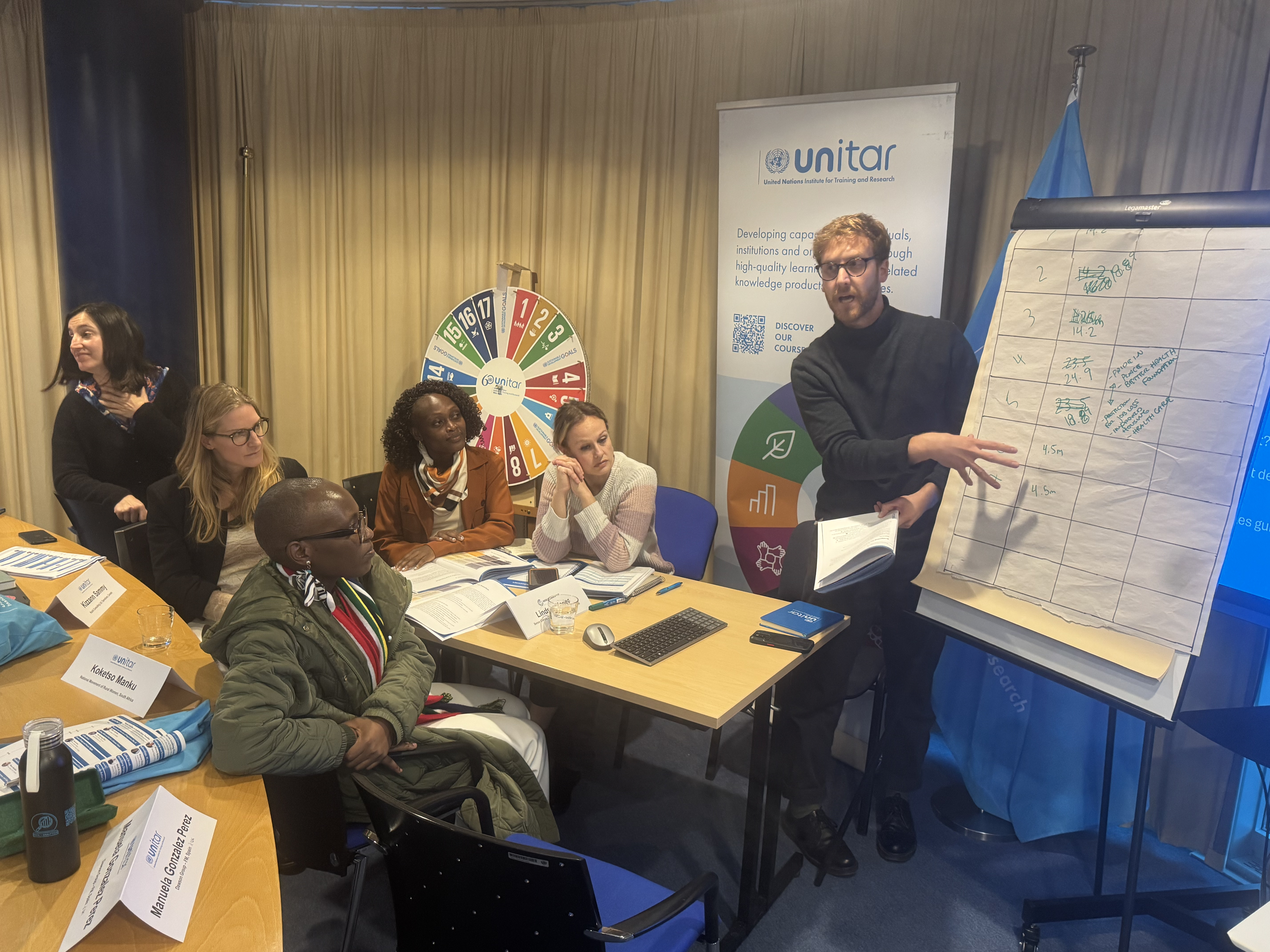
Photo Credit: UNITAR
Moving towards a low-carbon economy requires more than technological innovation: it also depends on investment, skills development, and inclusive policies. The International Labour Organization (ILO) explored the skills and employment opportunities associated with the green transition, while the Office of the United Nations High Commissioner for Human Rights (OHCHR) addressed the relationship between climate change, human rights, and inclusive environmental policy.
Economic policy and sustainable finance were also central themes. The United Nations Environment Programme (UNEP), through its Partnership for Action on Green Economy (PAGE), examined green economic transformation and public finance. A climate finance panel featuring the World Bank Group and the United Nations Environment Programme Finance Initiative (UNEP FI) considered how public and private investment can be mobilized to support climate objectives. The day culminated in a practical exercise on budgeting for a just transition, allowing participants to consider how financial decisions can support climate objectives while addressing social inclusion and equitable development.
Closing Reflections
Looking ahead to COP31, the programme explored how technology, partnerships, and organizational leadership can accelerate climate action. The International Telecommunication Union (ITU) examined the potential of digital technologies and artificial intelligence to support sustainable development, while EY shared perspectives on environmental, social, and governance (ESG) approaches and corporate responsibility.
These discussions came together in the Climate Action Solution Lab, where participants collaborated on practical responses to climate challenges, drawing on the week's learning across policy, finance, technology, skills development, and stakeholder engagement.
Pierre Quiblier, Senior Expert, Green Development and Climate Change Programme, UNITAR, and facilitator of the programme, stated: "The United Nations Climate Change Study Programme is unique in providing the necessary skills, training capacity, and learning solutions at the intersection of scientific understanding, policy development, and practical implementation to enable decision-makers to understand the value of information, catalyse strategic partnerships and translate them into responsible actions".
The programme concluded with a closing ceremony and the presentation of certificates, marking the completion of a week dedicated to strengthening professional capacities and international cooperation.
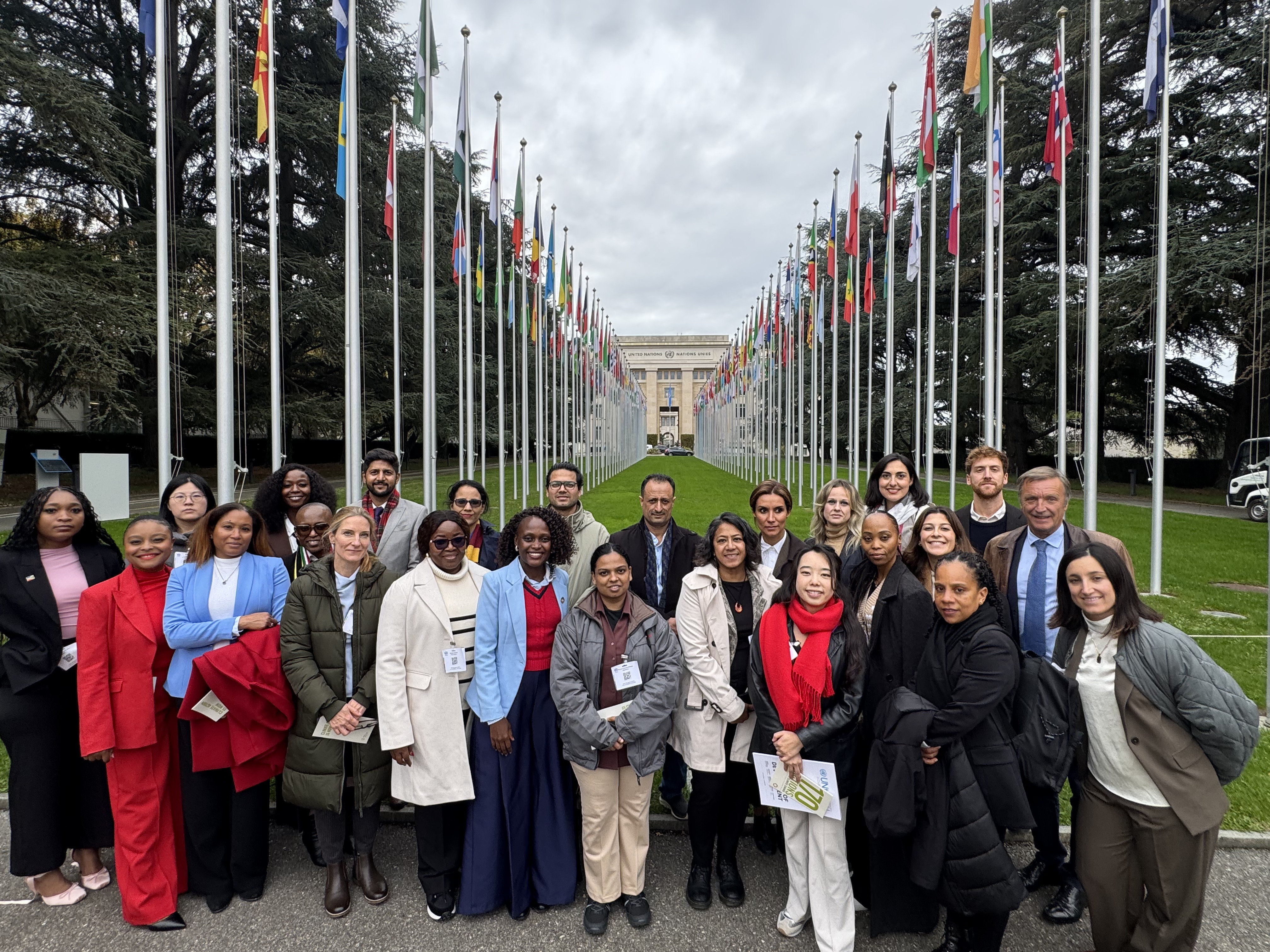
Photo Credit: UNITAR
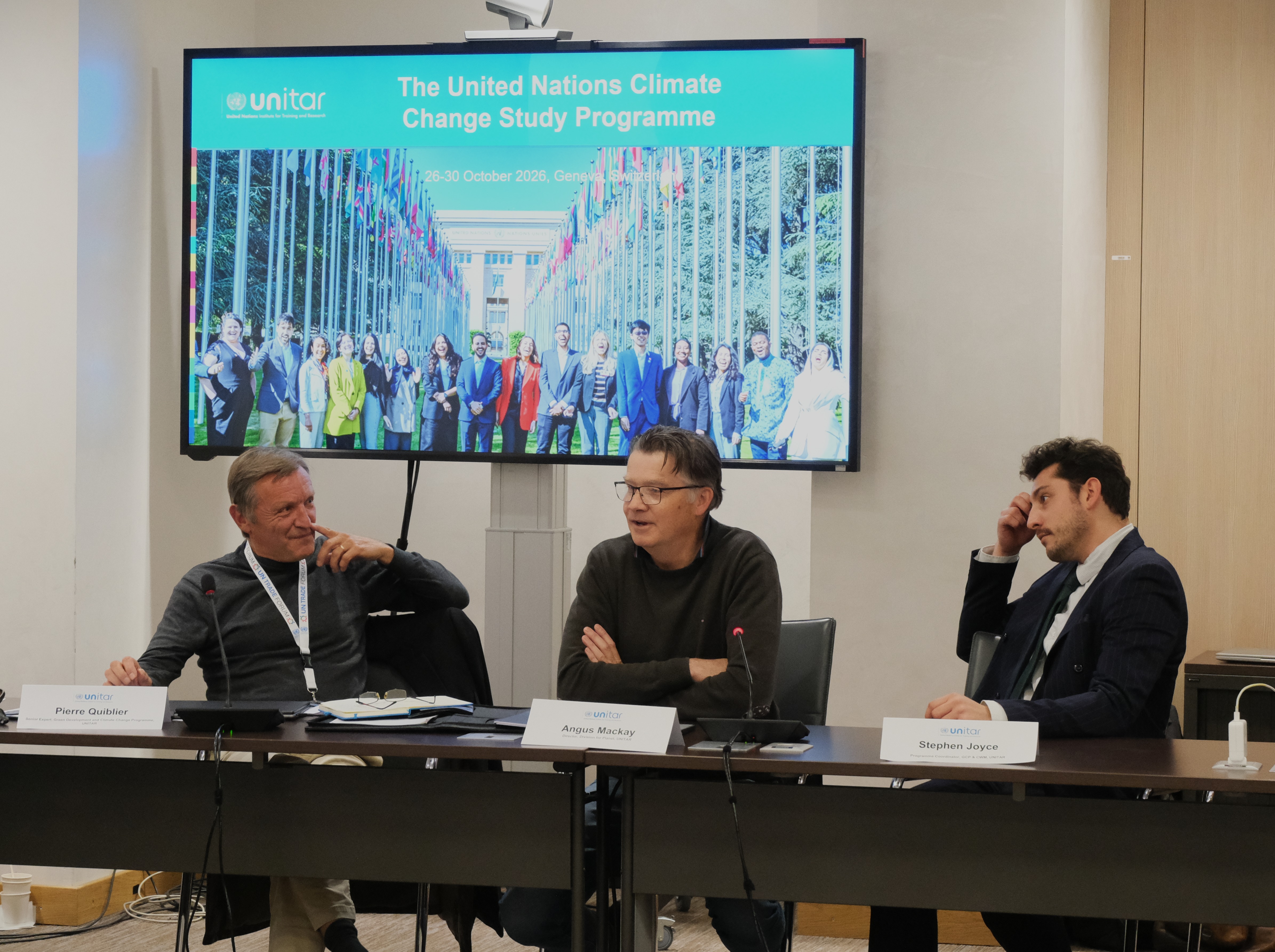
Photo credit: UNITAR
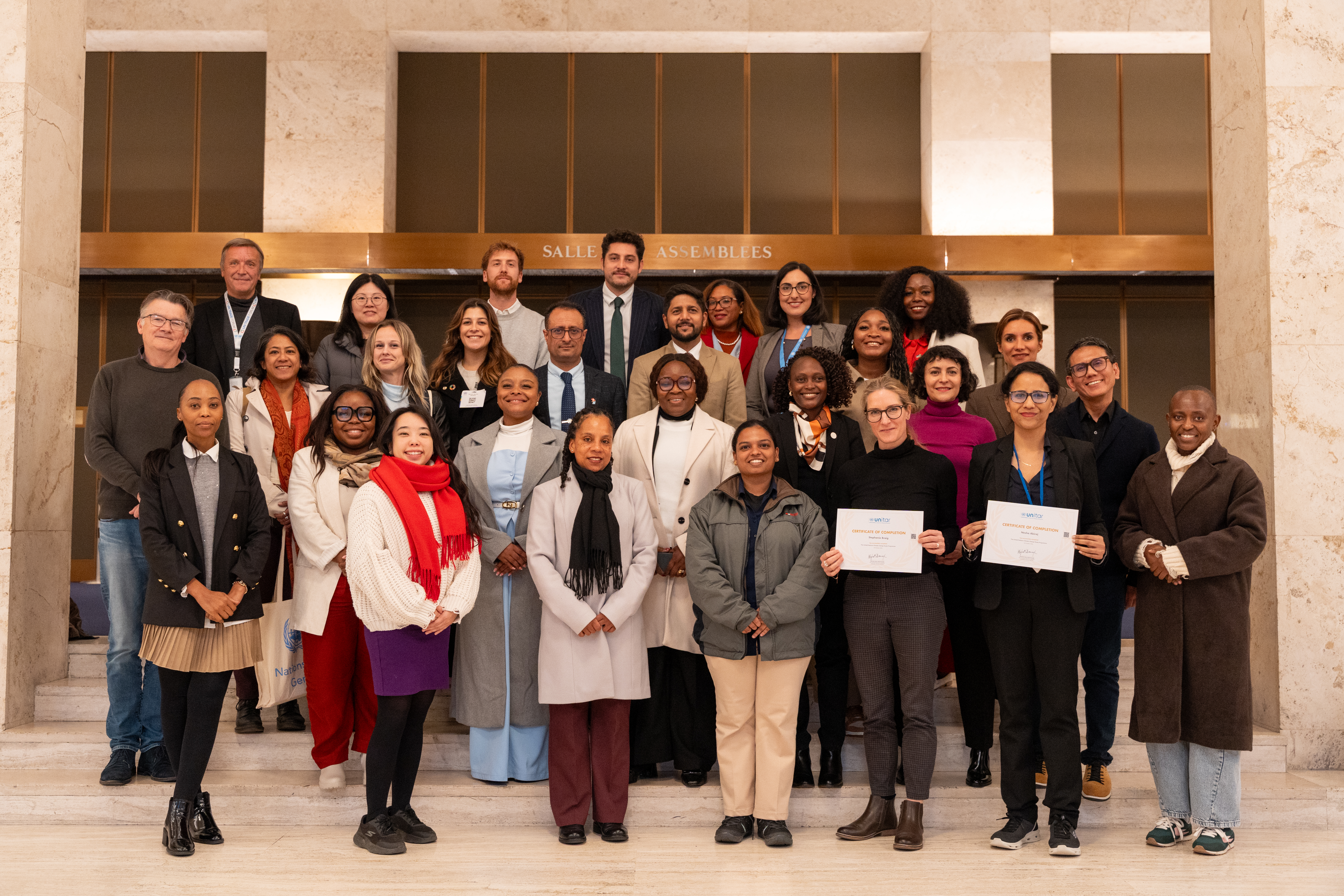
Photo Credit: Lorenzo Franchi, UNITAR
Acknowledgements
UNITAR gratefully acknowledges the contributions of experts and representatives from the following organizations and institutions who supported the programme: the WMO, the UNFCCC secretariat, the IPCC, UNDRR, WHO, UN-Water, UNECE, UNOPS, OHCHR, ILO, UNEP FI, PAGE, ITU, the World Bank Group, EY, the Villars Institute, Zoi Environment Network, and the Swiss Plasma Center at EPFL.