

Mobilizing Global Partnerships to Advance Low-Carbon and Sustainable Cities
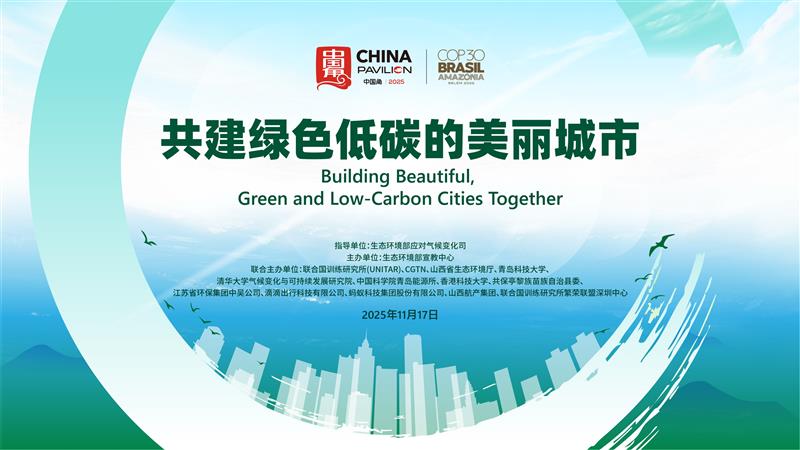
- UNITAR co-hosted the COP30 side event “Building Beautiful Low-Carbon Cities Together” with the Ministry of Ecology and Environment of the People’s Republic of China (MEE), China Global Television Network (CGTN), and the Prosperity Alliance Shenzhen (GBA) on 17 November 2025 in Belem, Brazil.
- Over 100 participants from government agencies, international organizations, academia, the private sector, and media exchanged low-carbon urban development practices from China, Brazil, and beyond.
- The event reaffirmed that low-carbon and sustainable cities require not only green technologies but also strong local institutional capacity, policy innovation, mutual learning, and skills development.
UNITAR
1 December 2025, Belem, Brazil – On 17 November 2025, the United Nations Institute for Training and Research (UNITAR), together with the Ministry of Ecology and Environment of the People’s Republic of China (MEE), China Global Television Network (CGTN), and the Prosperity Alliance Shenzhen (GBA), co-hosted a side event “Building Beautiful Low-Carbon Cities Together” during the 30th Conference of the Parties to the UN Framework Convention on Climate Change (COP30) in Belem, Brazil.
The event, held at the COP30 China Pavilion, brought together over 100 participants from government agencies, international organizations, academia, the private sector, and media to share low-carbon urban development practices from China, Brazil, and beyond. The participants explored how green innovation and smart urban transformation can drive sustainable and inclusive economic growth.
Opening Forum: Working Together for Green and Sustainable Urban Development
China’s Vice Minister of Ecology and Environment, Mr. Li Gao, delivered opening remarks at the side event, presenting China’s systematic efforts and progress in advancing green and low-carbon urban development. He expressed his hope that this side event will help deepen exchange and cooperation, and contribute momentum to global climate governance.
Cities account for more than 70 per cent of global carbon emissions. Advancing urban low-carbon transition is not only essential for addressing climate change; it is also a key pathway to achieving high-quality development.
– Li Gao, Vice Minister, China Ministry of Ecology and Environment
UNITAR
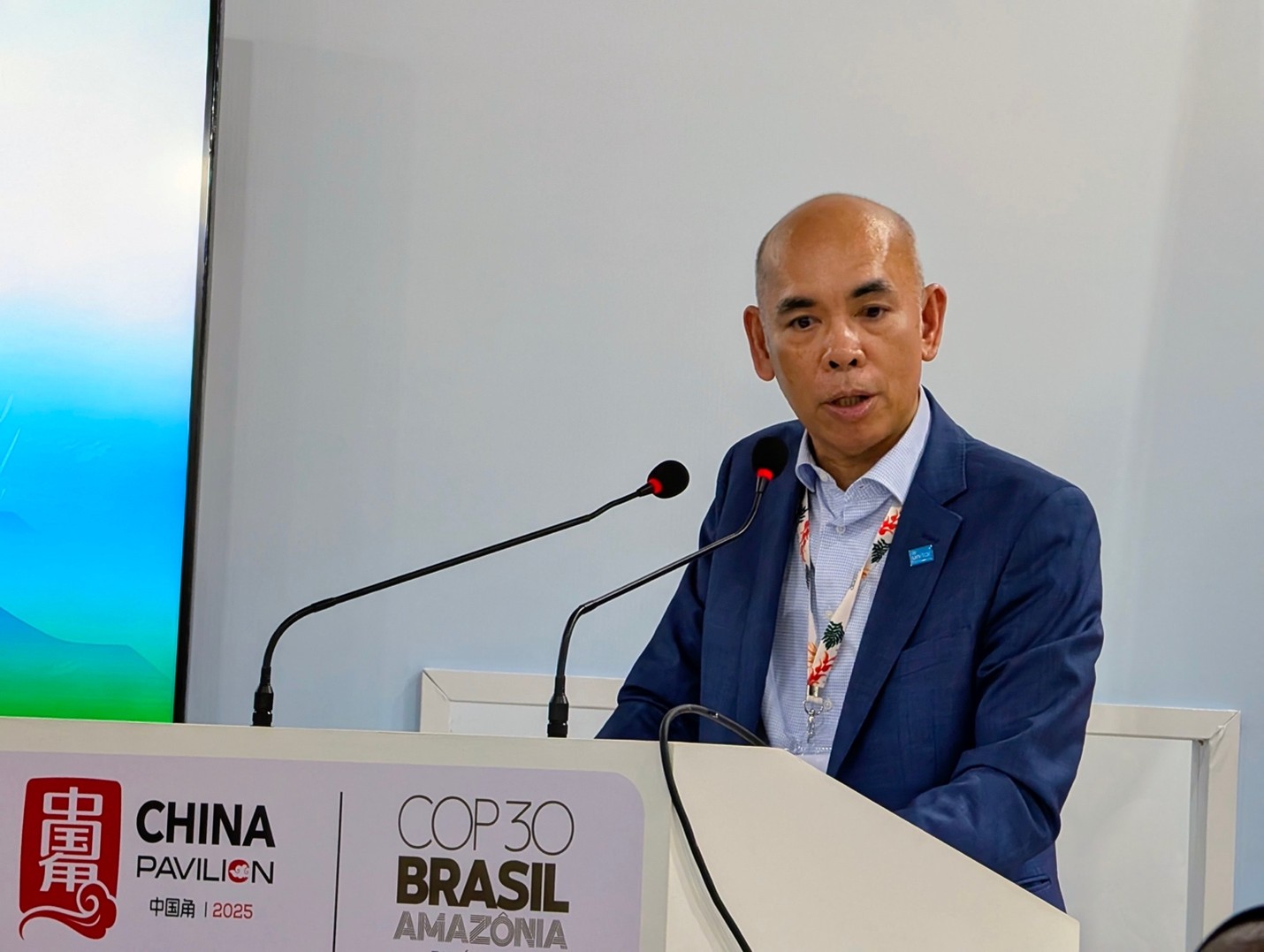
Michael Adalla, Senior Programme Officer of UNITAR's Division for Prosperity, underscored the critical role of capacity-building in advancing climate action and the transition towards low-carbon and sustainable cities. Emphasizing that urban transformation cannot be achieved by any single sector, Mr. Adalla highlighted the need for coordinated action across sectors. He also reaffirmed UNITAR’s long-standing commitment to building capacity and supporting policy development across the Global South.
Representing the private sector, the CEO of CHOREN Energy Technology (Beijing) Co. Ltd. highlighted the critical role of enterprises in advancing the transition towards green and efficient energy systems. He underscored that private enterprises must serve as “drivers and enablers” of low-carbon development through sustained investment, research and development, and cross-regional collaboration.
Roundtable Discussion: Green Technologies Driving Urban Prosperity and Sustainability
UNITAR
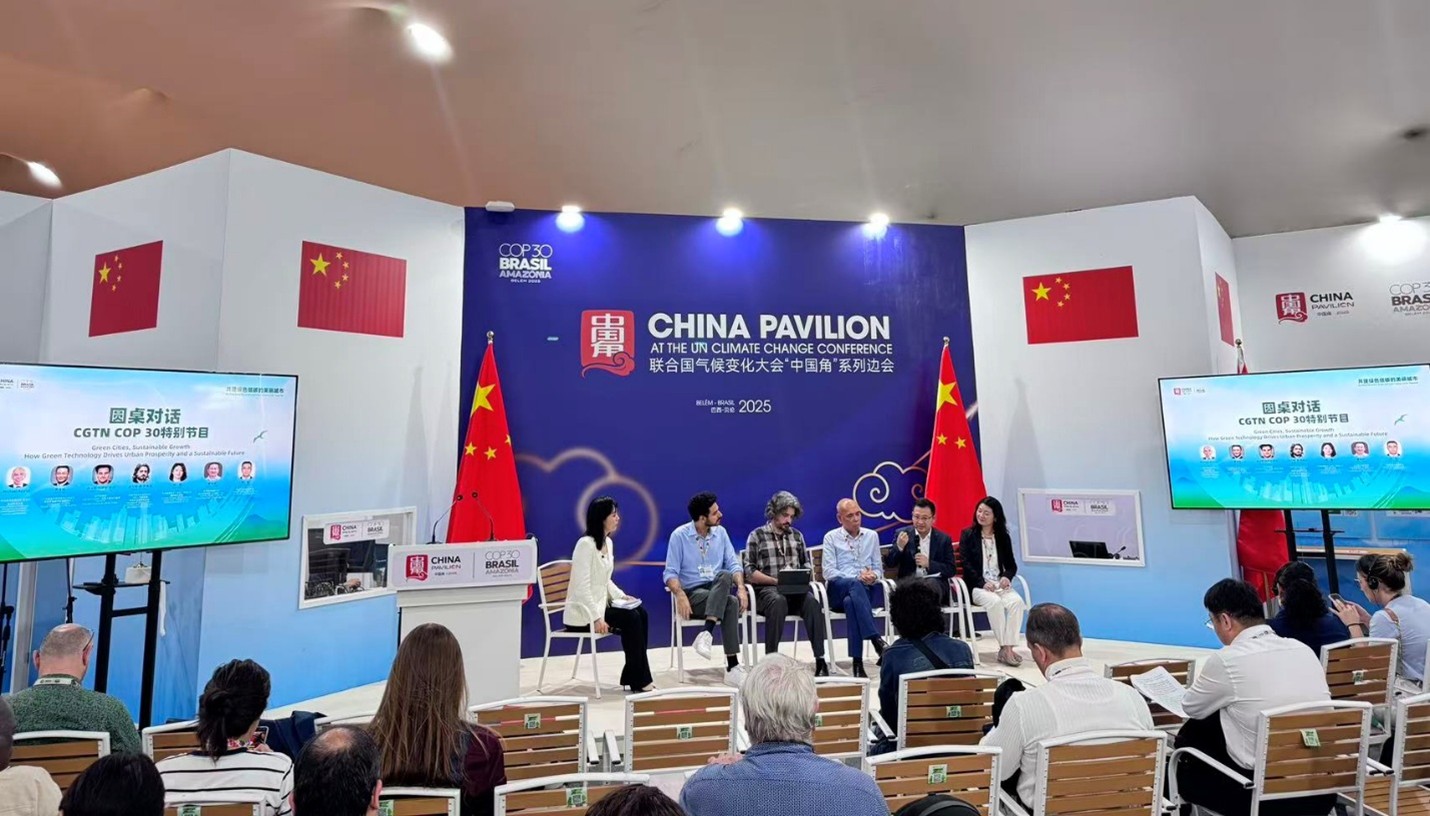
As part of the side event, UNITAR, CGTN Shenzhen, Prosperity Alliance Shenzhen (GBA), and Longhua District (China) organized a roundtable “Green Cities, Sustainable Growth: Green Technologies Driving Urban Prosperity and a Sustainable Future” to deep-dive into green and low-carbon urban transformation. The discussion highlighted the contributions of private enterprises, media organizations, and international institutions in advancing green innovation. Speakers exchanged perspectives on green technology for urban prosperity, public–private partnerships for sustainable innovation, and cooperation frameworks among countries of the Global South.
UNITAR
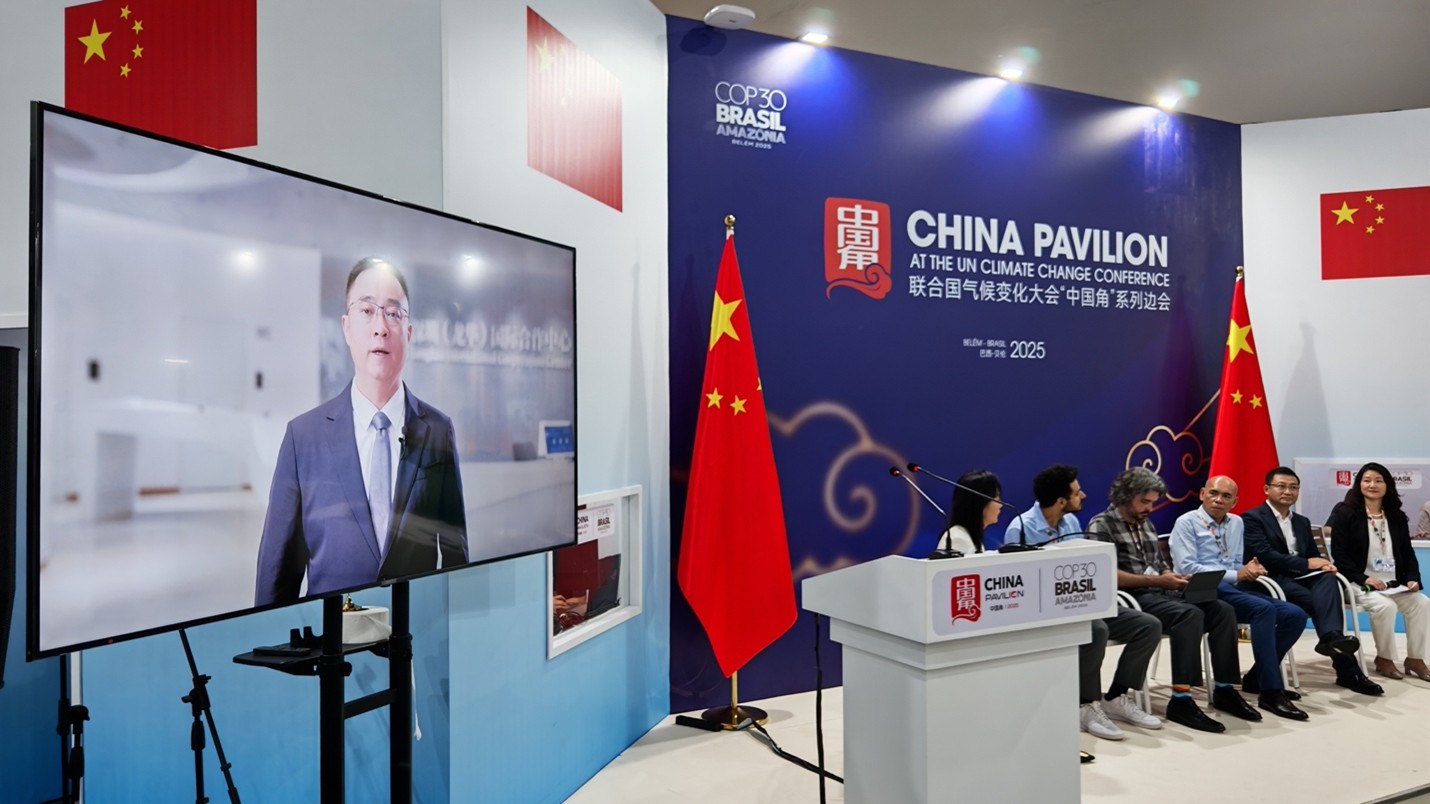
Participating virtually, Mr. Zhang Zhi, Member of Shenzhen Longhua District Standing Committee, together with Mr. Dong Haitao, Director of Prosperity Alliance Shenzhen (Greater Bay Area) —a UNITAR-affiliated initiative—shared insights from Shenzhen’s Longhua District as a leading example of smart-city and green urban development.
Mr. Zhang highlighted Longhua’s advancements in digital governance, smart mobility, clean-energy deployment, low-carbon industrial transformation, and the development of innovation-driven green communities. Mr. Dong emphasized cities’ need to develop capacity so they can design, implement, and scale climate and smart-city policies. He affirmed Prosperity Alliance Shenzhen’s commitment to working with UNITAR to enhance knowledge-sharing, deepen multilateral cooperation, and support cities in building more inclusive, resilient, and low-carbon urban futures.
The discussion extended to low-carbon urban practices from China, Brazil, and beyond—spanning renewable energy, smart mobility, and green infrastructure—and reaffirmed the importance of systematic, replicable, and collaborative approaches.
The side event reaffirmed that advancing low-carbon and sustainable cities requires not only green technologies but also strong local institutional capacity, policy innovation, mutual learning, and skills development.
UNITAR aims to translate these insights into action by scaling targeted capacity-building programmes, enhancing platforms for cross-regional knowledge exchange, and promoting replicable models for green and inclusive urban transformation.
About UNITAR
The United Nations Institute for Training and Research (UNITAR) is a dedicated training arm of the United Nations. In 2024, UNITAR trained approximately 550,000 learners around the world to support their actions for a better future. UNITAR has a global presence, with offices in Geneva, Hiroshima, New York and Bonn and networks around the world. Find out more at unitar.org