

- UNITAR, together with the Hiroshima and Nagasaki Prefectural Governments, co-hosted the 2026 Review Conference of the Parties to the Treaty on the Non-Proliferation of Nuclear Weapons (NPT) side event, “Nuclear Disarmament Obligation: Humanitarian, Development, and Peace”, led by the Government of Kazakhstan.
- The event was chaired by Mr. Azamat Kairolda, Deputy Permanent Representative of the Republic of Kazakhstan to the United Nations in New York.
- Local government officials, experts and youth activists discussed the humanitarian, development and peace dimensions of nuclear disarmament obligations.
- Advancing nuclear disarmament and providing essential support to victims of nuclear testing and hibakusha constitute a collective responsibility of the international community.
- The panel also discussed the establishment of an independent monitoring body to assess the implementation of the NPT 2010 Action Plan 10, as well as providing more skills development training for youth to advocate for nuclear disarmament.
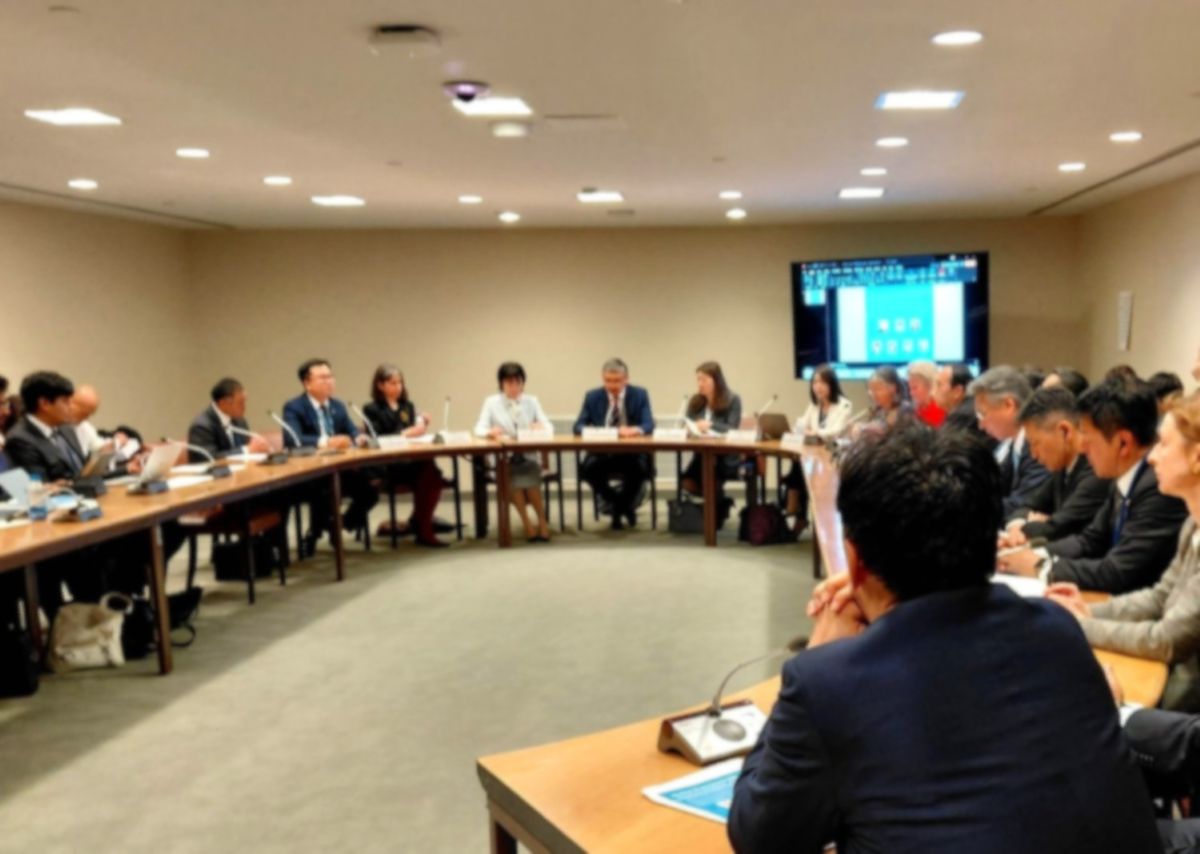
UNITAR (To protect participants’ privacy, the image has been intentionally blurred)
28 April 2026, Hiroshima, Japan – On 27 April 2026, UNITAR, with the Hiroshima and Nagasaki Prefectural Governments, co-hosted a side event to the 2026 Review Conference of the Parties to the Treaty on the Non-Proliferation of Nuclear Weapons (NPT) at the United Nations Headquarters in New York. The side event, titled “Nuclear Disarmament Obligation: Humanitarian, Development, and Peace” and led by the Government of Kazakhstan, featured a panel discussion of government representatives, experts and young people and aimed to identify actions that raise awareness of the humanitarian and environmental impacts of nuclear weapons, support implementation of the NPT Action Plan and strengthen advocacy for nuclear disarmament.
Over 50 panellists and guests participated, including Mr. Azamat Kairolda, Deputy Permanent Representative of the Republic of Kazakhstan to the United Nations in New York; Ms. Mika Yokota, Governor of Hiroshima Prefecture; Ms. Yuko Baba, Vice Governor of Nagasaki Prefecture; and Mr. Takashi Nakamoto, Speaker of the Hiroshima Prefectural Assembly.
In the panel discussion, Dr. Ivana Nikolić Hughes, President of the Nuclear Age Peace Foundation, emphasized the necessity of highlighting the humanitarian and environmental consequences of nuclear incidents and tests, which frequently surpass scientific predictions and threaten human security. She further asserted that providing essential support to victims of nuclear testing and hibakusha (atomic bombing survivors) constitutes a collective responsibility of the international community.
Professor Kazuko Hikawa, Vice Director of the Research Center for Nuclear Weapons Abolition at Nagasaki University, recommended that civil society actively engage and strengthen transparency and accountability mechanisms to monitor the implementation of the NPT Action Plan. She cited the Hiroshima Report as an excellent example of consistent, civil society-led monitoring. Additionally, Mr. Quoc Thai Ly, a representative of the first cohort of the UNODA Youth Leader Fund for a World without Nuclear Weapons Programme, emphasized that increasing youth and civil society advocacy is essential for advancing nuclear disarmament.
Mr. Ly underscored the importance of youth, stating, “Not all policymakers are good storytellers, and not all storytellers are well-informed. That's why investing in youth to advance disarmament advocacy goes beyond education, but also the skills necessary to communicate these issues in innovative and meaningful ways.”
In the current global peace and security climate, the NPT remains a key platform for addressing nuclear disarmament, non-proliferation and the peaceful use of nuclear energy. UNITAR, in collaboration with its partners, will continue to engage in dialogue and pursue initiatives aimed at building a safer and more equitable future for all by upholding the principles of the United Nations Charter, promoting multilateralism and advancing peace and justice.
The 2026 Review Conference of the Parties to the Treaty on the Non-Proliferation of Nuclear Weapons (NPT) is being held in New York from 27 April to 22 May 2026.
Attendees and Agenda
Panellists
- Mr. Azamat Kairolda, Deputy Permanent Representative of the Republic of Kazakhstan to the UN in New York
- Ms. Mika Yokota, Governor, Hiroshima Prefecture
- Ms. Yuko Baba, Vice Governor, Nagasaki Prefecture
- Mr. Takashi Nakamoto, Speaker of the Hiroshima Prefectural Assembly
- Dr. Ivana Nikolić Hughes, President, Nuclear Age Peace Foundation
- Prof. Kazuko Hikawa, Research Center for Nuclear Weapons Abolition, Nagasaki University
- Mr. Quoc Thai Ly, participant of the first cohort of the UNODA Youth Leader Fund for a World without Nuclear Weapons
Moderator
- Ms. Chisa Mikami, Head of the UNITAR Hiroshima Office
Agenda
- Opening remarks and introduction
- Panel discussion
- Nuclear Justice, Peace, and Negotiations – Creating a “Nuclear Justice” Discussion Space within the NPT, Nuclear Remediation Fund Pursuant, Link Article 6 Obligations
- Ensuring NPT Disarmament Action Plan – Create a Monitoring Mechanism
- Advocacy, Youth and Civic Engagement, and Skill Development
- Youth empowerment and engagement
- Diplomat training programme
- Q&A session
- Closing remarks
About UNITAR
Established in 1965, the United Nations Institute for Training and Research (UNITAR) is the dedicated training arm of the United Nations. Its mission is to strengthen knowledge and skills through high-quality training, research and innovative learning solutions.
Through strategic partnerships and a global learning platform, UNITAR builds skills of individuals, and enhances capacities of institutions and organizations, particularly those in vulnerable contexts, to accelerate progress towards the 2030 Agenda for Sustainable Development and the Pact for the Future.