

UNITAR
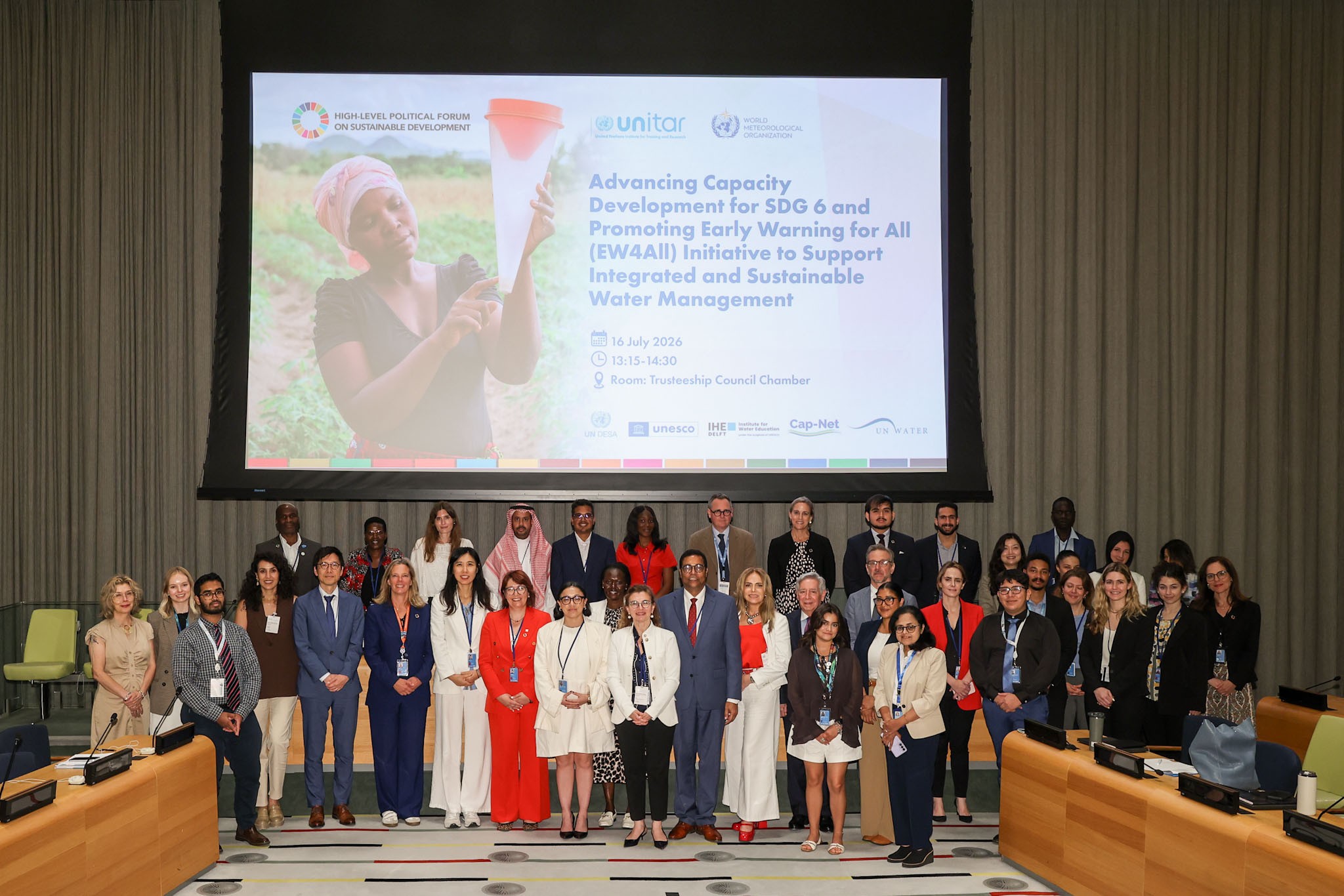
16 July 2026, New York, United States of America – Water is at the heart of nearly every Sustainable Development Goal, yet progress on SDG 6 is falling behind. At the 2026 High-Level Political Forum, UNITAR and the World Meteorological Organization (WMO) convened a high-level side event at UN Headquarters to press the case for stronger capacity development and early warning systems as the foundation for delivering on SDG 6.
The event, entitled "Advancing Capacity Development for Sustainable Development Goal (SDG) 6 and promoting Early Warning for All (EW4All) initiative to support integrated and sustainable water management," was co-hosted by UNITAR and WMO, in partnership with the United Nations Educational, Scientific and Cultural Organization (UNESCO), the United Nations Department of Economic and Social Affairs (UN-DESA), UN-Water, IHE Delft and Cap-Net. Co-convened by the Governments of the Netherlands, South Sudan and Panama, it was held in the Trusteeship Council Chamber at UN Headquarters in New York.
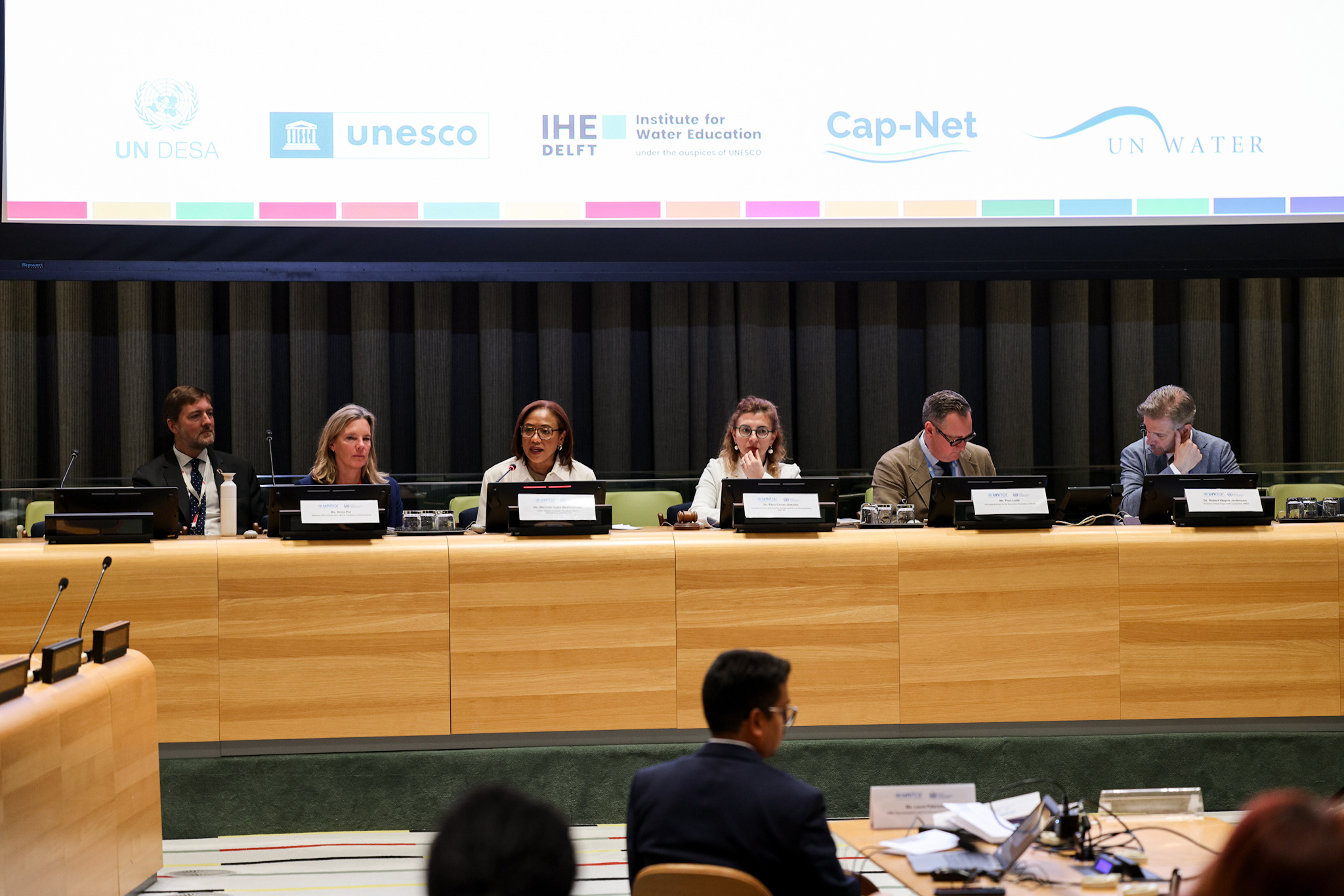
The event was moderated throughout by Ebru Canan-Sokullu, Director of UNITAR Global Water Academy, who set the scene at the opening and guided proceedings through to the closing remarks.
Placing Capacity Development at the Centre of SDG 6
The side event's central focus was the UN-Water SDG 6 Capacity Development Initiative (CDI), the inter-agency coordination platform on freshwater, sanitation and hygiene-related capacity development. Demand-driven by design, the CDI responds to country-specific capacity gaps in water governance, integrated water resources management (IWRM), sanitation services and hydrological monitoring, while promoting national ownership of solutions. The Initiative contributes directly to the capacity development accelerator of the SDG 6 Global Acceleration Framework and supports implementation of the UN System-wide Strategy for Water and Sanitation. Within this coordination platform, UNITAR leads through its Global Water Academy, which the designs and delivery of training and capacity-building programmes on integrated water resources management, water governance and hydrological services for government officials and practitioners around the world.
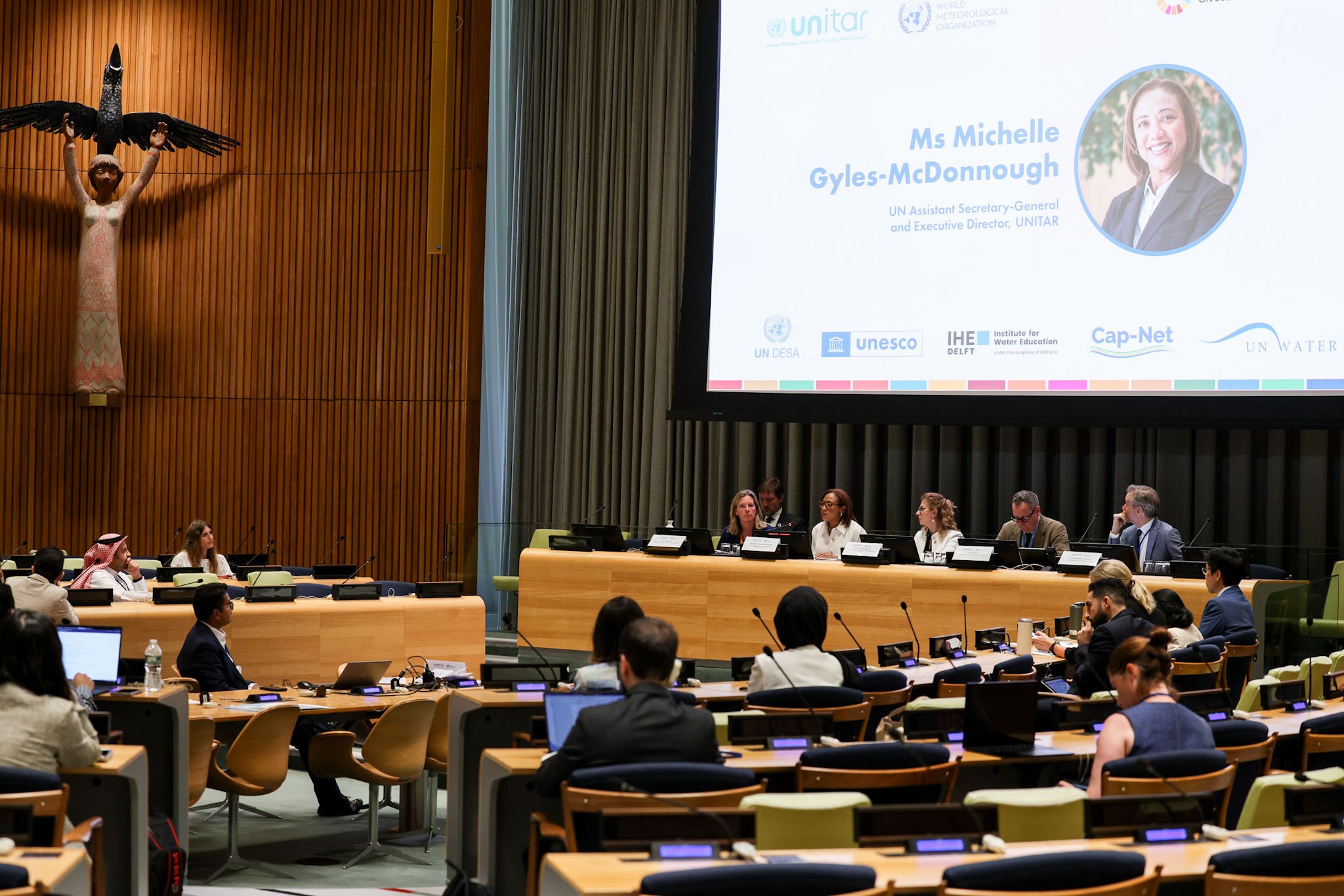
In her opening remarks, Michelle Gyles-McDonnough, UN Assistant Secretary-General and Executive Director of UNITAR, underscored the importance of capacity development and capability acceleration for water governance in achieving SDG 6. She was joined in the high-level segment by Paul Ladd, Director of the Sustainable Development and Population Division and Principal Adviser to the Executive Secretary at United Nations Economic Commission for Europe (UNECE); Robert Wayne Jenkinson, Director of Hydrology and Cryosphere at WMO; and Anna Pot, National SDG Coordinator at the Ministry of Foreign Affairs of the Kingdom of the Netherlands.
UNITAR
UNITAR
UNITAR
Building on the opening segment, technical experts examined how the CDI translates into practice on the ground. Mahmoud Radwan, Associate Programme Specialist at UNESCO, Stephanie Rambler, Sustainable Development Officer at UN-DESA, and Hwirin Kim of WMO's Hydrological Modelling and Forecasting section presented technical perspectives on the Capacity Development Initiative for SDG 6 and EW4All, with a focus on strengthening hydrological services and advancing integrated flood management.
Early Warnings for All: A Complementary Priority
Complementing the discussion on capacity development, the event also drew on WMO's work through its Associated Programme on Flood Management (APFM), which for more than 25 years has promoted integrated, risk-based and people-centred approaches to flood management. Speakers highlighted the Early Warning Systems for All (EW4All) initiative and its role in helping governments integrate flood risk management into national sustainable development and climate adaptation strategies, alongside related WMO initiatives such as Water at the Heart of Climate Action (WHCA) and the Hydrological Status and Outlook System (HydroSOS).
Country Perspectives on Capacity, Risk and Resilience
UNITAR
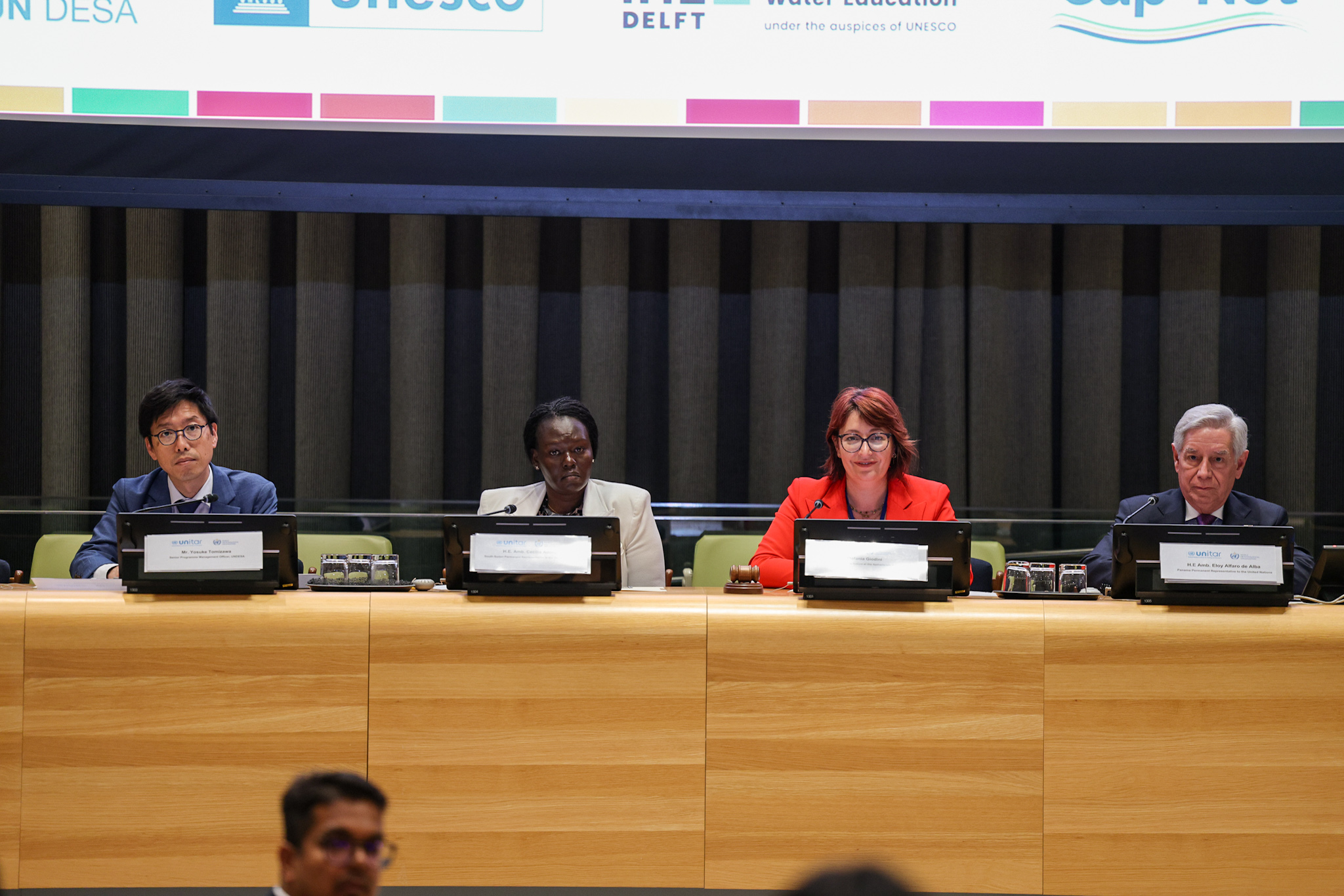
The high-level panel discussion, moderated by Stefania Giodini, Manager for Water, Climate and Nature at the Netherlands Red Cross, went beyond a general exchange of experiences. Panellists were pressed on where national progress is real, and where the gaps remain hardest to close.
UNITAR
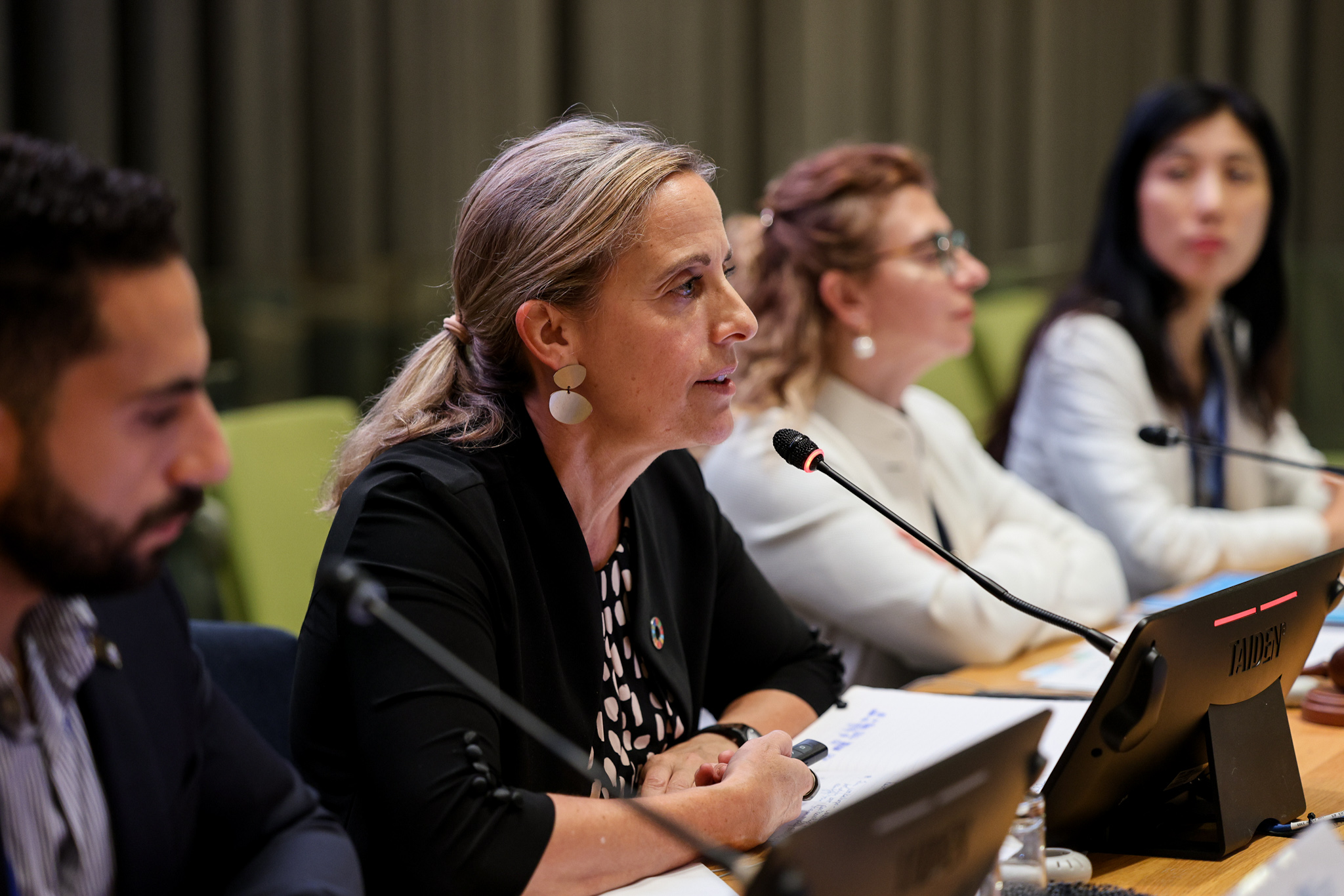
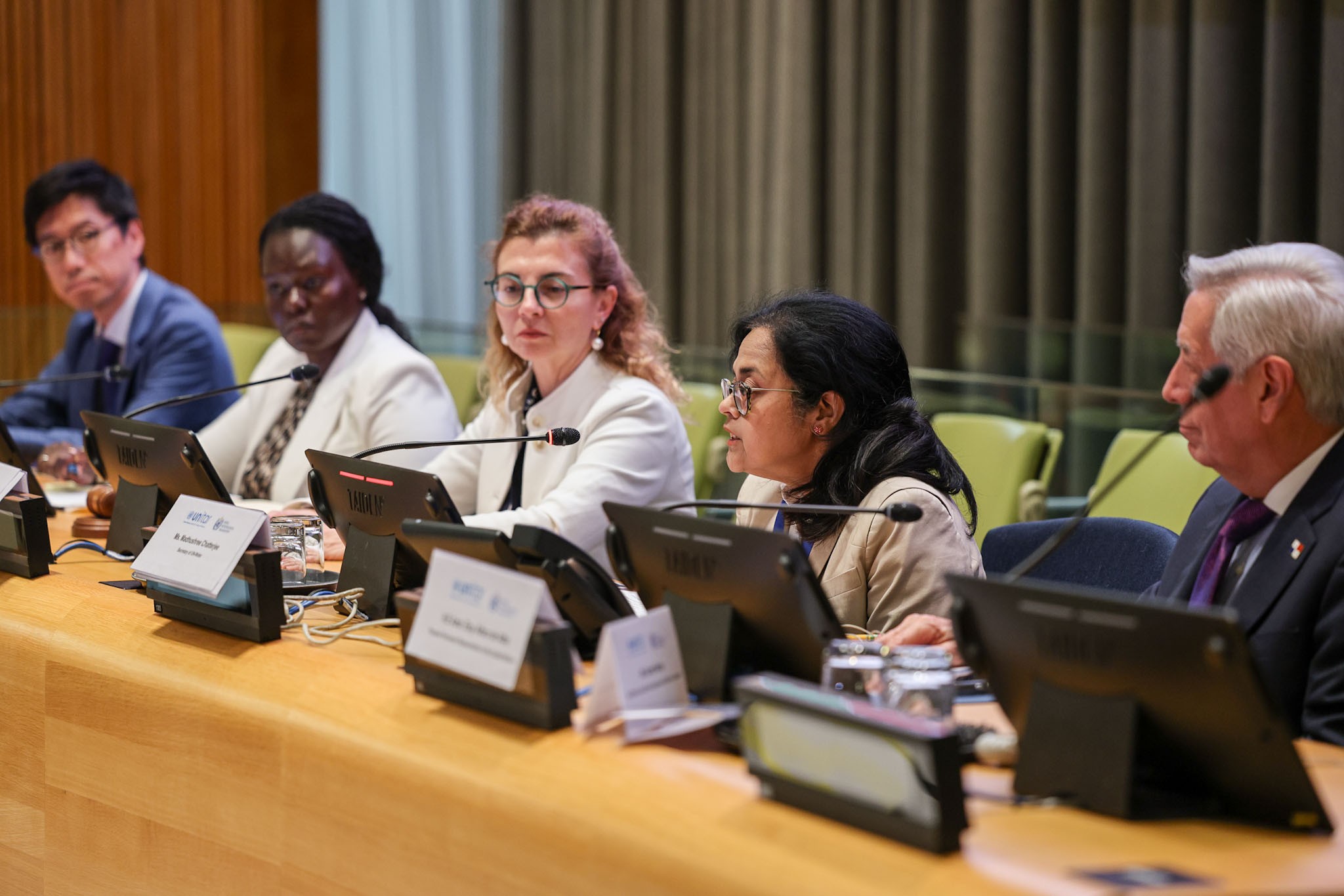
Ambassador Cecilia Adeng, Permanent Representative of South Sudan to the United Nations, spoke to which SDG 6 targets have advanced furthest at home, from drinking water and sanitation to integrated water resources management, and to the country's progress on early warning systems for floods and droughts. Ambassador Eloy Alfaro de Alba, Permanent Representative of Panama to the United Nations drew on Panama's recently completed SDG 6 Capacity Development Initiative workshop to flag the country's most pressing capacity gaps. Yosuke Tomizawa, Senior Programme Management Officer at UN-DESA, addressed how the UN system coordinates cross-cutting work on water, climate and disaster risk reduction, and what a genuinely operational outcome on capacity development would look like ahead of the December UN Water Conference.The session closed with an interactive Q&A and audience engagement segment, followed by closing remarks from Madhushree Chatterjee, UN-Water Secretary.
Looking Ahead
The high-level side event concluded with the panel led by Ebru Canan-Sokullu with actionable recommendations for scaling up capacity development initiative, partnerships and institutional capabilities in the water sector. She reiterated UNITAR’s contributions as a co-convener of Interactive Dialogue (f) on Investments for Water, co-leadership for UN-Water Conference Academic Hub, and for the Capacity Development Initiative. Through this role, UNITAR continues to bring capacity development perspectives to the global water agenda, building on the momentum generated by this HLPF side event and reinforcing the links between national capacity, resilient water governance and the achievement of SDG 6.