

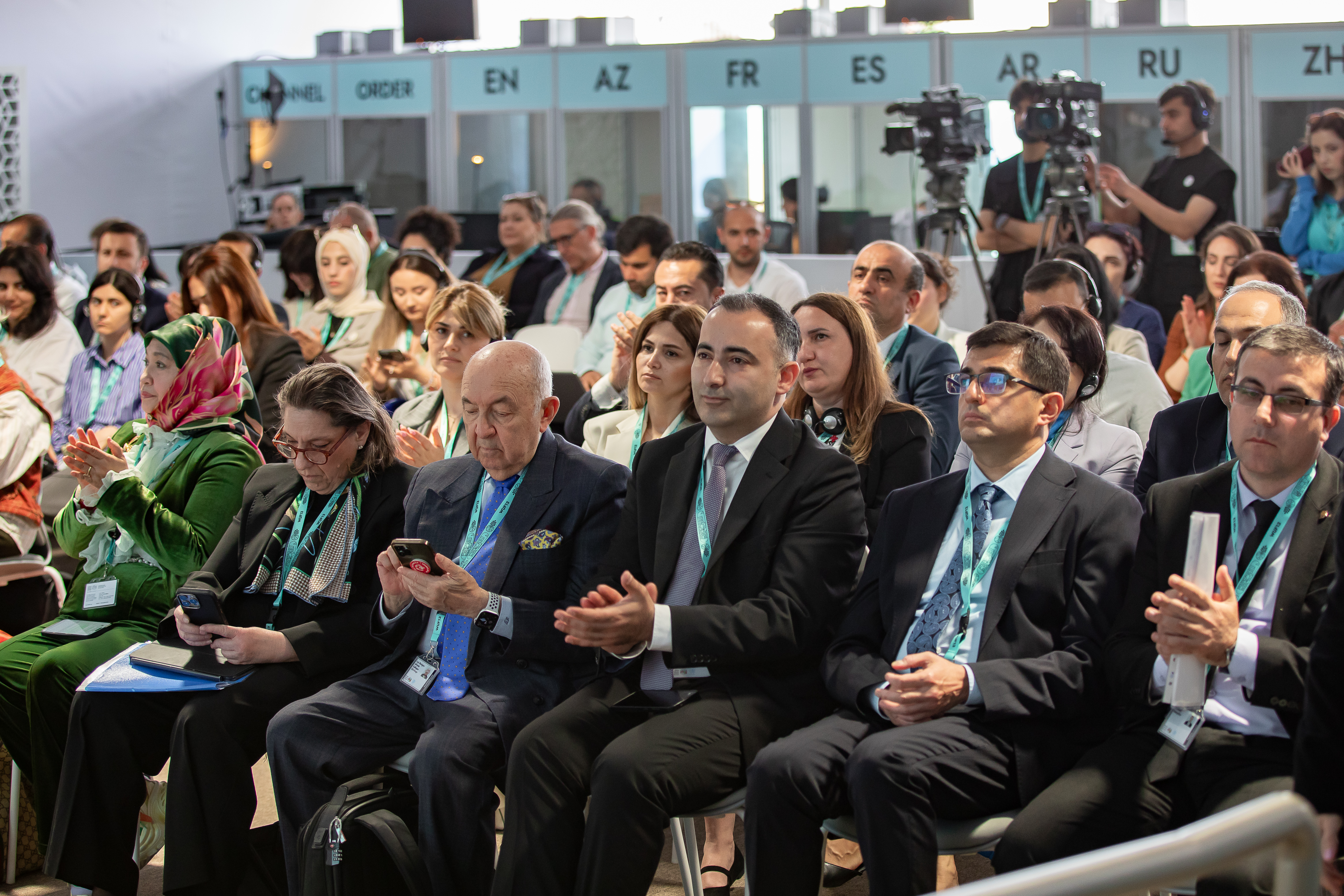
20 May 2026, Baku, Azerbaijan - At the World Urban Forum 13 (WUF13), UNITAR’s Global Water Academy (UGWA) and Azerbaijan’s Water and Amelioration Scientific Research Institute (WASRI) co- convened a ONE UN Side Event placing water at the centre of the global conversation on housing and urban resilience. The event titled Water-Smart Cities: Building Urban Resilience through Capacity Development brought together senior government officials, UN leadership, academic institutions, and private sector partners to examine how integrated water systems underpin safe, resilient, and inclusive cities.
The session responded to the WUF13 theme, Housing the World: Safe and Resilient Cities and Communities, centred on a proposition that housing security cannot be separated from water security. With nearly 70% of the global population projected to reside in urban areas by 2050, pressure on water resources, infrastructure, and services is rapidly becoming a defining test of urban governance. The side event translated that challenge into a direct exchange between policy, technical expertise, and capacity development.
Framing the Water and Housing Nexus
Ebru Canan-Sokullu, Director of UGWA, opened with scene-setting remarks, situating the discussion within UGWA’s broader mandate to strengthen institutional and human capacities for sustainable water governance. The central premise, adequate housing, climate adaptation, and equitable urban development all rest on the foundation of reliable, well-governed water systems.
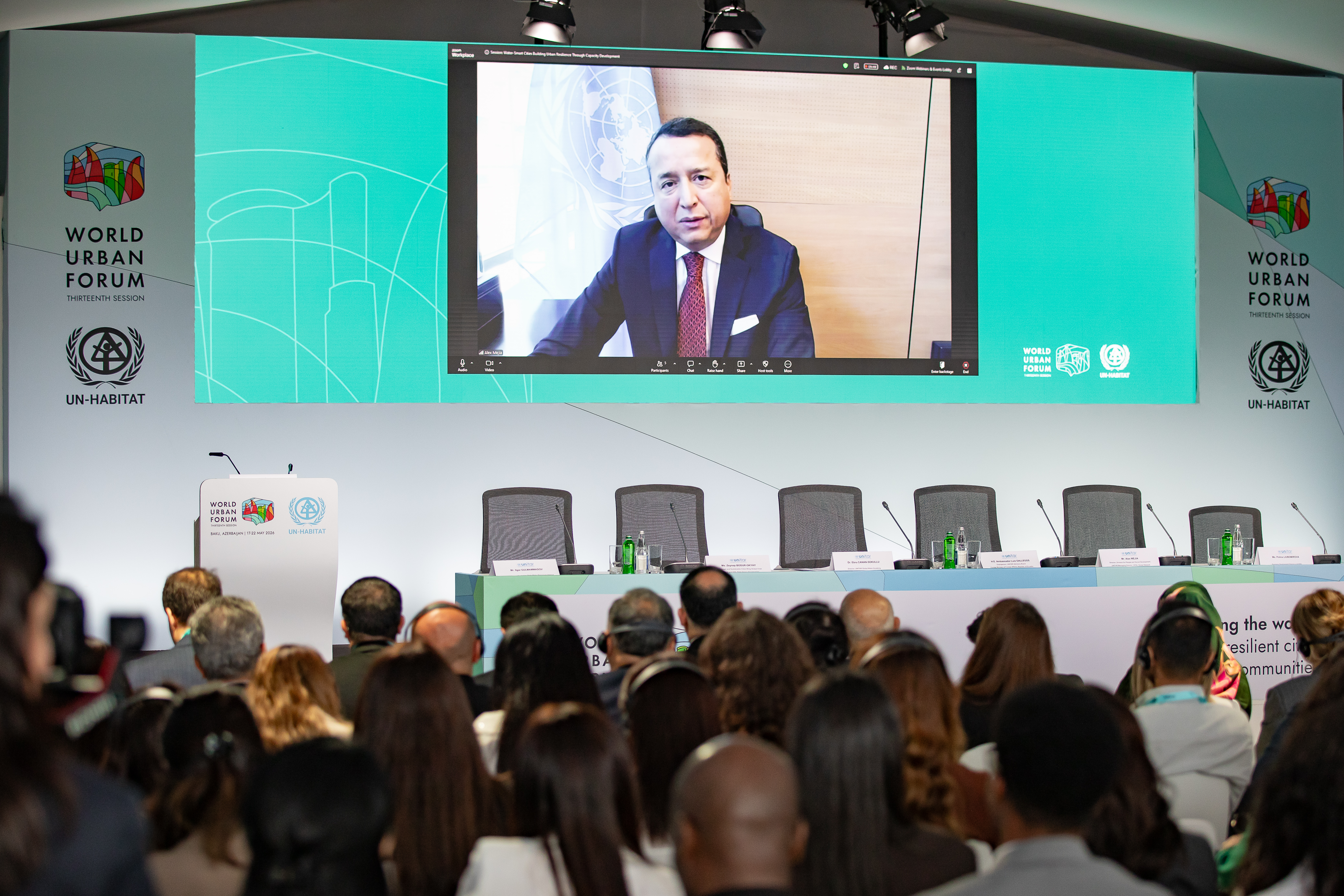
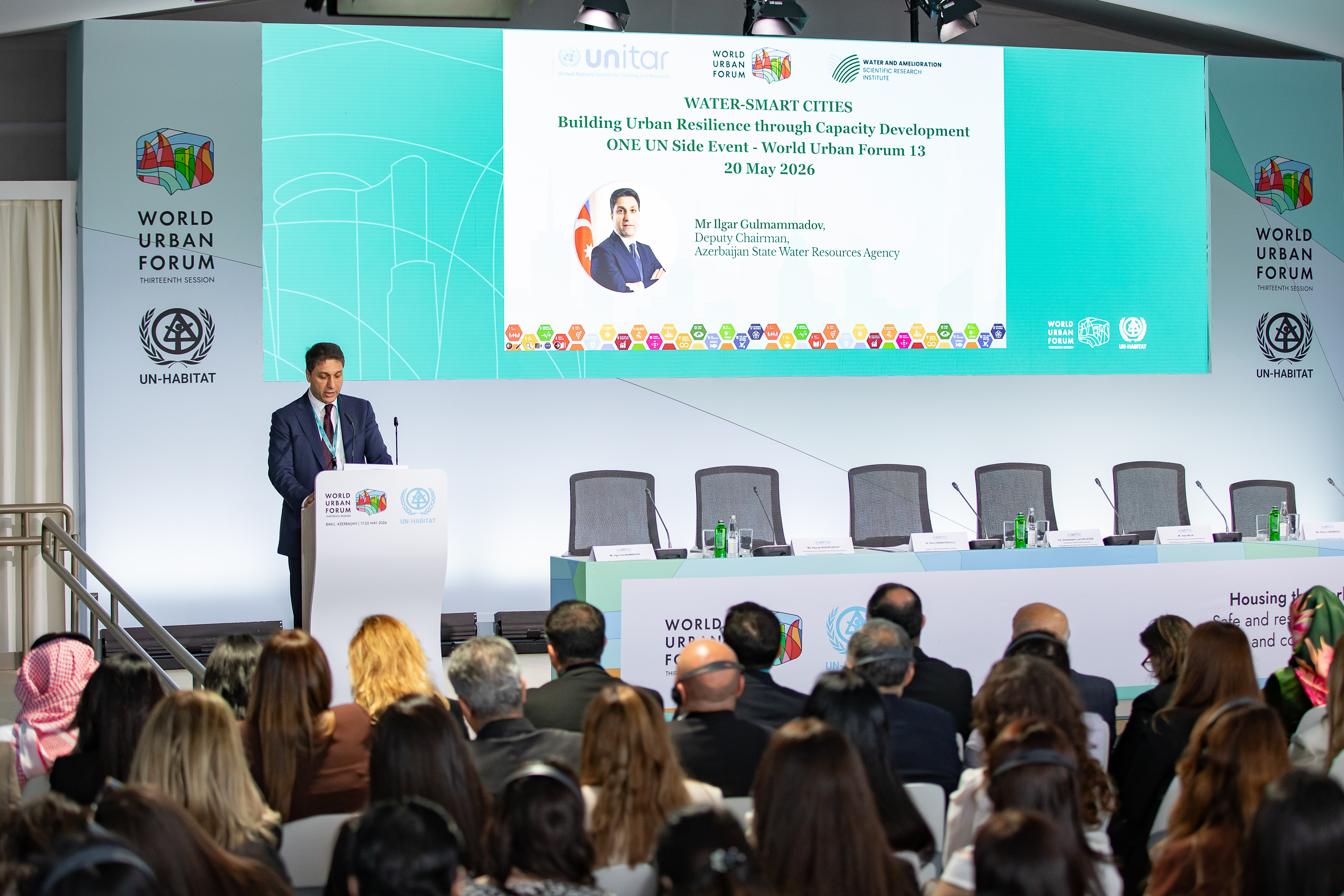
The opening session featured Ilgar Gulmammadov, Deputy Chairman of the Azerbaijan State Water Resources Agency, and Alex Mejia, Director of UNITAR’s Division for People and Social Development and Managing Director of the CIFAL Global Network. Their remarks positioned the event at the intersection of host-country priorities and UNITAR’s global capacity development architecture. The dialogue, they signalled, would draw on both national experience and the institutional reach of the CIFAL Global Network of training centres.
UNITAR
UNITAR
Keynote Perspectives on Smart and Sustainable Urban Futures
UNITAR
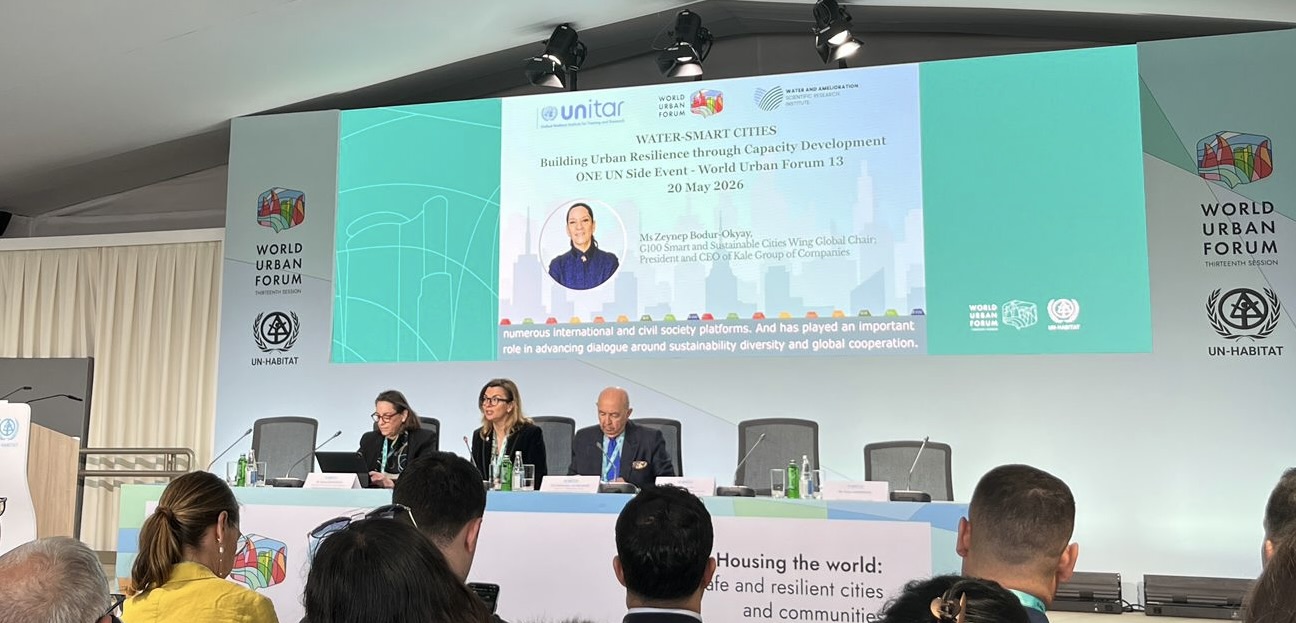
The keynote segment brought two distinct but complementary perspectives to the table. Zeynep Bodur-Okyay, Global Chair of the G100 Smart and Sustainable Cities Wing and President and CEO of the Kale Group of Companies, addressed the role of the private sector in advancing smart and sustainable urban development, with attention to how industrial leadership and corporate strategy can contribute to water-resilient urbanisation.
Ambassador Luis Gallegos, Chairperson of the Division for People and Social Development Advisory Board and former Minister of Foreign Affairs of the Republic of Ecuador, followed with remarks anchoring the discussion in the broader multilateral framework. His remarks underscored the role of UN-system institutions in convening governments, technical actors, and communities around the structural reforms required to make cities water-secure. They also reinforced UNITAR’s role in supporting governments seeking to implement the 2030 Agenda at the urban scale.
Expert Panel: From Frameworks to Practice
UNITAR
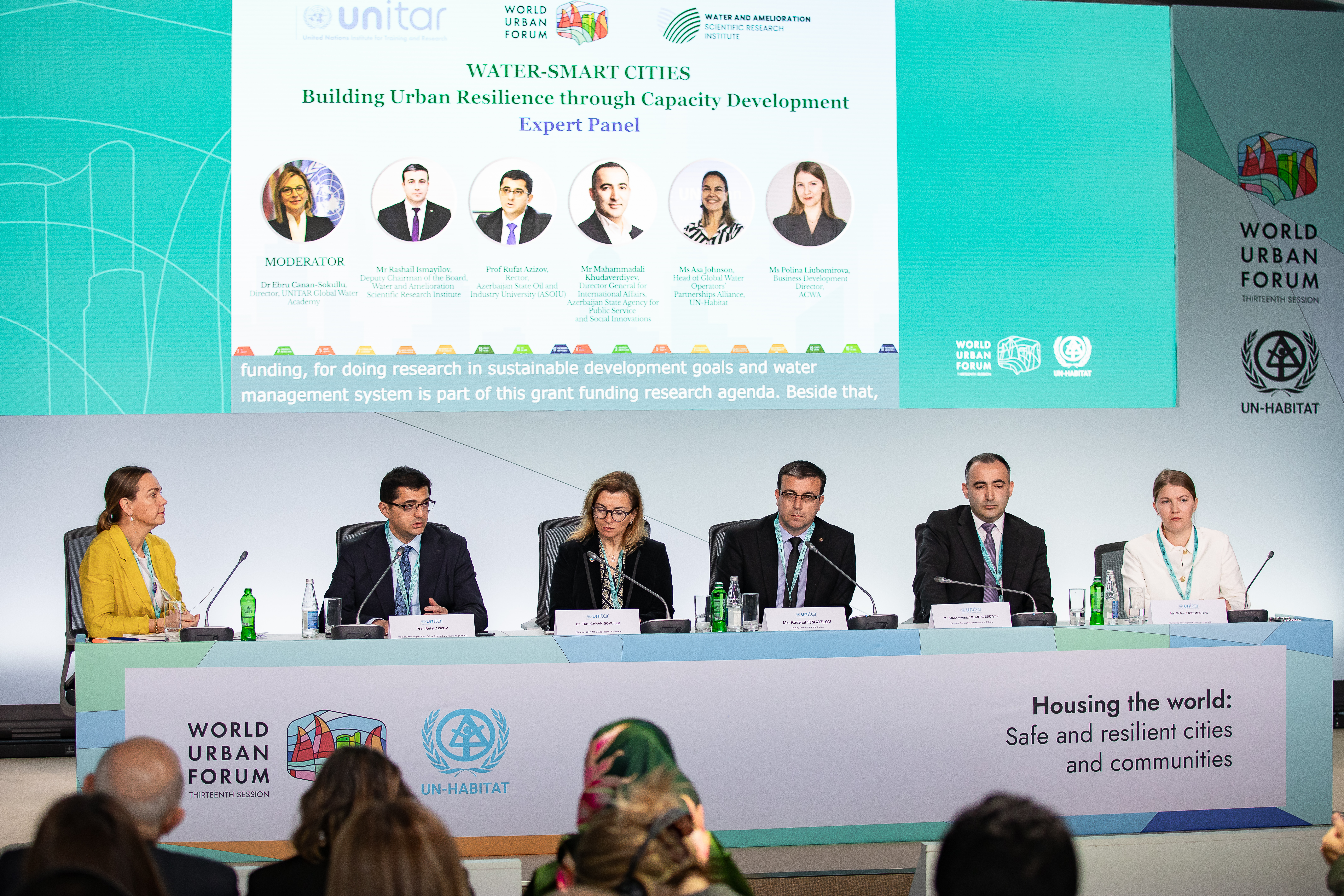
The expert panel, moderated by Canan-Sokullu, moved the conversation from framing to practice. Rufat Azizov, Rector of the Azerbaijan State Oil and Industry University (ASOIU), addressed capacity development for sustainable urban water systems, situating workforce and institutional capacity as the binding constraint on long-term water-resilient urbanisation.
- Rashail Ismayilov, Deputy Chairman of the Board of WASRI, opened the panel by analysing the water challenges and opportunities most directly relevant to WUF13’s housing and resilience goals. He drew on Azerbaijan’s own experience with integrated water management.
- Mahammadali Khudaverdiyev, Director General for International Affairs at the Azerbaijan State Agency for Public Service and Social Innovations, presented Azerbaijan’s approach to water management and public service delivery, offering a concrete national case for participants from comparable urbanising contexts.
- Asa Johnson of UN-Habitat, Head of the Global Water Operators’ Partnerships Alliance, spoke to the role of international partnerships in strengthening urban water governance.
- Polina Liubomirova, Business Development Director at ACWA, presented desalination as an urban strategy and examined the public-private partnership architecture required to deliver climate-resilient water supply at scale.
Taken together, the panel offered an integrated reading of urban water resilience, moving from national policy to institutional capacity to financing and technology in a single arc.
A Foundation for Continued Cooperation
UNITAR
Shalala Hasanova, Head of the Strategic Development Department at WASRI, delivered closing remarks, anchoring the session in the next phase of UGWA and WASRI collaboration on capacity development, knowledge exchange, and innovative approaches to water governance in rapidly urbanising contexts.
The event also marked the beginning of a formal partnership between UNITAR and the Water and Amelioration Scientific Research Institute. The two institutions will deepen collaboration on capacity development, knowledge exchange, and innovative approaches to sustainable water governance in rapidly urbanising cities.
The side event contributed to the Baku Call to Action on housing and urban resilience, reinforcing the foundational role of water systems in achieving safe and resilient cities. It also advanced the objectives of SDG 6 (Clean Water and Sanitation) and SDG 11 (Sustainable Cities and Communities). It supported the implementation of the New Urban Agenda and aligned with the UN Water Action Decade’s call for integrated approaches to urban water challenges.
Through this collaboration with WASRI and the partners convened in Baku, UNITAR with its Global Water Academy and WASRI reaffirm a commitment to building the institutional, technical, and human capacities required to translate the 2030 Agenda for Sustainable Development into resilient, water-secure cities in Azerbaijan and in the wider region.