

UNITAR
13 July 2026, New York, United States of America – Universities, UN entities, Member States and youth networks have committed to a shared vision for higher education's role in advancing sustainable development, with the formal launch of the GHES Consensus Statement at UN Headquarters in New York. The United Nations Institute for Training and Research (UNITAR) participated as a collaborating partner in the second Global Higher Education Symposium (GHES II), convened on the margins of the 2026 High-Level Political Forum on Sustainable Development (HLPF).
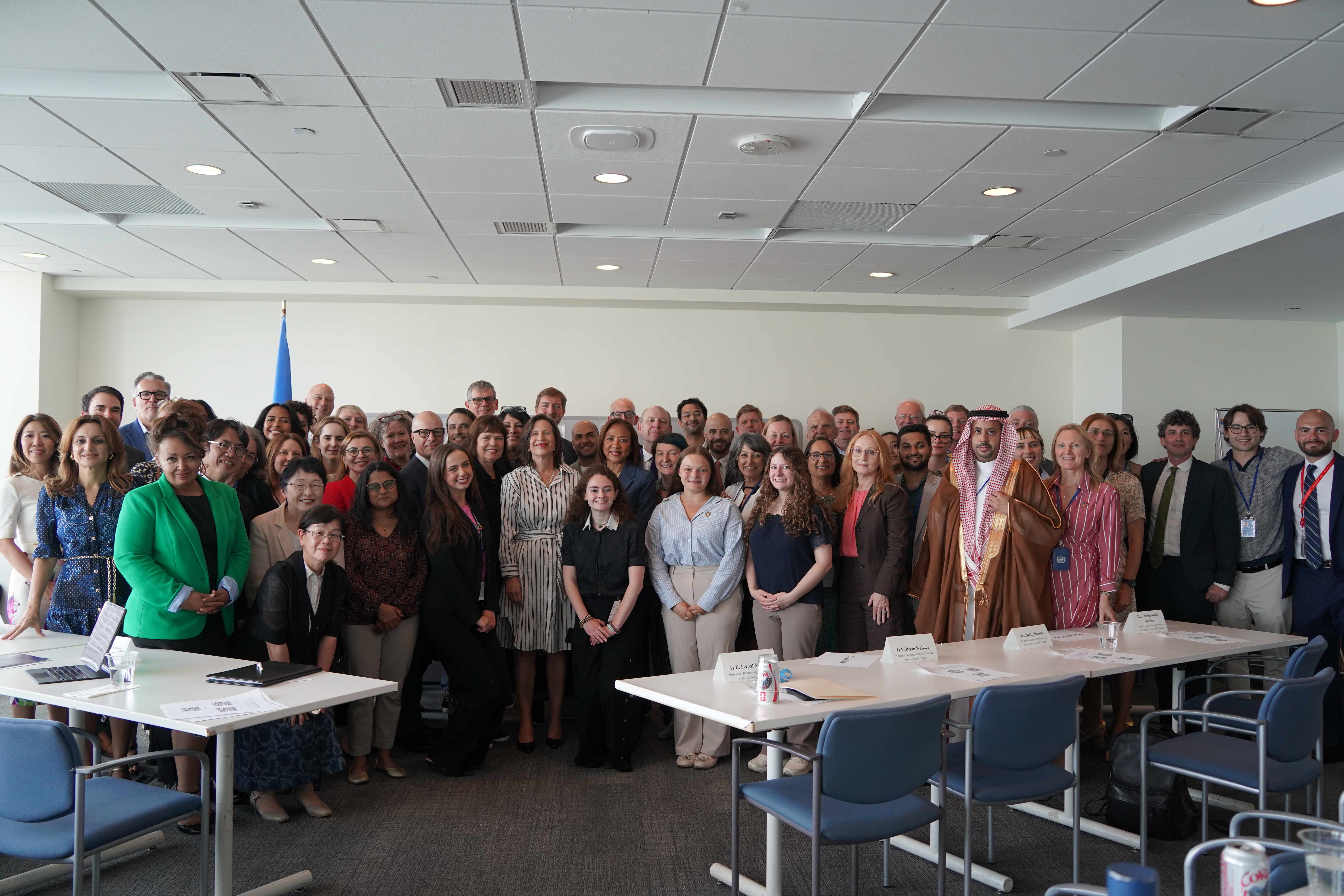
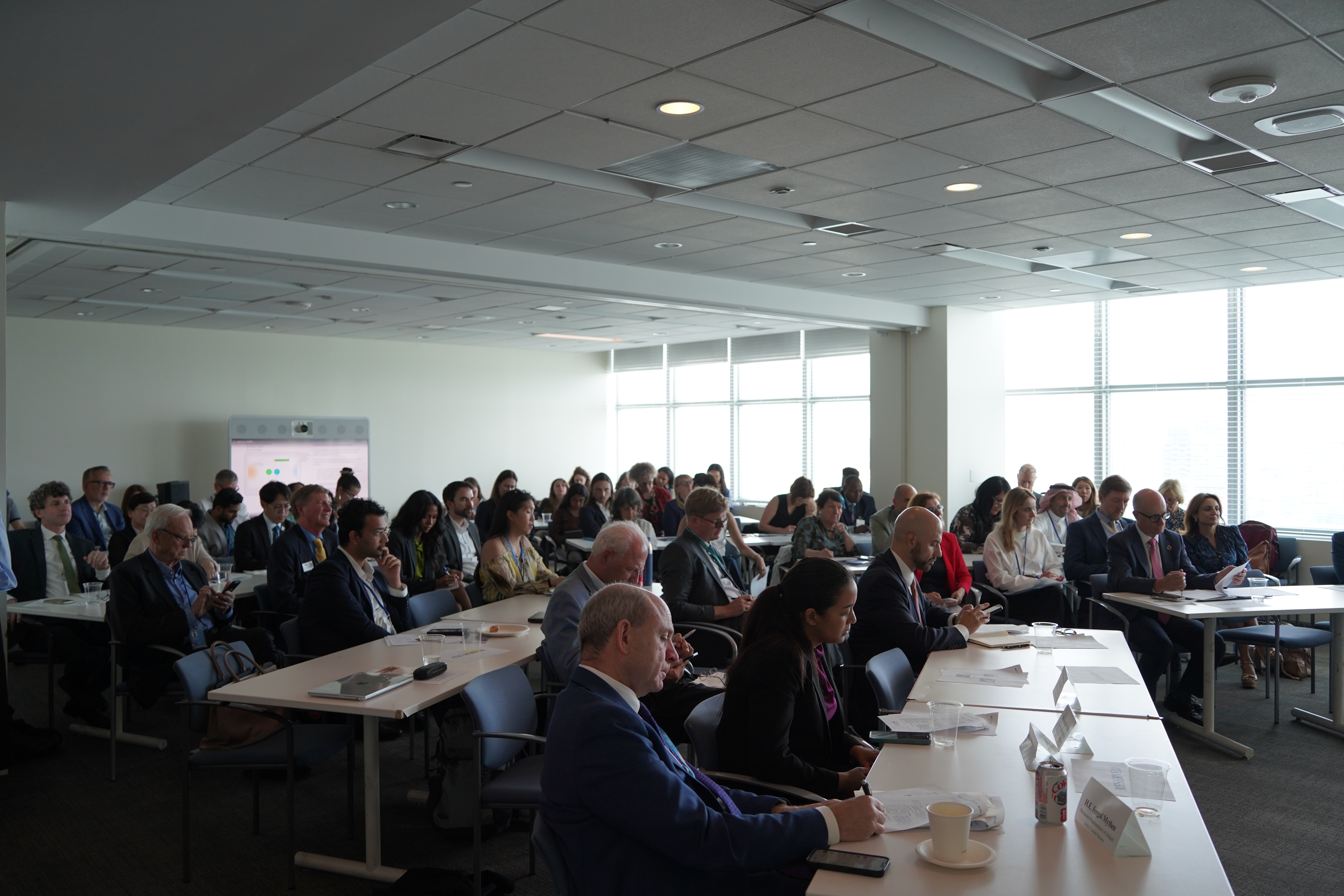
The half-day, invitation-only symposium brought together approximately 70 representatives from higher education institutions, Member States, international organizations, UN entities, youth networks and private sector partners to formally launch the Consensus Statement on the role of higher education in advancing sustainable development.
The symposium built directly on the first Global Higher Education Symposium (GHES I), convened at UN Headquarters in July 2025, which produced a Zero Draft Consensus Statement setting out shared priorities on the transformative potential of higher education. Between October and December 2025, a global consultation engaged some 350 voices from higher education institutions and networks across all regions to refine the draft. GHES II marked the formal launch of the resulting Consensus Statement, positioning higher education within the United Nations Educational, Scientific and Cultural Organization (UNESCO) Higher Education Roadmap, the Pact for the Future and the emerging post-2030 agenda.
UNITAR at the Opening
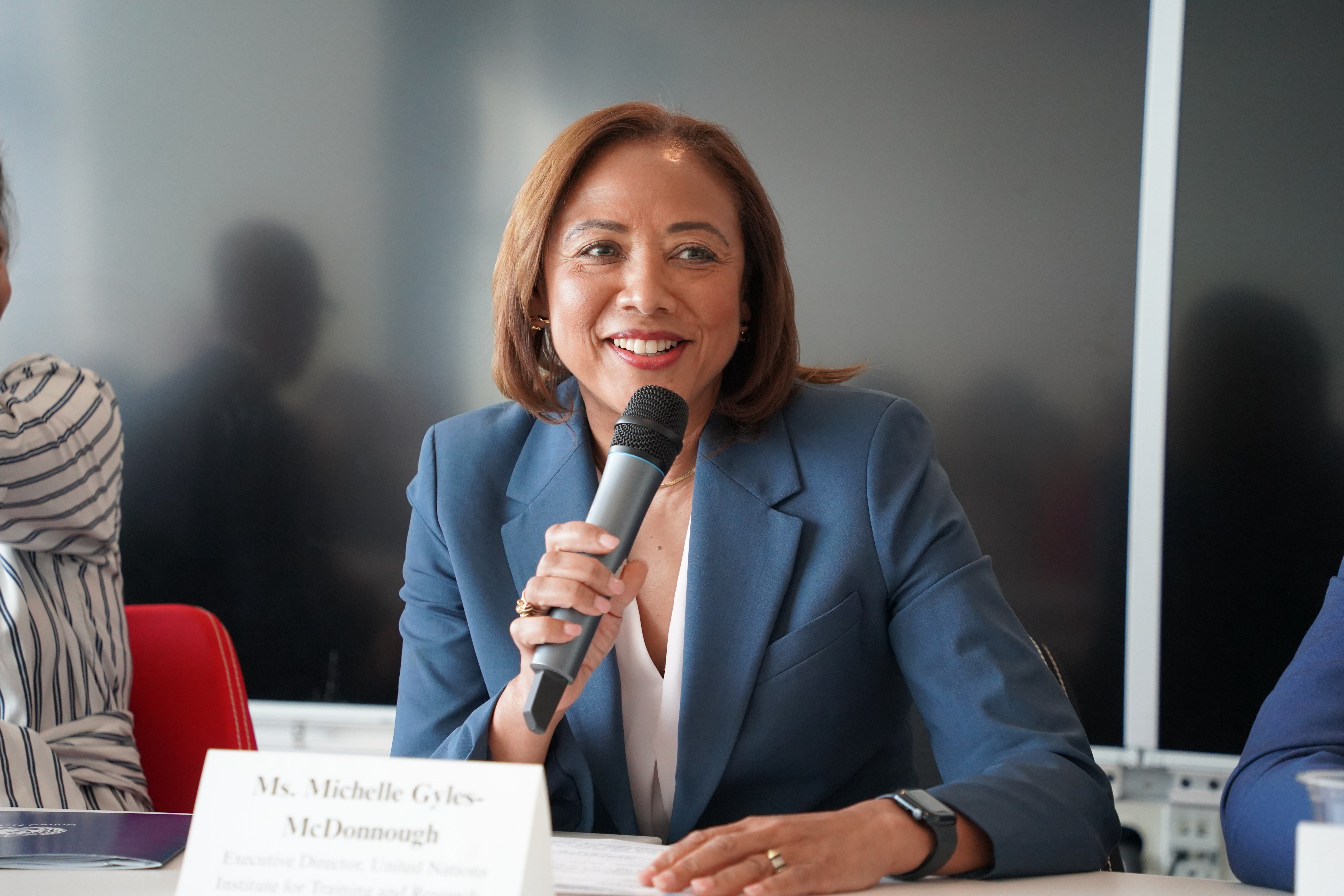
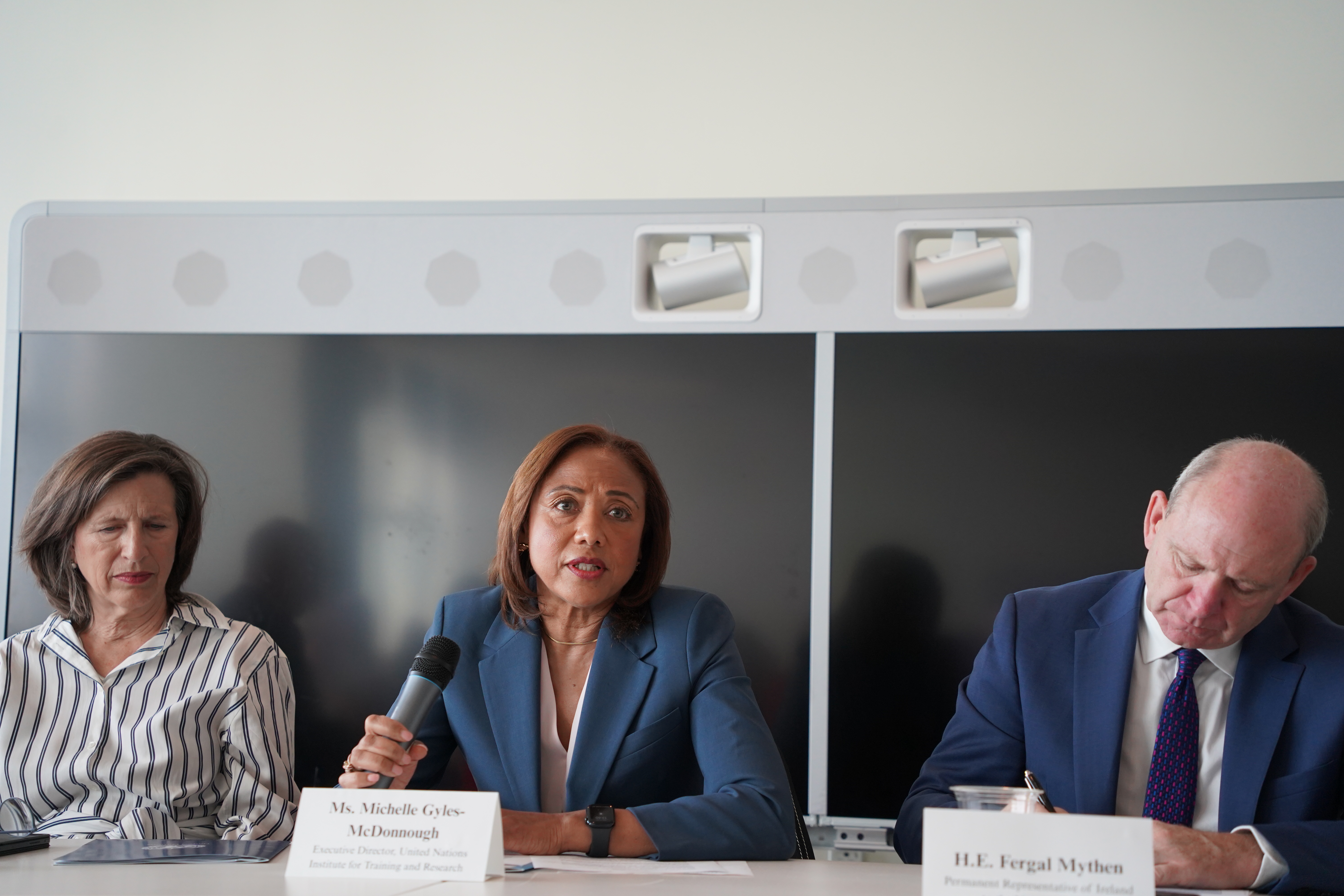
The symposium opened with remarks moderated by Maher Nasser, Director of the Outreach Division at the UN Department of Global Communications. Michelle Gyles-McDonnough, UN Assistant Secretary-General and Executive Director of UNITAR, delivered opening remarks alongside Melissa Fleming, Under-Secretary-General for Global Communications; Ambassador Fergal Mythen, Permanent Representative of Ireland to the United Nations; and Ambassador Brian Wallace, Permanent Representative of Jamaica to the United Nations, setting the tone for a symposium centred on higher education's role in shaping just, inclusive and sustainable futures.
UNITAR
UNITAR
Launching the Consensus Statement
The Consensus Statement was presented in a session moderated by Katrin Kohl, Co-Chairholder of the UNESCO Chair at York University, together with Patrick Paul Walsh of the (Sustainable Development Goal) SDG Academy at the Sustainable Development Solutions Network (SDSN) and Noah W. Sobe, Chief of Section for Higher Education at UNESCO. The presentation set out the five themes that emerged from the global consultation: the integration of sustainability and the SDGs; democratic values, trust and responsibility; knowledge, inclusion and decolonisation; science, technology and innovation, including artificial intelligence; and systemic change in governance and funding; along with the shared understanding that these themes are interconnected and resonate across all regions.
UNITAR's Voice in Panel I
UNITAR
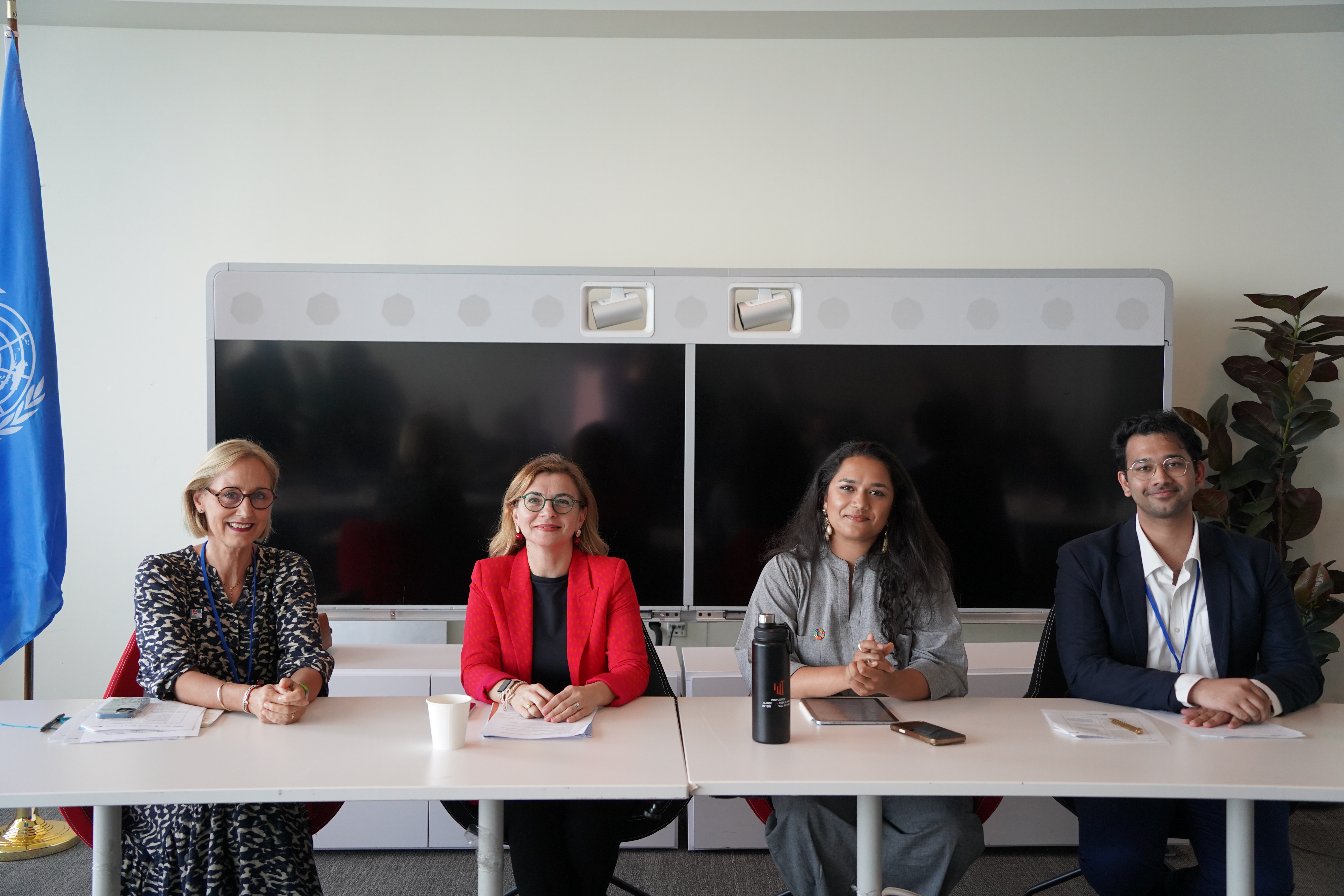
The first panel, "Higher Education in a Changing Global Landscape: One Year Later," was moderated by Hilligje van't Land, Secretary General and Executive Director of the International Association of Universities (IAU). The discussion reflected on how recent global developments have shaped universities' ability to serve the common good.
Panellists included Nudhara Yusuf, Co-Chair of the Coalition for the UN We Need, and Yash Tadimalla, Global Focal Point for the Major Group for Children and Youth. The conversation also drew in Ebru Canan-Sokullu, Deputy Director of UNITAR's Division for People and Social Development, who brought a UNITAR perspective on evidence-informed dialogue, institutional trust and cooperation in advancing the SDGs, grounded in the Division's flagship Leaders in Higher Education Alliance and Programme - For Accelerating Sustainability Transformations (LEAP-FAST) initiative. Developed jointly with UNESCO to advance higher education transformation for sustainable development, LEAP-FAST is a working example of what the Consensus Statement calls for: universities and international organizations moving from parallel efforts to genuine partnership, with sustainability embedded in institutional practice rather than treated as an add-on.
Reflecting on Next Steps
UNITAR
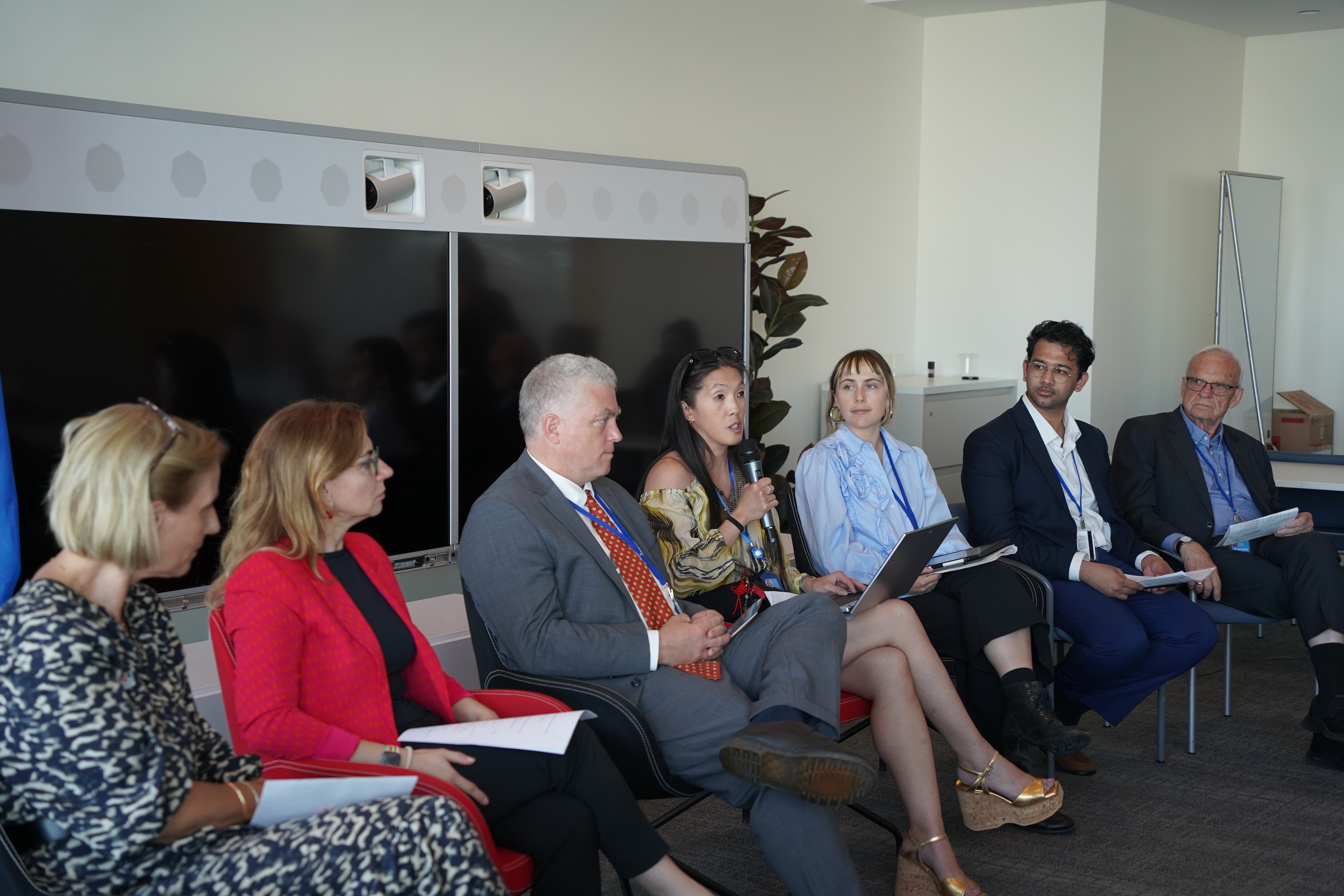
Following a second panel on transformation pathways for higher education, the symposium turned to next steps for the Consensus Statement. In a lightning round moderated by Aleksandra Gorisek, Head of the Civil Society and Academic Impact Section at the UN Department of Global Communications, partner representatives reflected on implementation pathways and collaborative action. Ebru Canan-Sokullu represented UNITAR in this segment, alongside Charles Hopkins of York University, Hilligje van't Land of IAU, Noah Sobe of UNESCO, Helen Perham of SDSN, Kathleen Ng on behalf of Higher Education Sustainability Initiative (HESI), and Yash Tadimalla of United Nations Major Group for Children and Youth (UNMGCY), offering a UNITAR perspective on translating the Consensus Statement's principles into practical, capacity-focused action.
UNITAR
Closing remarks were delivered by Christian Strowa, Director of the German Center for Research and Innovation New York (DWIH New York) and Regional Director of the German Academic Exchange Service (DAAD), and Maher Nasser, bringing the symposium to a close.
Looking Ahead
Through the formal launch of the Consensus Statement, GHES II reaffirmed a shared commitment among higher education institutions, UN entities, Member States and youth networks to position universities as central actors in advancing the SDGs, the Pact for the Future and the global conversation on a sustainable, post-2030 world. As a collaborating partner, UNITAR continues to bring its capacity-development and training expertise to this agenda, reinforcing the links between higher education, evidence-based decision-making and country-level action for sustainable development.