

UNITAR
3 June 2026, Geneva, Switzerland - In a time of growing uncertainty, Seychelles is investing in the ability of its public institutions to look ahead, understand complex change and prepare for different possible futures.
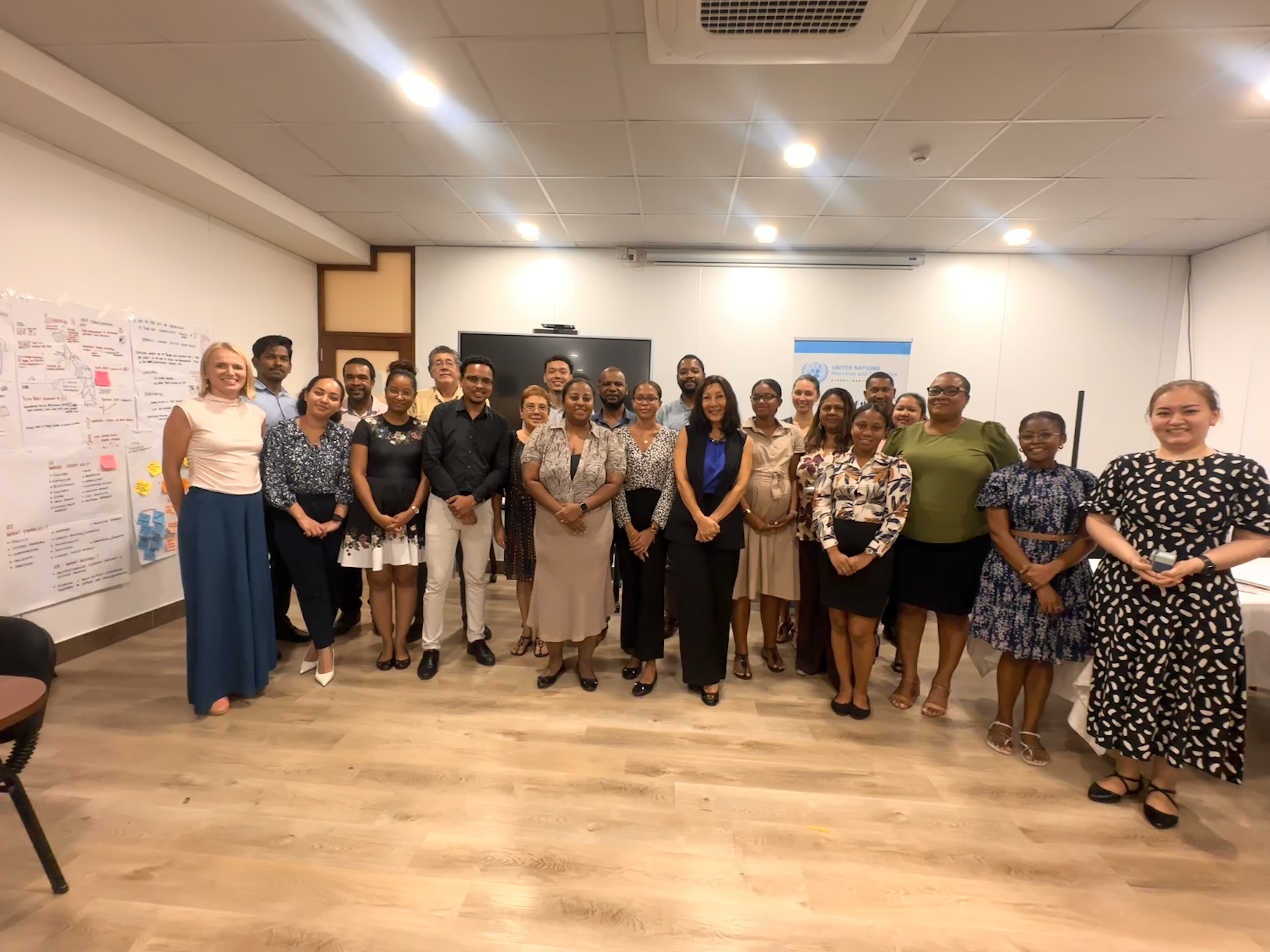
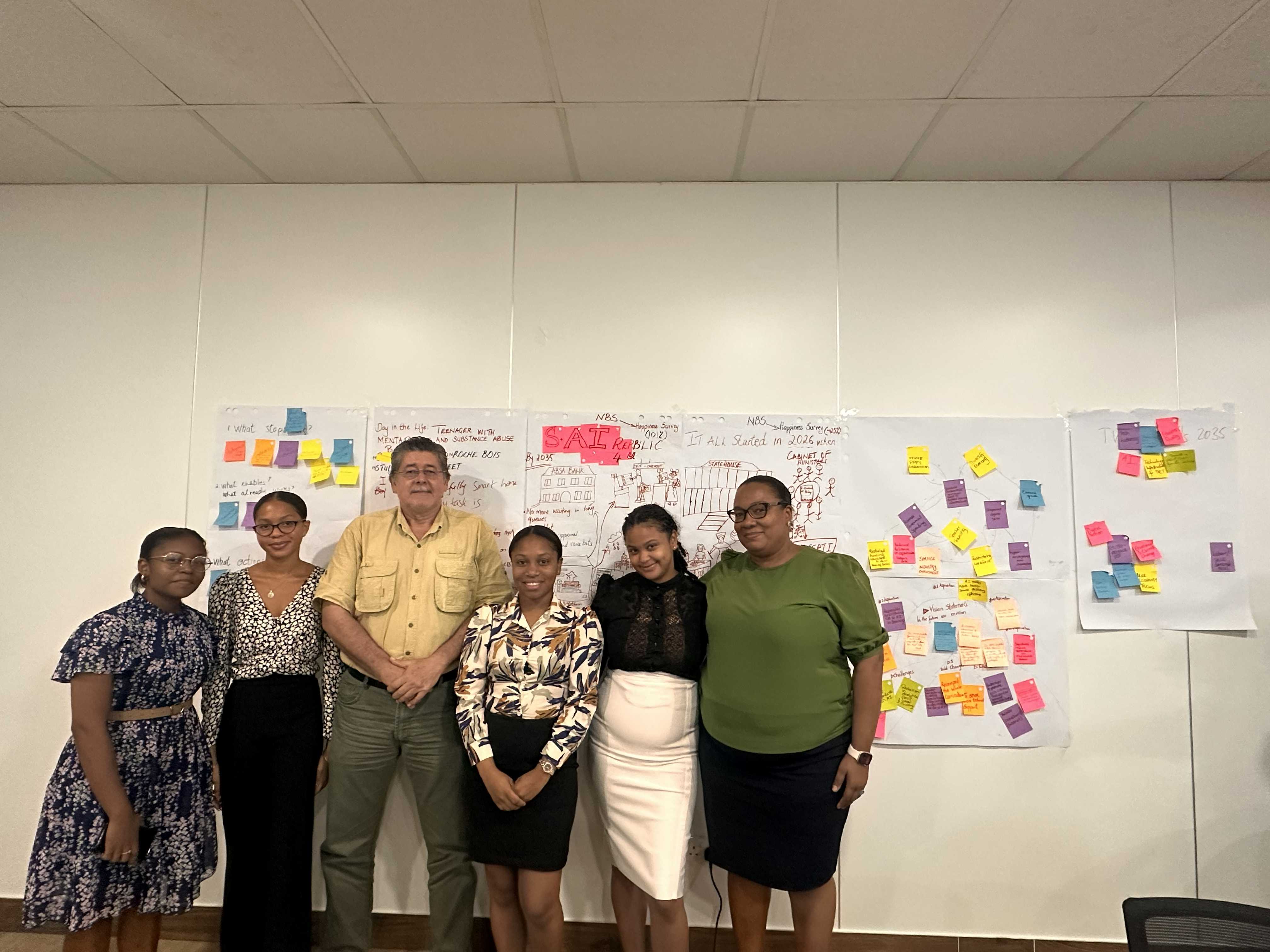
From 11 to 13 May 2026, 24 public officials gathered in Victoria for a Training-of-Trainers Capacity Building Workshop for Foresight Leads on Strategic Foresight and Systems Thinking for National Planning, Policies and Budgeting. The workshop aimed to equip a pool of officials with practical tools to support more anticipatory, integrated and resilient decision-making across government.
UNITAR
Led by the Ministry of Finance, Economic Planning, Trade and Investment (MFEPTI) in partnership with the United Nations Department of Economic and Social Affairs, the United Nations Resident Coordinator’s Office for Mauritius and Seychelles, and the United Nations Institute for Training and Research, the workshop formed part of the broader Seychelles National Strategic Foresight Capacities Programme. The programme builds on work initiated in 2024, when Seychelles began introducing strategic foresight and systems thinking more systematically into national planning and budgeting, including through an initial Training-of-Trainers programme, awareness-raising workshops across ministries, departments and agencies, a five-step methodology, and the use of causal loop diagrams to examine priority areas of the National Development Strategy 2024-2028.
UNITAR
In 2026, the focus is moving from awareness to application. The May workshop was a key step in developing a national methodological toolbox and action plan for embedding foresight into Seychelles’ planning and budgeting systems. It was supported by preparatory activities, including an online session on strategic foresight and systems thinking, a self-paced e-learning course on anticipatory governance, and a needs assessment to tailor the programme to national priorities. Follow-up webinars and peer-learning activities are expected to support participants as they apply the tools in their institutions.
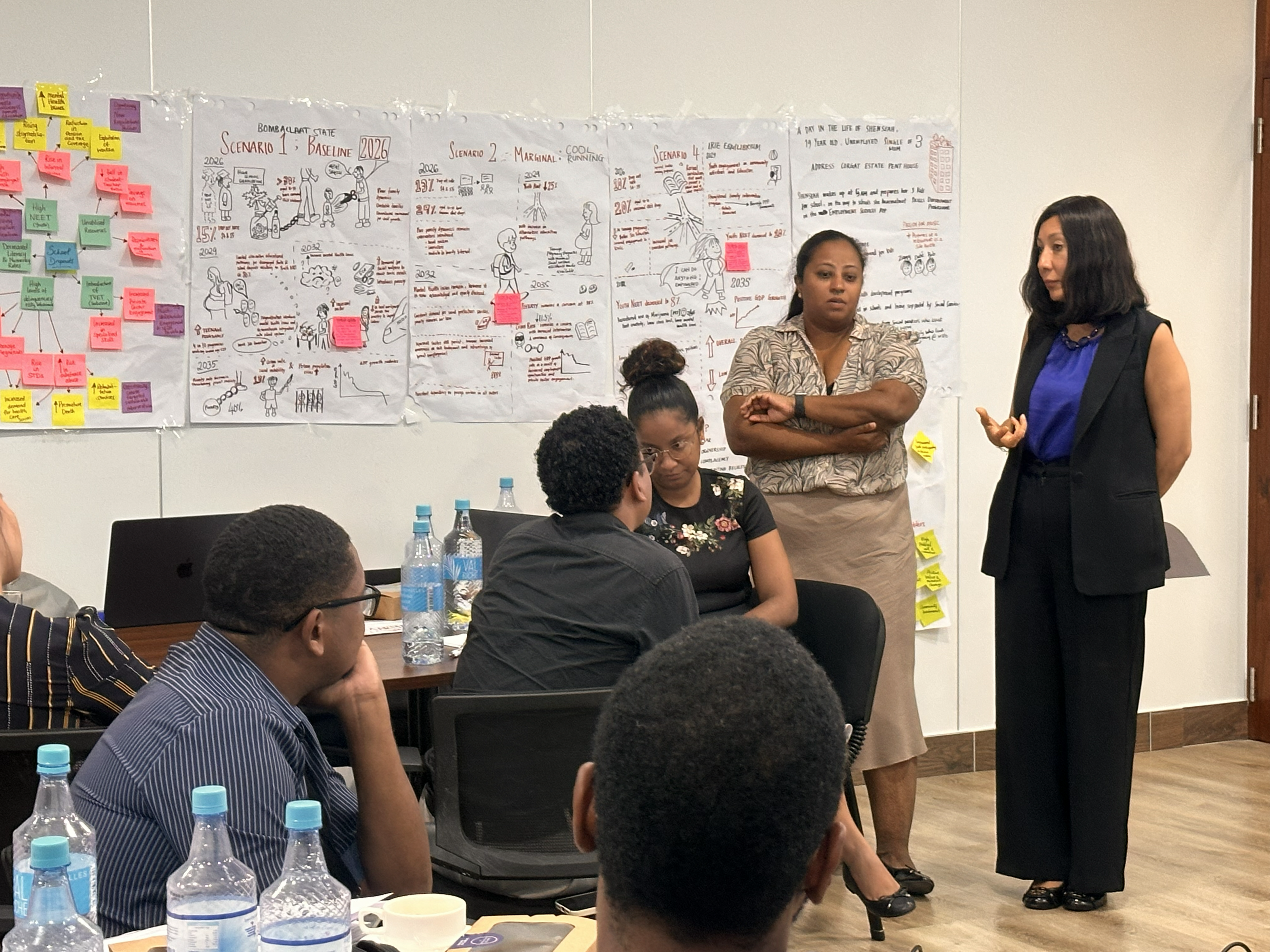
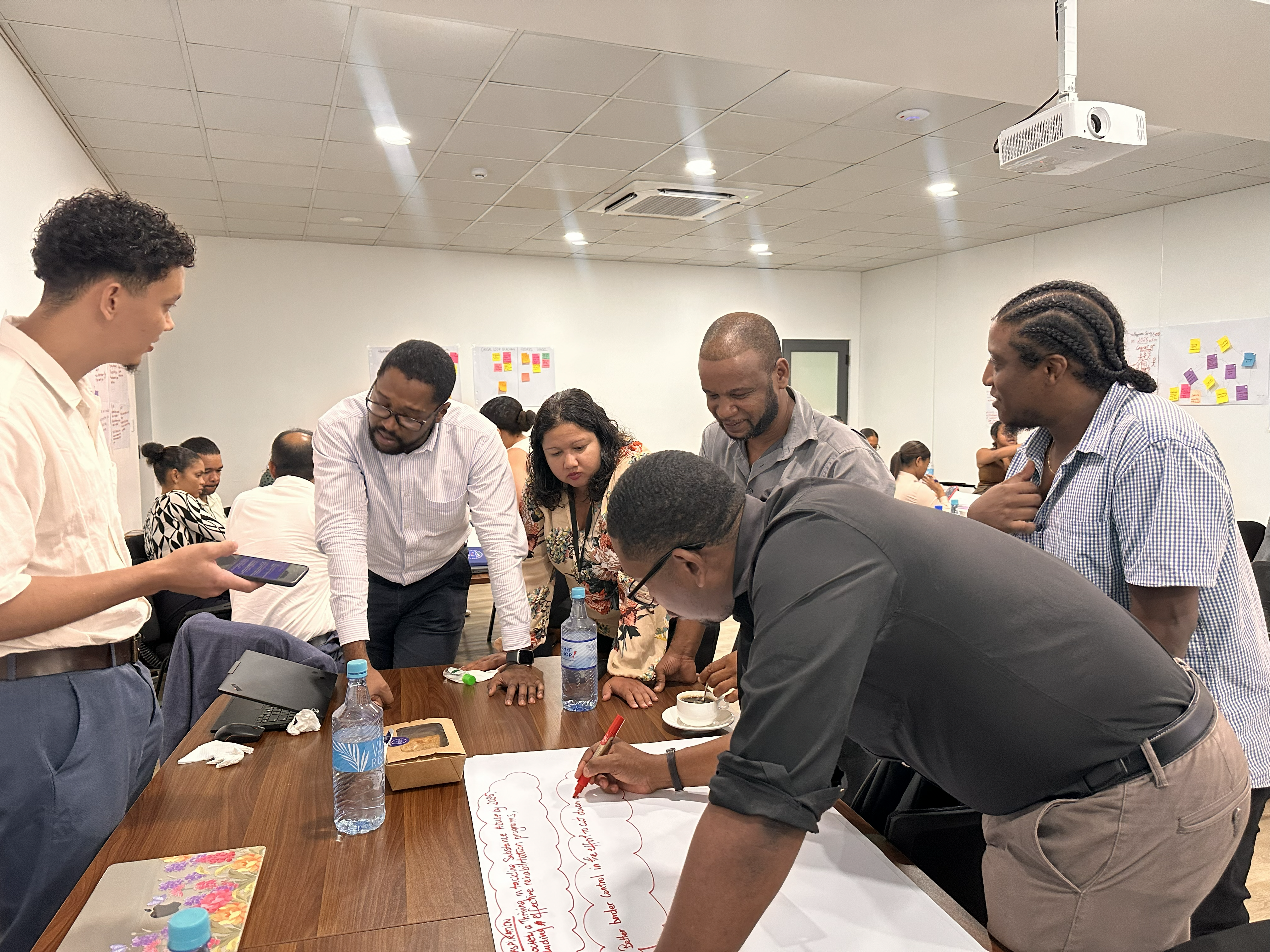
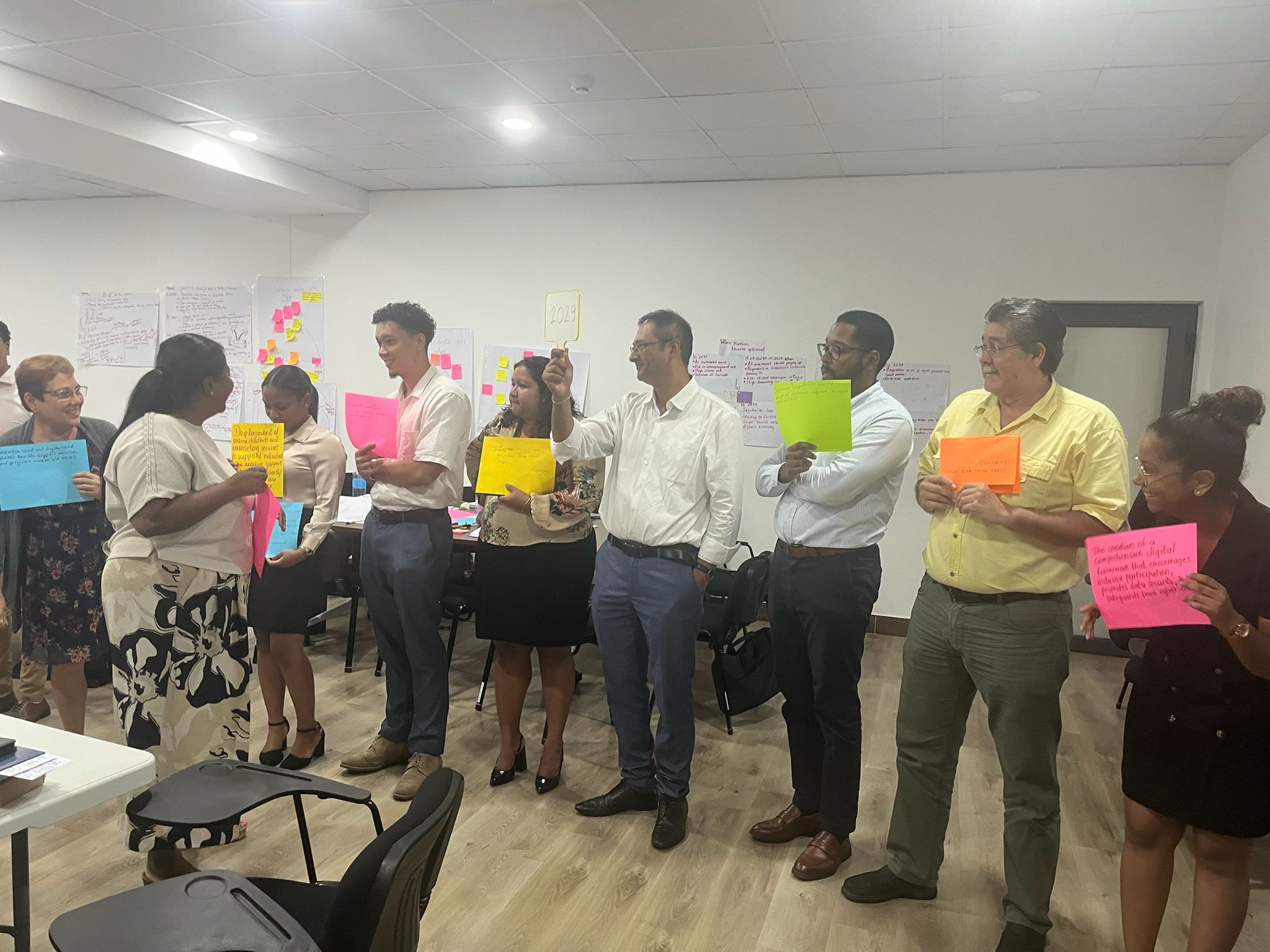
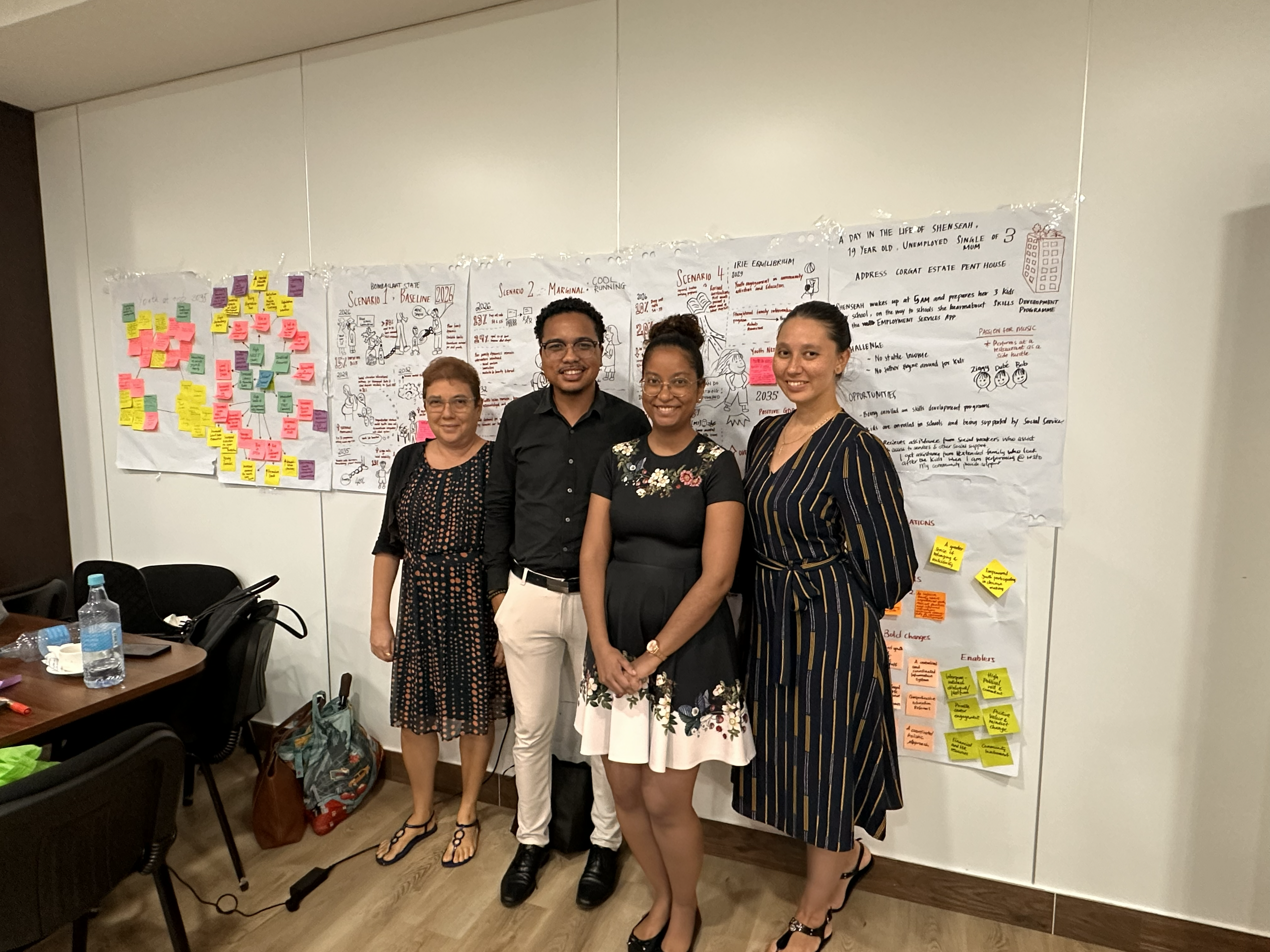
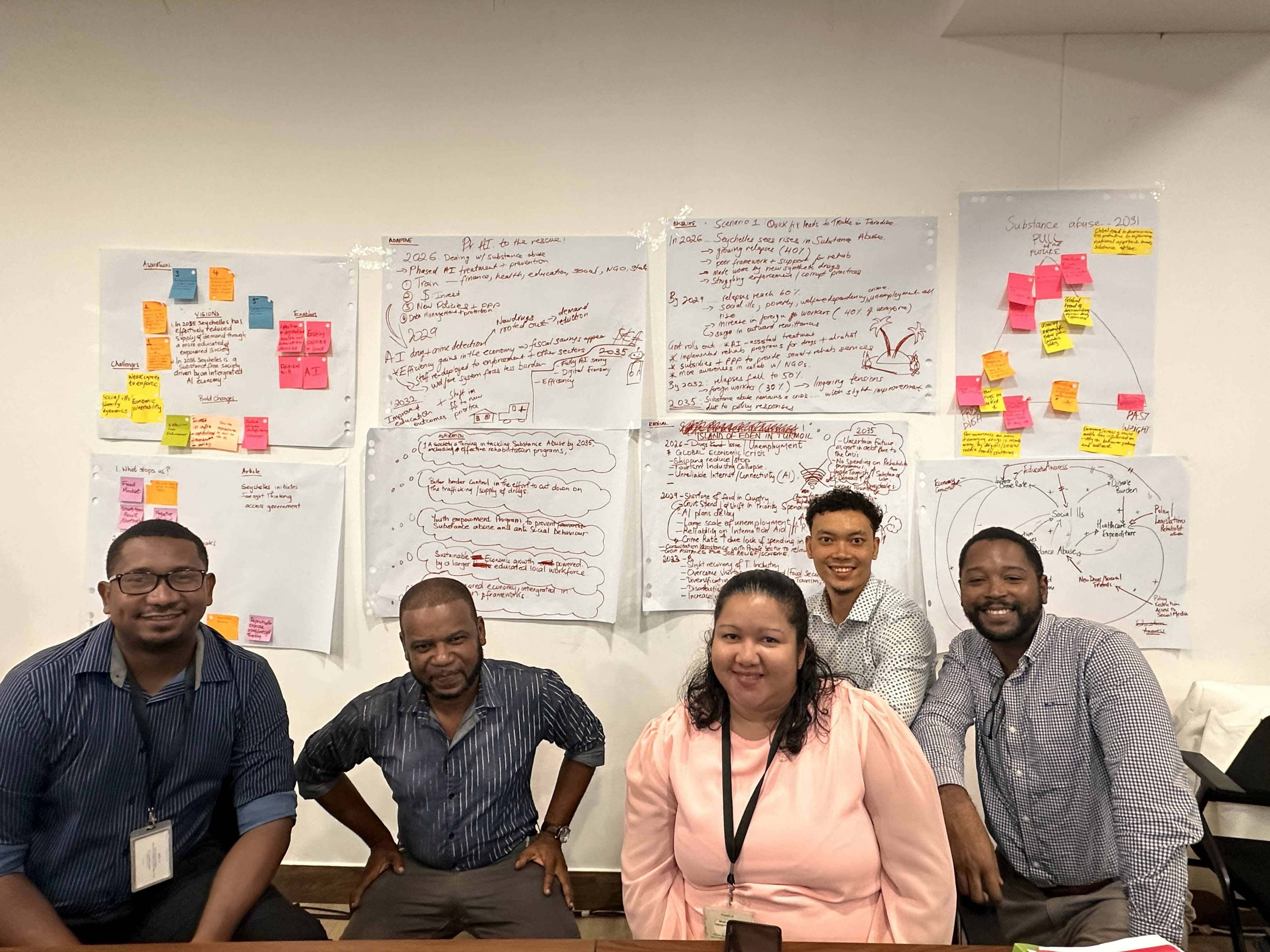
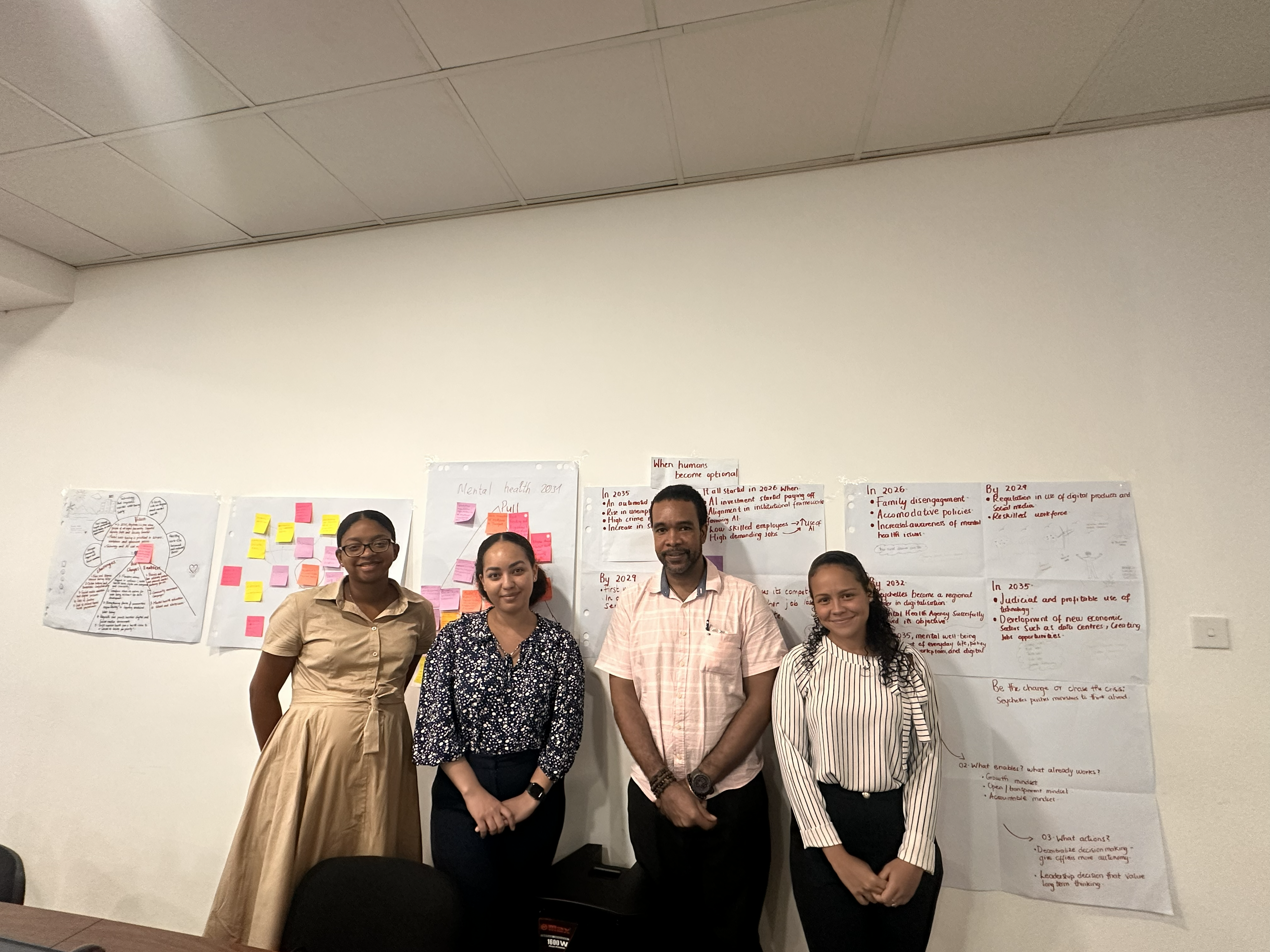
Opening discussions emphasized a clear message: effective planning in uncertain times requires institutions to test assumptions, connect risks across sectors and consider how today’s decisions may shape tomorrow’s outcomes. Over the three days, participants worked with tools such as horizon scanning, the Futures Triangle, causal loop diagrams, the Futures Wheel, scenario development, visioning and backcasting, applying them to different policy areas.
UNITAR
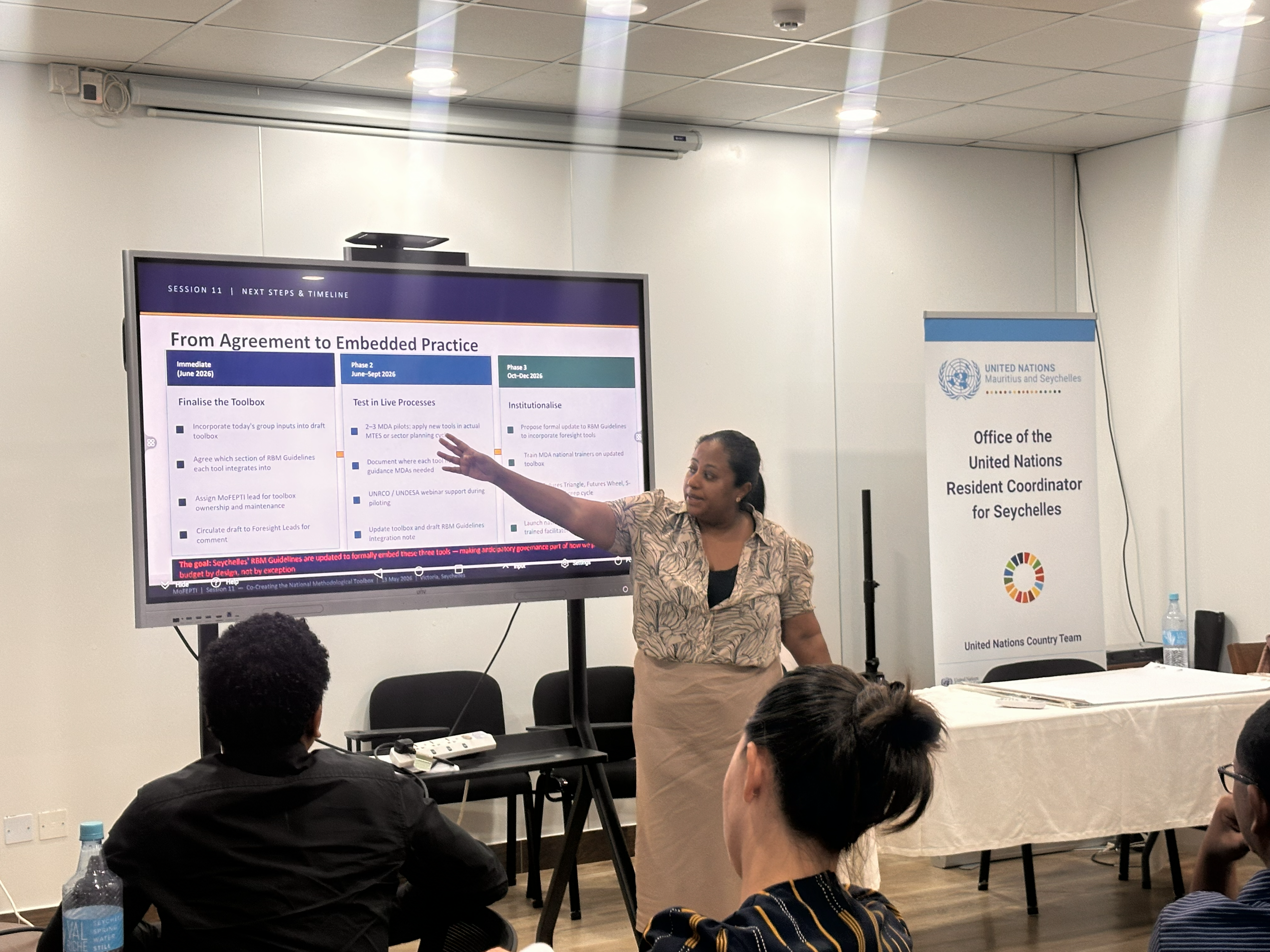
A key output was the co-creation of inputs for a national methodological toolbox to help ministries, departments and agencies apply foresight and systems thinking in a consistent and practical way within existing results-based management processes, including national strategic planning, medium-term expenditure planning, programme performance-based budgeting, and performance monitoring and evaluation.
UNITAR
Evaluation results showed a measurable difference. Average assessment scores rose from 73% before the training to 92% after it. Participants also reported strong practical value, with 100% finding the training useful and 94% saying it increased their confidence in applying at least two foresight tools.
The next phase of the programme is expected to test and refine the toolbox through selected pilots. The results will inform an updated methodology, training package and facilitation guide, which will support trained officials to lead wider workshops across government toward the end of 2026.
UNITAR
UNITAR
UNITAR
UNITAR