

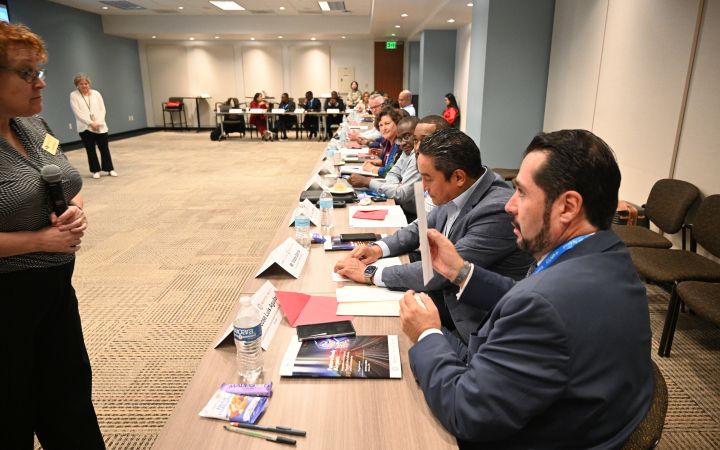
4 May 2026, Atlanta, USA – Large-scale high-profile governmental, cultural, sporting, or entertainment events such as the FIFA World Cup, G20s, Olympics and Paralympics, Super Bowls, Champions League finals attract significant visitors, bring important economic benefits and opportunities for improving urban development, while reducing environmental impact.
Airports are the first and last impression of any mega event. Airports own 6 steps of the 18-step spectator journey from home to home. Airports experience frames spectators' entire perception of the host city and event quality. At the same time, they face challenges such as sudden traffic surge, slot capacity crunch, immigration bottlenecks, last minute demand, amongst others.
In the framework of UNITAR’s Airports Global Training Programme offered in partnership with Hartsfield-Jackson Atlanta International Airport (ATL) and the Georgia Institute of Technology Enterprise Innovation Institute (EI2), the training workshop "Future-Ready Airports: Preparedness for Mega Events Through Safety, Sustainability, and Smart Innovation" took place in Atlanta, USA during 22-24 April 2026.
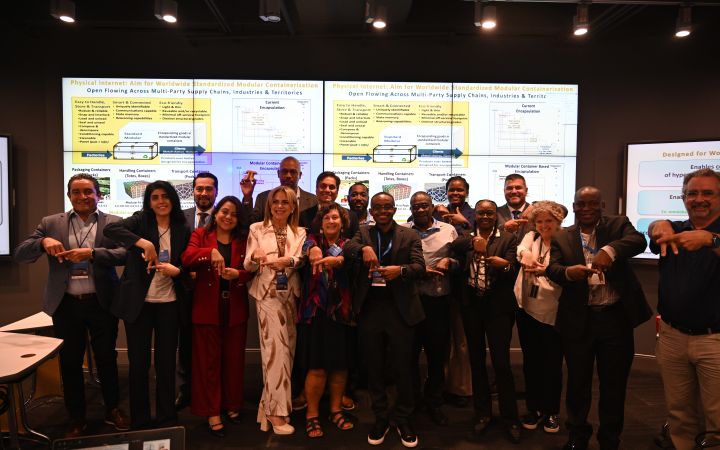
The workshop brought together 40 participants from Angola, the British Virgin Islands, Canada, Costa Rica, the Czech Republic, Dominica, Ecuador, Guatemala, Liberia, Panama, the Turks and Caicos Islands, and the USA. The primary objective was to exchange best practices and strategic tools for managing the complexities of mega events, ensuring that airports leaders are equipped to handle sudden traffic surges and operational challenges.
This gathering provided a unique opportunity to learn on how US airports are preparing to welcome 48 national teams, over 5 million international visitors across 16 host cities in the USA, Canada and Mexico during the 39-day FIFA World Cup.
The workshop addressed topics such as the integration of Generative AI to optimize operational efficiency, advanced screening technologies and biometric verification to manage massive passenger surges safely. These discussions expanded into broader logistical challenges, including slot capacity management, immigration bottlenecks, and cargo logistics, while also exploring cutting-edge concepts like Urban Air Mobility and the design of sustainable infrastructure.
A roundtable discussion was dedicated to Inter-agency Coordination and Crisis Management, which emphasised that airport security transcends any single organization. Experts highlighted the necessity of establishing joint command centres to enable a unified response and shared situational awareness between federal and local agencies and private operators. This approach ensures that high-demand periods are managed through a rigorous framework of continuous preparedness.
The analysis of Cybersecurity in mega events positioned the digital environment as the new strategic frontier. Given the increasing reliance of airports on data analytics and contactless security models, protecting the digital "nervous system" has become as vital as physical perimeter security. The discussions underscored that cyber resilience is fundamental to preventing disruptions that could paralyze operations, reaffirming the importance of real-time intelligence sharing to protect the airport ecosystem against both physical and digital risks during high-profile global events.
Key speakers included representatives from Hartsfield-Jackson Atlanta International Airport (ATL), the Miami-Dade Aviation Department, the Atlanta Fire Rescue - Aviation Division, U.S. Customs and Border Protection, DHS Transportation Security Administration, Georgia Tech, CIFAL Atlanta, CIFAL Miami, CIFAL York, and UNITAR.
The discussions reaffirmed four key areas in preparing for mega events:
- Readiness: Continuous training and simulation for high-demand operations
- Collaboration: Strengthening inter-agency coordination
- Continuous Improvement: Treating every event as a stress test for the system
- Guest-Focused: Balancing security and guest experience.
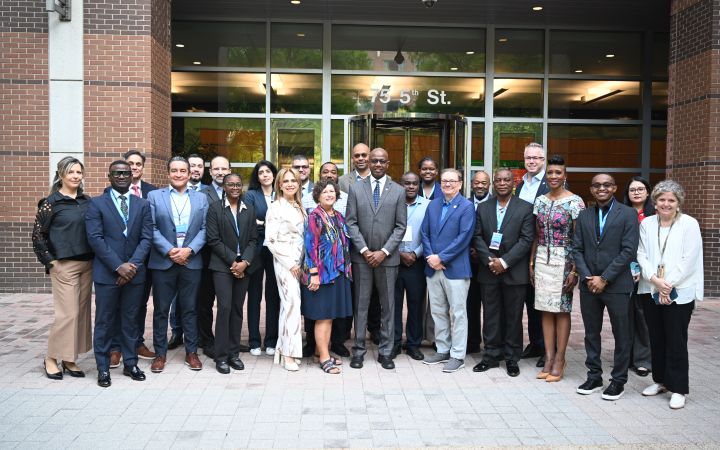
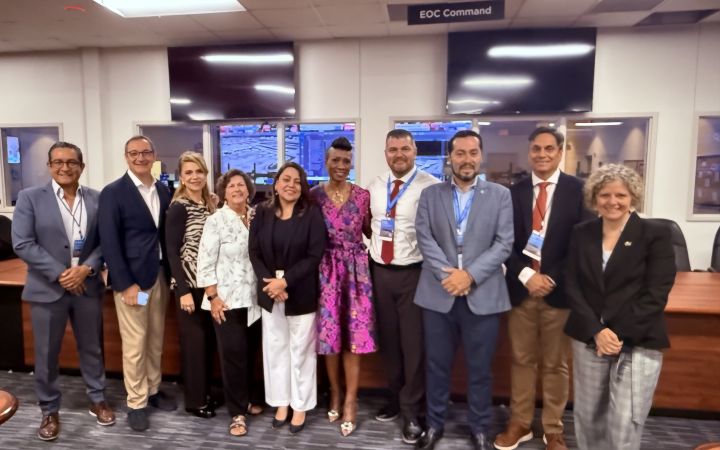
The workshop concluded with site visits to Atlanta Airport’s Emergency Operations Center (EOC) and to Georgia Tech’s cutting-edge laboratories:
Emergency Operations Center (EOC):to provide participants with a deeper understanding of how incidents affecting airport operations are managed. This session allowed participants to observe their dual approach: immediate crisis response—where strategic objectives are set and logistical support is provided—and their rigorous continuous preparedness.
Aerospace Systems Design Laboratory: to explore design concepts such as "Urban Air Mobility" (UAM) and vertiports and discuss how this new type of mobility will impact airports and cities.
Supply Chain & Logistics Institute: to exchange innovative ways to optimize cargo logistics and its application to airports.
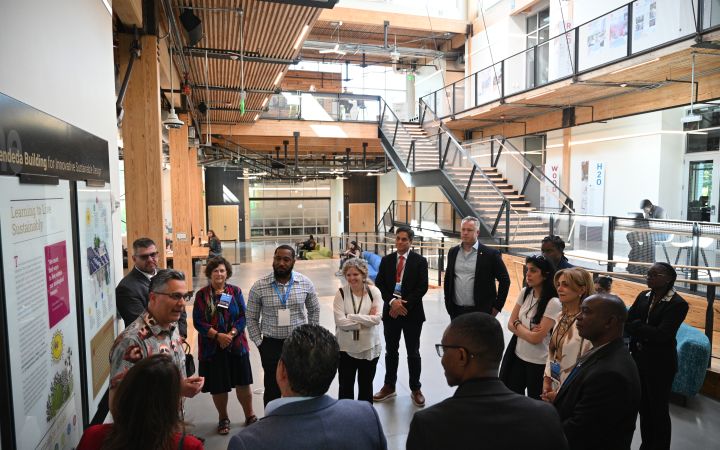
The Kendeda Building for Innovative Sustainable Design: to learn about infrastructure design and decarbonization net-positive energy and water systems that could be applied to airports.