
UNITAR
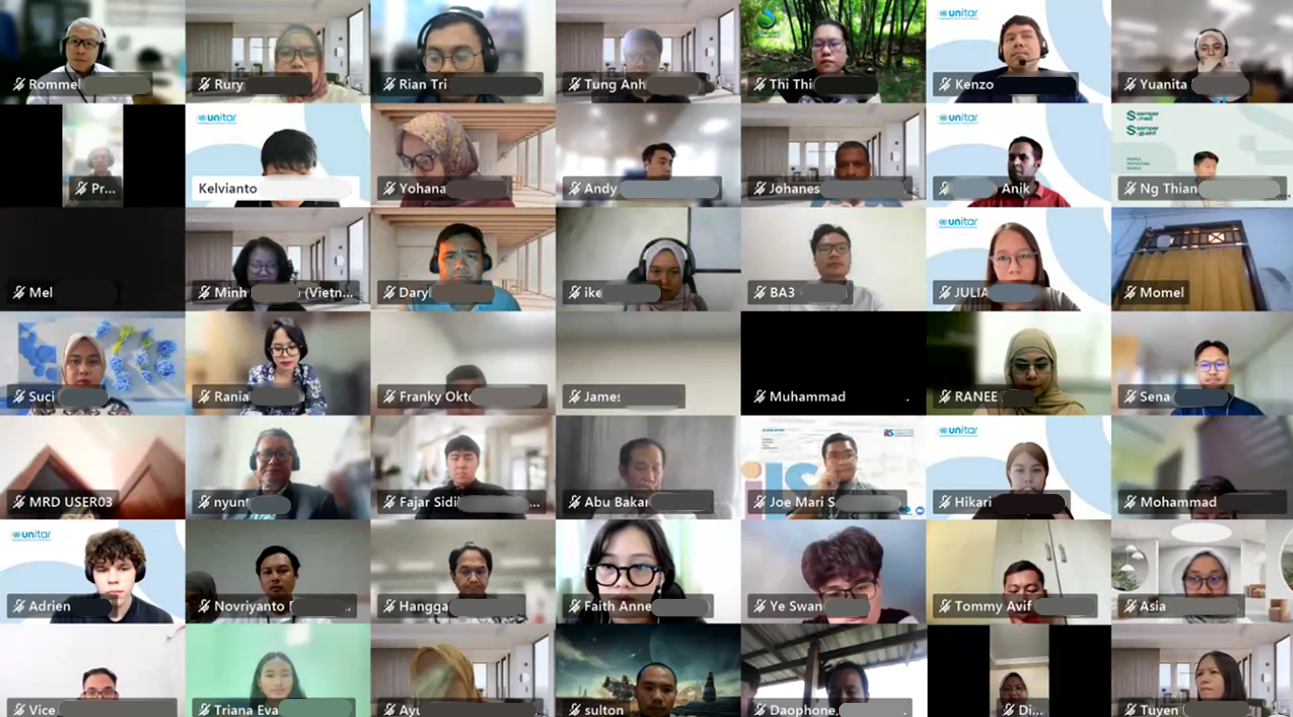
27 October 2026, Hiroshima, Japan – More than 1,000 professionals from all 11 member states of the Association of Southeast Asian Nations (ASEAN) participated in the first phase of the United Nations Institute for Training and Research (UNITAR) Green Economic Acceleration programme. Participants submitted more than 500 early-stage green-economy project proposals, and 200 were selected for the programme’s mentoring phase that began on 13 October 2026.
The UNITAR Green Economic Acceleration: A Japan–ASEAN Strategic Programme for Sustainable Green Finance is funded by the Government and People of Japan. It aims to help government officials and private-sector leaders develop practical projects addressing sustainable-finance challenges in their countries and across the region.
The programme began in July 2026 and comprises three progressively selective phases. Fifty participants will ultimately be selected for the final phase, an in-person Japan–ASEAN Green Summit scheduled for February 2027 in Tokyo.
Developing green-economy project proposals
UNITAR
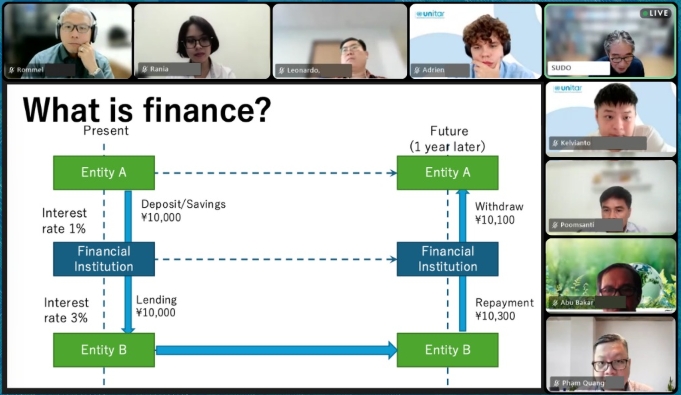
The first phase ran online from 7 July to 20 September. Participants completed six self-paced modules hosted on UN CC:e-Learn and joined six expert-led webinars.
The modules introduced sustainable finance, sustainable-finance taxonomies, climate finance, green fiscal policy, energy transition and climate-related financial disclosure frameworks. The webinars complemented this material with practical perspectives on green lending, financial technology, investment strategies and the development of sustainable-finance markets in the ASEAN region.
Participants also examined approaches including emissions trading, carbon markets, biodiversity credits and nature-based finance. Examples from Japan and ASEAN countries helped them consider how policy and financing tools could be applied to challenges in their own contexts.
Each participant identified a green-economy or sustainable-finance challenge and began developing a proposal in one of four areas: sustainable banking and green fintech; energy transition; carbon markets and emissions trading; or green fiscal policy. More than 500 proposals were submitted by the end of the phase.
Two hundred participants advance to phase 2: Multidimensional Mentoring
Based on the proposals, 200 participants were selected to continue to Phase 2, where they will further refine their proposals. This phase, which runs from 13 October to 30 November, will introduce a multidimensional mentoring model where the participants will be organized into four thematic cohorts of 50 participants each and receive dedicated mentoring from a specialist in their thematic area. This will be complemented by engagement with rotating industry practitioners from the Japanese private sector. This will take place across four live webinar sessions.
Unlike conventional one-to-one mentoring, multidimensional mentoring will let participants test their proposals against policy, academic and business perspectives at the same time. The thematic specialist will provide continuity and in-depth technical guidance, while practitioners from Japanese companies will share how green projects are assessed and financed in practice. Each cohort will also have its own space on the programme’s online community platform for peer exchange between sessions.
Using the technical, policy and business perspectives provided during the mentoring phase, participants will further develop and finalize their proposals. Fifty participants will then be selected based on the revised proposals to join the Japan–ASEAN Green Summit in Tokyo in February 2027.
The mentoring phase began on 13 October, marking the next step in helping participants turn early-stage ideas into more developed green-economy project proposals.
About UNITAR Green Economic Acceleration: A Japan–ASEAN Strategic Programme for Sustainable Green Finance
The UNITAR Green Economic Acceleration: A Japan–ASEAN Strategic Programme for Sustainable Green Finance is a strategic initiative to strengthen Japan-ASEAN cooperation in advancing sustainable finance, supporting regional economic resilience, and accelerating the transition to a green economy.
In three progressively selective phases, the programme will train ASEAN government officials and private-sector leaders to develop bankable green economy projects and strengthen regional capacity in sustainable finance. The programme runs from July 2026 to March 2027.
This programme is offered free of charge to participants thanks to the generous support of the Government and People of Japan.