

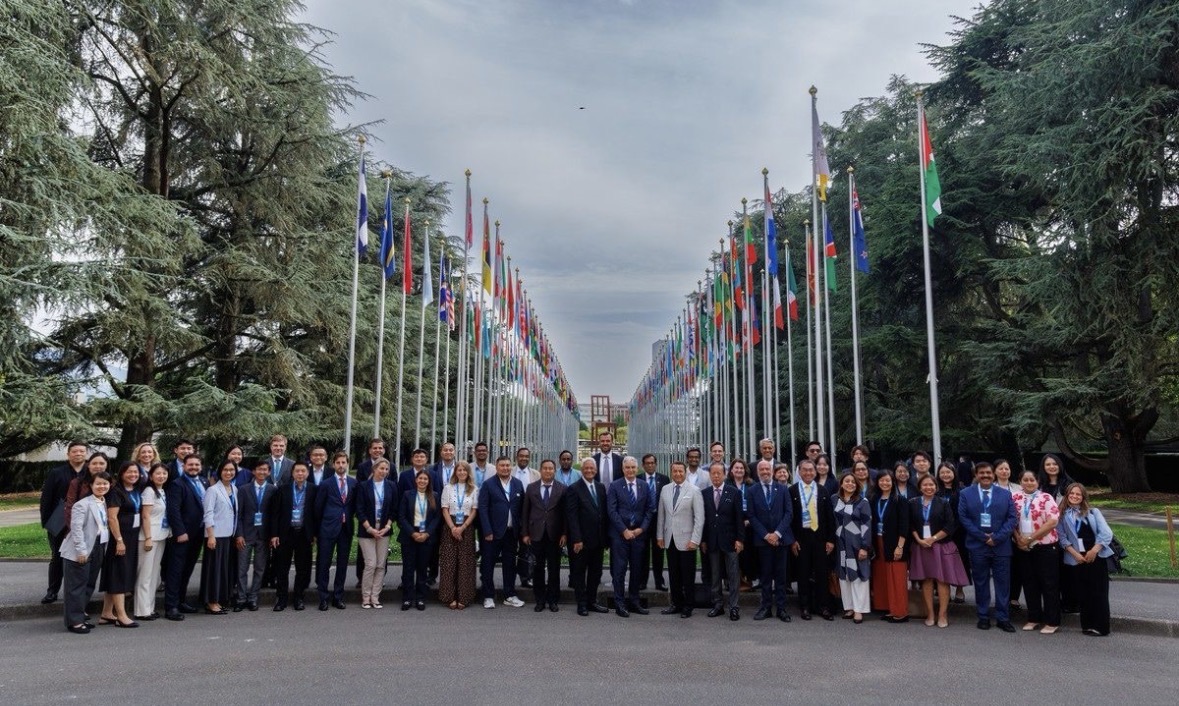
20 July 2026, Geneva, Switzerland - Held at the United Nations Office at Geneva on 13–14 July 2026, the Fellowship Programme and Graduation of the Safe Mobility 4 All & 4 Life (SM4A4L) Initiative for Asia-Pacific marked the culmination of months of learning, mentoring and cross-sector collaboration amongst road safety practitioners, government officials and international experts from the region.
The Safe Mobility 4 All & 4 Life Initiative is a joint initiative of UNITAR and the Fédération Internationale de l’Automobile (FIA) with the support of the FIA Foundation designed to strengthen technical knowledge, develop leadership skills and encourage the design of practical, evidence-based responses to national road safety priorities.
The SM4A4L Fellowship Programme represented a transition from learning to implementation. Over two days at the Palais des Nations, participants exchanged experiences, tested ideas and presented solutions developed through months of study, mentoring and institutional collaboration.
36 participants from 15 countries completed a comprehensive capacity development journey comprising more than 120 hours of learning across 56 technical topics, supported by mentoring from an international network of road safety specialists. The learning process enabled participants to strengthen their ability to work across institutions, engage diverse stakeholders and translate the Safe System Approach into practical action.
UNITAR
Learning Together, Leading Together
UNITAR
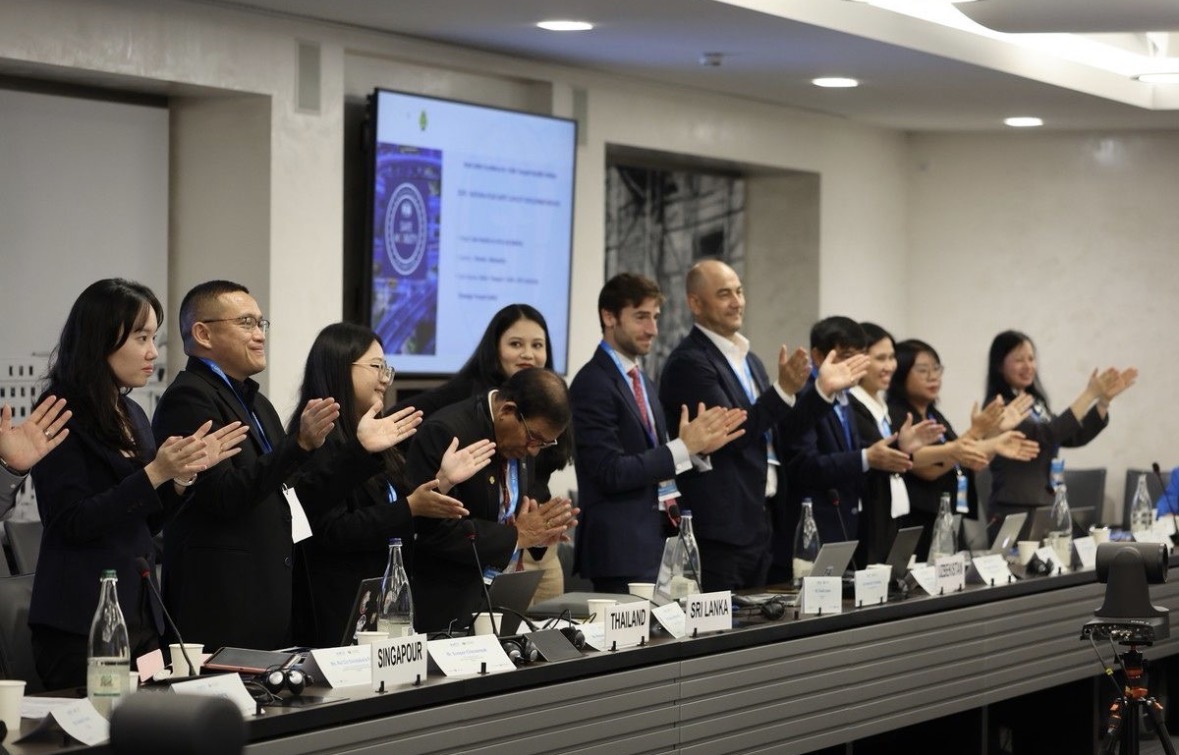
A government panel brought together senior representatives to discuss national road safety priorities and the institutional conditions needed to deliver lasting progress. The discussion highlighted the importance of political commitment, evidence-based policymaking, inter-agency cooperation and continued investment in safer mobility systems.
The Mentors’ Panel focused on applying the Safe System Approach across varied national contexts. Drawing on expertise in infrastructure, vehicle safety, road user behaviour, youth engagement, engineering and capacity development, mentors reflected on their work with the country teams and the importance of adapting international experience to local realities.
A United Nations panel featuring experts from UNECE and UNHCR connected national road safety action with wider global priorities. The discussion reinforced the role of international cooperation and cross-sector partnerships in advancing safer, more inclusive and sustainable mobility.
Together, these exchanges demonstrated that effective road safety leadership depends not only on technical knowledge, but also on the ability to build trust, coordinate institutions and sustain collaboration across sectors and borders.
Turning Knowledge into Action
UNITAR
The SM4A4L Asia-Pacific edition resulted in the design of 17 road safety projects, reflecting the different needs and contexts of Australia, Bangladesh, Cambodia, India, Indonesia, Japan, Kyrgyzstan, Mongolia, Nepal, the Philippines, Singapore, Sri Lanka, Thailand, Uzbekistan and Vietnam. The projects presented were co-designed by FIA Member Clubs, government authorities and partner institutions.
The projects covered a broad range of priorities. Several focused on protecting children and young people, including safer school zones, data-driven road safety education, motorcycle safety, youth advocacy and improved support for learner drivers.
Others addressed vulnerable road users through safer pedestrian crossings, inclusive mobility for children with disabilities and safer mobility for ageing drivers.
Professional and commercial road transport also featured strongly. Proposed actions included annual refresher training for public transport drivers, competency-based heavy-vehicle training, simulator-based driver education and the integration of road safety into corporate transport management.
Technology and data were central to several projects. These included artificial intelligence to identify non-standard motorcycle helmets, a central road crash database, sensor-based analysis of school commuting behaviour and research into public understanding of supervised driving systems.
Infrastructure-related project proposals included the application of road safety Star Rating methods, safer school mobility planning and improvements to high-risk pedestrian crossing locations. Vehicle safety initiatives also addressed child restraint legislation and the responsible use of emerging vehicle technologies.
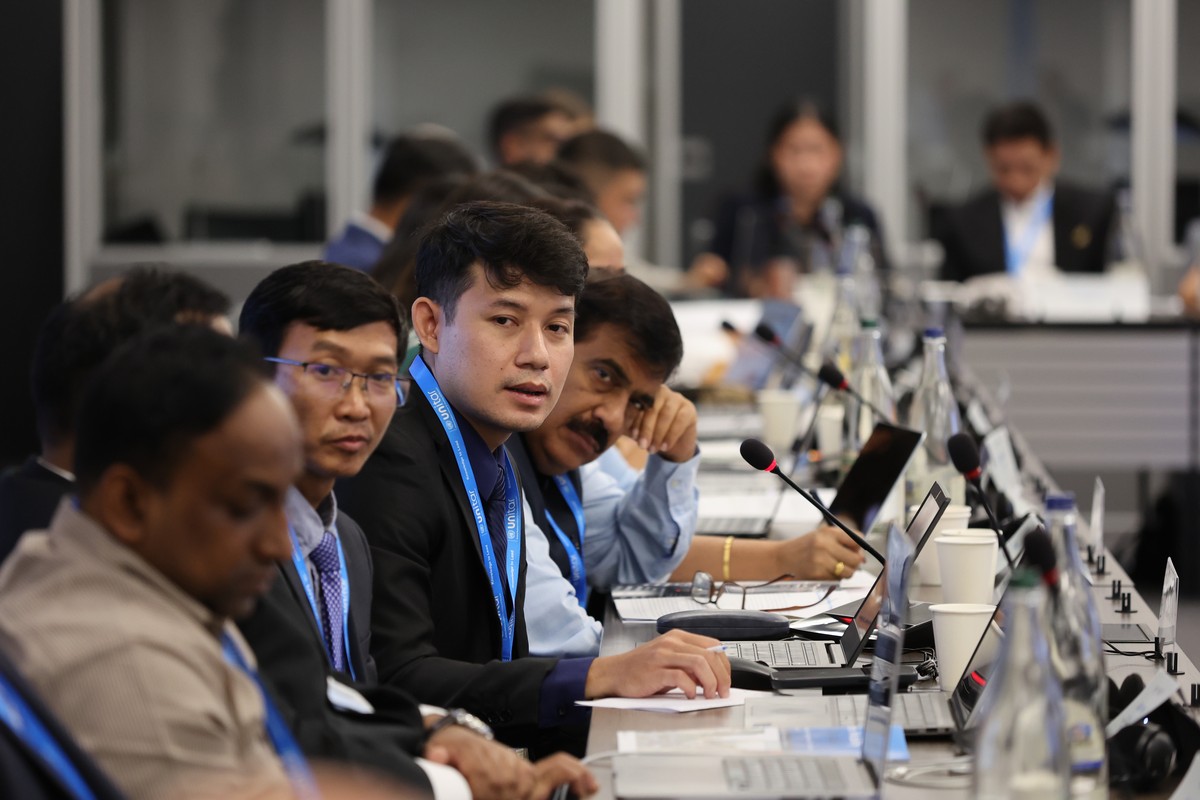
The project showcase sessions gave teams the opportunity to present their proposals to peers, mentors and international experts. The exchange encouraged constructive feedback and allowed participants to identify similarities across countries, learn from different approaches and explore opportunities for future regional cooperation.
Celebrating Achievement and Looking Ahead
The event concluded with a Graduation Ceremony recognizing the commitment and professional growth demonstrated by participants throughout the Asia-Pacific edition. The Fellowship’s significance, however, extends beyond the certificates awarded in Geneva. Its real value lies in the knowledge strengthened, the partnerships formed and the country-led solutions now moving towards implementation.