

21 September 2026 - Geneva, Switzerland / Majmaah, Saudi Arabia - Senior leaders from 35 higher education institutions in 20 countries have begun a UN-backed programme designed to move universities from pledging support for sustainability to changing how they govern, teach, research and spend.
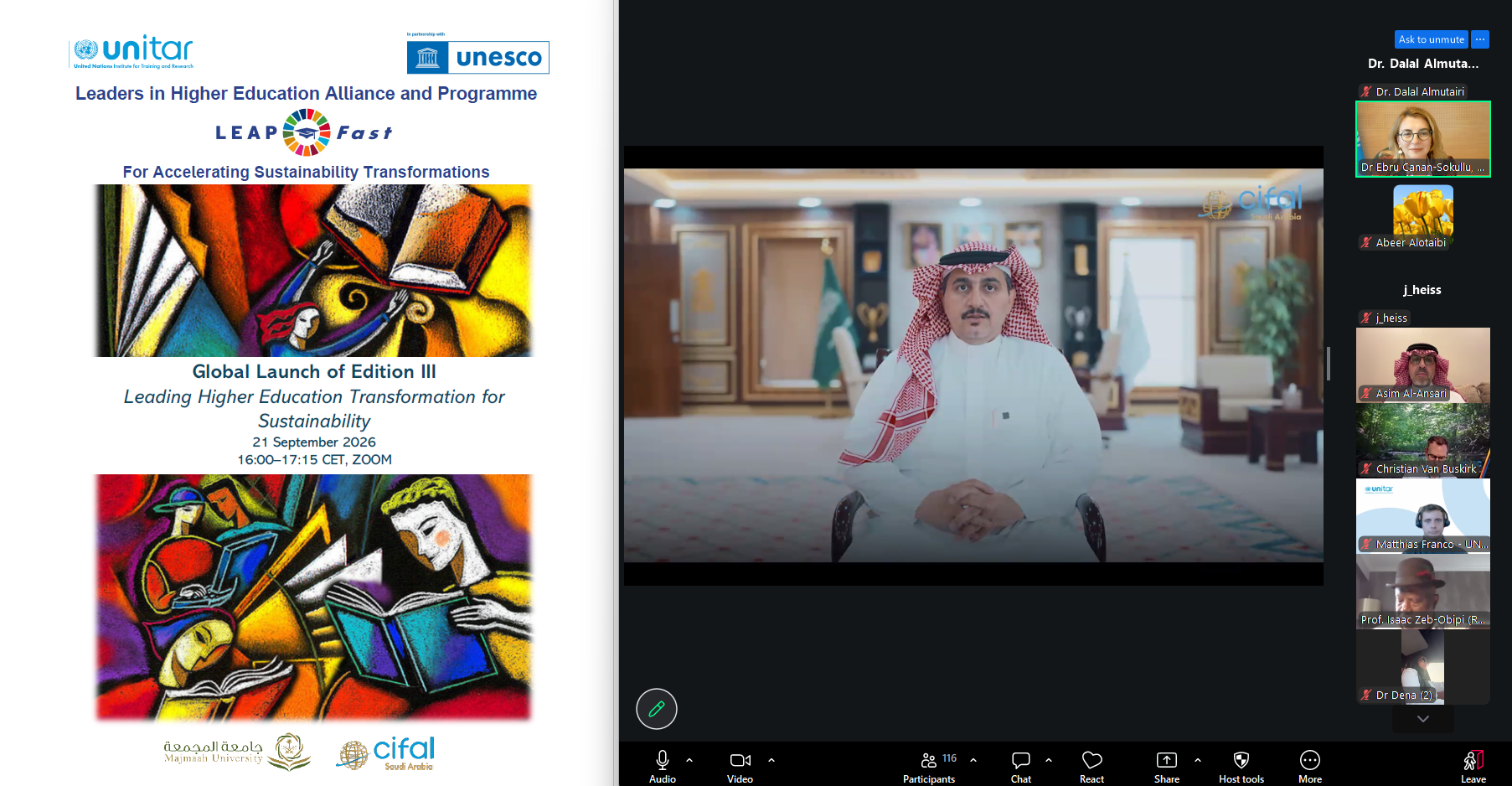
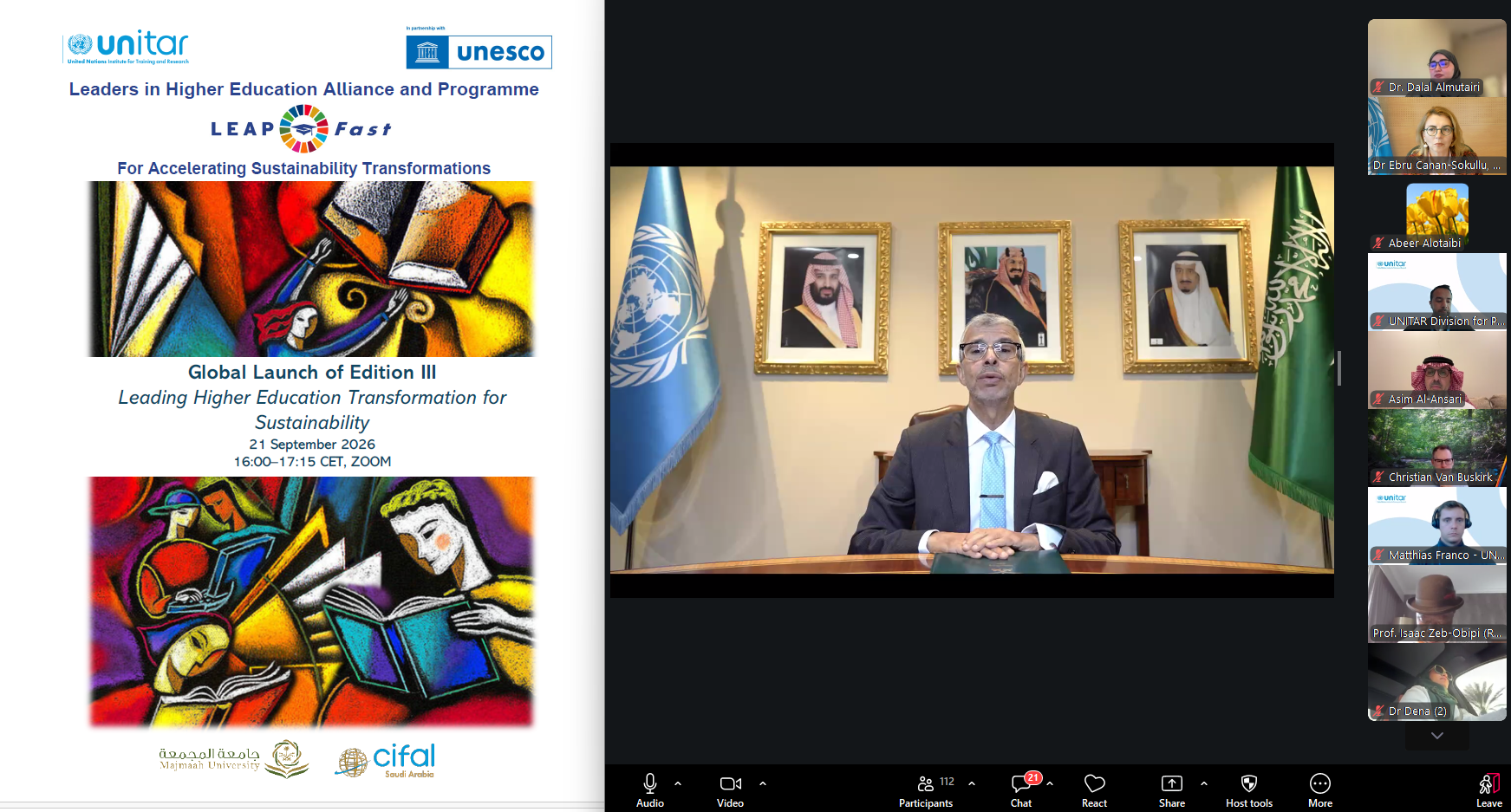
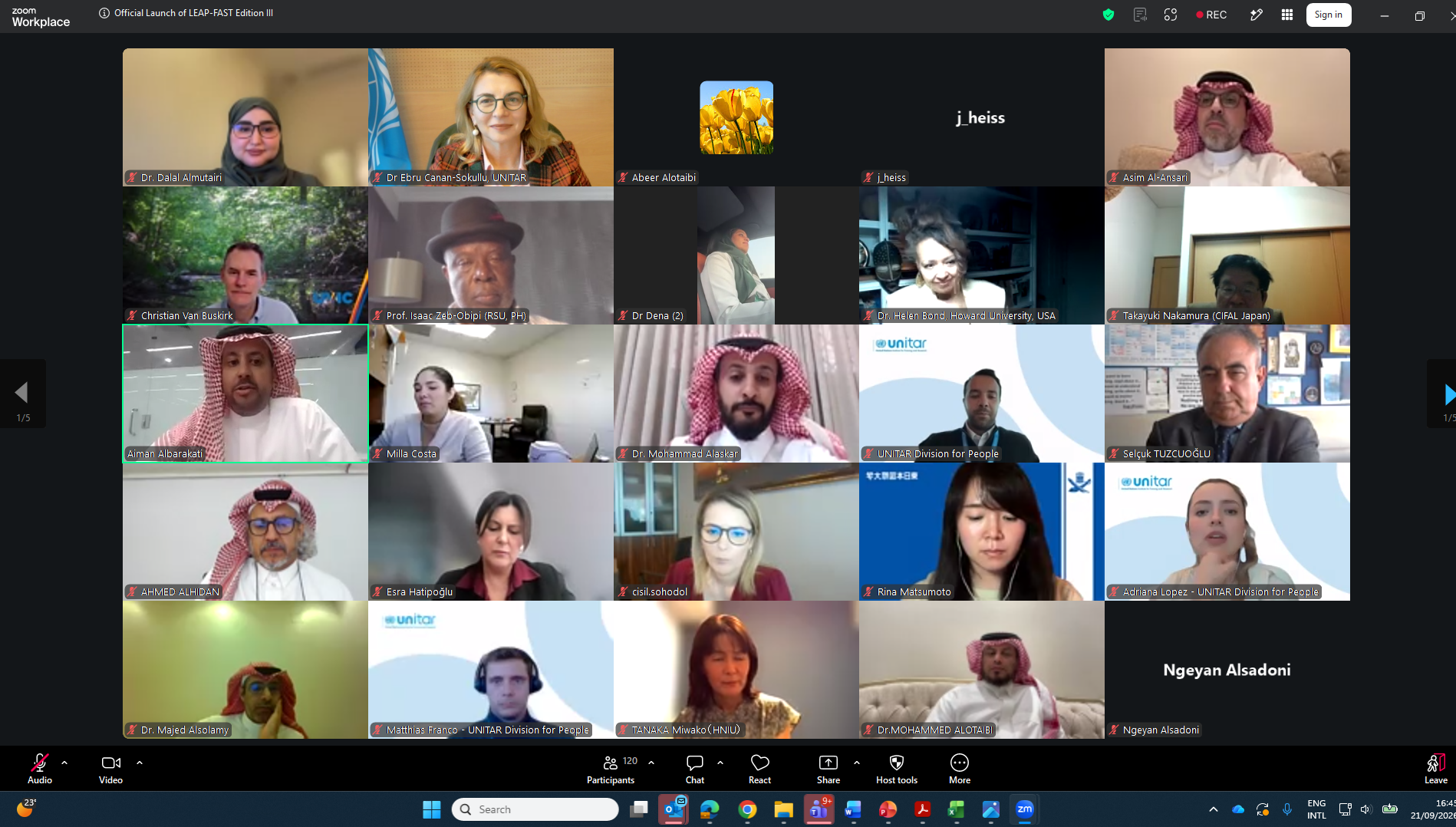
The 106 participants started the third edition of LEAP-FAST, the Leaders in Higher Education Alliance and Programme for Accelerating Sustainability Transformations, at a virtual launch convened by the United Nations Institute for Training and Research (UNITAR) and UNESCO. The launch was organized in partnership with Majmaah University and CIFAL Saudi Arabia, part of UNITAR's CIFAL Global Network of training centres.
From commitment to evidence
UNITAR
The launch focused on a gap that many universities now face. Most have committed to sustainability, but fewer can show what that commitment has changed.
"The more important question is not whether universities are committed to sustainability. Many of us already are," said Dr Angelo Jimenez, President of the University of the Philippines. "The more important question is, what does that commitment change?"
Dr Majed Al-Solamy, who leads university performance measurement at Saudi Arabia's Council of University Affairs, warned that "activity is not always evidence of transformation". He said universities should look for change at three levels: decisions such as budget allocation, practice in teaching and research, and outcomes for graduates. Sustainability, he argued, should go through the same reporting and review cycle as every other area of performance.
What participating universities report
Leaders from earlier cohorts gave examples of how the programme's approach is being applied. Professor Esra Hatipoğlu, Rector of Bahçeşehir University in Türkiye, described a "domino effect": staff who took part in earlier editions built what they learned into their curricula and passed it on to colleagues and partner institutions.
Professor Isaac Zeb-Obipi, Vice Chancellor of Rivers State University in Nigeria, described measures his university has taken to make change outlast its leadership. Postgraduate theses must address the Sustainable Development Goals, 30% of course content is designed around sustainability priorities, new centres focus on water and sanitation and on climate studies, and the campus is moving from diesel generators to solar power. "Even when I leave as Vice Chancellor, it becomes difficult for my successor not to sustain the momentum," he said.
UNITAR's role and partnerships
LEAP-FAST was created three years ago by UNITAR, UNESCO and Majmaah University. UNITAR leads the programme and runs its co-creation process, in which participants develop institutional plans together rather than following a fixed curriculum. UNESCO has co-designed the curriculum since the first edition.
Julia Heiss, Chief of Education for Sustainable Development at UNESCO, said the programme treats sustainability as a social, emotional and behavioural competency as well as a cognitive one: "the head, the heart, and the hands".
The CIFAL Global Network connects the programme to locally based expertise. Several of the university leaders who spoke at the launch head institutions that host CIFAL centres in Nigeria, the Philippines, Saudi Arabia and Türkiye.
UNITAR
UNITAR
Next steps
Over the next eleven weeks, participants will assess their own institutions and work on curriculum reform, governance and strategy. In November, the cohort will meet in person for a Co-Creation Development Week at Majmaah University in Saudi Arabia.
The direct outputs of this edition are a trained cohort and an institutional plan for each participating university. The test of its outcomes will be whether those plans lead to measurable changes in budgets, teaching and research. Its longer-term impact will depend on whether those changes last beyond the programme and the leaders who started them.