

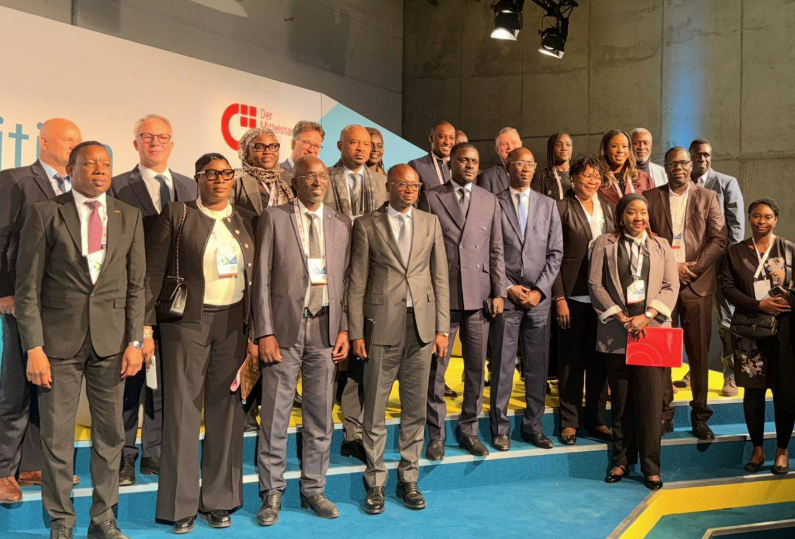
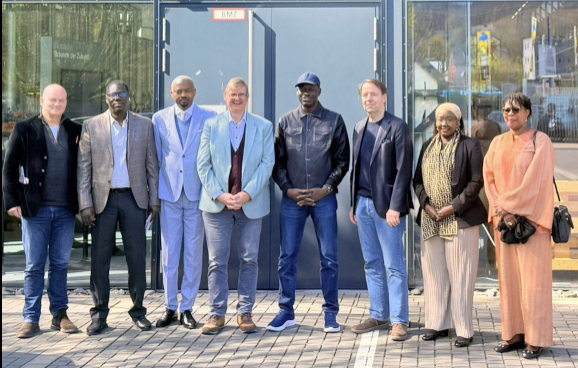
18 April 2026, Siegen, Germany — In a working visit that signals a new chapter for the CIFAL Dakar Centre, Mayor Abass Fall, Chairperson of CIFAL Dakar, traveled to Germany accompanied by the Director of this CIFAL Centre, Mr. Mouhamed Diop, to explore one of the world's most celebrated models of technical and vocational education. The mission, centred on Germany's renowned Duale Ausbildung, the dual education system marks a significant strategic milestone in the Mayor's broader vision for a more modern, inclusive, and opportunity-driven Dakar.
Officially installed as Mayor in September 2025, Mr Abass Fall has outlined four strategic priorities: making Dakar an economically and socially inclusive city, an international capital, a hub of creativity and digital innovation, and a smart city focused on sustainability and quality of life. The visit to Germany is a direct expression of these priorities in action. The question put forward was how to build a training ecosystem that genuinely connects young people to economic opportunities is not abstract, it is one of the most consequential governance challenges Mayor Fall's administration faces.
Learning from the German Model
CIFAL Dakar
The centrepiece of the visit was an immersion in Germany's Duale Ausbildung - the dual apprenticeship system that has made German vocational education a globally recognized benchmark for youth employment and workforce integration. Unlike traditional classroom-based training, the dual system divides learning between a vocational school and a company, with apprentices spending part of their week in theoretical instruction and the rest in supervised on-the-job training with an employer. The model is lauded internationally for its ability to align skills formation precisely with the needs of the labor market, reduce youth unemployment, and produce graduates who are work-ready from their first day of employment.
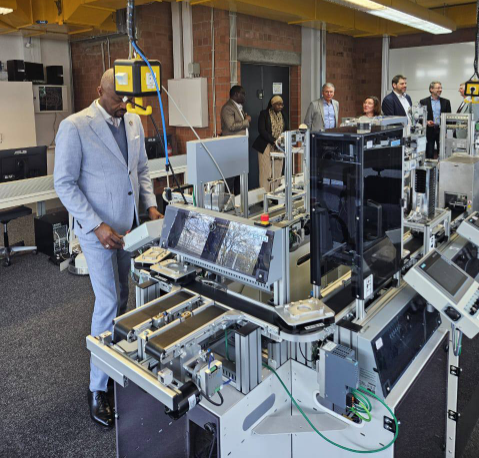
CIFAL Dakar engaged directly with two institutions that embody this approach: the Berufskolleg Technik Siegen, a specialized technical vocational college, and the Campus Berufliche Bildung Buschhütten, a professional education campus with deep roots in the region's industrial and craft sectors. Through structured exchanges with educators, administrators, and training coordinators at both institutions, CIFAL Dakar explored the pedagogical architecture, institutional partnerships, financing models, and quality assurance mechanisms that give the German system its effectiveness and began the careful work of identifying what elements could be adapted and transposed to the Senegalese context.
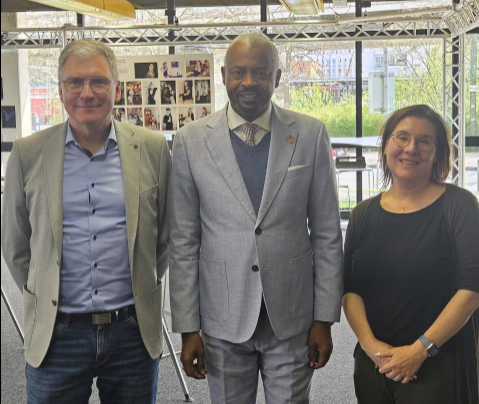
The visit to the University of Siegen provided an additional academic dimension, situating the vocational training dialogue within a broader higher education and research framework, and opening pathways for potential academic cooperation alongside the more practice-oriented institutional partnerships being developed.
CIFAL Dakar as the Vehicle for Transformation
Established in 2019 and hosted by the Municipality of Dakar, CIFAL Dakar aims to strengthen the capacities of government authorities, private sector representatives, and civil society leaders in the areas of urban governance and planning, capacity for the Agenda 2030 for Sustainable Development, and social inclusion, with a scope covering West Africa and a focus on Francophone countries. This CIFAL Centre is an institutional vehicle through which the insights and partnerships developed during the German visit will be translated into programming, curriculum development, and operational reform.
The central purpose of the CIFAL training programmes is to develop and strengthen human capacities to better respond to development challenges and to facilitate city-to-city partnerships, providing a platform for dialogue and knowledge transfer on key development-related issues, including networking opportunities that lead to collaboration, peer-to-peer learning, and exchange of best practices.
CIFAL Dakar
CIFAL Dakar
CIFAL Dakar
Laying the Groundwork for Structured Cooperation
The exchanges held during the working visit were productive enough to move beyond general exploration into the concrete groundwork for structured institutional cooperation. Both the Berufskolleg Technik Siegen and the Campus Berufliche Bildung Buschhütten engaged substantively CIFAL Dakar’s ambitions, and the foundations for a formalized partnership, encompassing curriculum exchange, educator training, and potentially student mobility are now being laid.
The ambition, as framed by Mayor Fall's administration, is a dynamic transformation of CIFAL Dakar: a substantive upgrading that draws from international best practices to provide young Dakarois with qualifying, adapted, and opportunity-driven career paths. This means revisiting the CIFAL Centre's pedagogical model, its relationship with private sector employers, its certification frameworks, and its capacity to respond rapidly to shifts in labor market demand.
The City of Dakar and CIFAL Dakar have already demonstrated their commitment to youth employability through initiatives such as a series of training courses that allowed 1,500 young people to obtain their driving licenses free of charge, enabling them to enter the world of work and improve road safety, a practical illustration of how CIFAL Dakar has consistently sought to link training directly to employment outcomes. The German partnership ambition represents a significant scaling of that philosophy, moving from targeted interventions to a structural reform of the Training Centre's entire operating model.
A Milestone in Dakar's International Strategy
The working visit to Germany also reflects the increasingly internationalist dimension of CIFAL Dakar’s leadership. The Centre has contributed to position Dakar as an international capital and a hub of creativity and digital innovation, and the pursuit of partnerships with European institutions of excellence is a concrete expression of that positioning. By bringing CIFAL's institutional network to bear on this ambition, and by visiting Germany not as a diplomatic gesture but as a structured learning mission with clear deliverables, the Mayor, Chairperson of CIFAL Dakar, is signaling that Dakar's international engagement will be substantive, technical, and outcomes oriented.
This initiative is supported by UNITAR and the CIFAL Global Network, which continues to strengthen CIFAL Dakar's capacity as a hub for knowledge exchange, leadership development, and sustainable urban governance across Francophone West Africa. Through partnerships like this one, connecting municipal leadership, and European educational excellence, the CGN reaffirms its commitment to building capacity and institutional partnerships that translate the 2030 Agenda for Sustainable Development into opportunity for the young people who need it most.