

UNITAR produces rigorous research and publications that advance understanding of road safety challenges and inform evidence-based interventions worldwide. Through systematic reviews, meta-analyses, and innovative applications of artificial intelligence and machine learning, these publications examine critical issues such as drink-driving among youth, behavioral trends, contributing factors, and the effectiveness of prevention strategies.
By linking insights to the UN Sustainable Development Goals, the Decade of Action for Road Safety 2021–2030, and the UN Decade of Sustainable Transport 2026-2035, the research provides actionable guidance for policymakers, government officials, educators, and practitioners seeking to improve road safety outcomes globally.
Assessing Attitudinal Change Towards Drinking and Driving
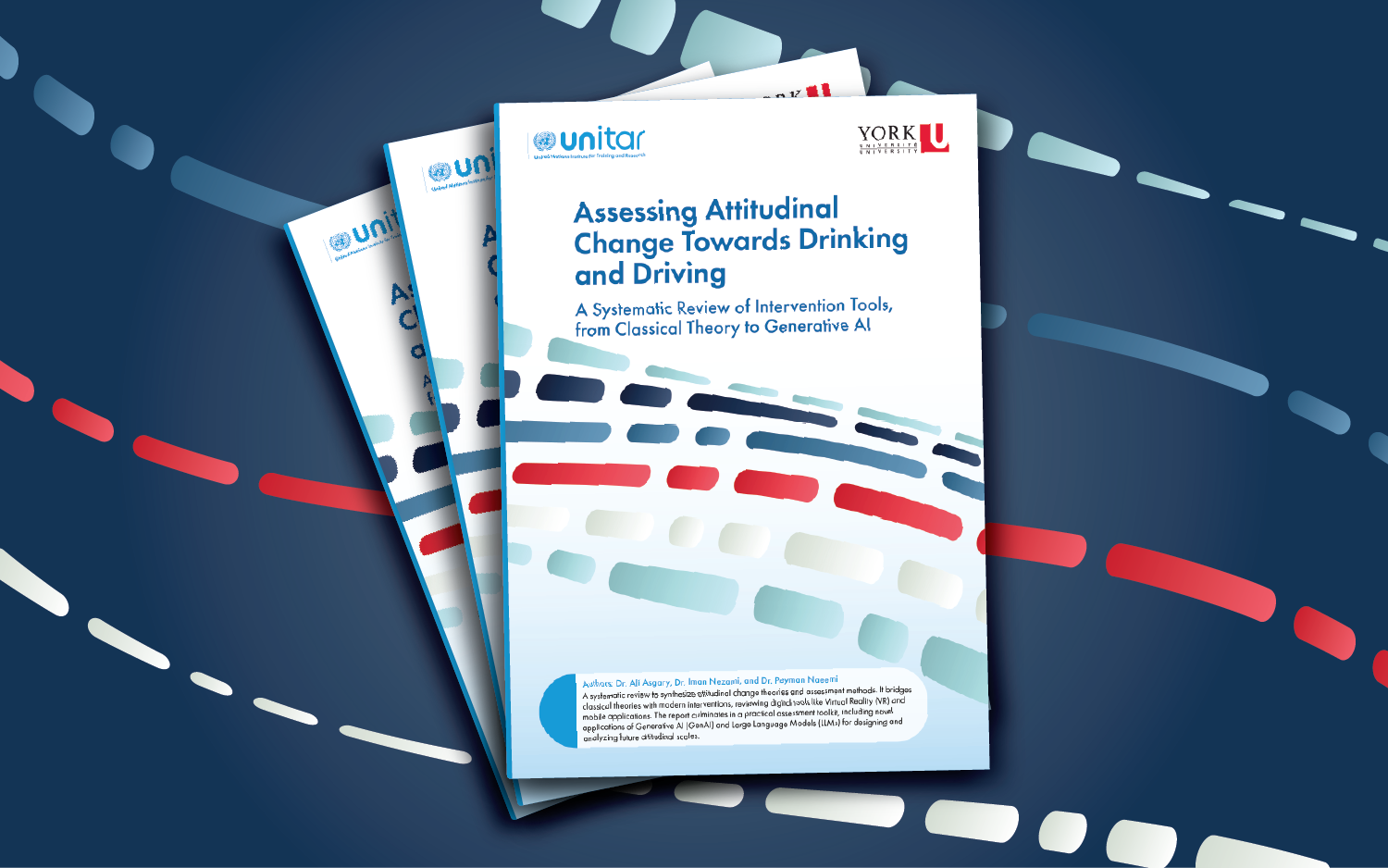
Assessing Attitudinal Change Towards Drinking and Driving: A Systematic Review of Intervention Tools, from Classical Theory to Generative AI
Authors: Dr. Ali Asgary, Dr. Iman Nezami, and Dr. Peyman Naeemi
Abstract
This study examines the impacts of drink driving on youth and provides an in-depth analysis of why so many interventions are short-lived. It also offers a practical, evidence-based toolkit that governments, NGOs, and road safety practitioners can use to measure and, ultimately, increase attitudinal and behavioural change.
This project has two key deliverables: firstly, it presents a matrix highlighting which interventions demonstrate the longest-lasting effects. This matrix was developed using a PRISMA-aligned systematic review of a wide variety of high-quality studies, applying nine dominant theories of attitude and behaviour aligned with thirteen intervention categories to create the matrix.
The second deliverable of this publication is the "Attitudinal Change Assessment Toolkit”, which enables users to match the most appropriate intervention type for their specific needs and identify the most sensitive, cost-effective, and culturally adaptable measurement methods.
The publication aims to serve as a key resource for road safety practitioners, non-governmental organizations, and governments to evaluate intervention effectiveness, protect vulnerable road users, and demonstrate measurable progress towards safer roads.
Publication Details:
- ISBN 978-2-9701428-3-6 (electronic version)
- ISBN 978-2-9701428-4-3 (print version)
- Year: 2026
- Partnership: UNITAR and York University
Download Full Publication
Understanding the Impacts of Drink-Driving for Youth
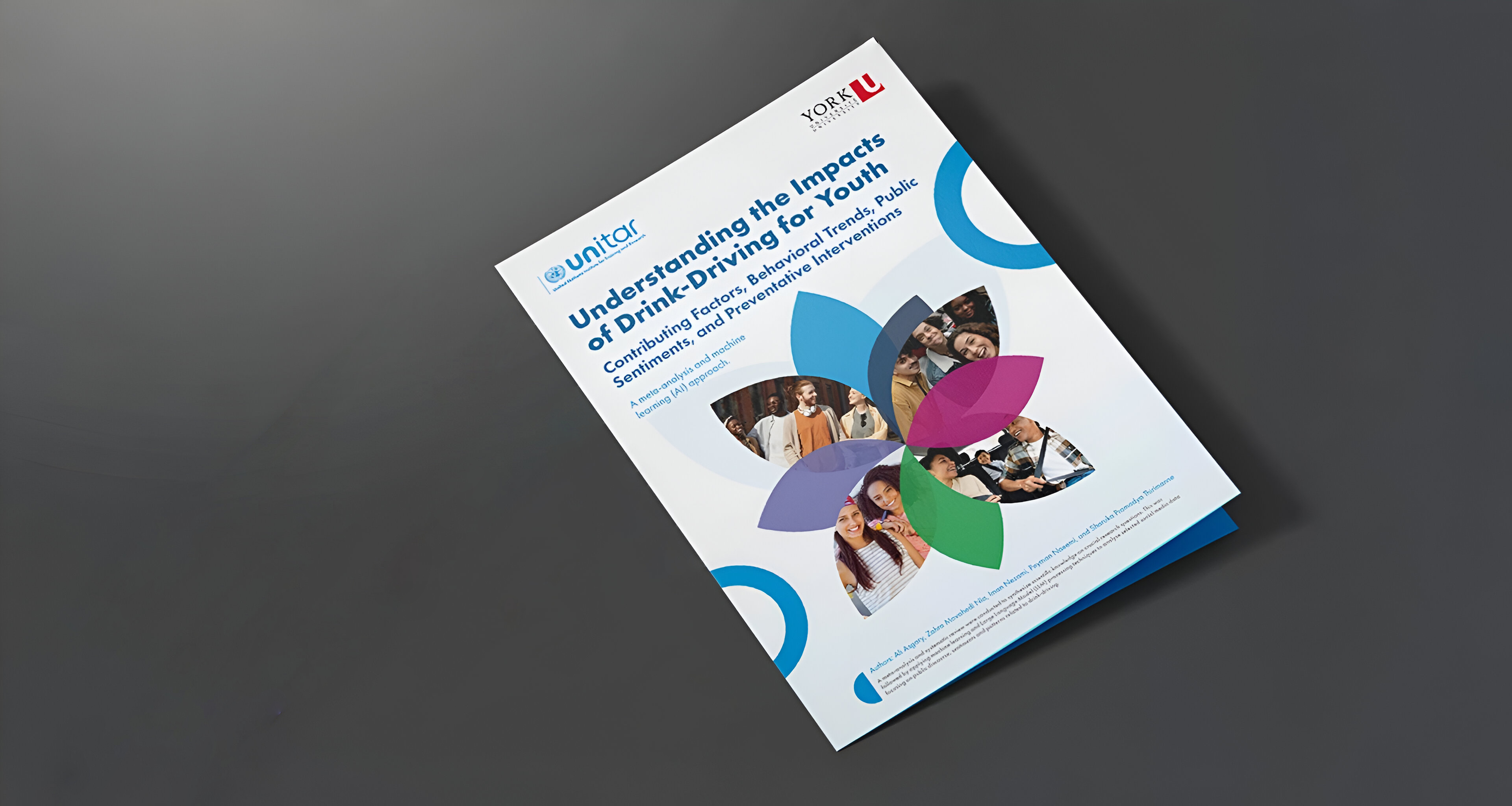
Understanding the Impacts of Drink-Driving for Youth: Contributing Factors, Behavioral Trends, Public Sentiments, and Preventative Interventions
Authors: Ali Asgary, Zahra Movahedi Nia, Iman Nezami, Peyman Naeemi, and Sharuka Promodya Thirimanne
Abstract
This study introduces an AI-based prototype tool using Large Language Models with Retrieval-Augmented Generation to deliver intervention content through real-world stories and documentaries, representing a novel application of artificial intelligence in road safety education.
It employs a mixed-methods approach combining Meta-Analysis, Systematic Review, and Advanced Machine Learning (ML) techniques to examine drink-driving among youth aged 15-25. The research synthesizes scientific literature while the use of social media analytics to understand public discourse and behavioral patterns related to driving under the influence (DUI).
The research underscores the importance of standardized, evidence-based approaches to address drink-driving among youth. It highlights that combining multiple intervention strategies, maintaining long-term engagement, and integrating innovative technologies can significantly improve outcomes. This publication serves as a reference for road safety researchers, policymakers, practitioners, and academics contributing to global initiatives aligned with the UN Sustainable Development Goals and the Decade of Action for Road Safety 2021–2030.
Publication Details:
- ISBN 978-2-9701428-1-2 (electronic version)
- ISBN 978-2-9701428-2-9 (print version)
- Year: 2025
- Partnership: UNITAR and York University