

The United Nations Satellite Centre
The United Nations Satellite Centre, recognized by the Economic and Social Council in its resolution E/2021/L.22, provides satellite imagery-based analysis, training, and capacity development to the United Nations system and Member States across their territories. The team of experienced analysts ensures the timely and tailored delivery of satellite imagery-derived maps (both live web and static maps), reports, and data ready for direct inclusion in geospatial data for evidence-based decision making and operational planning.
Partnership with the United Nations Office for the Coordination of Humanitarian Affairs in the Occupied Palestinian Territory (OCHA OPT)
The United Nations Satellite Centre has been providing extensive satellite imagery analysis and geospatial support to inform the humanitarian response across the Gaza Strip and the West Bank. Operating fully remotely through a variety of satellite data sources, including very high- resolution (VHR) optical and synthetic aperture radar (SAR) imagery, delivering timely, impartial, and evidence-based products to overcome the severe access constraints that characterize the complex emergency. Working in close coordination with OCHA OPT, as well as UN sister agencies, including FAO, UNEP, UNESCO, UNICEF, WHO, UNDP, UNIDO, and UN-Habitat.
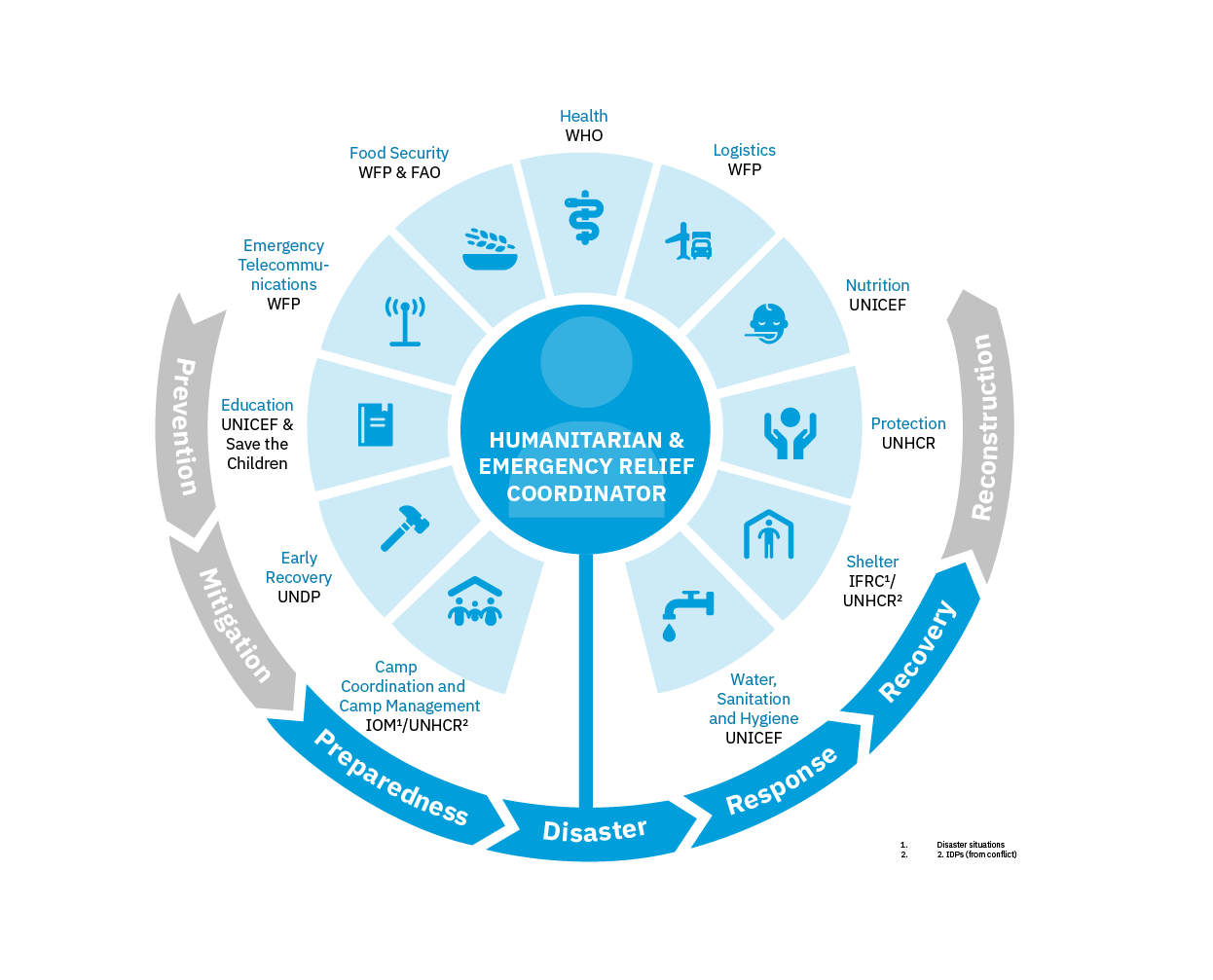
Supported by the oPt Humanitarian Fund (oPt HF) under project CBPF-OPT-25-R-UN-37668, the United Nations Satellite Centre produces damage assessments, infrastructure analyses, road accessibility mapping, agricultural impact evaluations, and environmental risk assessments tailored to the specific needs of the humanitarian cluster system, including the Early Recovery, Education, Food Security, Health, Water Sanitation and Hygiene (WASH), Shelter, and Camp Coordination and Camp Management (CCCM) Clusters. With physical access to affected areas severely constrained by ongoing conflict, this work has become an indispensable resource for humanitarian coordination across the Gaza Strip and the West Bank, enabling life-saving decisions to be grounded in timely, impartial, and objective geospatial evidence, reaching populations where no field presence is limited.
United Nations Satellite Centre: Guiding Winterization response for hundreds of thousands of displaced people in the Gaza Strip
UN Satellite Centre
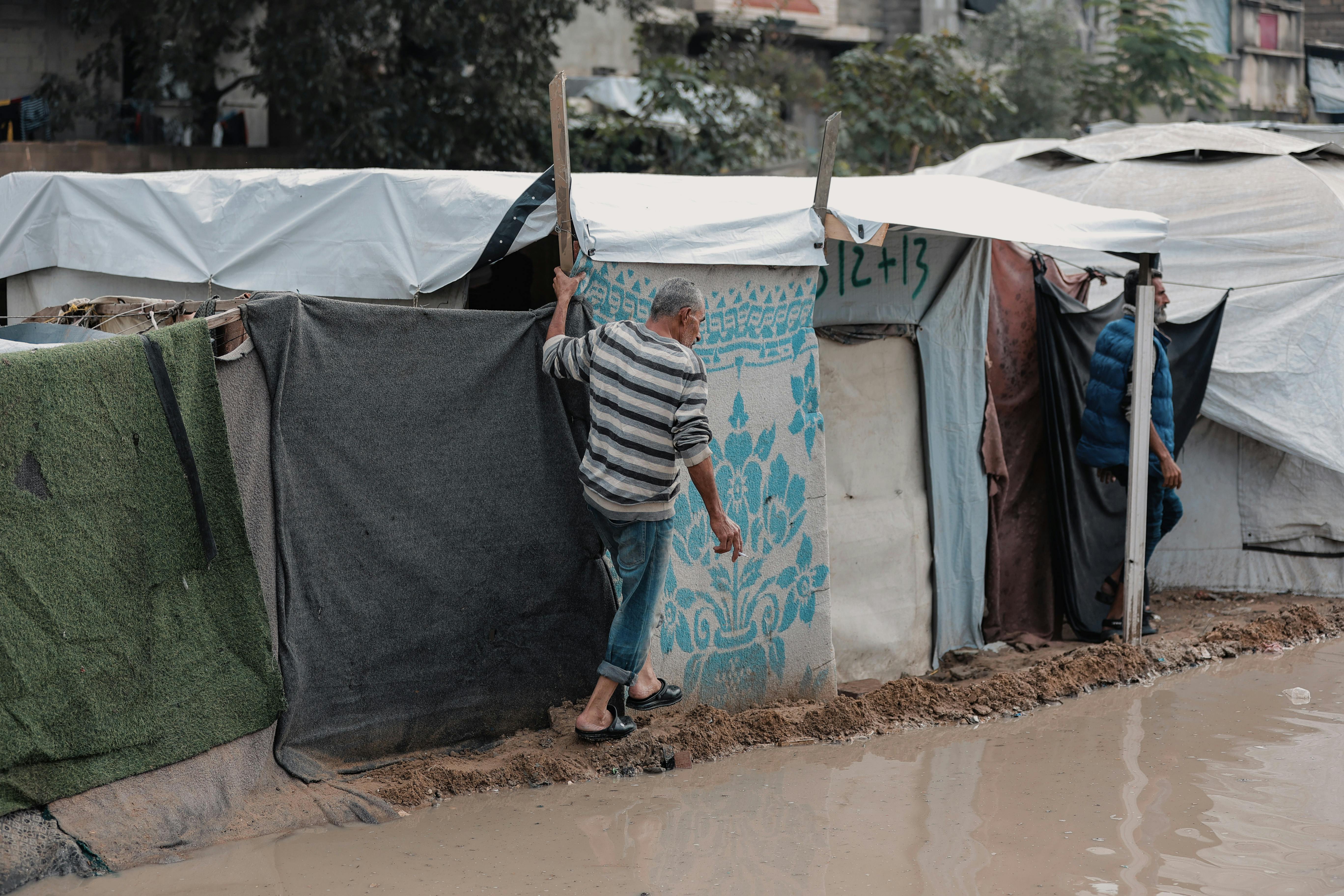
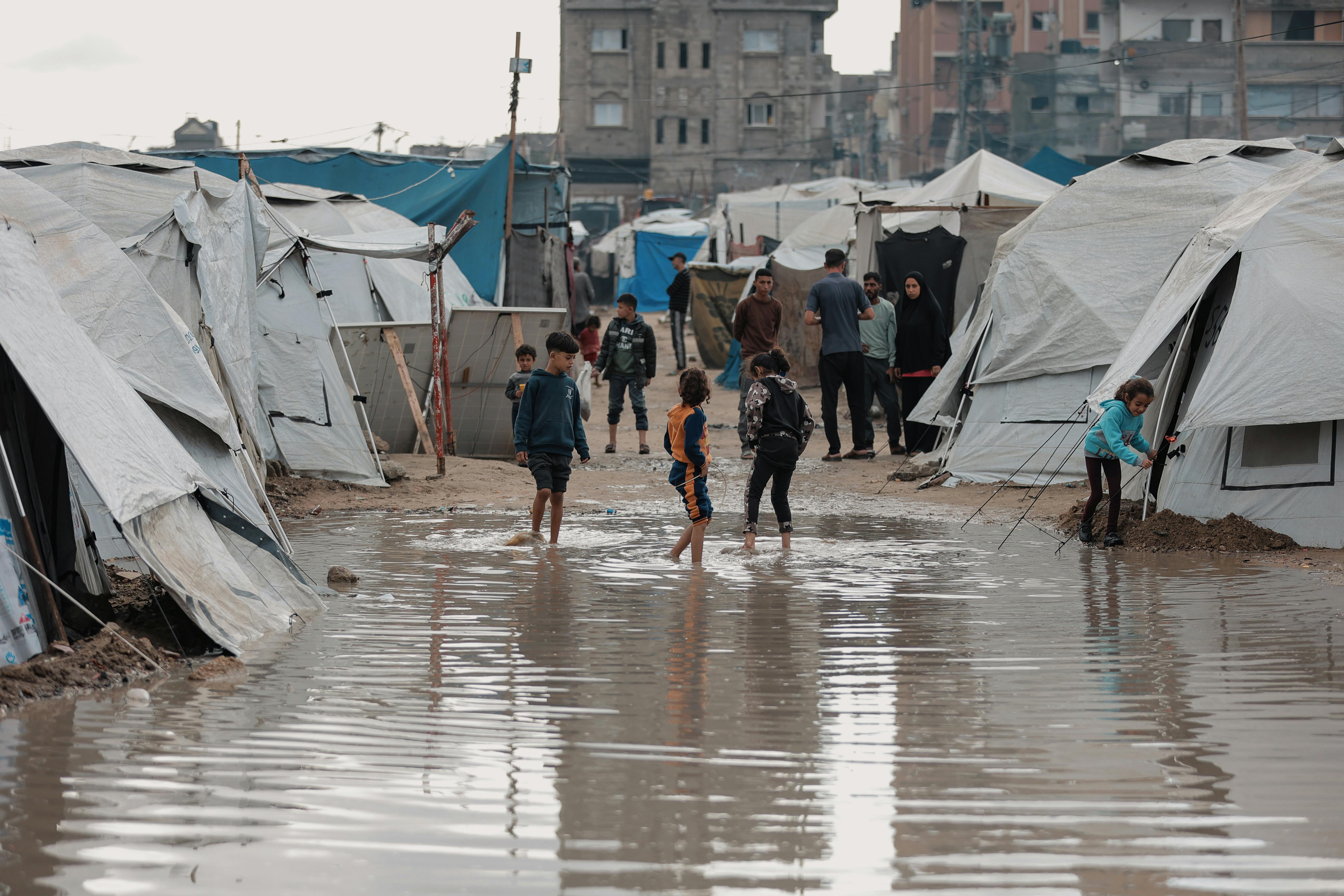
Since October 2023, the Gaza Strip has been living through one of the most severe and prolonged displacement crises of recent decades. Families who fled bombardment lost not only their homes but any prospect of returning to them. More than a million people came to settle in makeshift sites along the coastline, in public spaces, on school grounds, and on the edges of urban areas, sheltering in manufactured tents that offered little protection from the elements. With almost no intact housing available, families in tents on low-lying, near-sea-level ground faced acute exposure when winter arrived.
In December 2025 and January 2026, severe weather swept through the Gaza Strip, bringing high waves, sea surges, strong winds, and flash flooding that severely affected the population of the strip. For humanitarian responders operating in a complex conflict environment with severely limited ground access, understanding the scale and geography of risk was not achievable through ground and field assessment. The speed of weather events, the density and heterogeneity of displacement sites, and the inaccessibility of many areas meant that evidence-based action required a different kind of tool.
Most displaced people in the Gaza Strip are concentrated very close to the coastline, which is extremely low lying—practically at sea level.- Senior OCHA OPT official
For humanitarian responders operating in such a complex conflict environment, ground access to displacement sites was severely constrained. The speed of weather events, the density and heterogeneity of displacement sites, and the inaccessibility of many areas meant that a satellite-based analytical approach was required to support evidence-based humanitarian action.
The United Nations Satellite Centre's Intervention
Hosny Salah
In response to a formal request from OCHA, the United Nations Satellite Centre rapidly deployed satellite-based analysis using a four-dimensional analytical framework combining multi-date satellite imagery analysis with field data to allow a comprehensive full coverage of the strip:
- Satellite flood observation: satellite-observed flooding as deduced from Very High Resolution (VHR) imagery acquired on 15 December 2025 and 11 January 2026.
- Sea surge and strong wind exposure: satellite-based risk assessment for strong winds and sea surge, using shoreline proximity and historical storm inundation data as proxy indicators, given the limited availability of local meteorological data.
- Field data: reported flood events collected from ground sources by OCHA and cluster partners;
- Affected Population: affected families' data from OCHA and cluster partners, integrated to translate spatial hazard zones into population-level estimates
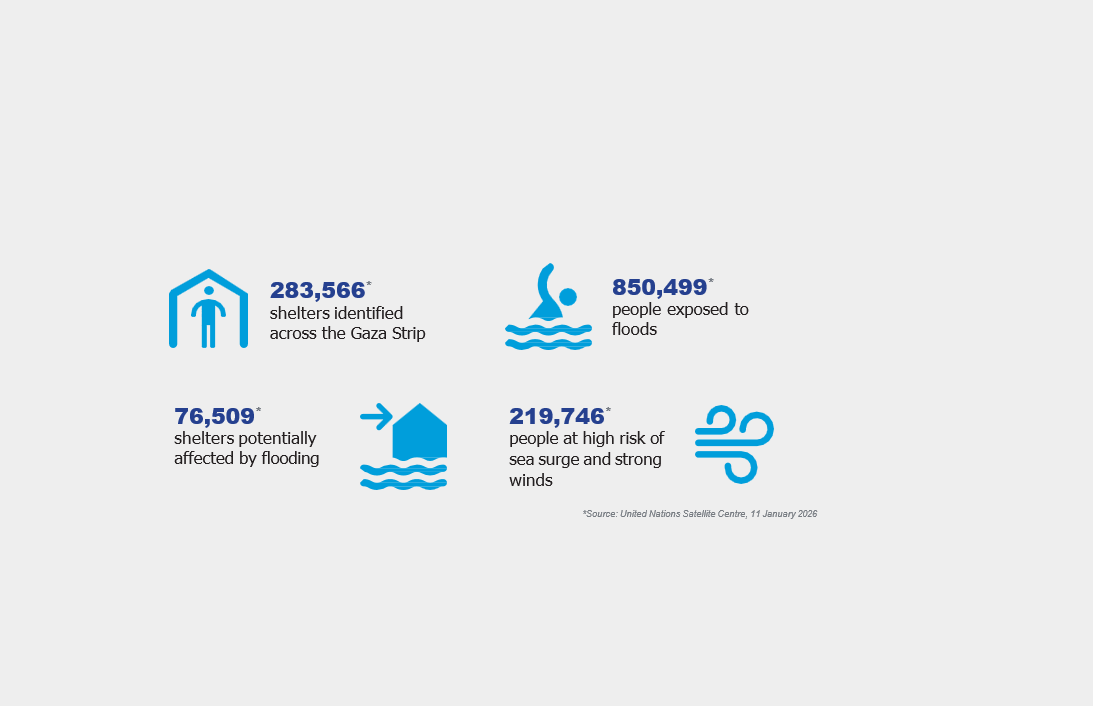
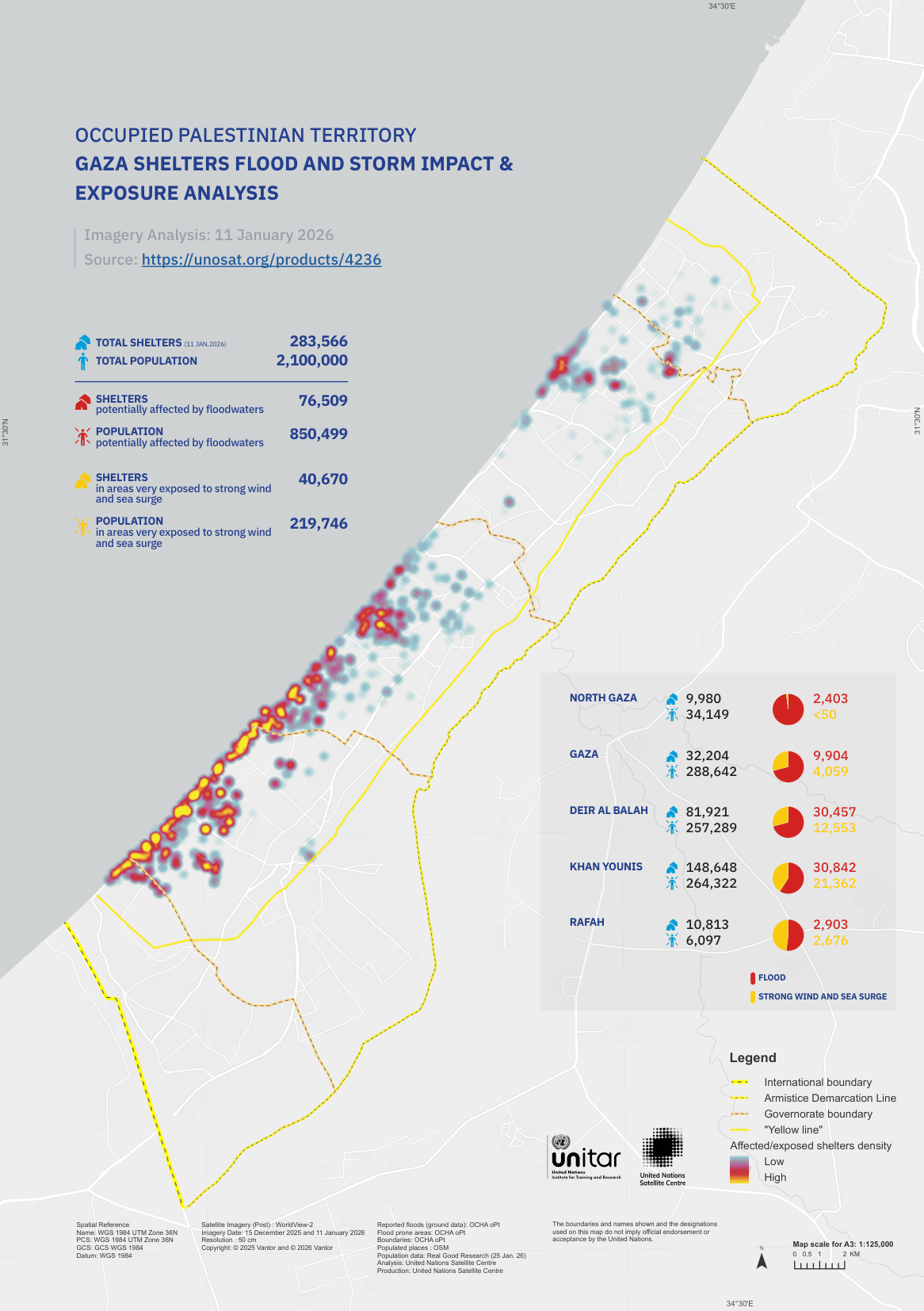
In the frame of the DISHA (Data Insights for Social and Humanitarian Action) initiative, developed in partnership with Google, the United Nations Satellite Centre processed VHR satellite imagery to identify and count all shelters and tents across the Gaza Strip. A total of 283,566 shelters and tents were identified as of 11 January 2026: 148,648 in Khan Younis, 81,921 in Deir Al Balah, and 32,204 in Gaza Governorate. Human-in-the-loop validation ensured that tent structures were correctly distinguished from permanent buildings and that flood-affected shelters were not confused with other structures.
Based on a combination of satellite observations and ground data on reported floods and flood-prone areas, quantitative estimates were carried out, and at least 76,509 shelters were estimated to have been potentially affected by or directly exposed to flooding. Additionally, 40,670 shelters located close to the shoreline were identified as being in areas highly exposed to sea surge risk and strong winds, concentrated mainly in Khan Younis Governorate (21,362 shelters) and Deir Al Balah (12,553 shelters).
Using a 100-metre gridded population dataset from Real Ground Research based on anonymized telecommunications data dated 25 January 2026, the United Nations Satellite Centre estimated that more than 850,000 people were exposed to floods, and about 220,000 people were living in areas at high risk of sea surge and strong wind impact. (read more: https://unosat.org/products/4241)
Gaza Strip - Analysis Overview
Type of Analysis | Description | Products |
|---|---|---|
Shelter Count and Evolution | AI-assisted detection and counting of shelters across the Gaza Strip using VHR imagery. Human-in-the-loop validation of AI results. | Quantification and geographic distribution of shelters and impact. Results shared via web map, static maps, and geodata. |
Flood Impact Analysis | Use of satellite data combined with field observations to deduce the flood impact across the Strip. | Quantification and geographic distribution of flood-affected and flood-prone areas. Results shared via web map, static maps, and geodata. |
Sea Surge Exposure Analysis | Risk assessment and exposure to the sea surge hazard along the shoreline of the Gaza Strip. | Quantification and geographic distribution of shelters within high-risk areas. Results shared via web map, static maps, and geodata. |
Population Exposure Estimates | Estimates of the number of people exposed to flooding and at high risk of sea surge and strong winds, using a 100-metre gridded population dataset (Real Ground Research, 25 January 2026). Results provided at the entire Gaza Strip level by governorate and neighbourhood. | Affected and exposed population quantified using anonymised telecommunication datasets from Real Ground Research. Results shared via web map and static maps. |
Aggregation by Governorate and Neighbourhood | Specific analysis for North Gaza, Gaza, Deir Al Balah, Rafah, and Khan Younis governorates showing shelter exposure to flooding, sea surge, and strong winds. Shared with OCHA OPT and cluster partners. | Specific maps were produced for each governorate (North Gaza, Gaza, Khan Younis, and Rafah) and shared with partners. |
Hosny Salah
Results were delivered as governorate-level static maps and an online interactive map accessible to OCHA OPT and cluster partners. Also, a technical briefing was delivered to the humanitarian partner covering the scope of satellite-based flood monitoring support.
The partnership between OCHA and the United Nations Satellite Centre yielded several significant outcomes:
1. Enhanced Evidence-Based Decision Making
By combining satellite-based analysis of flooding with risk modelling for sea surge and wind, and integrating field-reported events with population data, the United Nations Satellite Centre produced a comprehensive impact analysis: shelters were categorised by risk level, enabling responders to prioritize at the right scale and geographic distribution. This information directly informed cluster-level response planning.
UNOSAT (UN Satellite Centre) provided a precise geographic analysis showing how many people were at risk from flooding and sea surge. They zoned populations, categorized tents by risk, and quantified exposure across high, medium, and lower risk areas. At the time, we estimated around 220,000 people were at extreme risk, and this analysis was shared directly with the Shelter and Site Management Clusters - Senior OCHA OPT official
2. Enabled Anticipatory Action Measures
The activation of the United Nations Satellite Centre's analysis was itself anticipatory. OCHA knew a storm was approaching and, knowing that the vast majority of the displaced population was concentrated along the low- lying coastline, the team notified the United Nations Satellite Centre to begin analysis before the weather event struck.
Products were delivered in advance of the peak weather events, giving humanitarian actors the lead time needed to act before conditions deteriorated further. The information was shared with the Shelter Cluster and the Site Management Cluster, which used it to coordinate the movement of vulnerable populations away from the highest-risk zones. Requests for additional tents were dispatched so that families could relocate, and aid was pre-positioned for those who had sought refuge in coastal areas.
Operationally, the information arrived at exactly the right time. It enabled us to anticipate actions before the event occurred. The data strengthened situational awareness and enabled relevant clusters to intervene early and deliver assistance to people sheltering near the coastline. - Senior OCHA OPT official
The material stakes of protecting each shelter were exceptionally high. With supply chains severely disrupted by the conflict, replacement tents were nearly impossible to source.
A single tent can cost around 400 to 700 US dollars, which is far beyond the reach of families affected by two years of conflict. Preventing tent loss was therefore critical, and the data had a significant impact on both operations and coordination. - Senior OCHA OPT official
3. People Reached: Saving Lives and Reducing Economic Damage
Families in the highest-risk zones were alerted, and many succeeded in relocating or reinforcing their shelters before conditions worsened. Tents that might otherwise have been inundated or destroyed were relocated, preserving the most basic form of shelter available to displaced families. Senior OCHA OPT official drew a clear distinction between the value of damage assessment, which comes after the fact, and the value of anticipatory geospatial analysis, which changes what is possible before the crisis peaks:
Damage assessment is useful for understanding a crisis after it happens. However, tracking people through satellite imagery and helping those who choose to relocate to safer areas has far greater value. It saves lives, saves money, and significantly reduces humanitarian needs and suffering. - Senior OCHA OPT official
People who were informed in advance that their tents were at risk were able to mobilize and relocate. The scale was very large—around 220,000 people. The impact was real, visible, and operationally meaningful. - Senior OCHA OPT official
4. Improved Clusters Coordination and Planning
The United Nations Satellite Centre's products provided a shared, satellite-derived evidence base that cut across cluster boundaries. The Shelter Cluster, the Camp Coordination and Camp Management (CCCM) Cluster, and the Site Management Cluster were aligned around a single picture of risk. The Humanitarian Pooled Fund placed an allocation specifically to target those people impacted by the winter conditions, directing resources to households identified as most exposed.
The UNOSAT (UN Satellite Centre) team delivered exceptional support during the winter period. Their analysis directly enabled preparedness for the winterization season and guided humanitarian funding allocations toward people affected by floods, rainfall, and windstorms. - Senior OCHA OPT official
Beyond this specific response, the United Nations Satellite Centre's geospatial analysis products are systematically integrated into the broader humanitarian coordination architecture in the occupied Palestinian territory. Products are referenced in OCHA Situation Reports and the Inter-Cluster Coordination Group (ICCG) minutes, and contribute to the evidence base underpinning Humanitarian Response Plans (HRPs) and cluster response strategies. The project targets integration across seven humanitarian clusters: Shelter, WASH, Health, Food Security, Education, Protection, and Logistics, and up to ten humanitarian organisations, including UN agencies and NGO partners operating across the Gaza Strip
Looking Ahead
This case illustrates how satellite-based geospatial analysis can extend beyond situational awareness to shape concrete humanitarian action on a scale. In a context where field access was severely constrained, the United Nations Satellite Centre's capacity to deliver multi-dimensional, population-level risk analysis within agreed timeframes filled a critical evidence gap.
The integration of AI-assisted image analysis through the DISHA Initiative with human-in-the-loop validation demonstrated an approach that combines speed with precision, both essential when the window for protective action is narrow. The use of gridded population data to move from shelter exposure counts to people- level estimates further strengthened the operational relevance of the products. Equally significant is the pathway through which the contribution is translated into action: from satellite imagery to risk-zoned maps, to cluster coordination, to funding allocation, to field response. This chain of evidence-based decisions ultimately shaped whether hundreds of thousands of displaced people entered the Gaza 2025-2026 winterization with some degree of protection, or none at all.
Beyond this specific winterization response, the Senior OCHA OPT official underlined the broader and compounding value of geospatial evidence in crises: it does not serve a single purpose or a single moment. It flows through multiple layers of the humanitarian and recovery system, informing decisions that range from immediate shelter response to longer-term reconstruction planning.
UNOSAT (UN Satellite Centre) information is used across multiple layers — not only humanitarian response, but also development, negotiation, and planning. This baseline data adds value throughout the entire humanitarian coordination chain. - Senior OCHA OPT official
The partnership with UNOSAT (UN Satellite Centre) is close and highly professional, and it has produced very strong results, clearly demonstrating the value of this collaboration for humanitarian organizations operating under extreme field constraints. - Senior OCHA OPT official
References
- United Nations Satellite Centre, 2026, 'Occupied Palestinian Territory', Version 1, Product ID 4241, Activation FL20260111PSE, https://unosat.org/products/4241. Accessed 28 April 2026.
- United Nations Satellite Centre, 2026, 'Occupied Palestinian Territory', Version 1, Product ID 4240, Activation FL20260111PSE https://unosat.org/products/4240. Accessed 28 April 2026.
- United Nations Satellite Centre, 2026, 'Occupied Palestinian Territory, Gaza Governorate, Gaza Strip', Version 1, Product ID 4238, Activation
FL20260111PSE, https://unosat.org/products/4238. Accessed 28 April 2026. - United Nations Satellite Centre, 2026, 'Occupied Palestinian Territory, Deir Al Balah Governorate, Gaza Strip', Version 1, Product ID 4237, Activation FL20260111PSE, https://unosat.org/products/4237. Accessed 28 April 2026.
- United Nations Satellite Centre, 2026, 'Occupied Palestinian Territory, Khan Yunis Governorate, Gaza Strip', Version 1, Product ID 4236, Activation
FL20260111PSE, https://unosat.org/products/4236. Accessed 28 April 2026. - United Nations Satellite Centre, 2026, 'Occupied Palestinian Territory, Gaza Strip, North Gaza Governorate', Version 1, Product ID 4239, Activation FL20260111PSE, https://unosat.org/products/4239. Accessed 28 April 2026.
- Site Management Cluster (SMC). Site Verification Key Findings. Gaza Strip. Data collected as of 10 March 2026; published March 2026. Implemented through IOM, NRC, CESVI, ACTED, FADE and partners. [SMC Site Verification, March 2026]
This impact story was developed using the Outcome Harvesting methodology. Evidence was collected through semi-structured interviews with OCHA partners and triangulated against United Nations Satellite Centre project reports and published satellite analysis products.
File