
- Teresa Benedict, a retired UN staff member and Rotary E-Club leader in Kuala Lumpur, joined Cohort 2 with almost no technical background and only a passing curiosity about Malaysia's data centre boom.
- Through the programme's technical learning she has moved from passively consuming AI tools to having conversations about their ethical and responsible application.
- She has since carried that shift into her church and Rotary network, introducing young people to AI and data centre literacy, and is now building her own AI coaching agent.
October 23 2026, Geneva, Switzerland – Teresa Benedict joined the Pathway to Prosperity programme as a retired United Nations staff member. She now spends her time as an active member of the Rotary E-Club of One Kuala Lumpur and a Core Leader in Kingdom Transformation Sanctuary. What attracted her to UNITAR's 12-week hybrid programme in Selangor was the chance to find answers to why Malaysia was investing heavily in data centres and who it would affect going forward.
Learning Without a Technical Background
UNITAR
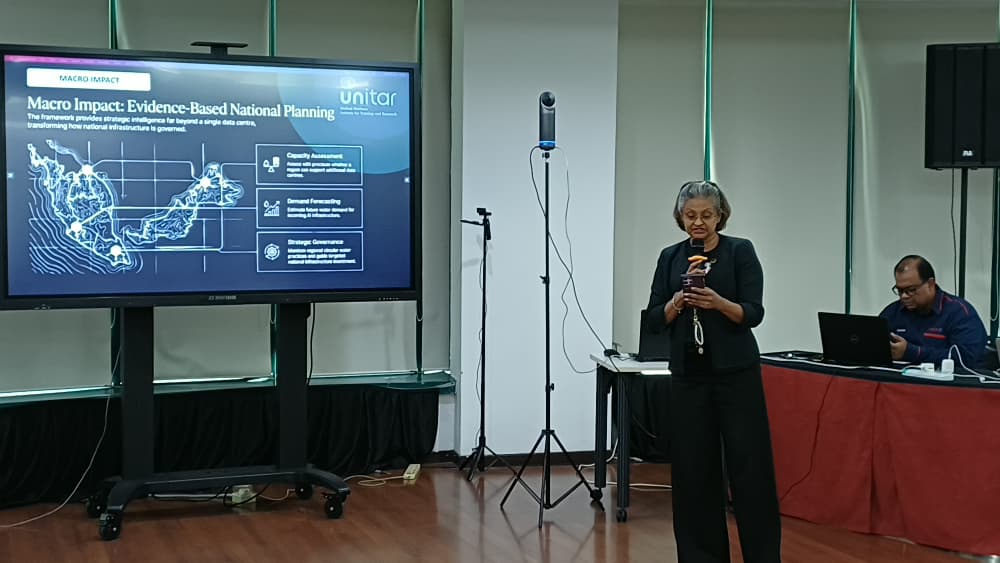
Before starting the programme, Teresa admits she knew very little about AI tools and almost nothing about data centres. "Coming from a non-technical background, each session expanded my understanding of how data centres operate and the many technologies that support them," she said, recalling that she'd only ever heard the word "networking" second-hand, twenty years earlier, when her daughter's father studied it.
What changed was not only the knowledge she gained, but what she could do with it.
Today, I feel much more confident discussing AI, digital infrastructure and the future of technology, especially with younger people," she said. "I now have enough understanding to participate in meaningful conversations instead of simply listening without understanding."
This shift from listener to participant became the foundation for Teresa’s growing confidence and interest in the field.
From Consuming to Critical Thinking
The clearest behavioural change Teresa points to is how she approaches the AI tools already at her fingertips. Before the programme, she took ChatGPT's answers largely at face value. Modules and webinars on the ethical and responsible use of AI fundamentally changed how she used these tools. "Now I am much more aware that AI has limitations, biases and the need for human judgement.” She now asks better questions, verifies responses more carefully, and uses AI as a thinking partner rather than relying on it to provide all the answers.
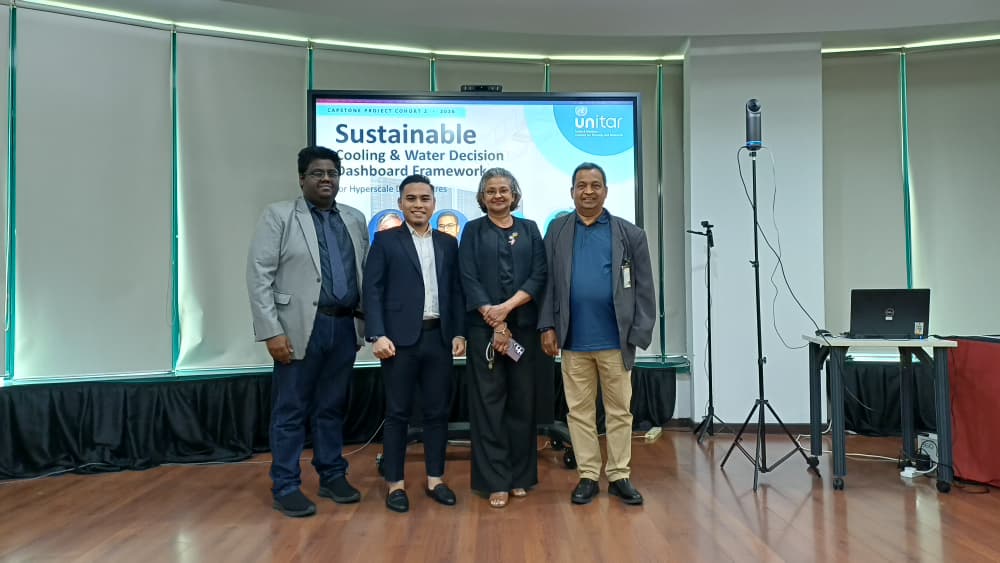
That same rigour carried into her capstone project, where preparing a final group presentation pushed her toward research she says she "would not normally have done." Teresa’s capstone project proposed a sustainable cooling and water decisions dashboard framework to encourage the sustainable use of resources in hyperscale data centres. As the group coordinator, she led the team to a successful presentation and delivery in front of an expert jury. It was here that efficiency stopped being the whole story for her.
It made me realize that technological progress must go hand in hand with responsible planning if we want long-term sustainable development."
She now shares sustainability-focused articles with her capstone teammates, hoping to keep contributing to discussions about a better future.
Where Impact Goes when There is NO Office to Change
UNITAR
Teresa's impact on her community has taken a different, quieter shape. She has already begun talking with young people in her church about AI and Malaysia's data centre boom. Reflecting on that experience, she entertained a new idea.
Perhaps I could organize a simple introductory session—not as an expert, but as someone sharing what I have learned. Sometimes helping others take their first step is more important than knowing everything yourself."
Passing her knowledge forward is also what comes next for Teresa. She is now building her own AI agent for a future coaching practice, hoping to collaborate with fellow cohort members along the way. "My hope is that this will eventually allow me to help others work more efficiently and become more confident in using AI themselves," she said.
Small Contributions Going a Long Way
Had Teresa not taken part in the Pathway to Prosperity Programme, her perspective on AI and digital technology would likely have remained unchanged. Instead, she describes her role now as an ongoing series of small contributions to Malaysia's future. "Every conversation that helps someone understand the future a little better is, in my view, a small contribution towards preparing our society for the digital economy."
Teresa's story connects directly to SDGs 4, 8 and 10, demonstrating that AI upskilling extends opportunity and confidence well beyond the workplace—into homes, congregations, and the intergenerational conversations that keep communities moving forward together.