

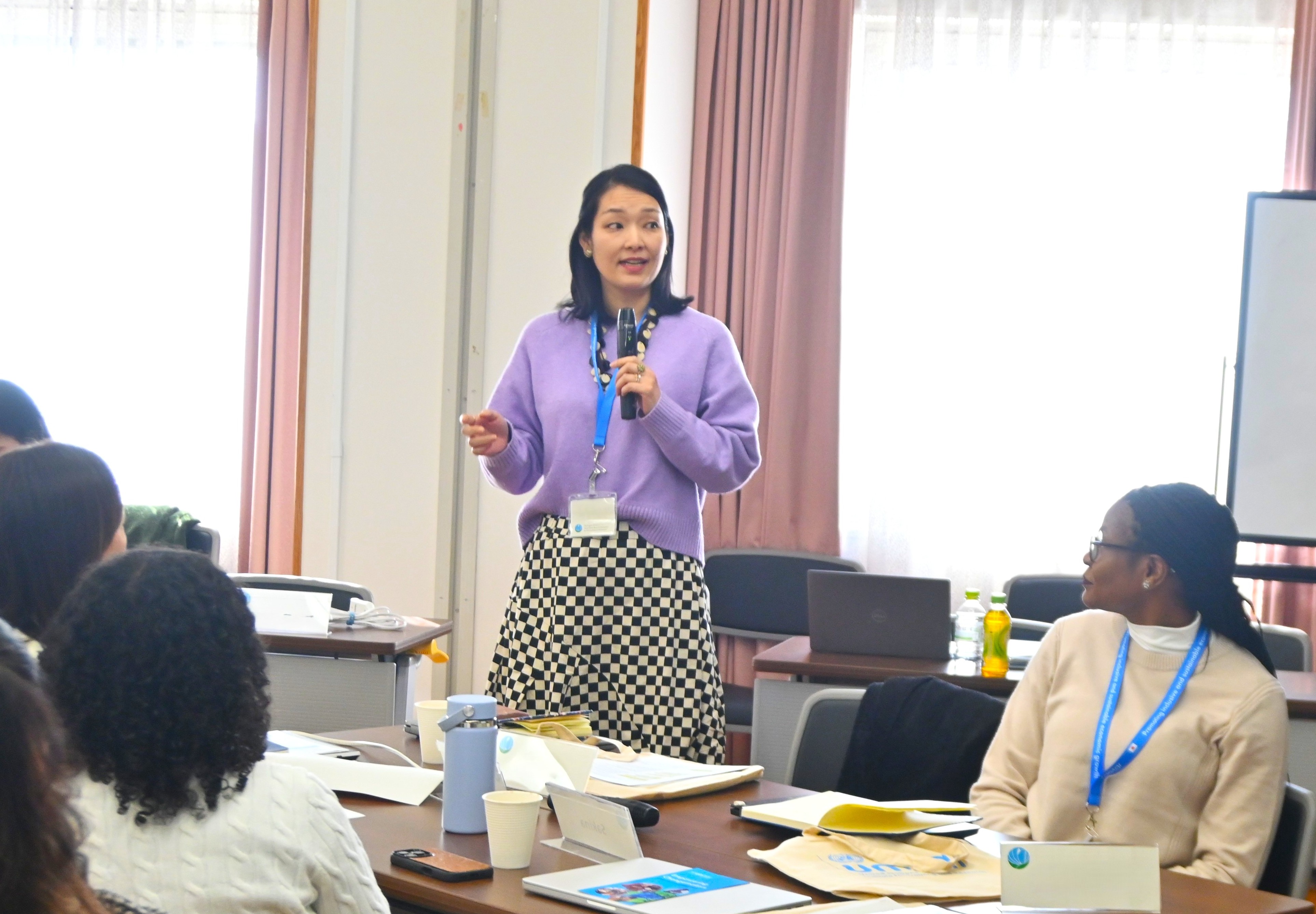
- Dr. Yumi Kisaka from Japan is an external relations officer at the World Health Organization (WHO) in Geneva.
- She participated in the one-week FY2025 Mid-Career Course Program for Global Human Resource Development for Peacebuilding and Development, held at Hiroshima University in January 2026.
- Yumi gained renewed clarity about her purpose, reflected on the kind of leader she hopes to become, and reconnected with the values that first inspired her commitment to global health.
- The Program is implemented by Hiroshima University in collaboration with the United Nations Institute for Training and Research (UNITAR).
Hiroshima University and UNITAR
28 August 2026, Hiroshima, Japan – Dr. Yumi Kisaka from Japan has dedicated herself to improving people’s lives through health – from working as a medical doctor to shaping Japan’s health policies and now contributing to global health at the World Health Organization (WHO) as an external relations officer. Yet, despite having achieved many of her career goals, the financial crisis and subsequent organizational downsizing prompted her to reflect on her professional growth, motivation and future direction. The FY2025 Mid-Career Course of the Program for Global Human Resource Development for Peacebuilding and Development helped her remember why she had chosen a career in medicine, clarify her aspirations, and regain a clearer sense of professional purpose.
Rooted in Hiroshima, Committed to Peace and Health
Growing up in Hiroshima, Yumi learned from the city’s history about the connections between peace, health and human dignity. Driven by a desire to contribute to society, she became an emergency and intensive care physician. Her experience treating individual patients gradually expanded her interest to the policies and systems that shape health outcomes. She later worked in the public health policy sector before joining WHO in Geneva.
Seeking Clarity at a Career Crossroads
Despite achieving many of the career goals she had set for herself, Yumi reached a point where she felt it was time to consider the next stage of her professional and personal growth. During a period marked by an unprecedented financial crisis within the United Nations system and broader changes in the global health landscape, she took the opportunity to pause, reflect on her future direction, and revisit the motivations and values that had first inspired her career in medicine and global health.
[As the UN financial crisis increasingly constrained my work,] my personal growth had plateaued and... it became hard for me to motivate myself. [I would] ask whether this was really the thing I wanted to do in my life.”
When the opportunity to participate in the Mid-Career Course arose, Yumi saw it as a timely opportunity to broaden her perspective, and use this period to gain greater clarity about the next stage towards strategic leadership, building on her technical expertise.
Established by the Ministry of Foreign Affairs of Japan, the program develops the capacities of professionals working in peacebuilding and development. Since fiscal year 2024, Hiroshima University has implemented it in cooperation with UNITAR. Yumi joined the Mid-Career Course, which focuses on leaders aspiring to management positions.
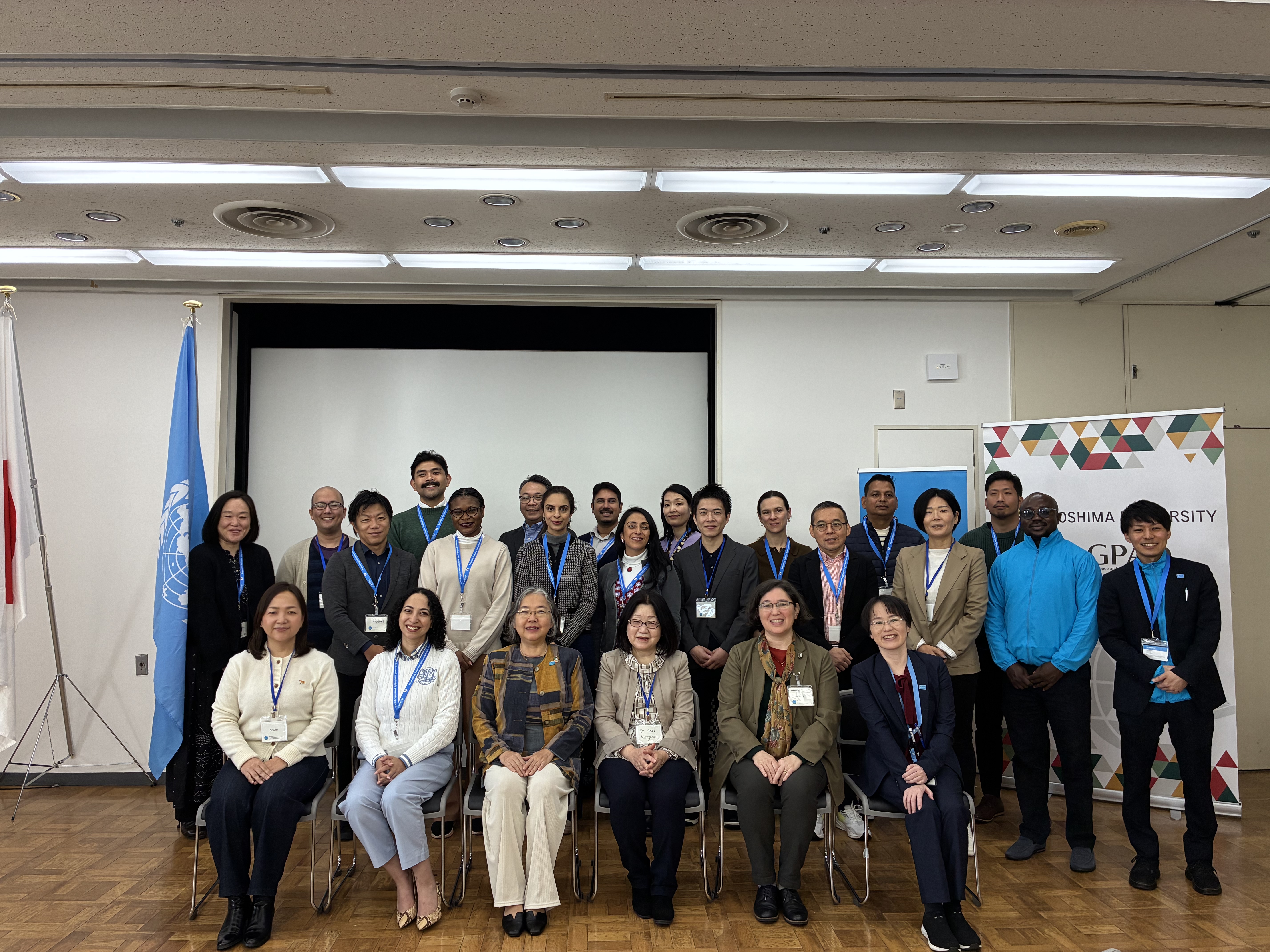
The FY2025 Course combined online pre-training in December 2025 and in-person training 7-13 January 2026 at Hiroshima University. Eight participants from Japan and one each from Austria, Cameroon, France, Guatemala, India, Indonesia, Morocco, Nepal and Pakistan took part.
Back in Hiroshima, Rediscovering Whom She Serves
Hiroshima University and UNITAR
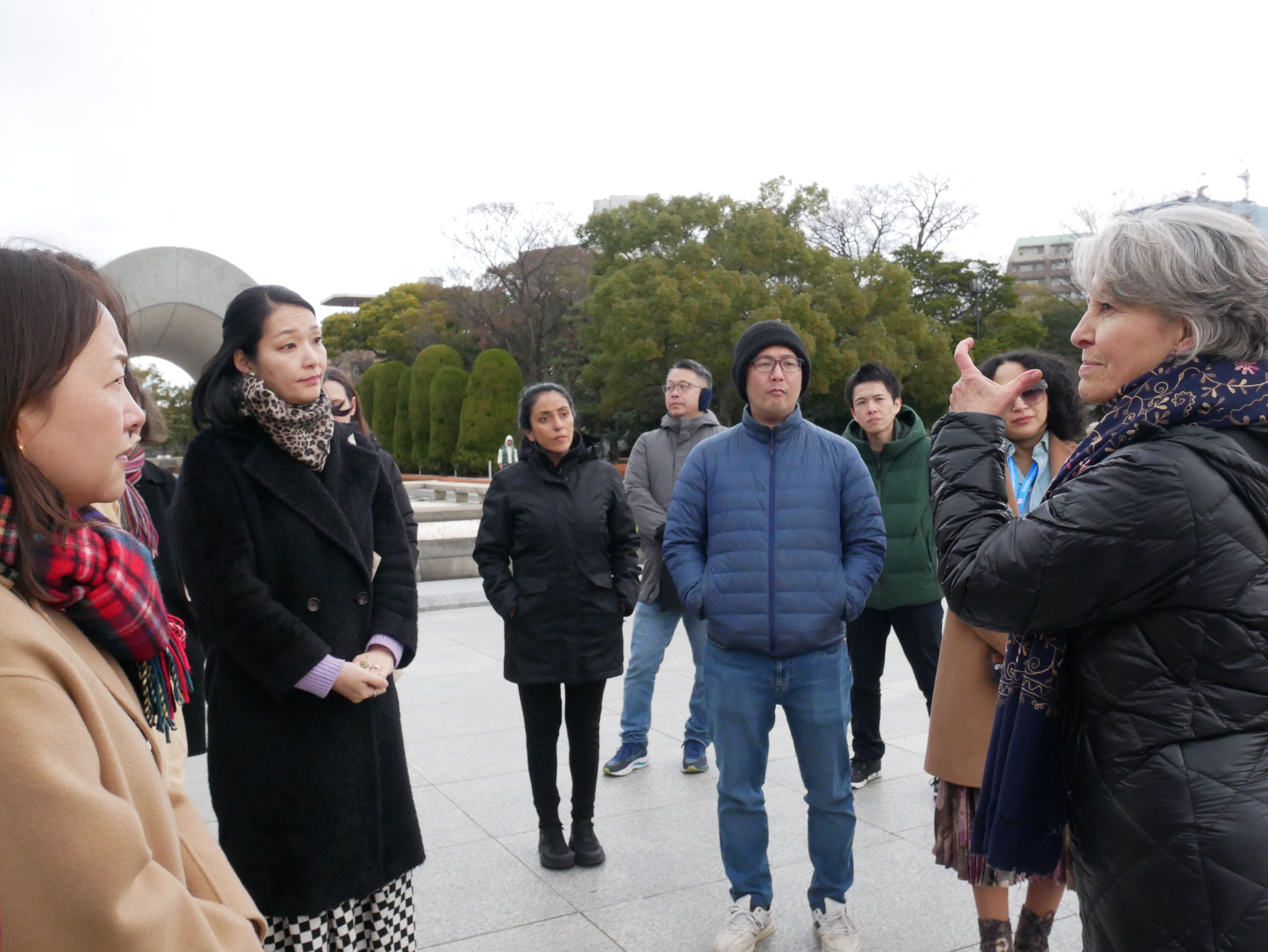
For Yumi, one of the most valuable aspects of the program was the opportunity for structured self-reflection. Through workshops, discussions, presentations, and conversations with fellow participants, she was encouraged to question not only what she wanted to achieve professionally, but also why she chose this path in the first place. The fact that the program was held in her hometown Hiroshima made the experience particularly meaningful. Visiting the Hiroshima Peace Memorial Park and Museum reminded her of the values that first inspired her.
Hiroshima is my roots. Peace and health are two sides of the same coin. Peace is the best medicine for health.”
Yumi found herself in an environment built on mutual respect, kindness and genuine support. Participants, resource persons, faculty members and organizers created a trusted space where individuals felt encouraged to share their experiences, explore difficult questions and learn from one another. Listening to fellow participants share their own career journeys helped Yumi recognize the common values and aspirations that connected professionals working across different sectors and countries.
The Leader She Wants to Become
Hiroshima University and UNITAR
The insights Yumi gained during the program have already begun shaping how she thinks about her future. One of her key takeaways was the importance of taking ownership of her own career journey. She now views her career as a project that she must actively lead and shape, rather than simply allowing opportunities to unfold.
The most important learning for me was to visualize and vocalize what I wanted to do, how I wanted to do it, why I wanted to do it, and whom I am (ultimately) working for.”
The program also encouraged her to think more intentionally about leadership. Her long-term aspiration is to contribute to strategic decision-making and meaningful change in global health. To grow into the kind of leader she aspires to be, Yumi aspires to combine technical expertise, self-awareness, empathy and a clear sense of purpose. She intends to apply the practical guidance, tools and encouragement gained from the program into her future work.
As she returns to her work at WHO, Yumi carries with her a renewed sense of purpose and greater clarity about the next stage of her journey and confidence to move forward. What began as a search for answers became an opportunity to reconnect with herself and renew her trust in her own abilities, in the value of work, and in the people with whom she works. The program equipped her to navigate uncertainty more intentionally, remain grounded in a clear understanding of whom she ultimately seeks to serve, and turn her aspirations into purposeful action.
About the Human Resource Development Program by the Ministry of Foreign Affairs Japan
In response to then Foreign Minister Taro Aso’s policy speech, “Let Us Create a ‘Terakoya’ for Peacebuilders,” the Ministry of Foreign Affairs of Japan has implemented a human resource development program in the field of peacebuilding since 2007.
In fiscal year 2015, the program was renewed and expanded to provide comprehensive support for identifying, developing, and fostering the careers of professionals in international organizations, and was relaunched as the Program for Human Resource Development for Global Professionals in Peacebuilding and Development.
Since fiscal year 2024, Hiroshima University has been commissioned by the Ministry of Foreign Affairs of Japan to implement and manage the program in cooperation with UNITAR.
Ministry of Foreign Affairs of Japan: https://www.mofa.go.jp/fp/ipc/pagewe_000001_00215.html
Global Peace and Development Career Network: https://gpad.hiroshima-u.ac.jp/en/
About Hiroshima University
Hiroshima University is a national comprehensive research university established in 1949 in Hiroshima, the first city in human history to experience an atomic bombing. In fulfilling its mission as a national university, Hiroshima University has adopted the Hiroshima University Charter as the foundation of its activities. Guided by five core principles, namely the pursuit of peace, the creation of new knowledge, education that fosters rich humanity, coexistence with local and international communities, and continuous self-renewal, the University strives to realize a free and peaceful society and contribute to the well-being of humankind.
Hiroshima University also respects the human rights and dignity of every individual and contributes to both local and global communities through education and research. In pursuit of a peaceful and sustainable future, the University pioneers innovative solutions to global challenges, including poverty, conflict, human rights violations, infectious diseases, environmental issues, and resource and energy sustainability, taking a leading role in addressing these issues on a global scale.