
- Dr. Nur Athirah Mat Zahari, a Medical Doctor and Senior Operations and User Support Executive at MIMS Medica Sdn. Bhd., is also a part-time MBA student. She participated in Cohort 2 of the Pathway to Prosperity Programme, powered by Google and implemented by the Division for Prosperity at the United Nations Institute for Training and Research (UNITAR).
- A working professional in Malaysia's health tech sector, Nur Athirah joined the programme with no formal background in AI or data centre infrastructure, exactly the demographic the programme was designed to upskill.
- Since completing the programme, she has moved from reviewing her company's AI search feature purely as an end-user to contributing informed, technical feedback that is shaping how that feature is built, a shift that has rippled outward into her MBA thesis, her family, and her community.
October 23 2026, Geneva, Switzerland — Nur Athirah’s first encounter with AI was as an everyday user, and data centres were unfamiliar territory for her. That changed when her business analytics lecturer recommended the Pathway to Prosperity Programme. The programme’s credentials were what convinced her to join. "Knowing that the programme was jointly organized by the United Nations and SHRDC, with support from Google, gave me confidence that the content would be both credible and applicable to my work," she said.
From End-User to Informed Contributor
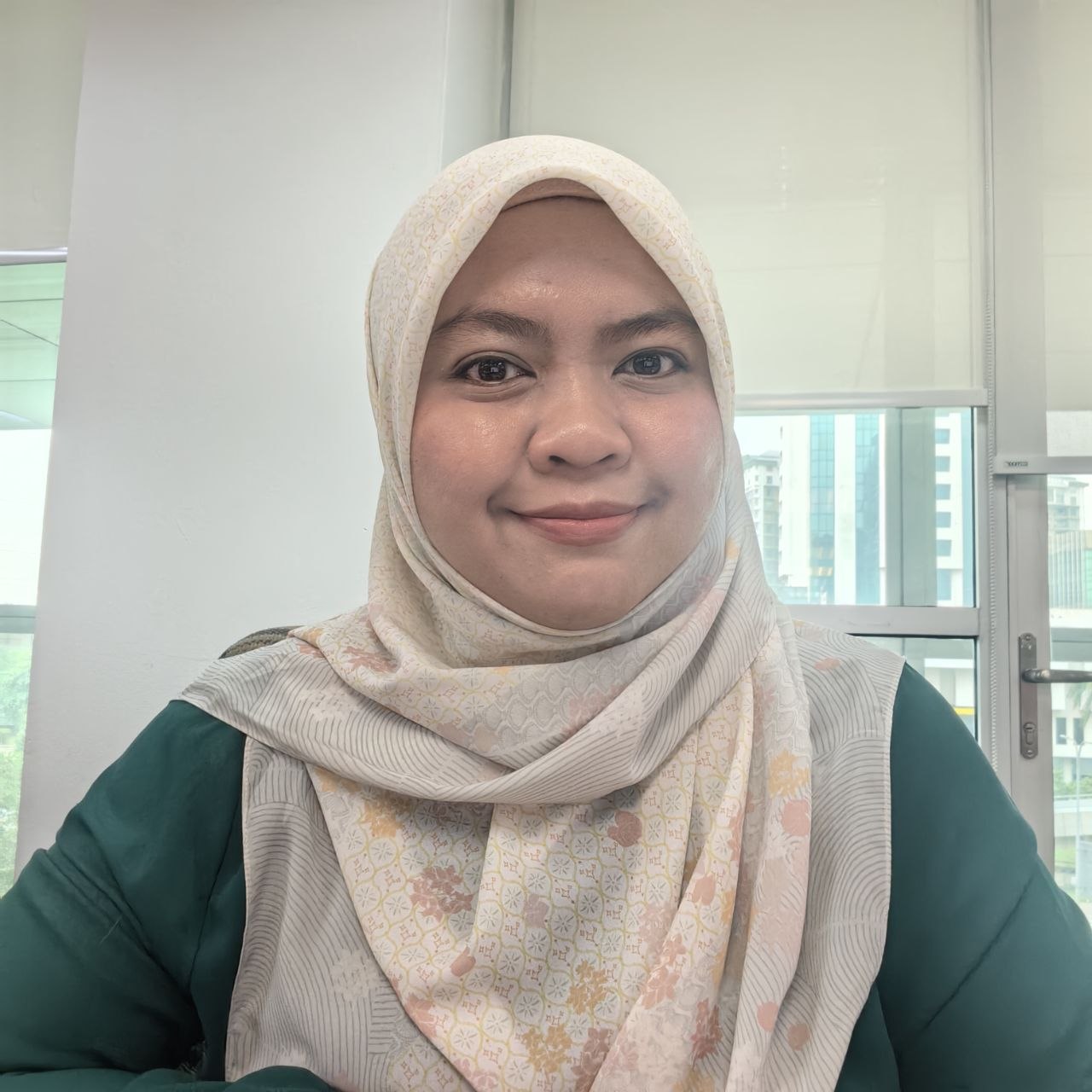
Photo from Nur Athirah
The programmes’ ‘from theory to practice’ methodology, particularly the webinar on building AI agents without code with Hari Prasad Renganathan, helped Nur Athirah understand these concepts.
"It showed [me] how someone without an IT background could still plan and build an AI system".
Webinars by guest speakers Kirthi Jayakumar on AI governance and Mimi Nicklin on empathy in the age of AI also stood out as foundational knowledge she felt everyone in the field needed. The concept that reshaped her thinking most concretely was Retrieval-Augmented Generation, a method for grounding AI search results in a company's own verified data rather than a general model prone to hallucinating.
Without this foundational knowledge, Nur Athirah would still be reviewing MIMS' search feature from the outside, flagging wrong results without understanding why. Now, she is better equipped to explore the root causes of issues and contribute to discussions on how the platform can be improved. Ultimately, this has changed the conversations she has with her team about accuracy and reliability, the qualities most critical to a platform used by doctors.
Raising RAG as a direction for MIMS' search architecture remains an ongoing discussion, slowed by the practical realities of cost. Rather than treating that resistance as a barrier, she has used it as an opportunity to strengthen her knowledge and refine her thinking around the proposal. It reflects a shift from identifying challenges to engaging more actively in conversations about possible solutions.
A Capstone that Sharpened Her Thinking
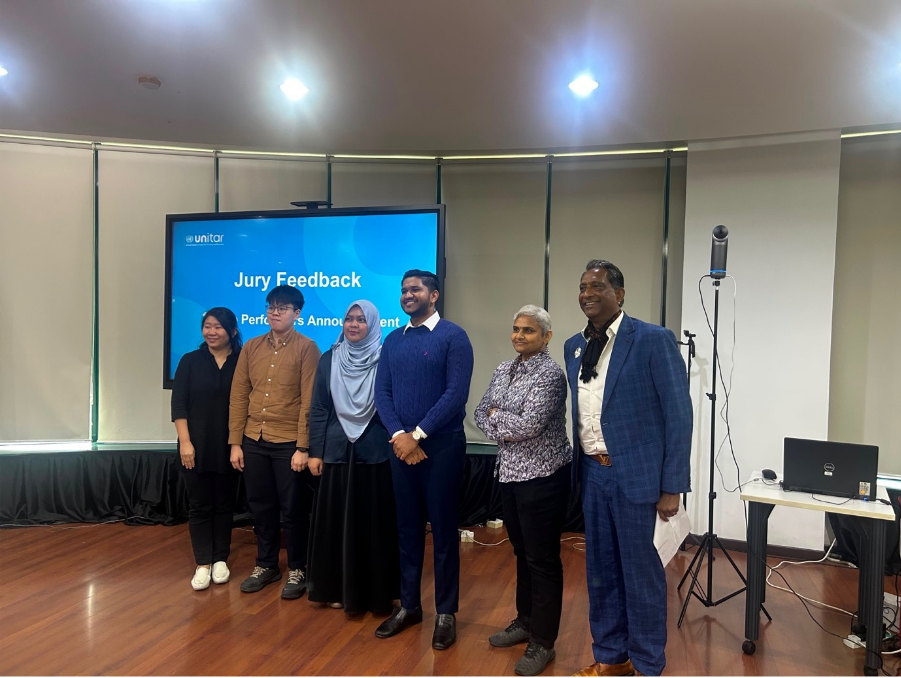
UNITAR
The clearest turning point was Nur Athirah’s Capstone project titled "AI-Assisted Resource Optimization Platform for Sustainable Data Centers," built around protecting the environment amid the industry's expansion. Working through it’s development solidified her belief that
AI is here to stay, and data centers are only going to keep coming… We can either resist that and continue to complain about it, or we can keep learning and become part of the group that shapes how AI performs and impacts the environment.
That discipline transferred into her MBA. Feedback from guest speaker and jury member, Mimi Nicklin, on the importance of a project having a clear, measurable objective became a framework Nur Athirah applied to her own thesis defense. Her defense was well received by her examiners, proving yet again that the programme reshaped not just her job, but her approach to any body of work.
A Ripple that Reaches the Next Generation
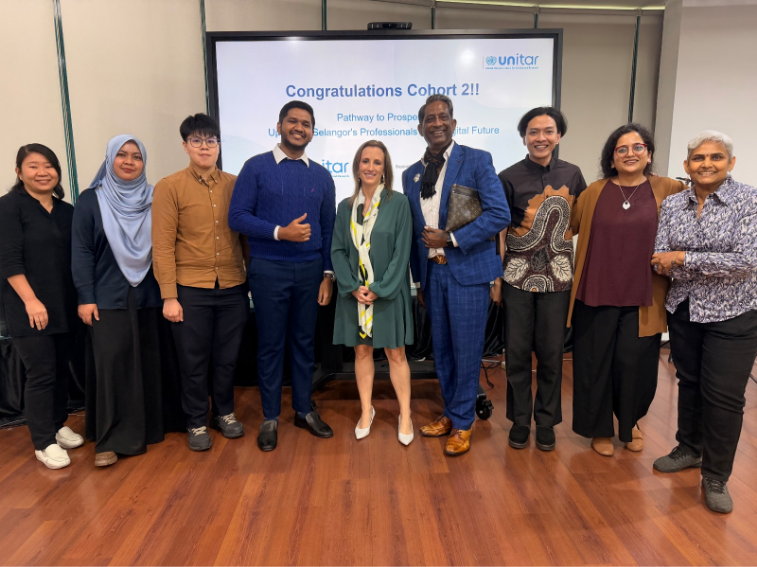
UNITAR
The programme's influence has already moved outward. Her brother, prompted by her experience, joined Cohort 3. She has encouraged her nephew, studying electrical technology at a community college, to consider a career in data centre infrastructure, a path he is now actively exploring. Within MIMS, she now takes a more active role in IT feedback sessions, contributing perspectives informed by her growing technical knowledge.
Asked what she would tell someone considering programmes like this, Nur Athirah highlighted the diversity within her own cohort, which included professionals from fields as varied as academia, scientific research, and medicine. For her, this demonstrated that interest in AI spans professions and disciplines, provided people have access to the right learning opportunities. She attributed the programme’s effectiveness to its structured progression, beginning with foundational knowledge on Moodle, strengthened through live webinars, and culminating in a hands-on Capstone project. Together, these elements created a practical learning journey that helped participants build meaningful skills and confidence in applying AI beyond the theoretical level.
Nur Athirah's story connects directly to SDGs 3, 4, 8 and 10, showing how AI and data centre upskilling for a working professional can strengthen healthcare technology, sharpen professional performance, and extend opportunity to the next generation.