

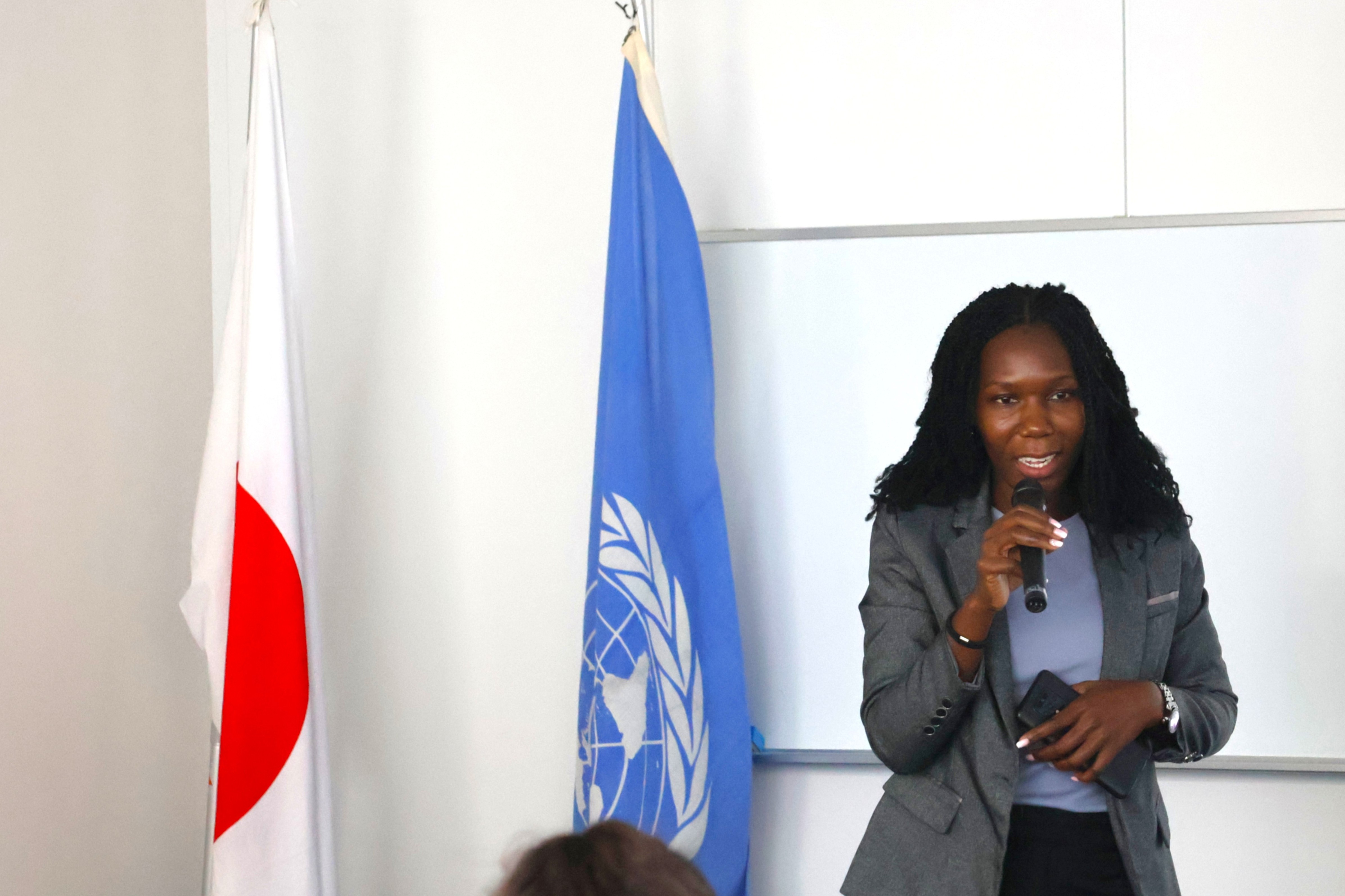
- Lydia Tabu Casmiro Jamba, from South Sudan, is committed to building peace. She leads programmes at a women-led NGO in her country.
- She participated in the FY2024 Primary Course of the Program for Global Human Resource Development for Peacebuilding and Development, commissioned by the Ministry of Foreign Affairs of Japan. It was held online and on-site, in Hiroshima and Tokyo, Japan.
- Lydia learned practical skills in negotiation and gender mainstreaming, was inspired by Hiroshima’s collective peacebuilding efforts, and clarified her career goal to become a conflict resolution specialist.
- The Program is implemented by Hiroshima University in collaboration with the United Nations Volunteers programme and United Nations Institute for Training and Research (UNITAR).
Hiroshima University and UNITAR
22 May 2026, Hiroshima, Japan – Lydia Tabu Casmiro Jamba from South Sudan works to help build peace in her country. Now managing programming for a national, women-led NGO that she helped to found and studying for her master’s degree, Lydia joined the FY2024 Primary Course of the Program for Global Human Resource Development for Peacebuilding and Development to strengthen her chosen career path.
Building Peace in Her Conflict-Affected Country
Lydia experienced life in refugee camps as a child and knows what it’s like to never feel like she was at home in her own country – a country that continues to face multi-faceted conflict. Lydia describes the conflict as inter-communal, political, ethnic and even individual. She believes the long-term political instability and economic crises have left people struggling and “always filled with anger”, so that they cannot empathize with one another.
Having experienced all this, Lydia chose to do what she could to build peace in her communities. In past work, she trained peace ambassadors who collaborate with local leaders to help resolve community conflicts, raise awareness about gender-based violence, and promote social co-existence and reconciliation. She also worked with religious leaders on conflict prevention and resolution and coordinated with humanitarian agencies to remove children from armed groups and reintegrate them with their families.
Gaining Practical Perspectives on Negotiation and Gender
Always looking for opportunities to expand her skills, Lydia found the Primary Course of the Program for Global Human Resource Development for Peacebuilding and Development. Commissioned by the Ministry of Foreign Affairs of Japan, the Program sets out to discover, develop and build human resources for peacebuilding. The Primary Course focuses on young professionals committed to building careers in peacebuilding and development. It is implemented by Hiroshima University in collaboration with the United Nations Volunteers (UNV) programme and the United Nations Institute for Training and Research (UNITAR).
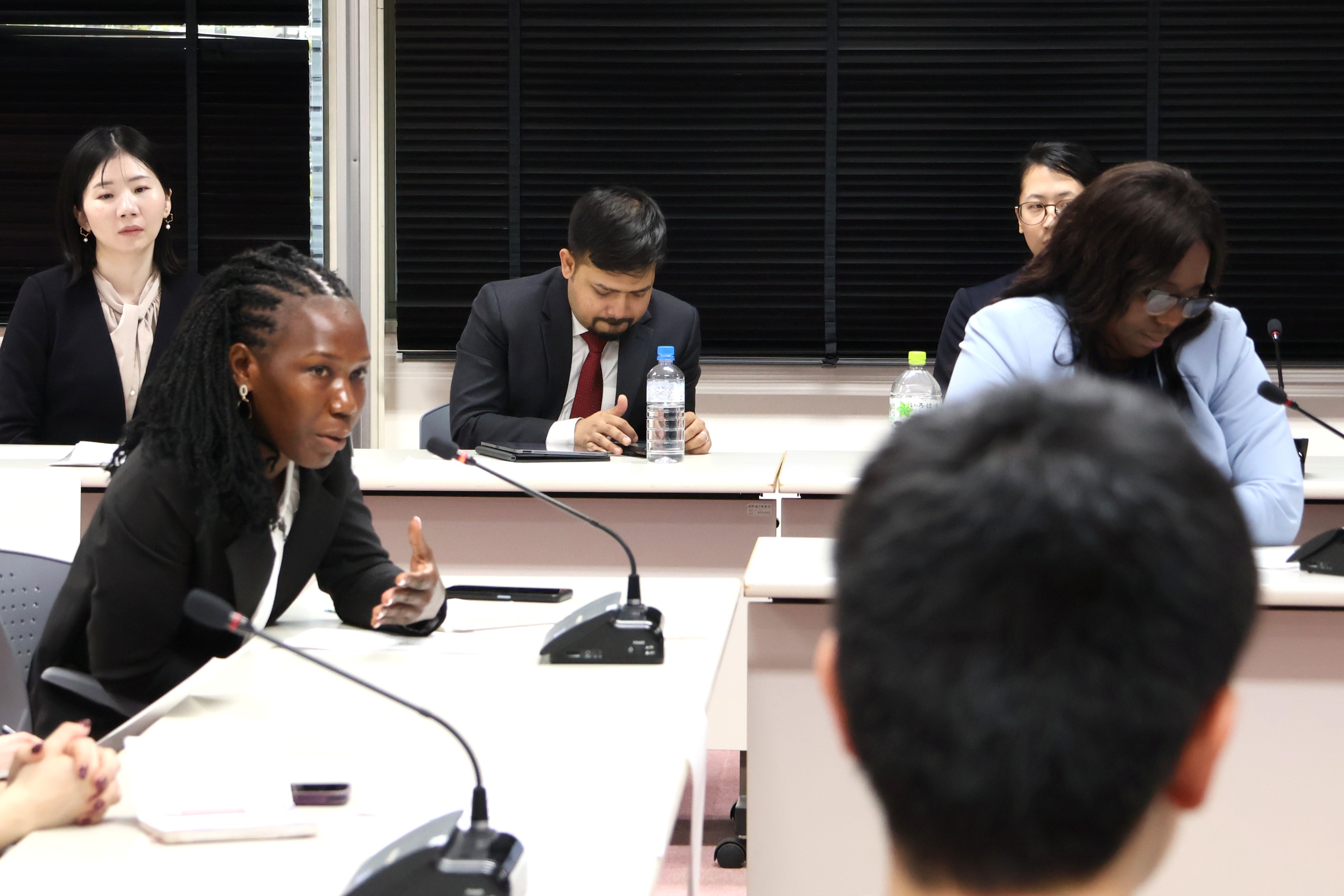
Lydia was accepted to the FY2024 Primary Course, which was held from January 2025 to February 2025. After completing the online training phase, she arrived in Japan to join 22 Program Associates in a four-week training that took her to Hiroshima and Tokyo. Lydia spent each day in Japan reflecting on the many new perspectives and values that she encountered and how she could apply them to her work back home.
One topic that she found immediately practical was negotiation. Conflict resolution always involves mediation and negotiation, and Lydia says that the Course taught practical things that she could use and gave her ideas, such as how to build peace between people in camps for internally displaced people or refugees.
To understand the different approaches to negotiation and looking at communication and teamwork among the negotiating [parties], and understanding … about giving task[s] or a role to the [parties] – was … interesting to me. I didn’t know about that.” —Lydia Tabu Casmiro Jamba (South Sudan), Alumna of the FY2024 Primary Course
The Course also reaffirmed for Lydia the fundamental importance of gender mainstreaming for building peace. She mentions, for example, that the Revitalised Peace Agreement, a 2018 framework to end South Sudan’s civil war, was developed with limited participation by women, and the implementation of its gender commitments has been uneven. Especially now that she works for an organization aiming to build a society where girls and women can realize their rights, Lydia is prepared to develop a theory of change for the projects that she brings in and ensure that gender is meaningfully addressed.
Hiroshima University and UNITAR
Hiroshima University and UNITAR
Finding Courage in Hiroshima: “Building Peace Is a Collective Responsibility”
Hiroshima University and UNITAR
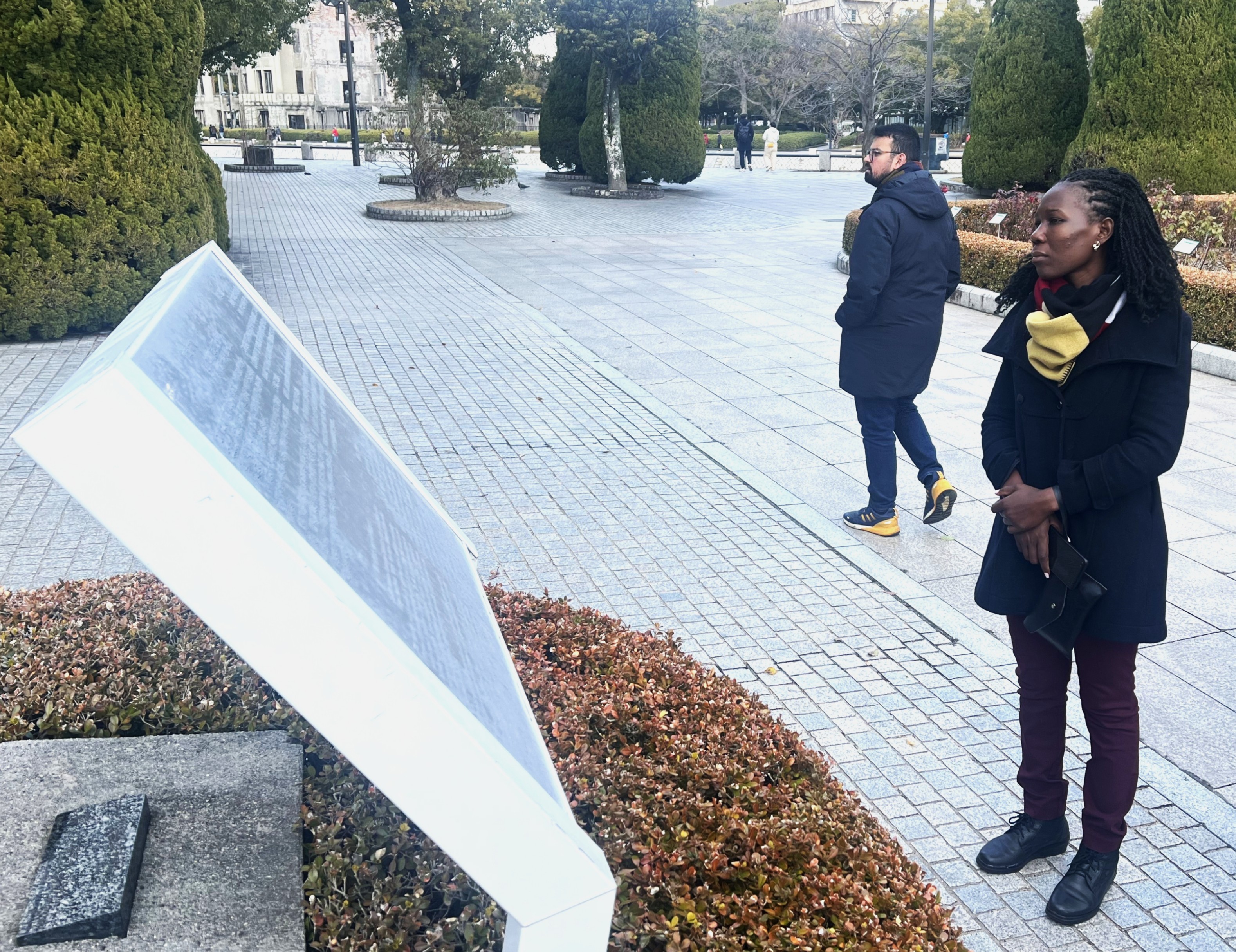
Another important moment for Lydia was her visit to the Hiroshima City. She had heard about the atomic bomb but little about its impact. Seeing the buildings that survived the devastation and listening to hibakusha, atomic bombing survivors, changed that. “It was emotional”, she says, but gave her strength and courage.
However much things are happening at home, I think things can be changed. … How the [Hiroshima] community put efforts together to rebuild the city was really inspiring. It … tells me that building peace is a collective responsibility. People need to unite in order to rebuild their city, … restore their relationship, and … bring themselves a peaceful environment.” —Lydia Tabu Casmiro Jamba (South Sudan), Alumna of the FY2024 Primary Course
The Future: On Her Chosen Career Path
Hiroshima University and UNITAR
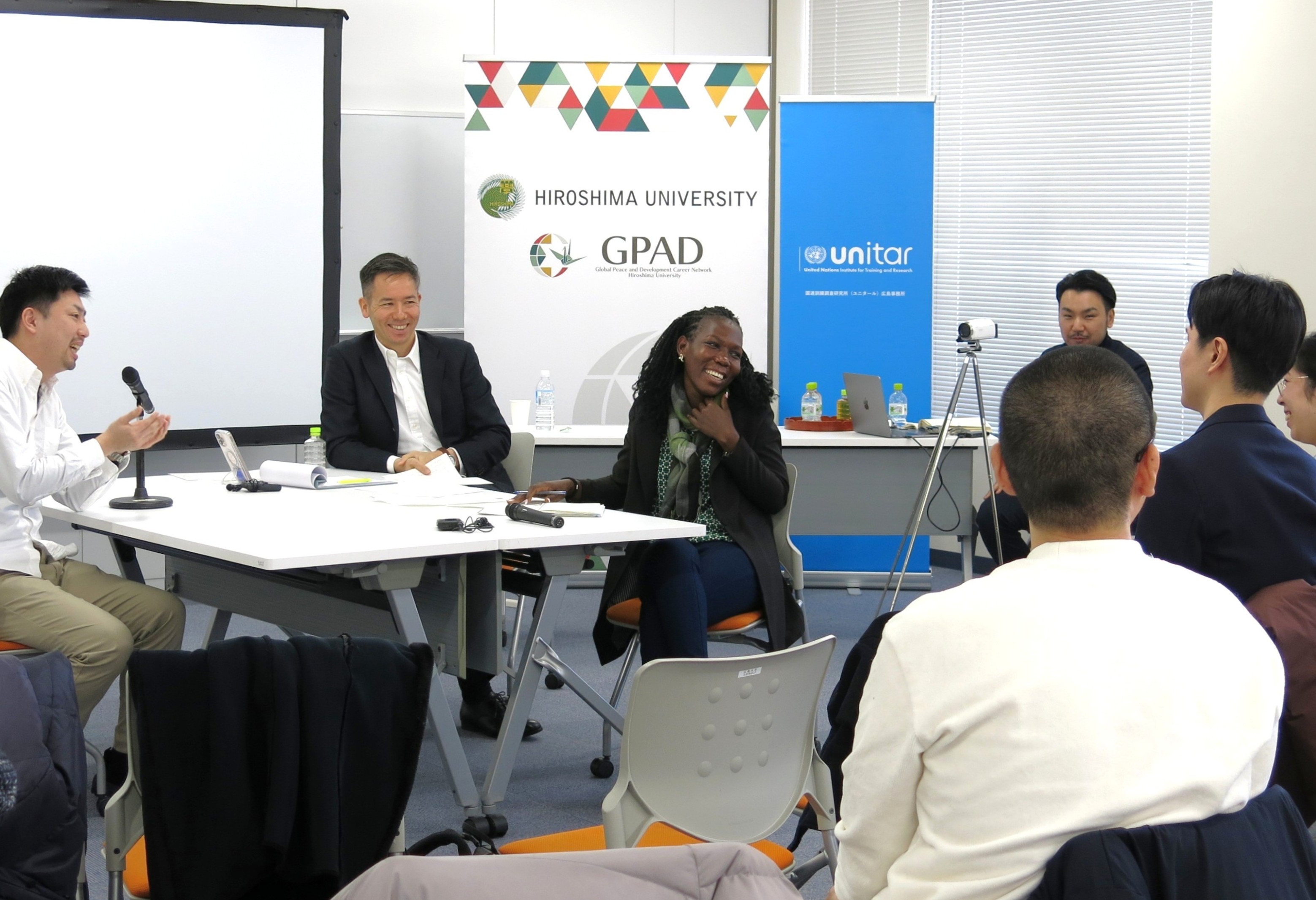
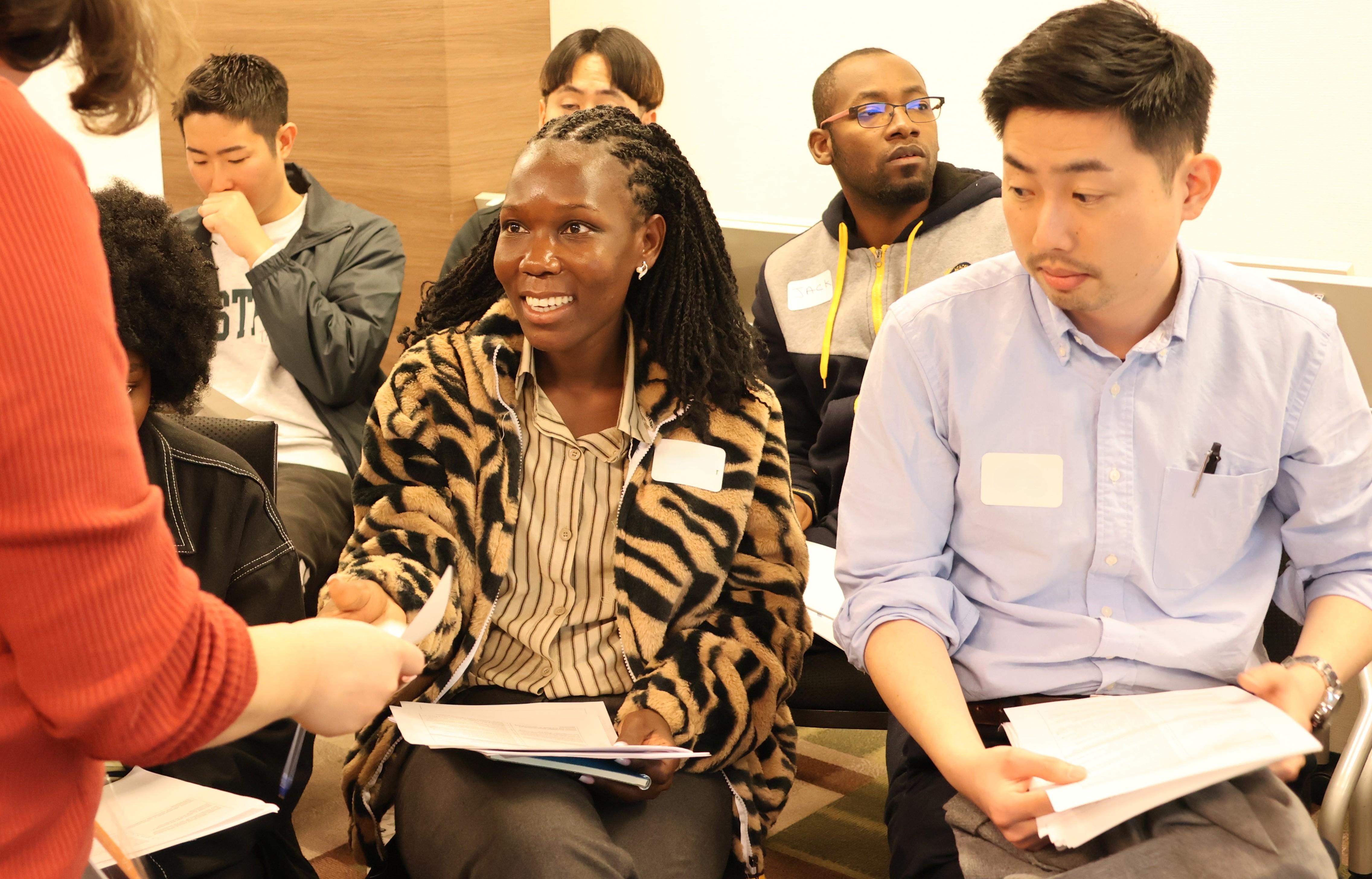
One objective of the Primary Course was to encourage young professionals to explore their future career paths through candid conversations with peers and with guidance from experts. Lydia valued having opportunities to reflect and develop smart goals to clarify where she wants to go in her career.
We as young people, we are key in building peace in the world. And [this] programme gives you an opportunity to build career and build peace within yourself, with the community and the world.” —Lydia Tabu Casmiro Jamba (South Sudan), Alumna of the FY2024 Primary Course
She recommends the Course to young professionals like her, not only for the practical things she learned but for the opportunity to meet like-minded professionals from around the world.
Lydia wants a world where people are not struggling with insecurity or forced to flee their homes. She is committed to doing her part for peace – in any way, in any place, wherever she is needed.
The original version of the article was published on the GPAD website.
About the Human Resource Development Program by the Ministry of Foreign Affairs of Japan
The Ministry of Foreign Affairs of Japan has implemented its human resource development programme in peacebuilding since 2007. In fiscal year 2015, the “Program for Global Human Resource Development for Peacebuilding and Development” was launched to comprehensively conduct the discovery, development and career-building of human resources. The Program has actively advanced capacity development in this field, serving as a vital resource for a broad spectrum of practitioners – from young professionals seeking their entry point to mid‑career experts aiming to leverage their experience and advance to the next stage. For three years starting from fiscal year 2024, Hiroshima University will manage and operate the Program in cooperation with UNITAR.
Ministry of Foreign Affairs of Japan: https://www.mofa.go.jp/fp/ipc/pagewe_000001_00215.html
Global Peace and Development Career Network: https://gpad.hiroshima-u.ac.jp/en/
About Hiroshima University
Hiroshima University was founded in 1949 in Hiroshima City, the site of the first atomic bombing in human history. Guided by its Charter, Hiroshima University is committed to respecting the human rights and individuality of each person and to fostering human resources that will contribute to the realization of a free, peaceful and sustainable society. It also aims to be a university which is open to and trusted by society, thereby contributing to the local and international community. Furthermore, Hiroshima University will lead the world in providing cutting-edge solutions to global issues. In this way, we aim to nurture educated and internationally-minded individuals who are committed to addressing the challenges and pursuit of peace.
About the United Nations Volunteers
The United Nations Volunteers (UNV) programme is a UN organization that promotes volunteerism to support peace and development worldwide. It mobilizes skilled volunteers to serve in UN agencies, government programmes, and community initiatives, especially in areas affected by conflict, poverty or environmental challenges. Japanese participants who graduate from the Primary Course are offered a one-year post with the United Nations Volunteers (UNV) programme.
About UNITAR
Established in 1965, the United Nations Institute for Training and Research (UNITAR) is the dedicated training arm of the United Nations. Its mission is to strengthen knowledge and skills through high-quality training, research and innovative learning solutions.
Through strategic partnerships and a global learning platform, UNITAR builds skills of individuals, and enhances capacities of institutions and organizations, particularly those in vulnerable contexts, to accelerate progress towards the 2030 Agenda for Sustainable Development and the Pact for the Future.