

Background
Small Island Developing States (SIDS) such as Saint Lucia face a persistent challenge: producing timely, accurate, and granular data to inform decision-making. Rapidly changing informal settlements, combined with limited statistical resources, make it difficult to maintain up-to-date population estimates and vulnerability assessments.
For Saint Lucia’s Central Statistics Office (CSO), the challenge became particularly visible when the 2022 population and household census was estimated to have a 23.3 per cent undercount rate. Based on listings and field experience, the CSO suspected that much of this undercount was concentrated in informal settlement areas, where housing patterns can change quickly between census cycles. These gaps are not only technical. They affect how services are planned, how risks are assessed, and how resources are allocated.
Against this backdrop, the CSO piloted the use of Unmanned Aerial Vehicle (UAV) imagery as a non-traditional data source for the production of official statistics. With support from the Organization of Eastern Caribbean States (OECS) under the World Bank-funded Data for Decision Making project, the initiative was designed and coordinated by UNITAR, which provided technical support across all phases, including geospatial analysis through its United Nations Satellite Centre and capacity development for the CSO. ETH Zurich - Dr. Kenneth Harttgen, Senior Scientist, and Mr. Nathanael Schmidt-Ott, PhD student, at the Development Economics Group - contributed to the population modelling work, while the United Nations Statistics Division (UNSD) provided feedback and international experience on integrating non-traditional data sources, including citizen data, into official statistics.
OECS
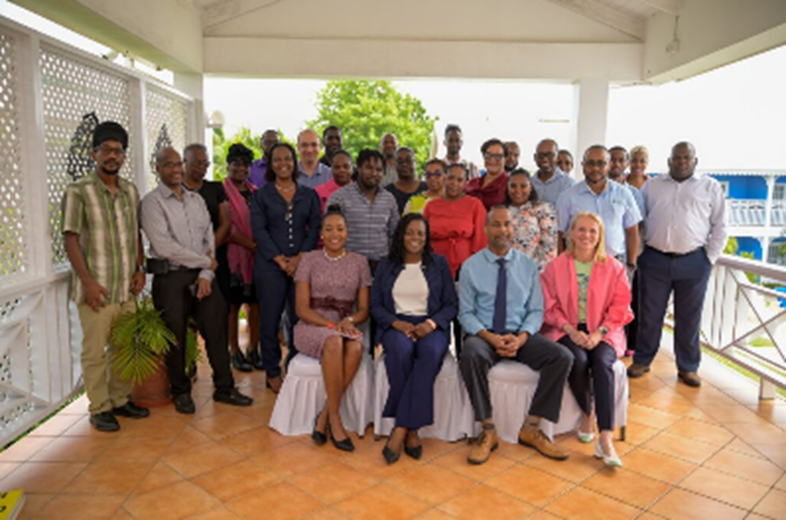
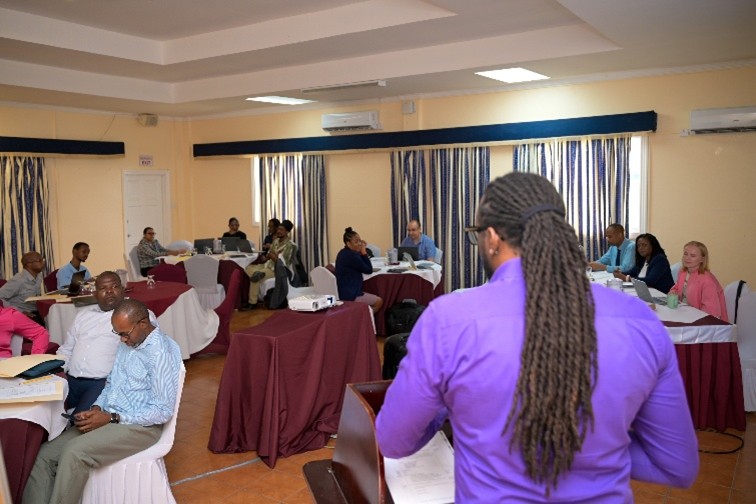
The pilot followed a design-thinking approach, beginning with a multi-stakeholder introductory launch webinar and an in-person training workshop before moving into field application. 22 participants took part in the in-person training, rating the training as useful and effective (91%), and 89% indicated that they met the learning objectives (11 respondents). The CSO then collected UAV imagery in selected communities, including Soufrière town and Palmiste. The images were corrected and used to improve building footprint data, giving the team more precise information on the location and characteristics of buildings. These data were then brought together with census records, household survey information, and citizen data from sources such as OpenStreetMap to test two linked applications: improving population estimates and identifying household-level vulnerability indicators.
Links with the Sustainable Development Goals (SDGs)
- SDG 11 - Sustainable Cities and Communities
- SDG 9 - Industry, Innovation and Infrastructure
- SDG 13 - Climate Action
- SDG 17 - Partnerships for the Goals
Links with UNITAR’s Strategic Objectives
- SO2 - Institutions in developing countries are strengthened to accelerate the achievement of the 2030 Agenda for Sustainable Development, implement the Pact for the Future, and respond to national priorities.
Castries, Saint Lucia.
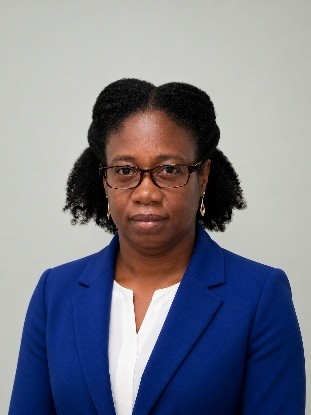
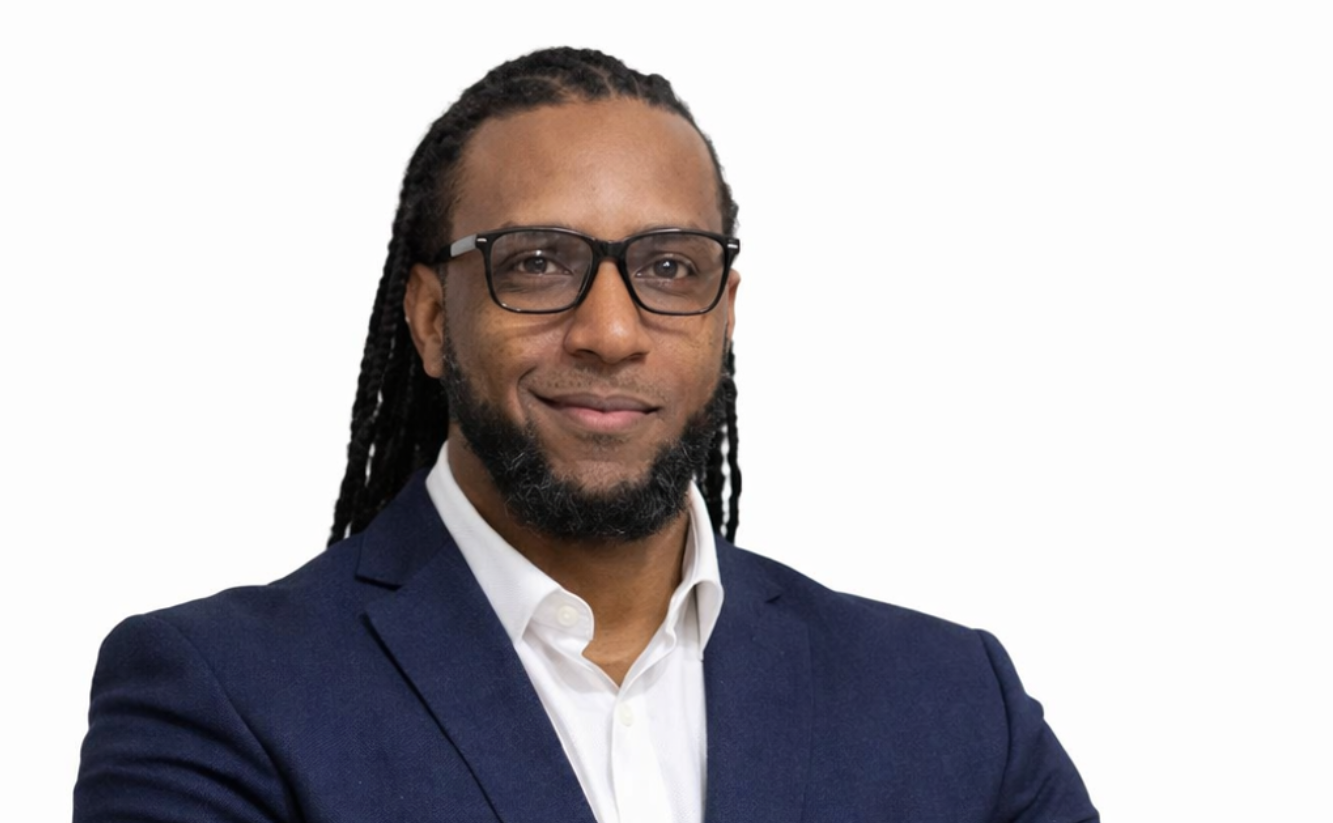
Among the key CSO staff involved were Ms. Sherma Small, a Statistician who supervises the CSO Mapping Unit, and Mr. Patrick Dujon, a Statistical Assistant within the Unit working on cartography and spatial data. The Unit is responsible for updating and improving statistical data collection, which means that their work depends on spatial data that reflects what is actually happening on the ground.
Improving Spatial Data and Efficiency
OECS
For Sherma and Patrick, the value of UAV imagery was first visible on the maps: it showed where housing had expanded and where the CSO’s spatial data needed updating. Sherma explained that the UAV data allowed them to
visualize areas where there would have been an increase in housing stock.
She noted that the CSO had “not really utilized the data in that way as yet” for population estimation, but the imagery was already helping the team understand where official records might no longer reflect reality. Patrick also saw the potential from another angle. Updating information through field enumeration is time-consuming, especially in dense or difficult-to-map areas. UAV imagery offered a way to make that work more efficient. He explained that the UAV could provide “the amount of work an enumerator may do over a week's time in a day”, while also noting that post-processing remains an important part of the workflow.
Population Modelling
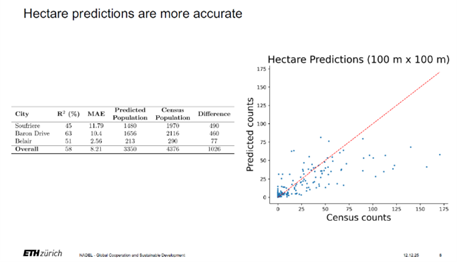
The next step was to test whether UAV imagery could support population modelling. The modelling work focused on areas affected by undercount, including Soufrière. Eight locations were used to train the model, while Belair, Baron Drive, and Soufrière were used as test locations. UAV imagery was combined with building footprints drawn largely from open-source databases, and predicted population figures were compared with census data to estimate error. The model was tested at both the hectare level and the building level.
The results provided one of the project’s clearest quantitative findings. Once corrected, building footprints were used, and model accuracy improved substantially. The strongest results were at the hectare level, while building-level occupancy predictions remained unreliable because the model identified too many houses as inhabited. This finding was important because it showed both the promise of UAV-supported modelling and the conditions required for it to work well, particularly accurate building footprints and geolocated census data.
For Patrick, the modelling work was not just a technical output produced by partners. It became something he had to understand and work through. He described how the project helped him follow what was happening in the back end of the model, from “the inputs that were provided to the outputs that we see”. He explained that he had gone through the code, prepared by Mr. Schmidt-Ott, ETH Zurich, on GitHub (a platform that helps developers build, organize, maintain, and collaborate on code), tried to understand what had been done, and resolved some errors along the way. In practical terms, the project connected programming, spatial data, and official statistics in a way that expanded how he could contribute to the work.
UN Satellite Center
ETH Zurich
Vulnerability Assessment
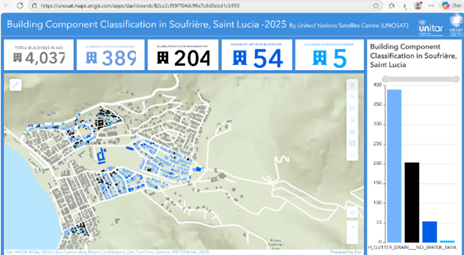
As Saint Lucia already had several vulnerability-related initiatives across government, including work by the National Emergency Management Organization (NEMO), the Department of Sustainable Development, the Ministry of Finance, and the Ministry of Equity, the project did not replace what other agencies were already doing, but added a new layer of evidence. It showed where the CSO’s GIS unit could add value by using UAV imagery to detect household-level physical indicators that had not been fully captured in broader assessments. As such, the team focused on vulnerability aspects that could be observed through UAV imagery, specifically gutter drain and water tanks. Their absence can increase household vulnerability during disasters, including risks linked to water supply disruption and roof or foundation damage. In Soufrière, the building classification showed that only 54 out of 652 classified buildings had both a water tank and gutter drain. This gave the CSO a measurable way to complement wider socio-economic and environmental vulnerability work.
Sherma connected this directly to the usefulness of CSO data. She explained that while they already knew these communities were vulnerable,
having specific indicators of the vulnerability of these communities has definitely improved
the value of the data produced. She also saw how this information could support the Ministry of Equity, particularly for community assistance programmes, by helping identify affected households or areas spatially. On the other hand, Patrick added that the value of the data depends on the variables attached to UAV-derived polygons. Depending on what is linked to those polygons, the CSO could produce population data, vulnerability data, and potentially economic data. At the same time, he emphasized that dissemination needs to protect confidentiality, making community-level outputs more realistic than street-level outputs in the short term.
Beyond the data itself, the project changed how evidence can be communicated. Patrick explained that
most times when you provide data which is more or less statistical data in numbers, it does not have such a great effect unlike what you can with the UAV imagery.
For stakeholders and decision-makers, seeing conditions on the ground can make population and vulnerability information easier to understand and use.
Capacity building, Ownership and Collaboration
With regards to the overall capacity, the team had already received UAV training and certification before the project, but Sherma explained that they had struggled to put a plan in place for using the drones regularly. Through the project, that changed. She said they had been able to undertake numerous missions, showing a shift from training to practical application in real conditions. The skills gained were also not limited to drone flights. Sherma described modelling as
a new skill that we are,[…] learning and a new skill that's going to be implemented as part of our regular work process.
She also noted that the team is still editing and cleaning building footprints using drone imagery to create a more accurate building footprints layer. This, in turn, shows that the project is not only producing one-off outputs but influencing routine work inside the mapping unit. However, both Sherma and Patrick mentioned that they would need assistance to fully understand how to use the model, after which they expected to continue on their own and seek additional support if improvements are needed. Patrick added that scaling the approach is manageable but will require learning more about the programming language it uses, accessing post-processing software, and maintaining drones.
For continued use, Sherma explained that UAV imagery is expected to support the regular updating of enumeration districts and maps, helping provide enumerators with more current information before field listings, including for areas selected through the quarterly Labour Force Survey. Patrick extended this point to broader data integration. He explained that, because the CSO serves as a repository for national data, geospatially tagged datasets from different sources could be linked to UAV-derived polygons, allowing each mapped building or area to carry multiple variables. He also referred to the National Spatial Data Infrastructure as a possible mechanism for hosting imagery and helping the CSO align different spatial datasets.
Another key aspect was the role of the participatory approach in strengthening collaboration. Sherma said that, although agencies had collaborated before, vulnerability-related projects were often carried out at the departmental level, with others reviewing results rather than being involved throughout the process. This project helped open dialogue on what we would consider vulnerability, and “how should we approach it”, creating space for more national involvement from the beginning. Patrick described one of the main lessons even more simply: “collaboration, collaboration.” For Patrick, collaboration was what allowed different pieces to come together: UNITAR, ETH Zurich, CSO staff, and others contributing different skills to move the work forward. It also helped the team understand what would be needed to replicate and scale the approach, including human resources, hardware, software, finance, and time. As he put it,
We can now sit down and project what we need for the next step forward.
Conclusion
The impact is not captured by one result alone. It is visible in the way the CSO is now better positioned to leverage data from new data sources, such as UAV imagery for the production of official statistics, specifically contributing to the provision of more timely and spatially granular data on population estimates, ensuring coverage of informal settlements, as well as informing the vulnerability assessment. The results of this pilot project have been documented for potential use and replication by other SIDS in the region or elsewhere. For Sherma and Patrick, the project not only strengthened the capacities of the CSO’s Mapping Unit, but also what is possible beyond the traditional ways of mapping and collecting the data. In a context where planning, service delivery, and disaster preparedness depend on the quality, timeliness, and relevance of data, this project contributes not only to data production but ultimately to better-informed decisions.