

- Harenthirah Gopala Krishnan, a final-year Computer Science undergraduate at HELP University, joined Cohort 2 of the Pathway to Prosperity Programme, powered by Google and implemented by the Division for Prosperity at the United Nations Institute for Training and Research (UNITAR).
- With no workplace to apply his new skills in, Harenthirah made one for himself: he kept building on his team's capstone project, EcoDC, an AI-powered Green Data Centre Console, and published it as open source so others could learn from it.
- Since completing the programme, he has taken AI-driven automation ideas back to his former internship team, feeding into their discussions on monitoring and alerts
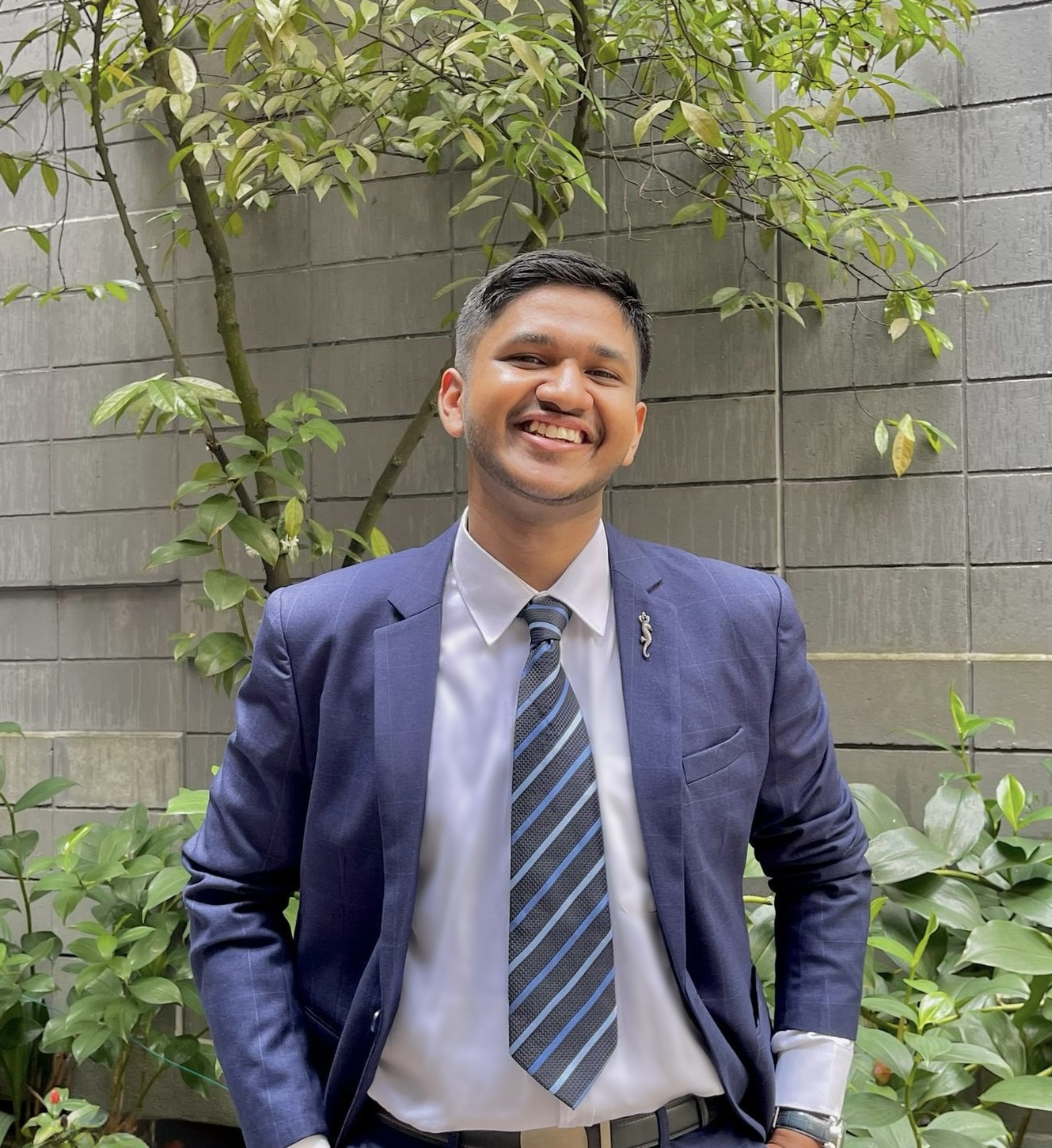
Harenthirah Gopala Krishnan
August 2026, Geneva, Switzerland – Most participants came to the Pathway to Prosperity programme from a workplace, hoping to bring new skills back to their teams. Harenthirah Gopala Krishnan came from a lecture hall, with a hunch that Malaysia's data centre industry was about to escalate in terms of presence and scale. He had curiosity and a little exposure to the field, and he saw the programme "as an opportunity to bridge that gap by learning more about modern data centre operations, infrastructure, and how AI is transforming the industry".
FROM THEORY TO PRACTICAL INFRASTRUCTURE
UNITAR
Coming from a computer science background, Harenthirah already understood machine learning in theory, which gave him a small head start. An earlier internship at a private cloud provider had also taken him inside a data centre in Kuala Lumpur. But that had been a glimpse, no more.
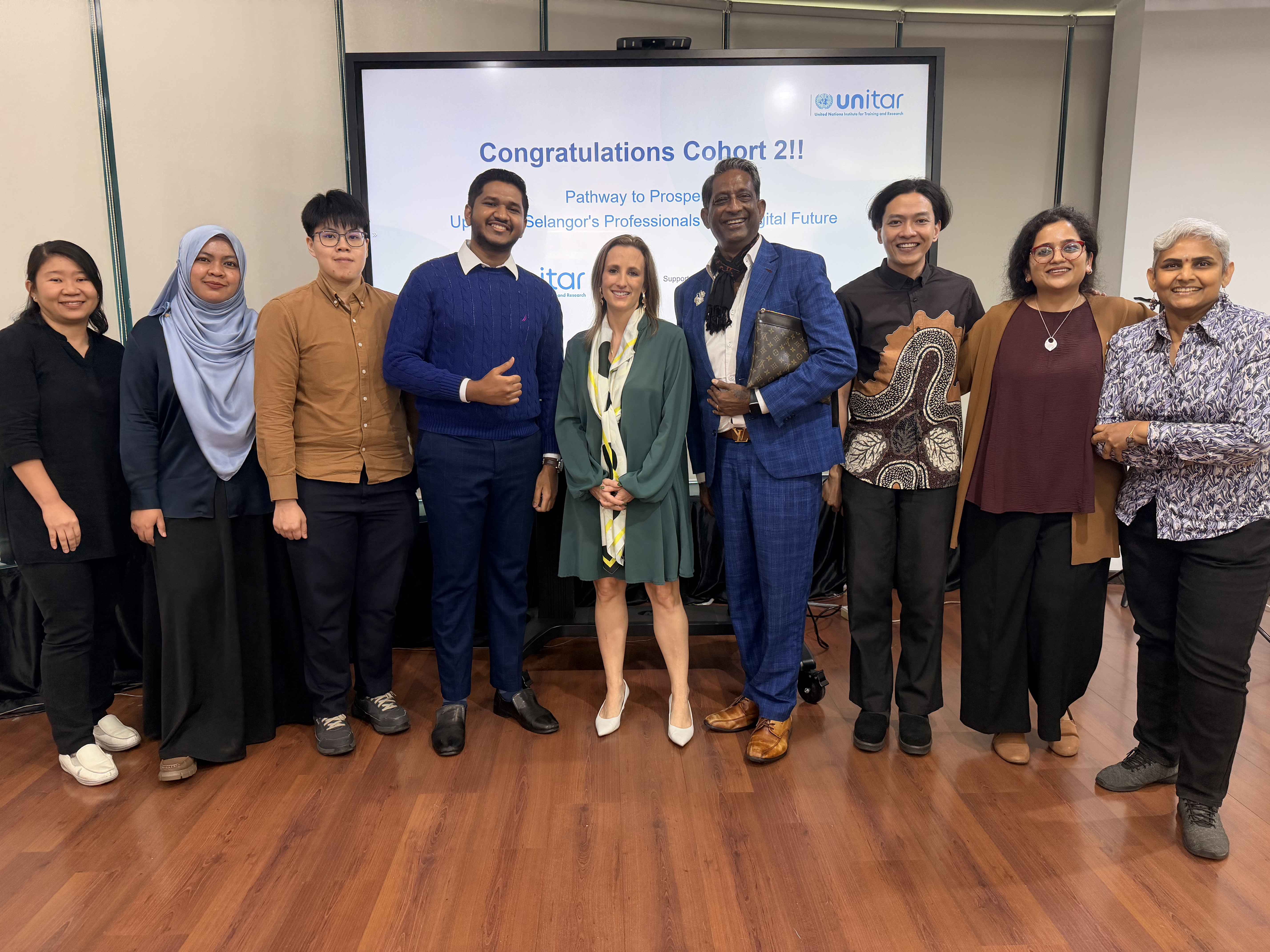
The Pathway to Prosperity was designed to ground technical knowledge in application. The online module on Operational Technology (OT) Cybersecurity introduced Harenthirah to accessible tools like Wazuh, OPNsense, and Zabbix, giving him a much deeper appreciation for protecting mission-critical infrastructure. The hands-on workshops at SHRDC on n8n, a workflow automation platform, turned nowledge into practical abilities. He wasn't learning what automation could do in theory; instead, he was watching repetitive tasks disappear in front of him. These sessions would go on to shape nearly everything he built afterward.
When asked what genuinely shifted his thinking, Harenthirah didn't point to a specific module. He pointed to the diverse cohort of people.
The most eye-opening part of the programme was not just the technical knowledge, but the people I learned alongside. Although I come from a technical background, I was inspired by participants from diverse industries, many with little or no technical experience, who embraced challenging concepts with enthusiasm and determination.
As one of the room's youngest voices, learning beside professionals further along in their careers was itself part of what the programme always sought to deliver.
BUILDING WHERE HE CAN
UNITAR
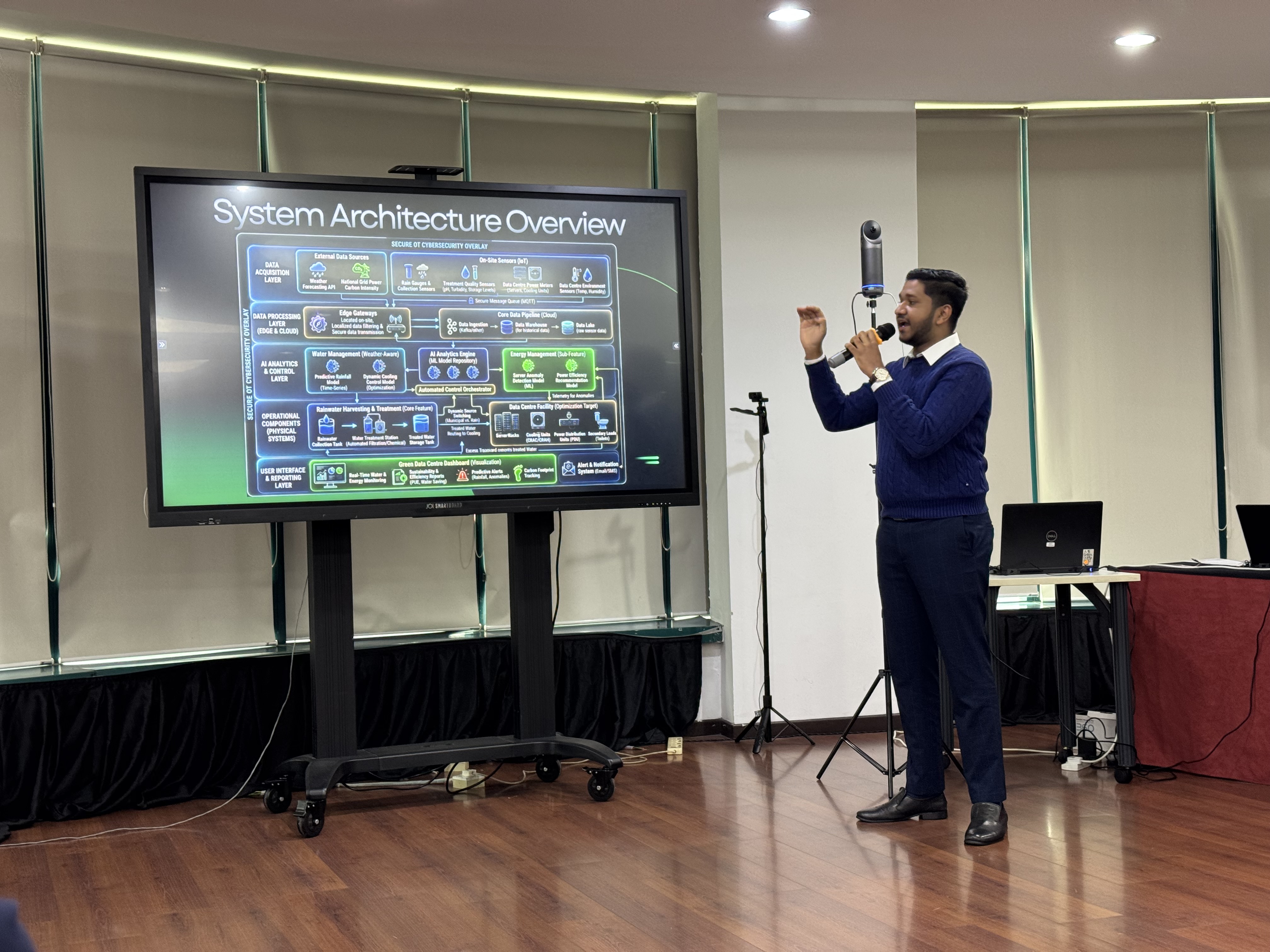
However, Harenthirah's story departs from the usual account of training translating into workplace change because he didn’t have a workplace to apply his learning in. Rather than wait for one, he kept building where he could. "I decided to continue developing my team's capstone project, EcoDC, an AI-powered Green Data Centre Console," he said. "I enhanced several features after the programme and published the project on GitHub so others could explore our work and learn from it." By publishing his work on open-source platforms, Harenthirah is proactively expanding what the wider community can access and learn from.
Additionally, he reached out to his former internship colleagues and proposed new ideas about integrating Large Language Models into their existing monitoring and alerting system based on what he learned about workflow automation using n8n through the programme. He pitched that his suggestion could "transform traditional reactive alerts into a more proactive and intelligent monitoring solution by providing richer insights through API integrations." While he wasn't there to implement it himself, he was able to reach his community and contribute meaningfully to improving industry-level services.
LAYING THE FOUNDATIONS
UNITAR
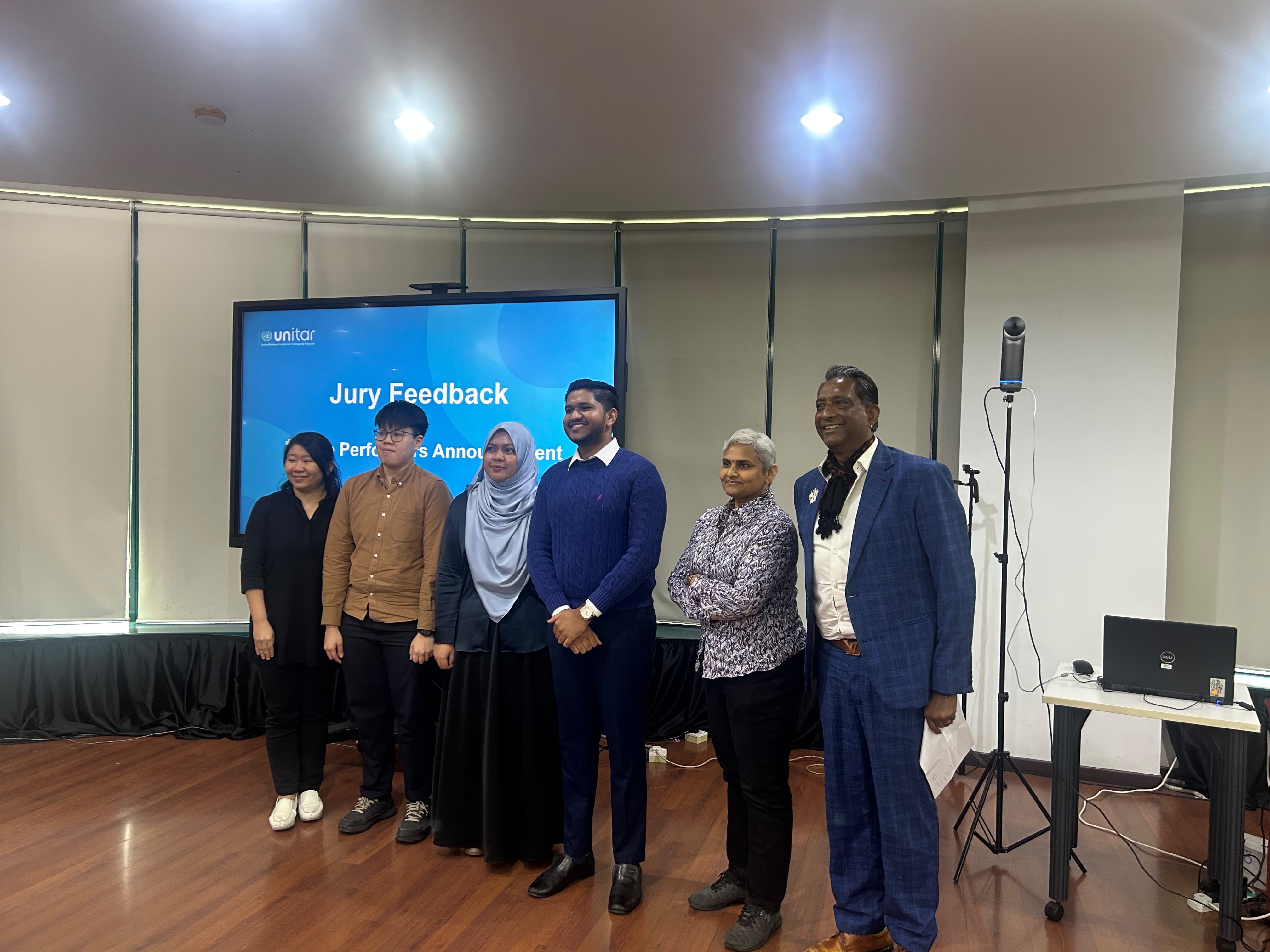
Beyond his own project, the ripple effect has continued to grow outward. His university recognised his achievements following the programme, and he has since encouraged his course mates to apply to future cohorts, becoming a mentor for his own peer group.
When looking ahead Harenthirah connects his own trajectory to a much larger one. "I believe these skills will enable me to contribute to the country's digital transformation by supporting sustainable, secure, and AI-driven data centre operations," he said. His advice to anyone weighing whether to invest in programmes like this is unambiguous:
Programmes like the UNITAR Pathway to Prosperity do more than teach technical skills; they inspire curiosity, encourage lifelong learning, and create opportunities for people from diverse backgrounds to participate in the digital economy.
Harenthirah's story connects directly to SDGs 4 and 8, demonstrating how AI and technological upskilling can prepare emerging talent for a country's digital transformation, laying the foundations for a more capable workforce.
About the Pathway to Prosperity Programme
The Pathway to Prosperity Programme, powered by Google and implemented by the Division for Prosperity at the United Nations Institute for Training and Research (UNITAR), is a hybrid training programme designed to equip early and mid-career Selangor professionals with practical, industry-relevant skills in AI and data centre infrastructure. Cohort 1 brought together Selangor based participants for a combination of asynchronous learning, engaging weekly Saturday webinars and hands-on in-person workshops at SHRDC, bridging the gap between professional experience and the rapidly evolving demands of the AI and data centre industry.