

- Layla Merzah from Iraq is a communications and media specialist for the International Committee of the Red Cross.
- She participated in the FY2025 Primary Course of the Program for Global Human Resource Development for Peacebuilding and Development, commissioned by the Ministry of Foreign Affairs of Japan. It was held online and onsite, in Hiroshima and Tokyo, Japan.
- Layla deepened her understanding of how communication can contribute to peace and social change. She is motivated to apply her learning to support inclusive dialogue and responsible information-sharing in conflict-affected contexts.
- The Program is implemented by Hiroshima University in partnership with the United Nations Volunteers (UNV) programme and the United Nations Institute for Training and Research (UNITAR).
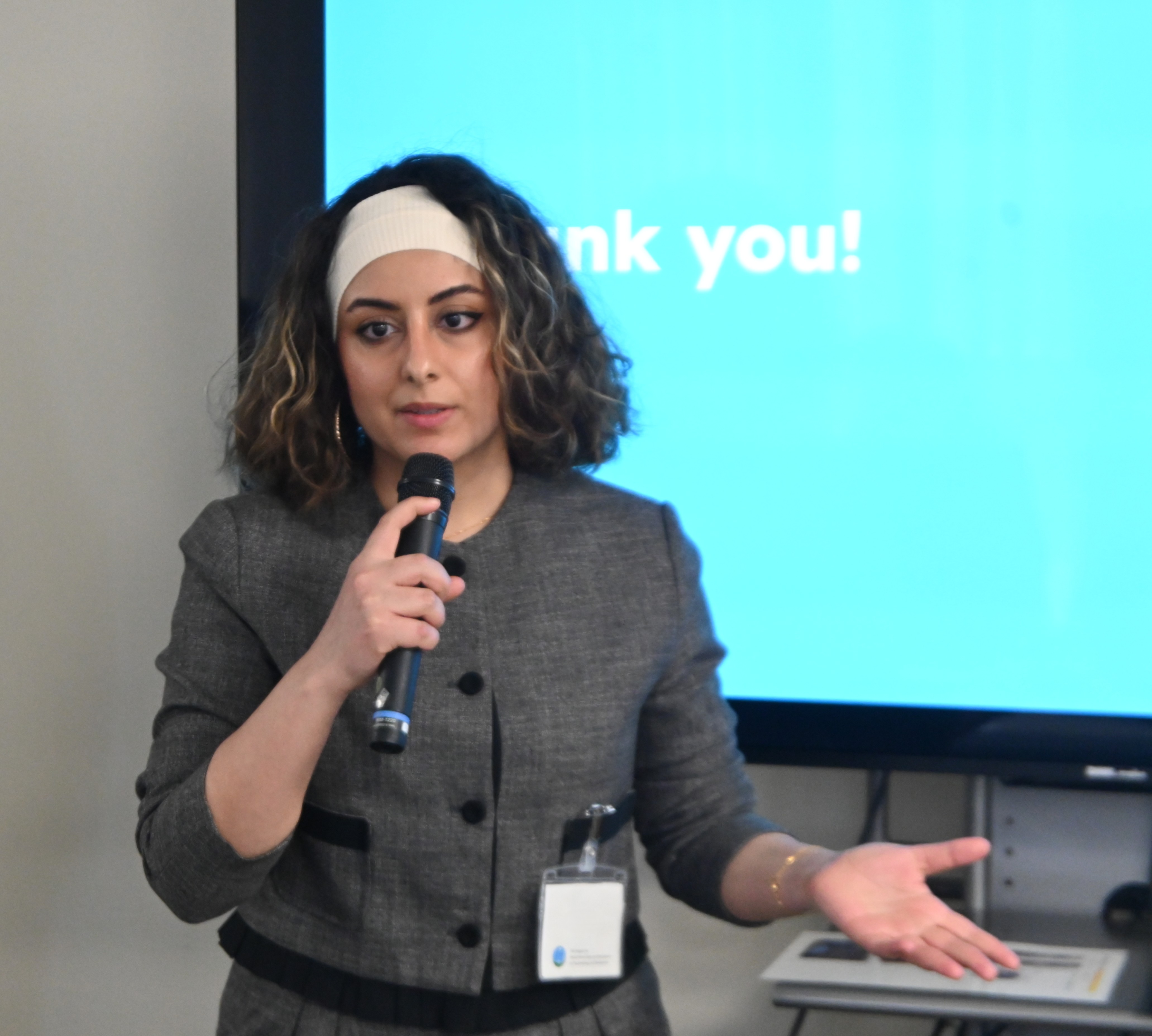
Hiroshima University and UNITAR
17 June 2026, Hiroshima, Japan – Layla Merzah from Iraq works as a communication and media specialist with the International Committee of the Red Cross (ICRC). She joined the FY2025 Primary Course of the Program for Global Human Resource Development for Peacebuilding and Development to help further direct her humanitarian career.
Spurred by Childhood Questions
Growing up in Iraq, Layla was surrounded by the realities of conflict from an early age. She also learned in school about other societies devasted by war. As she got older, Layla found herself questioning why conflicts still continued – and in many cases, becoming even more severe – despite all the lessons humans should have learned.
I was always confused by the fact that we learn how terrible wars are, yet they keep happening…. That made me want to understand why this was still the case and how I could be part of the change. — Layla Merzah (Iraq), Alumna of the FY2025 Primary Course
These questions shaped her determination to contribute to peacebuilding as a career. Having worked in communications in the humanitarian sector, Layla joined the Primary Course to better understand current peacebuilding initiatives and how she could contribute to efforts aimed at improving the dire situation.
Engaging, Sharing, and Growing Together in the Primary Course
The Program for Global Human Resource Development for Peacebuilding and Development was set up by the Ministry of Foreign Affairs of Japan to strengthen the capacity of individuals working for peacebuilding and development professionals, with the Primary Course focusing on early career professionals. Since FY2024, it has been delivered by Hiroshima University in close cooperation with UNITAR and the United Nations Volunteers (UNV) programme. The FY2025 primary course combined online pre-training in October 2025 and in-person training 3-30 November 2025 in Tokyo and Hiroshima, Japan. Twelve participants from Japan and 1 participant each from Armenia, Cambodia, Cameroon, Ecuador, Guatemala, Iraq, Nepal, Palestine, Papua New Guinea, South Sudan, Timor-Leste, and the African Union Commission (AUC) took part.
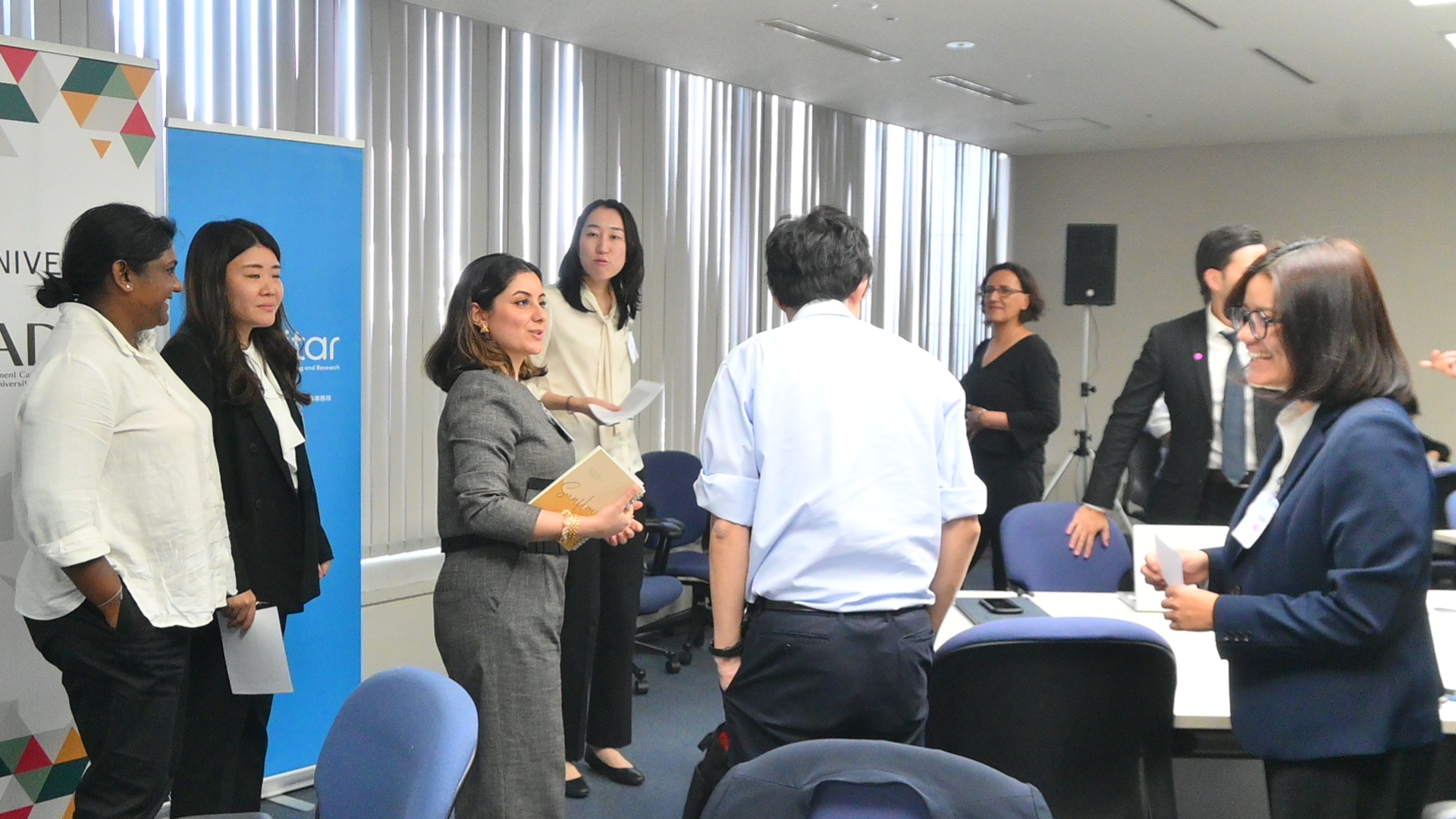
For Layla, one of the defining aspects of her experience in the course was the diversity of the training room. Surrounded by Program Associates from different cultural, professional and national backgrounds – from stable, post-conflict and conflict-affected societies – she encountered perspectives far beyond her own.
Having all these different backgrounds in one room shows you how people think at the international level. … It really broadens your horizons.
The interactions in the Program shifted her mindset. Layla discovered alternative ways of seeing problems and crafting solutions, and gained a more nuanced and globally aware approach to peacebuilding.
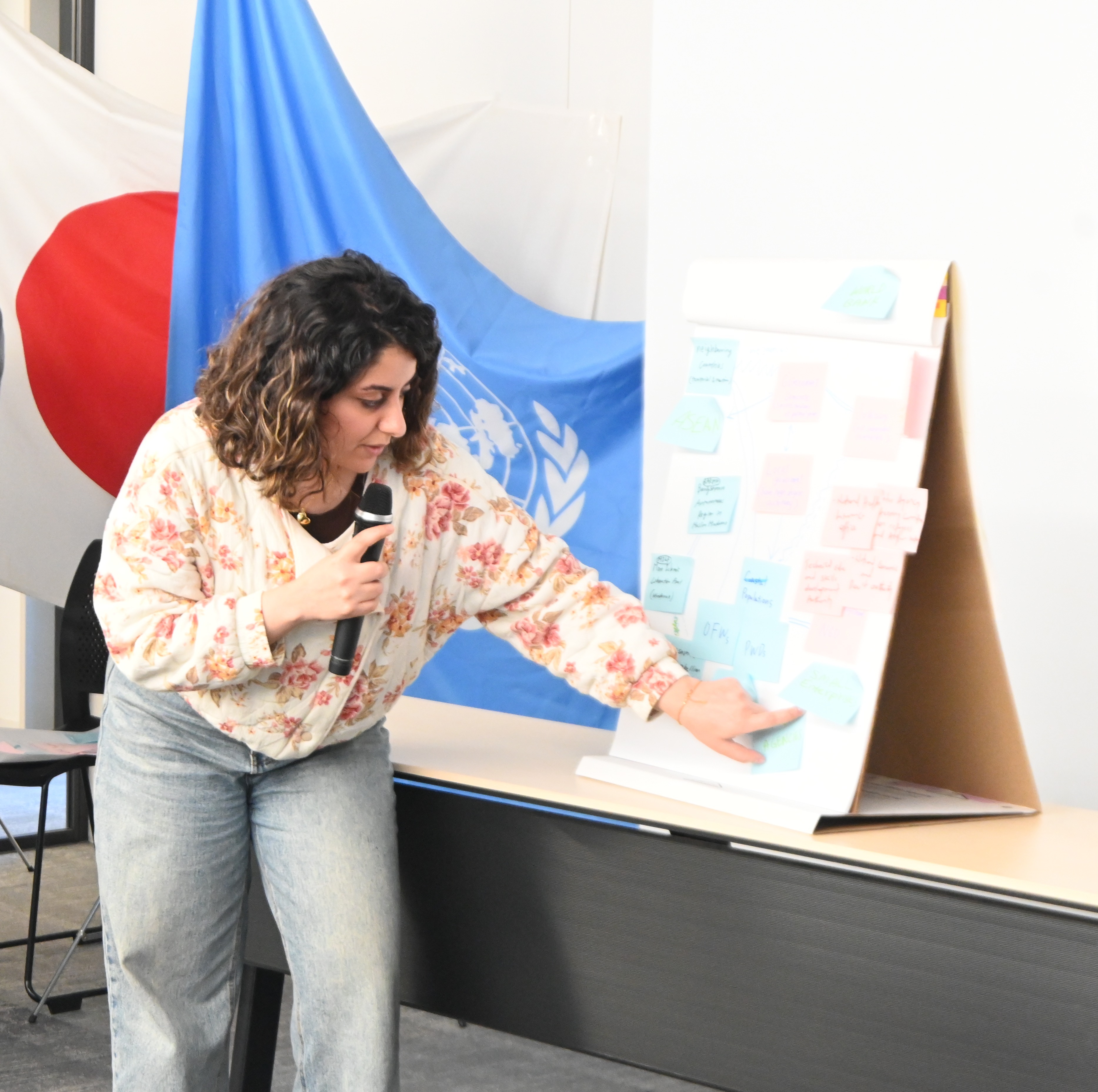
Hiroshima University and UNITAR
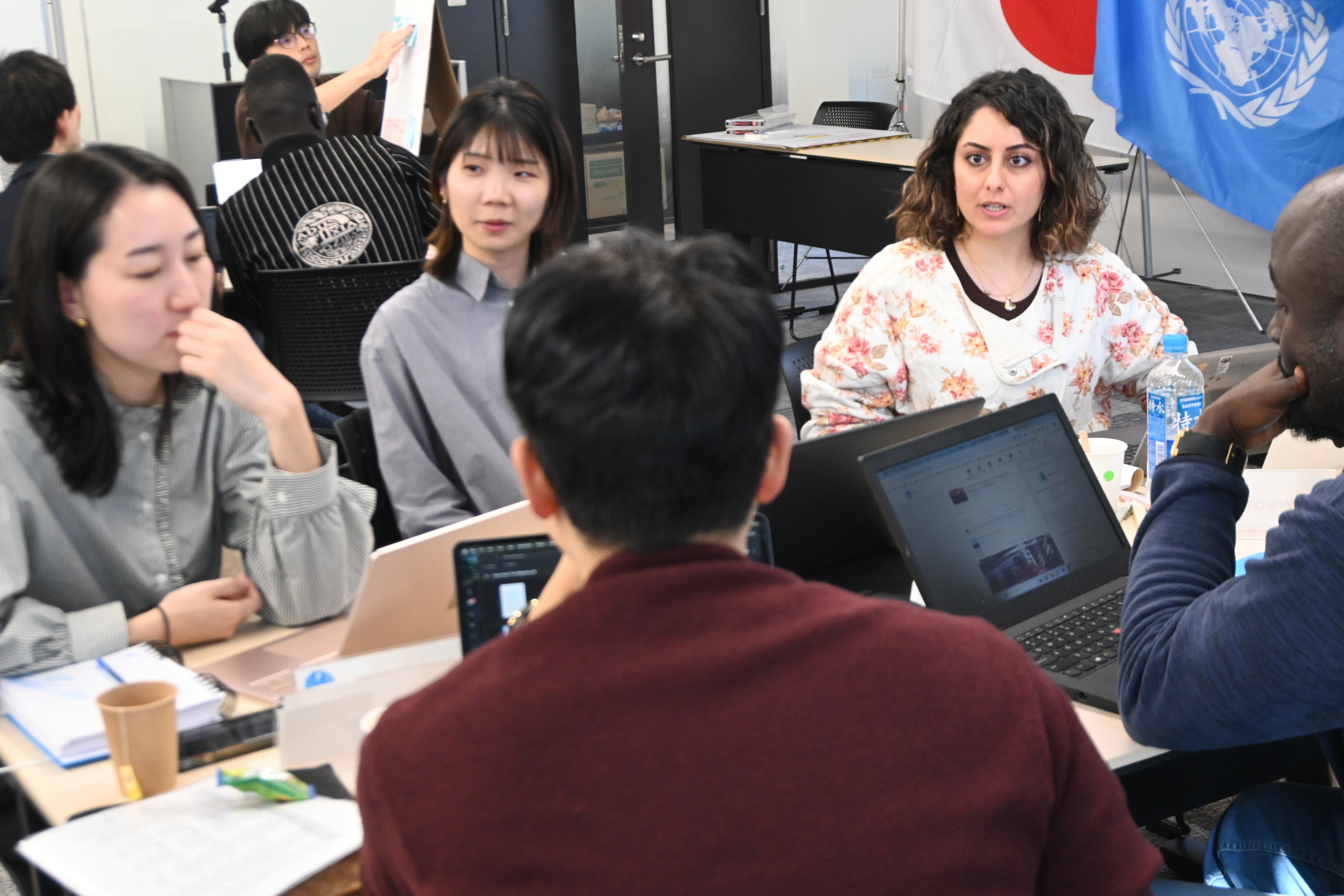
UNITAR
A Space to Find a Clearer Sense of Direction
Before joining the course, Layla often wondered how she, a young, early-career professional, could meaningfully contribute to global change.
I kept asking myself, where do I start? Is it only about taking small steps, or is there something greater I could contribute to?
She was interested in influencing policy but wasn’t sure how she might do so. The course helped Layla gain greater clarity on possible entry points, practical ways in which she could use her expertise in communication to engage in broader discussions and policy processes.
Layla encourages future Primary Course participants to engage actively and share their perspectives with confidence. She emphasizes that meaningful contributions are not limited to established opinions or professional experience; questions and emerging ideas also play an essential role in collective learning.
She describes the course as a judgement-free learning environment where Program Associates benefit not only from subject-matter experts, but also from peers representing diverse professional and cultural backgrounds.
…this is the perfect zone to learn to get out of your comfort zone and to try and seek the best you can take out of the people you have around you.
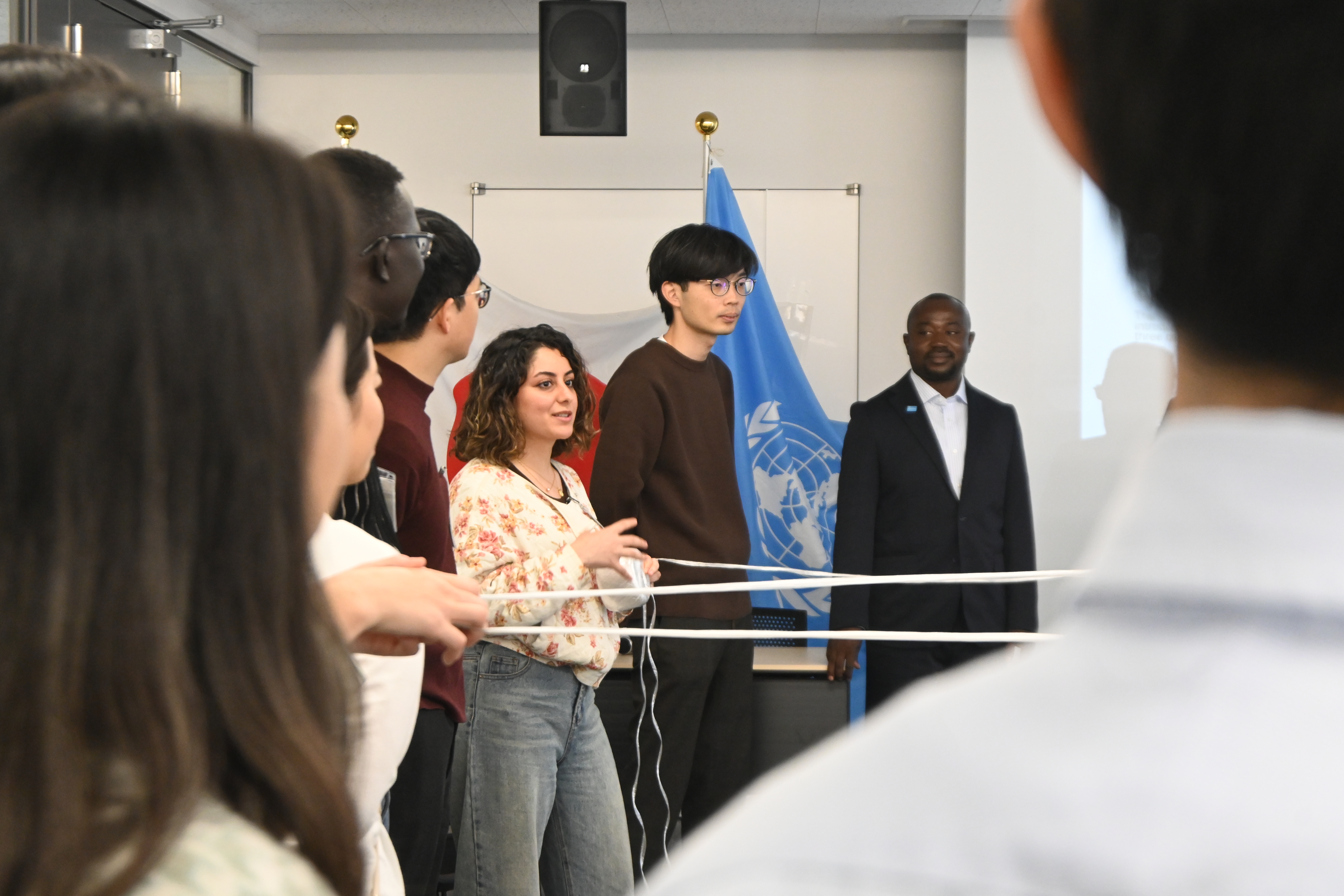
Hiroshima University and UNITAR
Hiroshima University and UNITAR
Believing in the Power of Words
Layla believes in the power of communication. In her communications and public relations work with communities, donors and project stakeholders, Layla has seen how information can influence trust, cooperation and public perception. These experiences have made her deeply aware of how powerful words can be.
If a single word can start violence, and a single piece of misinformation can damage an organization…. then surely words also have the power to inspire positive change.
Having witnessed both the risks and the potential of communication in sensitive contexts, Layla is determined to use her skills responsibly. She hopes to contribute to peacebuilding and development by promoting accurate, ethical, and inclusive information-sharing.
About the Human Resource Development Program by the Ministry of Foreign Affairs of Japan
The Ministry of Foreign Affairs of Japan has implemented its human resource development program in peacebuilding since 2007. In fiscal year 2015, the Program for Global Human Resource Development for Peacebuilding and Development was launched to comprehensively conduct the discovery, development and career-building of human resources. The Program has actively advanced capacity development in this field, serving as a vital resource for a broad spectrum of practitioners – from young professionals seeking their entry point to mid‑career experts aiming to leverage their experience and advance to the next stage. For three years, starting from fiscal year 2024, Hiroshima University will manage and operate the program in cooperation with UNITAR.
Ministry of Foreign Affairs of Japan: https://www.mofa.go.jp/fp/ipc/pagewe_000001_00215.html
Global Peace and Development Career Network: https://gpad.hiroshima-u.ac.jp/en/
About Hiroshima University
Hiroshima University was founded in 1949 in Hiroshima City, the site of the first atomic bombing in human history. Guided by its Charter, Hiroshima University is committed to respecting the human rights and individuality of each person and to fostering human resources that will contribute to the realization of a free, peaceful, and sustainable society. It also aims to be a university which is open to and trusted by society, thereby contributing to the local and international community. Furthermore, Hiroshima University will lead the world in providing cutting-edge solutions to global issues. In this way, we aim to nurture educated and internationally-minded individuals who are committed to addressing the challenges and pursuit of peace.
About UN Volunteers
The United Nations Volunteers (UNV) programme is a UN organization that promotes volunteerism to support peace and development worldwide. It mobilizes skilled volunteers to serve in UN agencies, government programs, and community initiatives, especially in areas affected by conflict, poverty, or environmental challenges. Japanese participants who graduate from the Primary Course are offered a one-year post with the UNV programme.
About UNITAR
Established in 1965, the United Nations Institute for Training and Research (UNITAR) is the dedicated training arm of the United Nations. Its mission is to strengthen knowledge and skills through high-quality training, research and innovative learning solutions.
Through strategic partnerships and a global learning platform, UNITAR builds skills of individuals, and enhances capacities of institutions and organizations, particularly those in vulnerable contexts, to accelerate progress towards the 2030 Agenda for Sustainable Development and the Pact for the Future.